


Unity & Love are basic mantras to address Kashmir problem: PM

August 28, 2016

New Delhi, Aug 28: Prime Minister Narendra Modi today said "Ekta" (unity) and "Mamata" (love) are the basic mantras for addressing the Kashmir problem even as he slammed those pushing children to create unrest, saying they will have to give answers to those "innocent" kids some day. He emphasised that if any life is lost in Kashmir, whether of any youth or any securityman, "that loss is ours, of our own country".
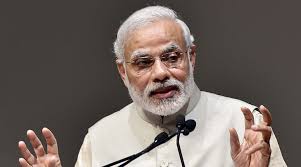
modipmSpeaking on the unrest in the valley in his monthly radio programme 'Mann Ki Baat', Modi said, "From the interactions I had with all parties on Kashmir, one thing emerged from those, which can be put in simple words as 'Ekta' and 'Mamata'. These two things were the basic mantra."

He said all the political parties had spoken in one voice on Kashmir, sending out a "message to the world as well as separatist forces" besides conveying "our sentiments to the people of Kashmir". He equated it to the passage of landmark GST Bill by Parliament for which all the parties came together.

"It is the view of all of us, the view of 125 crore people from a pradhan of a village to the Prime Minister, that if any life is lost in Kashmir, whether of any youth or any securityman, that loss is ours, our own country," Modi said.

At the same time, he slammed "those people who push small children to try to create unrest in Kashmir", saying "some day, they will have to give answers to these innocent children". The Prime Minister's remarks came a day after Jammu and Kashmir Chief MInister Mehbooba Mufti met him and presented a "three-pronged action plan" that includes dialogue with all stakeholders.

Comments

abdul
 - 
Sunday, 28 Aug 2016

Devil preaching the peace & harmony

Add new comment

  • Coastaldigest.com reserves the right to delete or block any comments.
  • Coastaldigset.com is not responsible for its readers’ comments.
  • Comments that are abusive, incendiary or irrelevant are strictly prohibited.
  • Please use a genuine email ID and provide your name to avoid reject.
Agencies
March 14,2020

New Delhi, Mar 14: The number of novel coronavirus cases in India rose to 83 on Saturday, which includes one death each from Delhi and Karnataka, the Union Health Ministry said.

While a 76-year-old man from Kalaburagi who had recently returned from Saudi Arabia died on Thursday, a 68-year-old woman in Delhi who had tested positive for coronavirus passed away at Ram Manohar Lohia (RML) Hospital on Friday night.

The woman, whose son with a travel history abroad had tested positive, died because of co-morbidity (diabetes and hypertension), the Health Ministry said, adding that she had tested positive for COVID-19.

Delhi has reported seven positive cases and Uttar Pradesh 11 so far. Karnataka has six coronavirus patients while Maharashtra has 14 and Ladakh three.

Besides, Rajasthan, Tamil Nadu, Jammu and Kashmir, Andhra Pradesh and Punjab have reported one case each. Telangana has reported two.

Kerala has recorded 19 cases, including three patients who were discharged last month after they recovered from the contagious infection with flu-like symptoms.

The total number of 84 confirmed cases includes 17 foreigners -- 16 Italian tourists and a Canadian, the ministry officials said.

Amid rising coronavirus cases in India, the government has asked people not to panic, saying no community transmission of the virus has been observed and there has only been a few cases of local transmission so far and that is "not a health emergency" in India at present.

With the World Health Organisation (WHO) declaring COVID-19 a pandemic, a Health Ministry official said over 4,000 people who had come in contact with the 83 positive cases have been identified through contract tracing and were being tracked while 42,000 people across the country are under community surveillance.

He said all essential facilities like community surveillance, quarantine, isolation wards, adequate personal protective equipment (PPEs), trained manpower, rapid response teams are being strengthened further in all the states and union territories.

The Centre as part of its measures to contain the spread of the disease on Friday announced that people will be allowed to travel through 19 of 37 land border checkposts from Saturday midnight and services of the Indo-Bangladesh cross border passenger trains and buses will continue to remain suspended till April 15.

Only four Indo-Nepal border checkposts will remain operational, and for citizens of Bhutan and Nepal visa-free entry to the country will continue, Home Ministry Additional Secretary Anil Malik had said.

He said the decision on closing the Kartarpur Corridor is under consideration

The government on Wednesday suspended all visas, barring a few categories like diplomatic and employment, in an attempt to prevent the spread of coronavirus.

It has asked Indian nationals to avoid all non-essential travel abroad.

All incoming international passengers returning to India should self-monitor their health and follow the required do's and dont's as detailed by the government.

Comments

Add new comment

  • Coastaldigest.com reserves the right to delete or block any comments.
  • Coastaldigset.com is not responsible for its readers’ comments.
  • Comments that are abusive, incendiary or irrelevant are strictly prohibited.
  • Please use a genuine email ID and provide your name to avoid reject.
Agencies
January 15,2020

Mumbai, Jan 15: Michael Debabrata Patra took over as Deputy Governor of the Reserve Bank of India (RBI) on Wednesday.

He was an Executive Director of India's central bank before being elevated to the post of Deputy Governor.

An RBI release said that as Deputy Governor, Patra will look after Monetary Policy Department including Forecasting and Modelling Unit (MPD/MU), Financial Markets Operations Department (FMOD), Financial Markets Regulation Department.

He will also look after Market Intelligence (FMRD/MI), International Department (Intl. D), Department of Economic and Policy Research (DEPR), Department of Statistics and Information Management (including Data and Information Management Unit) (DSIM/DIMU), Corporate Strategy and Budget Department (CSBD) and Financial Stability Unit.

Patra, a career central banker since 1985, has worked in various positions in the Reserve Bank of India.

As Executive Director, he was a member of the Monetary Policy Committee (MPC) of RBI, which is invested with the responsibility of monetary policy decision making in India. He will continue to be an ex-officio member of the MPC as Deputy Governor.

Prior to this, he was Principal Adviser of the Monetary Policy Department, Reserve Bank of India between July 2012 and October 2014.

He has worked in the International Monetary Fund (IMF) as Senior Adviser to Executive Director (India) during December 2008 to June 2012, when he actively engaged in the work of the IMF's Executive Board through the period of the global financial crisis and the ongoing Euro area sovereign debt crisis.

The release said that his book "The Global Economic Crisis through an Indian Looking Glass" vividly captures this experience.

He has also published papers in the areas of inflation, monetary policy, international trade and finance, including exchange rates and the balance of payments.

A fellow of the Harvard University where he undertook post-doctoral research in the area of financial stability, he has a PhD in Economics from the Indian Institute of Technology, Mumbai.

He will hold the post for three years or until further orders. The post fell vacant after Viral Acharya resigned on July 23 last year.

Comments

Add new comment

  • Coastaldigest.com reserves the right to delete or block any comments.
  • Coastaldigset.com is not responsible for its readers’ comments.
  • Comments that are abusive, incendiary or irrelevant are strictly prohibited.
  • Please use a genuine email ID and provide your name to avoid reject.
Agencies
July 21,2020

The Retailers Association of India (RAI) has said that ad hoc lockdowns by state governments are impacting the businesses of already-stressed retailers, along with hurting the economic revival of the country.

In a statement, the body of the organised retail industry said that the long road to recovery for the Indian retail industry continues to meet stumbling blocks with numerous restrictions being imposed at the state and local levels.

"Total lockdowns in some places and limited operational hours and days in several others are creating setbacks for retailers as the already stressed retail businesses are getting further interrupted and in turn, dampening consumer sentiment," it said.

According to RAI, although the intentions are that of citizen safety and social distancing, the recent instances of local lockdowns and ad hoc restrictions being imposed in Uttar Pradesh, Maharashtra, Andhra Pradesh and Karnataka are having a distressing impact on retail businesses.

Retailers are already facing huge setbacks in terms of payment of wages and rentals due to very low sales of about 40 per cent as compared to last year, thanks to the extended lockdown, it said.

Contesting the restrictions on operating hours, Sandeep Kataria, CEO, Bata India said: "Restricted shopping time can lead to unnecessary overcrowding of stores, which is unfavourable towards the personal safety of both store staff and customers. Longer operational hours will support recovery for retailers as well as help adhering to social distancing norms."

Arvind Mediratta, MD and CEO, METRO Cash & Carry India said that these lockdowns will create severe inconvenience for all citizens as they also bar operations of food and grocery retail and wholesale stores.

Such hastily-implemented decisions by states undermine investor confidence and would come in the way of making the country "aatmanirbhar" or self-reliant, he said.

Voicing the concerns of retailers, the RAI has submitted representations to various state and local authorities that puts forth recommendations to get businesses and life of consumers on the track to recovery.

It has said that authorities should mandatorily allow essential shops including kiranas, general trade shops, supermarkets, hypermarkets and wholesalers to operate every day of the week until 9 p.m. to cater to the daily needs of the customers.

It has also sought ensuring uniform and regular opening of all categories of retail for full working hours while following stringent hygiene practices and adhering to social distancing norms. This will help avoid overcrowding outside stores as demand will get distributed over all days of the week, it said.

The industry body has also asked the local authorities to open malls in all states. Malls can ensure a safe shopping experience wherein safety measures are taken by both, the mall authorities and the retailers, it said.

Kumar Rajagopalan, CEO, RAI, said: "The need of the hour is concerted efforts by all stakeholders. While retailers are doing their bit by following stringent hygiene practices, the policymakers too need to support to ensure economic revival across the country. Consumption is important for the country and supports the business environment."

Comments

Add new comment

  • Coastaldigest.com reserves the right to delete or block any comments.
  • Coastaldigset.com is not responsible for its readers’ comments.
  • Comments that are abusive, incendiary or irrelevant are strictly prohibited.
  • Please use a genuine email ID and provide your name to avoid reject.