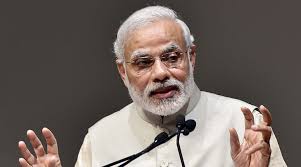
Unity & Love are basic mantras to address Kashmir problem: PM

August 28, 2016

New Delhi, Aug 28: Prime Minister Narendra Modi today said "Ekta" (unity) and "Mamata" (love) are the basic mantras for addressing the Kashmir problem even as he slammed those pushing children to create unrest, saying they will have to give answers to those "innocent" kids some day. He emphasised that if any life is lost in Kashmir, whether of any youth or any securityman, "that loss is ours, of our own country".

modipmSpeaking on the unrest in the valley in his monthly radio programme 'Mann Ki Baat', Modi said, "From the interactions I had with all parties on Kashmir, one thing emerged from those, which can be put in simple words as 'Ekta' and 'Mamata'. These two things were the basic mantra."

He said all the political parties had spoken in one voice on Kashmir, sending out a "message to the world as well as separatist forces" besides conveying "our sentiments to the people of Kashmir". He equated it to the passage of landmark GST Bill by Parliament for which all the parties came together.

"It is the view of all of us, the view of 125 crore people from a pradhan of a village to the Prime Minister, that if any life is lost in Kashmir, whether of any youth or any securityman, that loss is ours, our own country," Modi said.

At the same time, he slammed "those people who push small children to try to create unrest in Kashmir", saying "some day, they will have to give answers to these innocent children". The Prime Minister's remarks came a day after Jammu and Kashmir Chief MInister Mehbooba Mufti met him and presented a "three-pronged action plan" that includes dialogue with all stakeholders.

Comments

abdul
 - 
Sunday, 28 Aug 2016

Devil preaching the peace & harmony

Add new comment

  • Coastaldigest.com reserves the right to delete or block any comments.
  • Coastaldigset.com is not responsible for its readers’ comments.
  • Comments that are abusive, incendiary or irrelevant are strictly prohibited.
  • Please use a genuine email ID and provide your name to avoid reject.
Agencies
March 3,2020

Kashmir, Mar 3: Four days after the National Investigation Agency made a major breakthrough in the Pulwama terror attack case over a year after the bombing, arresting one person who had sheltered the suicide bomber Adil Ahmad Dar, the NIA on Tuesday arrested two more people in the case - a father-daughter duo - who had also provided shelter to the bomber, officials said.

The NIA also claimed that the video of the suicide bomber was also recorded at their residence and released by the Jaish-e-Mohammad (JeM) terror group from Pakistan after the attack. An NIA spokesperson in Delhi said: "Two more persons have been arrested by the agency in the Pulwama terror attack case and they have been identified as Insha Jan, 23, and her father Tariq Ahmed Shah, 50, who works as a tipper driver."

The official said that the father-daughter duo have been arrested from Hakripora area in Pulwama for their involvement in the attack. The two were arrested on early Tuesday morning after senior officials of the NIA raided their house on Monday night.

A senior NIA official related to the probe told IANS: "The video of Dar, who attacked the CRPF convoy, was recorded at the home of the duo. And the same video was released soon after the Pulwama terror attack by the JeM terrorists from a Pakistani IP address."

He said, "The video was shared by them to their handlers in Pakistan."

The spokesperson further claimed that during the probe Tariq Ahmed Shah disclosed that his house in Hakripora area was used by Dar, Mohammad Umar Farooq, a Pakistani terrorist and IED maker, Kamran - another Pakistani terrorist (both were later killed in encounters with security forces), Sameer Ahmed Dar, a Jaish-e-Mohammad terrorist from Pulwama and Mohammad Ismail aka Ibrahim, a Pakistani terrorist.

The spokesperson said that Shah facilitated all the terrorists at his house for sheltering and for planning of the heinous attack on the CRPF convoy. He said Jan, daughter of Shah, facilitated the terrorists at their home and provided food and other logistics during their stay on more than 15 occasions for two to four days each time, in their house during the year 2018-2019.

"Initial interrogation has revealed that Jan was in constant touch with Farooq and was in communication with him over telephone and other social media applications," the spokesperson said. The fresh arrests of the two accused brings the total number of arrests in the case to three.

The arrests were made on the revelations of Shakir Bashir Magrey, who was arrested by the anti-terror probe agency on February 28. According to senior NIA officials, more arrests will be made in the coming days. Magrey, a resident of Hajibal, Kakapora in Pulwama district of Jammu & Kashmir, is an overground worker (OGW) of the Pakistan-based Jaish-e-Mohammad (JeM).

According to agency sources, Magrey allegedly provided shelter and other logistical assistance to the Pulwama suicide bomber. He was sent to 15 days' NIA custody by a special NIA court in Jammu & Kashmir on Friday. During interrogation, Magrey revealed that he had harboured Dar and Pakistan-based terrorist Mohammad Umar Farooq in his house from late 2018 till the attack in February 2019 and assisted them in the preparation of the Improvised Explosive Device (IED). His shop is located near Lethpora bridge, and as advised by Mohammad Umar, he started conducting reconnaissance of the movement of CRPF convoys on Jammu-Srinagar Highway in January 2019, and informed Mohammad Umar and Adil Ahmad Dar about it.

Magrey was also involved in modifying the Maruti Eeco car and fitting the IED into it in early February, 2019 and was introduced to Adil Ahmad Dar in mid-2018 by Mohammad Umar and he became a full-time OGW of JeM.

"During his initial interrogation, he disclosed that on several occasions, he collected and delivered arms, ammunition, cash and explosive material to JeM terrorists, including those involved in the Pulwama attack," the agency had said on February 28.

"During investigation, the make, model and number of the car used in the attack was quickly ascertained by NIA to be a Maruti Eeco through forensic examination of the tiny remnants of the car which were found at the spot during extended searches," the agency stated.

"This has been corroborated by accused Shakir Bashir Magrey. The explosives used in the attack were determined to be ammonium nitrate, nitro-glycerin and RDX, through forensic investigation," it said.

Comments

Add new comment

  • Coastaldigest.com reserves the right to delete or block any comments.
  • Coastaldigset.com is not responsible for its readers’ comments.
  • Comments that are abusive, incendiary or irrelevant are strictly prohibited.
  • Please use a genuine email ID and provide your name to avoid reject.
Agencies
May 27,2020

New Delhi, May 27: India’s fourth recession since Independence, first since liberalisation, and perhaps the worst to date is here, according to rating agency, Crisil.

CRISIL sees the Indian economy shrinking 5 per cent in fiscal 2021 (on-year), because of the Covid-19 pandemic. The first quarter will suffer a staggering 25 per cent contraction.

About 10 per cent of gross domestic product (GDP) in real terms could be permanently lost. "So going back to the growth rates seen before the pandemic is unlikely in the next three fiscals", Crisil said.

Crisil has revised its earlier forecast downwards. "Earlier, on April 28, we had slashed our prediction to 1.8 per cent growth from 3.5 per cent growth. Things have only gone downhill since", it said.

While we expect non-agricultural GDP to contract 6 per cent, agriculture could cushion the blow by growing at 2.5 per cent.

In the past 69 years, India has seen a recession only thrice as per available data in fiscals 1958, 1966 and 1980. The reason was the same each time a monsoon shock that hit agriculture, then a sizeable part of the economy.

"The recession staring at us today is different," it added. For one, agriculture could soften the blow this time by growing near its trend rate, assuming a normal monsoon. Two, the pandemic-induced lockdowns have affected most non-agriculture sectors. And three, the global disruption has upended whatever opportunities India had on the exports front.

Economic conditions have slid precipitously since the April-end forecast of 1.8 per cent GDP growth for fiscal 2021 (baseline), Crisil said.

On the lockdown extension, it said that the government has extended the lockdown four times to deal with the rising number of cases, curtailing economic activity severely (lockdown 4.0 is ending on May 31).

The first quarter of this fiscal will be the worst affected. June is unlikely to see major relaxations as the Covid-19 affliction curve is yet to flatten in India.

"Not only will the first quarter be a washout for the non-agricultural economy, services such as education, and travel and tourism among others, could continue to see a big hit in the quarters to come. Jobs and incomes will see extended losses as these sectors are large employers," Crisil said.

CRISIL also foresees economic activity in states with high Covid-19 cases to suffer prolonged disruption as restrictions could continue longer.

A rough estimate based on a sample of eight states, which contribute over half of India's GDP, shows that their 'red zones' (as per lockdown 3.0) contributed 42 per cent to the state GDP on average regardless of the share of such red zones.

On average, the orange zones contribute 46 per cent, while the green zones where activity is allowed to be close to normal contribute only 12 per cent to state GDP.

The economic costs are higher than earlier expectations, according to Crisil. The economic costs now beginning to show up in the hard numbers are far worse than initial expectations.

Industrial production for March fell by over 16%. The purchasing managers indices for the manufacturing and services sectors were at 27.4 and 5.4, respectively, in April, implying extraordinary contraction. That compares with 51.8 and 49.3, respectively, in March.

Exports contracted 60.3 per cent in April, and new telecom subscribers declined 35 per cent, while railway freight movement plunged 35 per cent on-year.

"Indeed, given one of the most stringent lockdowns in the world, April could well be the worst performing month for India this fiscal," it said.

Added to that is the economic package without enough muscle. The government recently announced a Rs 20.9 lakh crore economic relief package to support the economy. The package has some short-term measures to cushion the economy, but sets its sights majorly on reforms, most of which will have payoffs only over the medium term.

"We estimate the fiscal cost of this package at 1.2 per cent of GDP, which is lower than what we had assumed in our earlier estimate (when we foresaw a growth in GDP)," it said.

"We believe a catch-up to the pre-crisis trend level of GDP growth will not be possible in the next three fiscals despite policy support. Under the base case, we estimate a 10 per cent permanent loss to real GDP (from the decadal-trend level), assuming average growth of about 7 per cent between fiscals 2022 and 2024," Crisil said.

Interestingly, after the Global Financial Crisis (GFC), a sharp growth spurt helped catch up with the trend within two years. GDP grew 8.2 per cent on average in the two fiscals following the GFC. Massive fiscal spending, monetary easing and swift global recovery played a role in a V-shaped recovery.

To catch-up would require average GDP growth to surge to 11 per cent over the next three fiscals, something that has never happened before.

The research said that successive lockdowns have a non-linear and multiplicative effect on the economy a two-month lockdown will be more than twice as debilitating as a one-month imposition, as buffers keep eroding.

Partial relaxations continue to be a hindrance to supply chains, transportation and logistics. Hence, unless the entire supply chain is unlocked, the impact of improved economic activity will be subdued.

Therefore, despite the stringency of lockdown easing a tad in the third and the fourth phases, their negative impact on GDP is expected to massively outweigh the benefits from mild fiscal support and low crude oil prices, especially in the April-June quarter. "Consequently, we expect the current quarter's GDP to shrink 25 per cent on-year," it said.

Counting lockdown 4.0, Indians have had 68 days of confinement. S&P Global estimates that one month of lockdown shaves 3 per cent off annual GDP on average across Asia-Pacific.

Since India's lockdown has been the most stringent in Asia, the impact on economic growth will be correspondingly larger.

Google's Community Mobility Reports show a sharp fall in movement of people to places of recreation, retail shops, public transport and workplace travel. While data for May shows some improvement in India, mobility trends are much below the average or baseline, and lower compared with countries such as the US, South Korea, Brazil and Indonesia.


Comments

Add new comment

  • Coastaldigest.com reserves the right to delete or block any comments.
  • Coastaldigset.com is not responsible for its readers’ comments.
  • Comments that are abusive, incendiary or irrelevant are strictly prohibited.
  • Please use a genuine email ID and provide your name to avoid reject.
News Network
February 14,2020

New Delhi/Washington, Feb 14: India has offered to partially open up its poultry and dairy markets in a bid for a limited trade deal during US President Donald Trump's first official visit to the country this month, people familiar with the protracted talks say.

India, the world's largest milk-producing nation, has traditionally restricted dairy imports to protect the livelihoods of 80 million rural households involved in the industry.

But Prime Minister Narendra Modi is trying to pull all the stops for the US President's February 24-25 visit, aimed at rebuilding bonds between the world's largest democracies.

In 2019, President Trump suspended India's special trade designation that dated back to 1970s, after PM Modi put price caps on medical devices, such as cardiac stents and knee implants, and introduced new data localization requirements and e-commerce restrictions.

President Trump's trip to India has raised hopes that he would restore some of the country's US trade preferences, in exchange for tariff reductions and other concessions.

The United States is India's second-largest trade partner after China, and bilateral goods and services trade climbed to a record $142.6 billion in 2018. The United States had a $23.2 billion goods trade deficit in 2019 with India, its 9th largest trading partner in goods.

India has offered to allow imports of US chicken legs, turkey and produce such as blueberries and cherries, government sources said, and has offered to cut tariffs on chicken legs from 100 per cent to 25 per cent. US negotiators want that tariff cut to 10 per cent. The Modi government is also offering to allow some access to India's dairy market, but with a 5 per cent tariff and quotas, the sources said. But dairy imports would need a certificate they are not derived from animals that have consumed feeds that include internal organs, blood meal or tissues of ruminants.

New Delhi has also offered to lower its 50 per cent tariffs on very large motorcycles made by Harley-Davidson, a tax that was a particular irritant for President Trump, who has labelled India the "tariff king." The change would be largely symbolic because few such motorcycles are sold in India.

President Trump will be feted in PM Modi's home state of Gujarat, then hold talks in New Delhi and attend a reception that the hosts have promised will be bigger than the one organised for former president Barack Obama in 2015.

But it is far from clear whether India's offers will be enough to satisfy US Trade Representative Robert Lighthizer, who cancelled plans for a trip to India this week. Instead, he has held telephone talks with Commerce Minister Piyush Goyal.

The US dairy industry remained sceptical on Thursday that a viable deal is at hand.

"We're always looking for market access, but in terms of India, as of today I'm not aware of any real progress going on," said Michael Dykes, president of the International Dairy Foods Association and a member of USTR's agricultural trade policy advisory committee.

Mr Dykes said the US dairy industry was looking for access in viable commercial quantities.

A USTR spokesman and India's trade ministry did not respond to requests for comment.

A parliament panel is reviewing a draft data privacy law that imposes stringent controls over cross-border data flows and gives the government powers to seek user data from companies.

It is not clear whether it will be passed, or in what form, but the possibilities have unnerved US companies and could raise compliance requirements for Google, Amazon.com Inc, and Facebook.

The draft law is not part of the trade discussions, Indian officials say, because the issue is too difficult to resolve at the same time.

"The privacy and localization piece will be raised independently and in concert with the trade discussions," said a Washington-based source with knowledge of the US administration's thinking.

President Trump on Tuesday was non-committal about sealing a trade deal before his visit. "If we can make the right deal, we'll do it," he told reporters.

Two US sources said progress had been made on proposed alterations to the medical device price caps. India's new import tariffs on medical devices, walnuts, toys, electronics and other products on February 1 surprised US negotiators, however.

The new tariffs were aimed at China, which also makes medical devices, according to an Indian government source. "We have to protect our market and our companies," the source said.

Comments

Add new comment

  • Coastaldigest.com reserves the right to delete or block any comments.
  • Coastaldigset.com is not responsible for its readers’ comments.
  • Comments that are abusive, incendiary or irrelevant are strictly prohibited.
  • Please use a genuine email ID and provide your name to avoid reject.