


Unity & Love are basic mantras to address Kashmir problem: PM

August 28, 2016

New Delhi, Aug 28: Prime Minister Narendra Modi today said "Ekta" (unity) and "Mamata" (love) are the basic mantras for addressing the Kashmir problem even as he slammed those pushing children to create unrest, saying they will have to give answers to those "innocent" kids some day. He emphasised that if any life is lost in Kashmir, whether of any youth or any securityman, "that loss is ours, of our own country".
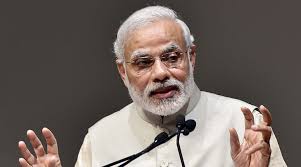
modipmSpeaking on the unrest in the valley in his monthly radio programme 'Mann Ki Baat', Modi said, "From the interactions I had with all parties on Kashmir, one thing emerged from those, which can be put in simple words as 'Ekta' and 'Mamata'. These two things were the basic mantra."

He said all the political parties had spoken in one voice on Kashmir, sending out a "message to the world as well as separatist forces" besides conveying "our sentiments to the people of Kashmir". He equated it to the passage of landmark GST Bill by Parliament for which all the parties came together.

"It is the view of all of us, the view of 125 crore people from a pradhan of a village to the Prime Minister, that if any life is lost in Kashmir, whether of any youth or any securityman, that loss is ours, our own country," Modi said.

At the same time, he slammed "those people who push small children to try to create unrest in Kashmir", saying "some day, they will have to give answers to these innocent children". The Prime Minister's remarks came a day after Jammu and Kashmir Chief MInister Mehbooba Mufti met him and presented a "three-pronged action plan" that includes dialogue with all stakeholders.

Comments

abdul
 - 
Sunday, 28 Aug 2016

Devil preaching the peace & harmony

Add new comment

  • Coastaldigest.com reserves the right to delete or block any comments.
  • Coastaldigset.com is not responsible for its readers’ comments.
  • Comments that are abusive, incendiary or irrelevant are strictly prohibited.
  • Please use a genuine email ID and provide your name to avoid reject.
Agencies
July 23,2020

Jaipur, Jul 23: Four days after the Special Operation Group (SOG) sent a notice to Union minister Gajendra Singh Shekhawat in connection with the purported audio clips indicating his alleged involvement in horse trading of MLAs in Rajasthan, a city court has directed the Rajasthan police to probe a complaint alleging Shekhawat's role in a credit society scam worth Rs 840 crore.

The additional district judge Pawan Kumar, on Tuesday, directed the additional chief judicial magistrate's court to send the complaint against Shekhawat to the SOG.

Shekhawat, his wife and other partners have been named in the complaint in the Sanjivani Credit Cooperative Society scam in which around 50,000 investors allegedly lost about Rs 840 crore.

The Jaipur unit of the SOG has been probing the scam since last year after an FIR was registered on August 23, 2019.

Now, Jaipur ADJ Court-8 ordered a fresh inquiry in the case against Gajendra Singh accepting the revised application filed by Lagu Singh and Guman Singh and said that "this is a serious matter and hence SOG should investigate this".

Both the applicants had invested a huge amount in Sanjivani credit cooperative society.

It is alleged in the complaint that a multi-storey building has been built with the money instead of a theatre which was proposed earlier and many properties were also bought in Ethiopia with the money.

An SOG investigation also reveals that a large amount of money has been deposited into accounts of Shekhawat and his wife at different time spans, said sources.

Earlier, Shekhawat was not mentioned in the chargesheet filed by the SOG in connection with the case. Later, a magistrate's court also rejected the application to include him in the chargesheet. The applicants then approached the additional district judge's court with a revised application.

Comments

Add new comment

  • Coastaldigest.com reserves the right to delete or block any comments.
  • Coastaldigset.com is not responsible for its readers’ comments.
  • Comments that are abusive, incendiary or irrelevant are strictly prohibited.
  • Please use a genuine email ID and provide your name to avoid reject.
News Network
May 24,2020

New Delhi, May 24: The Indian economy is likely to slip into recession in the third quarter of this fiscal as loss in income and jobs and cautiousness among consumers will delay recovery in consumer demand even after the pandemic, says a report.

According to Dun & Bradstreet's latest Economic Observer, the country's economic recovery will depend on the efficacy and duration of implementation of the government's stimulus package.

"The multiplier effect of the stimulus measures on the economy will depend on three key aspects i.e. the time taken for effecting the withdrawal of the lockdown, the efficacy of implementation and duration of execution of the measures announced," Dun & Bradstreet India Chief Economist Arun Singh said.

The report noted that the government's larger-than-expected stimulus package is likely to re-start economic activities.

Besides, measures taken by the Reserve Bank of India like reducing the repo rate by a further 40 basis points to 4 per cent, extending the moratorium period by three months and facilitating working capital financing will also help stimulate the momentum.

Singh said while the measures announced by the government are "positive", most of them have been directed towards strengthening the supply side of the economy, and "it is to be noted that supply needs to be matched with demand", he said.

Besides, "in the absence of cash-in-hand benefits under the government's stimulus package, demand for goods and services is expected to remain depressed", he added.

He further said the loss in income and employment opportunities, and cautiousness among consumers, will lead to a delayed recovery in consumer demand, even after the pandemic. As debt and bad loan levels increase, the banking sector might face challenges.

The report further noted that even as the monetary stimulus is expected to inject liquidity and stimulate demand for a wider section of the economy, the channelisation of funds from the financial institutions will be subjected to several constraints.

The foremost concern being increase in risk averseness, as the balance sheets of firms, households, and banks/NBFCs have weakened considerably and low demand for funds by firms as production activities have been on a standstill during the lockdown period, Singh said.

India has been under lockdown since March 25 to contain the spread of the coronavirus, resulting in supply disruptions and demand compression.

Prime Minister Narendra Modi imposed a nationwide lockdown to control the spread of coronavirus on March 25. It has been extended thrice, with some relaxations. The fourth phase of the lockdown is set to expire on May 31. 

Comments

Add new comment

  • Coastaldigest.com reserves the right to delete or block any comments.
  • Coastaldigset.com is not responsible for its readers’ comments.
  • Comments that are abusive, incendiary or irrelevant are strictly prohibited.
  • Please use a genuine email ID and provide your name to avoid reject.
Agencies
May 28,2020

Several India-based firms are spoofing the World Health Organisation (WHO) by creating fake Gmail accounts and luring business leaders in disguise of informing them of latest COVID-19 announcements and hack their personal and financial information, Google has warned.

These "hack-for-hire" firms, many based in India, have been creating Gmail accounts spoofing the WHO, largely targeting business leaders in financial services, consulting, and healthcare corporations within numerous countries including, the US, Slovenia, Canada, India, Bahrain, Cyprus, and the UK.

"The lures themselves encourage individuals to sign up for direct notifications from the WHO to stay informed of COVID-19 related announcements, and link to attacker-hosted websites that bear a strong resemblance to the official WHO website," security researchers from Google's Threat Analysis Group said on Wednesday.

The sites typically feature fake login pages that prompt potential victims to give up their Google account credentials, and occasionally encourage individuals to give up other personal information, such as their phone numbers.

On any given day, Google's Threat Analysis Group (TAG) said it is tracking more than 270 targeted or government-backed attacker groups from more than 50 countries.

Last month, it sent 1,755 warnings to users whose accounts were targets of government-backed attackers.

"Our team of analysts and security experts is focused on identifying and stopping issues like phishing campaigns, zero-day vulnerabilities and hacking against Google, our products and our users," said the tech giant.

Google continues to see attacks from groups like Charming Kitten on medical and healthcare professionals, including WHO employees.

"We're seeing a resurgence in COVID-related hacking and phishing attempts from numerous commercial and government-backed attackers," said the company.

Government-backed or state-sponsored groups have different goals in carrying out their attacks: Some are looking to collect intelligence or steal intellectual property; others are targeting dissidents or activists, or attempting to engage in coordinated influence operations and disinformation campaigns.

Google said that since March, it has removed more than 1,000 YouTube channels that were part of a large campaign and behaving in a coordinated manner.

"These channels were mostly uploading spammy, non-political content, but a small subset posted primarily Chinese-language political content similar to the findings of a recent Graphika report," said the company.

Several cybersecurity firms have seen a spike in COVID-19 related scams and hacking attempts. Hackers are also creating scam sites similar to COVID-19 relief packages.

Researchers at Check Point Software Technologies revealed in mid-May that they have seen 192,000 coronavirus-related cyber-attacks per week over the past three weeks, a 30 % increase compared to previous weeks.

Comments

Add new comment

  • Coastaldigest.com reserves the right to delete or block any comments.
  • Coastaldigset.com is not responsible for its readers’ comments.
  • Comments that are abusive, incendiary or irrelevant are strictly prohibited.
  • Please use a genuine email ID and provide your name to avoid reject.