



US allows UN denounce Israeli settlements

December 24, 2016

United Nations, Dec 24: Defying heavy pressure, the US today allowed the UN Security Council to pass a resolution demanding Israel to halt settlements in Palestinian territory as it abstained from wielding its veto in the powerful world body.
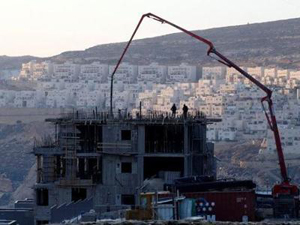
israelThe 15-nation Council adopted yesterday the resolution by a vote of 14 in favour and with one abstention from the US.

In a rare step, the United States instead abstained, enabling the adoption of the first UN resolution since 1979 to condemn Israel over its settlement policy.

The resolution had been put forward by Malaysia, New Zealand, Senegal and Venezuela.

In the resolution, the Council reiterated its demand that Israel "immediately and completely cease all settlement activities in the occupied Palestinian territory, including East Jerusalem, and that it fully respect all of its legal obligations in this regard".

As the resolution, which had more symbolic value and is unlikely to change the situation on ground between Israel and Palestine, was adopted, the Council broke into a huge round of applause as envoys of the permanent and non-permanent members lauded the decision.

The adoption of the resolution and Washington's abstention was seen as a huge rebuke to Israel, which has traditionally been a staunch US ally.

Trump had put pressure on the Obama administration to veto the UN resolution critical of Israel.

A day before the vote, Trump said in a post on social network Facebook that the resolution being considered at the UN Security Council regarding Israel should be vetoed.

"As the United States has long maintained, peace between the Israelis and the Palestinians will only come through direct negotiations between the parties, and not through the imposition of terms by the United Nations. This puts Israel in a very poor negotiating position and is extremely unfair to all Israelis," he had said.

Following the adoption of the resolution, Trump made his displeasure clear, tweeting "As to the UN, things will be different after January 20," referring to the day when he is sworn in as the next US President.

"There is one president at a time," Ben Rhodes, White House deputy national security adviser, told reporters, dismissing Trump's criticism.

US Ambassador to the UN Samantha Power, in Washington's explanation of vote on the resolution, said the vote for US was "not straightforward" because of "for as long as Israel has been a member" of the UN, Israel has been treated differently from other nations at the United Nations.

She said it is America's commitment to Israel's security that makes the United States believe it cannot stand in the way of this resolution as it seeks to preserve a chance of attaining the long-standing objective: two states living side-by-side in peace and security.

"The settlement problem has gotten so much worse that it is now putting at risk the very viability of that two-state solution. The number of settlers in the roughly 150 authorized Israeli settlements east of the 1967 lines has increased dramatically.

Yet rather than dismantling these and other settler outposts, which are illegal even under Israeli law, now there is new legislation advancing in the Israeli Knesset that would legalize most of the outposts – a factor that propelled the decision by this resolution's sponsors to bring it before the Council," she said.

Power added the US did not veto the resolution because it reflects the facts on the ground and is consistent with US policy across Republican and Democratic administration throughout the history of the State of Israel.

Outgoing UN Secretary-General Ban Ki-moon welcomed the adoption of the resolution which stated that the establishment of Israeli settlements in Palestinian territory occupied since 1967, have "no legal validity", constitute a "flagrant violation" under international law and are a "major obstacle" to a two-State solution and a just, lasting and comprehensive peace.

"The resolution is a significant step, demonstrating the Council's much needed leadership and the international community's collective efforts to reconfirm that the vision of two States is still achievable," the UN chief's spokesperson said in a statement.

"The Secretary-General takes this opportunity to encourage Israeli and Palestinian leaders to work with the international community to create a conducive environment for a return to meaningful negotiations," the spokesperson added.

Israel's Ambassador to the UN Danny Danon responded harshly to the American decision not to veto the UN Security Council resolution: "Neither the Security Council nor UNESCO can sever the tie between the people of Israel and the land of Israel".

Danon added that it was "expected" that Israel's greatest ally would act in accordance with the values that "we share and that they would have vetoed this disgraceful resolution".

"I have no doubt that the new US administration and the incoming UN Secretary General will usher in a new era in terms of the UN's relationship with Israel," he said.

Leading human rights group Human Rights Watch lauded the adoption of the resolution saying the US abstention is a welcome shift away from past practice of "using its Security Council veto to shield Israel from criticism despite longstanding US policy opposing settlements".

The Council vote "rebukes" those seeking to reverse universally accepted international law on the illegality of Israeli settlements in the West Bank.

UN Director at Human Rights Watch Louis Charbonneau said indications that Trump may change US policy on settlements "reinforces" the need for a steadfast Security Council position, adding that Malaysia, New Zealand, Senegal and Venezuela should be commended for pushing this resolution forward after Egypt "balked under political pressure before voting in favour of the final resolution".

The Council also underlined that it will not recognize any changes to the June 1967 lines, including with regard to Jerusalem, other than those agreed by the parties through negotiations.

The resolution called for immediate steps to prevent all acts of violence against civilians, including acts of terror, as well as all acts of provocation and destruction, and for accountability in that regard, as well as for both parties to act on the basis of international law, including international humanitarian law, and previous agreements and obligations, "to observe calm and restraint, and to refrain from provocative actions, incitement and inflammatory rhetoric".

Comments

shaji
 - 
Sunday, 25 Dec 2016

UN should also levy penalty on israel and make them pay for allt he losses they did to palestinians since 1967. Israel should withdraw from all the ocupied land.

shaji
 - 
Sunday, 25 Dec 2016

UN should pass a bill to curb and halt terorists state of Israel from occupying palestine land and withdraw immedaitely. As there is no chance that terror israel state will give any attention to US Resolution, i reqeust UN to pass on a resolution to isolate Israel and ban all flight servicdes to and from this terror state. However, even if this terrorits state do not honour UN resolution, UN should give freedom to Nato forces to attack israel. Isolation will definately work. Let this terrorist state suffer. Any country supporting Israel should also be given warning.

Add new comment

  • Coastaldigest.com reserves the right to delete or block any comments.
  • Coastaldigset.com is not responsible for its readers’ comments.
  • Comments that are abusive, incendiary or irrelevant are strictly prohibited.
  • Please use a genuine email ID and provide your name to avoid reject.
Agencies
August 3,2020

Manila, Aug 2: The number of COVID-19 cases in the Philippines has exceeded the 100,000 marks with a record 5,032 new infections registered on Sunday, the Health Ministry's data showed.

With the total cases now reaching 103,185, the spread of COVID-19 in the Southeast Asian nation is steeply rising. The daily growth rate just this Thursday set a record at over 3,800 cases, the next day there were nearly 4,000 new infections detected and on Saturday, over 4,800 cases were detected.

More than 65,000 people have recovered from the ailment, while 2,059 people have died.

The Philippines' epidemiological dynamic mirrors that of many Southeast Asian nations, where COVID-19 infections have only recently begun to climb. 

Most other nations in Europe and the Americas experienced an initial spread of the virus which later tailed off only to begin climbing again after easing of restrictions.

Comments

Add new comment

  • Coastaldigest.com reserves the right to delete or block any comments.
  • Coastaldigset.com is not responsible for its readers’ comments.
  • Comments that are abusive, incendiary or irrelevant are strictly prohibited.
  • Please use a genuine email ID and provide your name to avoid reject.
News Network
February 3,2020

Beijing, Feb 3: The first batch of patients arrived on Monday at a specialised hospital built in just 10 days as part of China's intensive efforts to fight a new virus.

Huoshenshan Hospital and a second facility with 1,500 beds that's due to open this week were built by construction crews who are working around the clock in Wuhan, the city in central China where the outbreak was first detected in December.

The Wuhan treatment centres mark the second time Chinese leaders have responded to a new disease by building specialised hospitals almost overnight. As severe acute respiratory syndrome, or SARS, spread in 2003, a facility in Beijing for patients with that viral disease was constructed in a week.

The first batch of patients arrived at the Huoshenshan Hospital at 10 am on Monday, according to state media. The reports gave no details of the patients' identities or conditions.

The ruling Communist Party's military wing, the People's Liberation Army, sent 1,400 doctors, nurses and other personnel to staff the Wuhan hospital, the official Xinhua News Agency said. The government said earlier some have experience fighting SARS and other outbreaks.

Authorities have cut most road, rail and air access to Wuhan and surrounding cities, isolating some 50 million people, in efforts to contain the viral outbreak that has sickened more than 17,000 and killed more than 360 people.

The Huoshenshan Hospital was built by a 7,000-member crew of carpenters, plumbers, electricians and other specialists, according to the Xinhua News Agency.               Photos in state media showed workers in winter clothing, safety helmets and the surgical-style masks worn by millions of Chinese in an attempt to avoid contracting the virus.

About half of the two-storey, 600,000-square-foot building is isolation wards, according to the government newspaper Yangtze Daily. It has 30 intensive care units.

Doctors can talk with outside experts over a video system that links them to Beijing's PLA General Hospital, according to the Yangtze Daily. It said the system was installed in less than 12 hours by a 20-member "commando team" from Wuhan Telecom Ltd.

The building has specialised ventilation systems and double-sided cabinets that connect patient rooms to hallways and allow hospital staff to deliver supplies without entering the rooms.

The hospital received a donation of "medical robots" from a Chinese company for use in delivering medicines and carrying test samples, according to the Shanghai newspaper The Paper.

In other cities, the government has designated hospitals to handle cases of the new virus.

In Beijing, the Xiaotangshan Hospital built in 2003 for SARS is being renovated by construction workers. The government has yet to say whether it might be used for patients with the new disease.

Comments

Add new comment

  • Coastaldigest.com reserves the right to delete or block any comments.
  • Coastaldigset.com is not responsible for its readers’ comments.
  • Comments that are abusive, incendiary or irrelevant are strictly prohibited.
  • Please use a genuine email ID and provide your name to avoid reject.
Agencies
March 31,2020

Months after the outbreak of COVID-19 in Wuhan city of central China, families of those deceased, who contracted the contagious infection, stood in long queues at funeral homes demanding to receive the cremated ashes of their loved ones.

Now this has spurred questions about the actual tally of COVID-19 related casualties in Wuhan, in a renewed pressure on the Chinese government that is already struggling to control its containment narrative of the pandemic spread.

Chinese media outlet Caixin showed how trucks carrying 2,500 urns with the ashes of the deceased COVID-19 cases were being shipped in a funeral home last week. Another picture published revealed how 3,500 urns were stacked within these funeral homes. It is therefore unclear how many urns have been filled in.

According to media reports, workers at several funeral parlors declined to provide any details as to how many urns were waiting to be collected, saying they either did not know or were not authorised to share the number.

Some families said they had been forced to wait for several hours to pick up the ashes. The photos circulated as mass deaths from the virus spiked in cities across the west, including Milan, Madrid and New York, where hospitals were erecting tents to handle the overflow as global infections soar past 500,000, with 24,000 dead.

According to Chinese government figures, 2,535 people in Wuhan have died of the virus. The announcement that a lockdown in place since January would be lifted came after the country said its tally of new cases had hit zero and stepped up diplomatic outreach to other countries hard hit by the virus, sending some of them medical supplies.

But some in China have been skeptical of the accuracy of the official tally, particularly given Wuhan's overwhelmed medical system, authorities' attempts to cover up the outbreak in its initial stages, and multiple revisions to the way official cases are counted.

Residents on social media have demanded disciplinary action against top Wuhan officials.

Many people who died had Covid-19 symptoms, but weren't tested and excluded from the official case tally, Caixin said. There were also patients who died of other diseases due to a lack of proper treatment when hospitals were overwhelmed dealing with those who had the coronavirus.

There were 56,007 cremations in Wuhan in the fourth quarter of 2019, according to data from the city's civil affairs agency. The number of cremations was 1,583 higher than those in the fourth quarter of 2018 and 2,231 higher than the fourth quarter of 2017.

Two locals in Wuhan who have lost family members to the virus said online that they were informed they had to be accompanied by their employers or officials from neighborhood committees when picking up the urns, likely as a measure against public gatherings.

COVID-19 is affecting 199 countries and territories around the world. Over 664,000 coronavirus cases have been registered globally out of which 30,890 have succumbed to the infection.

Comments

Add new comment

  • Coastaldigest.com reserves the right to delete or block any comments.
  • Coastaldigset.com is not responsible for its readers’ comments.
  • Comments that are abusive, incendiary or irrelevant are strictly prohibited.
  • Please use a genuine email ID and provide your name to avoid reject.