


US to begin process to move embassy to Jerusalem: Tillerson

Agencies
December 7, 2017

Washington, Dec 7: The US will immediately begin the process to move its embassy from Tel Aviv to Jerusalem, Secretary of State Rex Tillerson has said, hours after President Donald Trump recognised the holy city as Israel's capital.

In a major announcement, Trump recognised Jerusalem as Israel's capital yesterday despite warnings from the Arab leaders, reversing decades of US and international policy on the holy city.

"The State Department will immediately begin the process to implement this decision by starting the preparations to move the US Embassy from Tel Aviv to Jerusalem," Tillerson said.

The President Trump's decision to recognise Jerusalem as Israel's capital aligns the US presence with the reality that Jerusalem is home to Israel's legislature, Supreme Court, president's office, and prime minister's office, Tillerson said in a statement.

"We have consulted with many friends, partners, and allies in advance of the President making his decision. We firmly believe there is an opportunity for a lasting peace," he said.

Tillerson said the the safety of Americans was the State Department's highest priority, and with other federal agencies, it has implemented robust security plans to protect its citizens in affected regions.

In his landmark announcement, Trump said consistent with the Jerusalem Embassy Act, he was directing the State Department to begin preparation to move the American Embassy from Tel Aviv to Jerusalem.

"This will immediately begin the process of hiring architects, engineers and planners, so that a new embassy, when completed, will be a magnificent tribute to peace," he said.

The controversial decision received mixed reactions.

"I have long believed that Jerusalem is the true capital of Israel. However, issues surrounding the final and permanent status of Jerusalem must ultimately be resolved by Israelis and Palestinians as part of an internationally supported peace process," Senator John McCain said.

"That is why today's policy announcement, as well as any future relocation of the US Embassy in Israel from Tel Aviv to Jerusalem, should be part of a comprehensive diplomatic strategy in coordination with regional partners to achieve peace and security between Israelis and Palestinians," he said.

Democratic Senator Tim Kaine, member of the Senate Foreign Relations Committee, said the reaction from across the world is "troubling", including from important allies of Israel, and asserted that the announcement could have "destabilising consequences" for a region already rife with tensions.

"I am worried about the impact of this decision on the safety of US personnel overseas and have raised my concerns with the State Department to ensure sufficient security measures are in place at all US embassies and consulates," he said.

Another Democratic leader Nancy Pelosi rued that in the absence of a negotiated settlement between Israel and the Palestinians, moving the US embassy to Jerusalem now may "needlessly spark mass protests, fuel tensions, and make it more difficult to reach a durable peace".

Senator Marco Rubio said, "Today's announcement is an important step in the right direction. Unequivocal recognition of Jerusalem as Israel's capital will be complete when the US embassy is officially relocated there".

Following the Trump's decision, many Arab leaders warned that it could trigger an upheaval in the already volatile Middle East.

Comments

M Parson
 - 
Friday, 8 Dec 2017

This is outmost blunder by USA & Israel. Palestinian gave Israel people to live on their land. Today they acquired the place & now they say its their. Trump will never have natural death. Its known fact that USA admin call Israeli as their father before they any decision. One day inn sha Allah these Israel people will be paid for the things which they have done to Palestinian people. USA being such big country is afraid of Israel. Hum kisi se kum nahii Hamare Dash mein dum nahii

Add new comment

  • Coastaldigest.com reserves the right to delete or block any comments.
  • Coastaldigset.com is not responsible for its readers’ comments.
  • Comments that are abusive, incendiary or irrelevant are strictly prohibited.
  • Please use a genuine email ID and provide your name to avoid reject.
News Network
June 5,2020

Karachi, Jun 5: Pakistan's coronavirus cases rose to 89,249 on Friday after a record 4,896 new infections were detected in the country, while the death toll due to COVID-19 has reached 1,838, according to the health ministry.

The Ministry of National Health Service said that 68 patients died in the last 24 hours, taking the death toll to 1,838, whereas another 31,198 people have recovered.

It was the third consecutive day when a record number of cases were reported in Pakistan after the Eid holidays and easing of lockdown restrictions at the end of May.

Sindh province reported 33,536 infections, Punjab 33,144, Khyber-Pakhtunkhwa 11,890, Balochistan 5,582, Islamabad 3,946, Gilgit-Baltistan 852 and Pakistan-occupied Kashmir 299.

The authorities have conducted 638,323 tests, including a record 22,812 tests in the last 24 hours, the ministry said.

Despite the spike in number of COVID-19 cases, both houses of parliament are scheduled to meet separately on Friday. The Senate session started this morning while the National Assembly will be held in the afternoon, Radio Pakistan reported.

Chairman Senate Sadiq Sanjrani and Speaker National Assembly Asad Qaiser at a meeting at the parliament house in Islamabad reviewed arrangements made for the two sessions.

Fumigation was also carried out in the parliament house for the safety of the lawmakers and staff.

Earlier, the Opposition rejected the idea of virtual meetings and insisted that the sessions be held in person, noting that it was an important session of parliament because the budget is expected to be presented in the National Assembly in the next week.

The novel coronavirus which first originated from China's Wuhan city in December last year has claimed 391,249 lives and has infected over 6 million people globally, according to Johns Hopkins University data.

Comments

Add new comment

  • Coastaldigest.com reserves the right to delete or block any comments.
  • Coastaldigset.com is not responsible for its readers’ comments.
  • Comments that are abusive, incendiary or irrelevant are strictly prohibited.
  • Please use a genuine email ID and provide your name to avoid reject.
Agencies
July 1,2020

The ILO has warned that if another Covid-19 wave hits in the second half of 2020, there would be global working-hour loss of 11.9 percent - equivalent to the loss of 340 million full-time jobs.

According to the 5th edition of International Labour Organisation (ILO) Monitor: Covid-19 and the world of work, the recovery in the global labour market for the rest of the year will be uncertain and incomplete.

The report said that there was a 14 percent drop in global working hours during the second quarter of 2020, equivalent to the loss of 400 million full-time jobs.

The number of working hours lost across the world in the first half of 2020 was significantly worse than previously estimated. The highly uncertain recovery in the second half of the year will not be enough to go back to pre-pandemic levels even in the best scenario, the agency warned.

The baseline model – which assumes a rebound in economic activity in line with existing forecasts, the lifting of workplace restrictions and a recovery in consumption and investment – projects a decrease in working hours of 4.9 percent (equivalent to 140 million full-time jobs) compared to last quarter of 2019.

It says that in the pessimistic scenario, the situation in the second half of 2020 would remain almost as challenging as in the second quarter.

“Even if one assumes better-tailored policy responses – thanks to the lessons learned throughout the first half of the year – there would still be a global working-hour loss of 11.9 per cent at the end of 2020, or 340 million full-time jobs, relative to the fourth quarter of 2019,” it said.

The pessimistic scenario assumes a second pandemic wave and the return of restrictions that would significantly slow recovery. The optimistic scenario assumes that workers’ activities resume quickly, significantly boosting aggregate demand and job creation. With this exceptionally fast recovery, the global loss of working hours would fall to 1.2 per cent (34 million full-time jobs).

The agency said that under the three possible scenarios for recovery in the next six months, “none” sees the global job situation in better shape than it was before lockdown measures began.

“This is why we talk of an uncertain but incomplete recovery even in the best of scenarios for the second half of this year. So there is not going to be a simple or quick recovery,” ILO Director-General Guy Ryder said.

The new figures reflect the worsening situation in many regions over the past weeks, especially in developing economies. Regionally, working time losses for the second quarter were: Americas (18.3 percent), Europe and Central Asia (13.9 percent), Asia and the Pacific (13.5 percent), Arab States (13.2 percent), and Africa (12.1 percent).

The vast majority of the world’s workers (93 per cent) continue to live in countries with some sort of workplace closures, with the Americas experiencing the greatest restrictions.

During the first quarter of the year, an estimated 5.4 percent of global working hours (equivalent to 155 million full-time jobs) were lost relative to the fourth quarter of 2019. Working- hour losses for the second quarter of 2020 relative to the last quarter of 2019 are estimated to reach 14 per cent worldwide (equivalent to 400 million full-time jobs), with the largest reduction (18.3 per cent) occurring in the Americas.

The ILO Monitor also found that women workers have been disproportionately affected by the pandemic, creating a risk that some of the modest progress on gender equality made in recent decades will be lost, and that work-related gender inequality will be exacerbated.

The severe impact of Covid-19 on women workers relates to their over-representation in some of the economic sectors worst affected by the crisis, such as accommodation, food, sales and manufacturing.

Globally, almost 510 million or 40 percent of all employed women work in the four most affected sectors, compared to 36.6 percent of men, it said.

The report said that women also dominate in the domestic work and health and social care work sectors, where they are at greater risk of losing their income and of infection and transmission and are also less likely to have social protection.

The pre-pandemic unequal distribution of unpaid care work has also worsened during the crisis, exacerbated by the closure of schools and care services.

Even as countries have adopted policy measures with unprecedented speed and scope, the ILO Monitor highlights some key challenges ahead, including finding the right balance and sequencing of health, economic and social and policy interventions to produce optimal sustainable labour market outcomes; implementing and sustaining policy interventions at the necessary scale when resources are likely to be increasingly constrained and protecting and promoting the conditions of vulnerable, disadvantaged and hard-hit groups to make labour markets fairer and more equitable.

“The decisions we adopt now will echo in the years to come and beyond 2030. Although countries are at different stages of the pandemic and a lot has been done, we need to redouble our efforts if we want to come out of this crisis in a better shape than when it started,” Ryder said. 

Comments

Add new comment

  • Coastaldigest.com reserves the right to delete or block any comments.
  • Coastaldigset.com is not responsible for its readers’ comments.
  • Comments that are abusive, incendiary or irrelevant are strictly prohibited.
  • Please use a genuine email ID and provide your name to avoid reject.
Agencies
July 30,2020

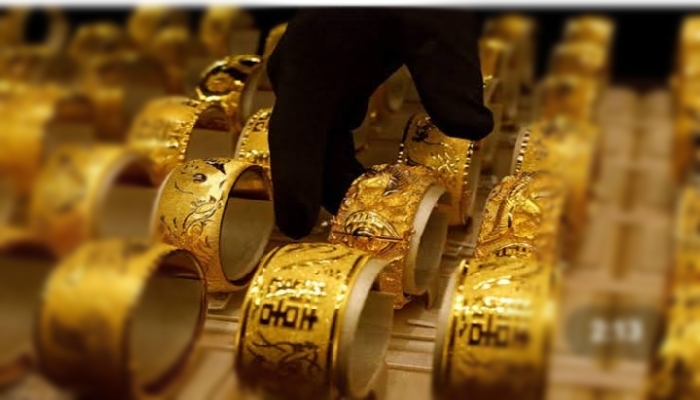
New Delhi, Jul 30: India's gold demand in 2020 is expected to fall to the lowest level in 26 years with domestic bullion prices hitting a record high and as falling disposable incomes could curtail retail purchases, the World Gold Council (WGC) said on Thursday.

Lower demand by the world's second-biggest bullion consumer could limit a rally in global prices, which hit a record high earlier this month, although it could also reduce India's trade deficit and support the ailing rupee.

"Fast rising gold prices could act as headwinds," said Somasundaram PR, the managing director of WGC's Indian operations.

Local gold futures have jumped 35% so far this year after rising a quarter in 2019.

India's gold consumption in the first half of 2020 plunged 56% on-year to 165.6 tonnes. Meanwhile, the coronavirus-triggered lockdown also slashed demand by 70% in the June quarter to 63.7 tonnes, the lowest in more than a decade, the WGC said in a report published on Thursday.

Millions of Indians have lost their jobs or taken a pay cut after the country imposed a lockdown on its 1.3 billion people to curb the spread of the virus that has infected more than 1.5 million Indians.

Consumption is generally high during the June quarter due to weddings and key festivals such as Akshaya Tritiya, but lockdown restrictions kept shoppers indoors this year.

The weak demand in the first half could drag down India's gold consumption in 2020 to the lowest since 1994, when demand stood at 415 tonnes, Somasundaram said, adding that it is still difficult to provide an estimate for full-year demand as the coronavirus crisis is still unfolding.

"Indian demand has previously jumped as much as 300 tonnes in a quarter. Latent demand could come out in the second half," Somasundaram said.

Comments

Add new comment

  • Coastaldigest.com reserves the right to delete or block any comments.
  • Coastaldigset.com is not responsible for its readers’ comments.
  • Comments that are abusive, incendiary or irrelevant are strictly prohibited.
  • Please use a genuine email ID and provide your name to avoid reject.