


UTK writes to Modi criticizing BJP MP’s attempt to endorse tobacco use in India

[email protected] (CD Network)
April 2, 2015

Mangaluru, Apr 2: Karnataka Health and Family Welfare Minister U T Khader has written to Prime Minister Narendra Modi expressing concern over BJP MP Dilip Gandhi’s insensitive remarks that that there’s not enough Indian data to link tobacco to cancer.
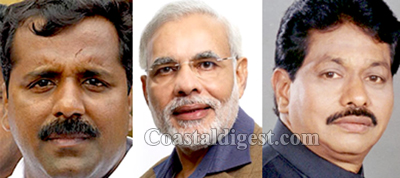
ut modi gandhiIn a letter sent to the Prime Minister, Mr Khader expressed shock over the recommendation put forward by Dilip Gandhi to reexamine the health effects of tobacco on an Indian population in concern with pictorial warnings implementation.

Dilip Gandhi, who head’s Parliamentary panel on subordinate legislation examining the provisions of Cigarettes and Other Tobacco Products Act, 2003 which had sought deferment of the move, earlier stated that there was no Indian study to confirm that use of tobacco products leads to cancer.

“If this report is true, it is disappointing as the health hazards of tobacco are well established worldwide over the decades. The carcinogenic chemicals in tobacco are the same worldwide and do not differ between countries in nature to harm human life. The same is proven well by the International agency for research on cancer- a wing of W.H.O,” said Mr Khader.

It is shocking that a senior MP is so poorly informed about the facts pertaining to harmful effects of tobacco. It also clearly shows the influence of the tobacco industry on the policy maker in a bid to distort science and influence policy. Tobacco is attributable cause for almost 40 % of cancers in India and majority of lung or heart diseases. It is appalling that Dilip Gandhi is challenging the recommendations of W.H.O, United Nations, UICC, CDC, NCI etc with regards to health effects of tobacco. In December 2010, Supreme Court had directed Ministry of Health to constitute an expert committee to study the harmful effects of tobacco. The committee submitted a damming report proving beyond doubt that tobacco is indeed very harmful, said Mr Khader in his letter.

Mr Khader further said: “This poor and unscientific approach by a policy maker can only make way for Acche Din to the tobacco industry, which contributes to highest deaths from NCD in our country. I strongly urge you to take cognizance of the issue and show your commitment for a Swasth Bharat by intervening in this policy measure that has potential to save lives.”

Comments

Add new comment

  • Coastaldigest.com reserves the right to delete or block any comments.
  • Coastaldigset.com is not responsible for its readers’ comments.
  • Comments that are abusive, incendiary or irrelevant are strictly prohibited.
  • Please use a genuine email ID and provide your name to avoid reject.
News Network
June 26,2020

Bengaluru, Jun 26: The National Restaurant Association of India (NRAI) on Thursday came up with a Standard Operating Procedure (SOP) for restaurants whereby among other physical distancing norms, it has suggested a 2-metre gap between tables.

Formulated in partnership with Releski, a Bengaluru based skill-tech company, the SoP suggests that in case of back-to-back seating, people sitting with their backs towards each other will have their seats divided by 'Plexiglass' divider raised up to 2 meters from the ground.

"In a typical restaurant, the improvised seating plan should have a minimum distance of 2 metres between tables. The distance of 2 metres (6 feet) between tables should measure from one edge of the table to the other table's edge," it said.

In case of loose or free seating such as in banquet style or food court style seating, a minimum 2 meters of distance should be maintained between tables.

The guidelines noted that, to encourage physical distancing, restaurants have to sacrifice their seating capacity, to promote health and safety, and also to gain trust from their patrons.

"In order to perform this, divide your restaurants under different sectors. Pull out your restaurant's floor plan and colour code different sections red and yellow. Red sections are potential areas where maximum footfall or traffic is observed. Yellow sections are areas where the footfalls are average," it said.

All the red sections are encircled or bordered by placing barricades or Q manager and will open at specific points to access the yellow section and all the opening points will have hand sanitisers and sprays, and every guest who walks from red zones to yellow zones will sanitise himself/herself to reduce the chances of contamination.

For air conditioning, the guidelines of CPWD shall be followed which inter alia emphasises that the temperature setting of all air conditioning devices should be in the range of 24-30 degree Celsius, relative humidity should be in the range of 40- 65 per cent, intake of fresh air should be as much as possible and cross ventilation should be adequate, the guidelines suggested.

The industry body has also suggested appointment of a COVID-free Ambassador who would operate as the Chief Health Officer within the restaurant team, preferably from the management team in each shift.

The ambassador's would put the new daily work routines into practice, to monitor compliance with good practice and to lead the preventative measures, adapt to health & safety recommendations and requirements of the restaurant and oversee the implementation of the norms.

Anurag Katriar, President of NRAI and CEO & Executive Director of deGustibus Hospitality, said: "Every restaurant cutting across formats is facing the harsh reality of subdued to shut business volumes in the present and the uncertainty of business environment in the future. One thing is certain that hygiene and safety will be a key differentiator in the post-pandemic restaurant operations."

Comments

Add new comment

  • Coastaldigest.com reserves the right to delete or block any comments.
  • Coastaldigset.com is not responsible for its readers’ comments.
  • Comments that are abusive, incendiary or irrelevant are strictly prohibited.
  • Please use a genuine email ID and provide your name to avoid reject.
News Network
June 7,2020

Bengaluru, Jun 7: An eminent scientist on Sunday suggested a shift system in schools to prevent spread of the coronavirus and continuing with online classes with focus on project-based learning in a big way to promote creativity.

Former Director General of the Defence Research and Development Organisation (DRDO) V K Saraswat supported the idea of online teaching in the absence of regular classes in view of closure of schools due to the COVID-19 pandemic.

But, he said it should be organised in far better and more interactive ways so that delivery of knowledge can be better. The NITI Aayog member stressed the need for schools to have a strategy when they reopen keeping in mind the safety of students.

May be they will have to organise shifts so that within the same space they can handle the students; May be they will have to employ more teachers, and they can run two shifts. "May be half the strength in a class can come in the morning and others in the afternoon.

Or students of first to sixth standard can come in the morning and seventh to tenth can come in the afternoon, Saraswat told PTI. Reopening strategy will have to be worked out by the education department, added the former Chief Scientific Advisor to the Defence Minister.

Along with normal classes, online education should be continued as a regular system in future, and promoted in a big way because that is the way technology is going to help delivery of knowledge, he added. Saraswat also raised the pitch for reforms in the education sector, saying India is facing the problem of rote learning.

Rote learning has to give way for more project-based teaching, he underlined. Children should be made to work on projects at home and that can be done online. That will also support the changeover from rote learning to creative learning.

I personally believe the education delivery system -- primary, secondary and college levels -- has to be completely changed because creativity in India is less and creativity would come only if we replace rote learning with project-based learning, Saraswat said.

On some academics holding the view that the marks-based model is killing the education system in India as it does not promote creativity, he said evaluation of any outcome is important. Even when we perform in our normal way, evaluation cannot be replaced.

Otherwise, you cant find out how much you have succeeded in delivery. Certainly evaluation cannot be dispensed with. He did not agree with some experts, who favoured a single, uniform system for school education in India by dispensing with CBSE, ICSE and state boards. I am not for normalising everything in life.

I personally believe variety should be there. This concept of one kind of a system is okay for a Communist society, society which was trying to drive everybody like a herd, he said.

Creativity comes with variety, and there is nothing wrong in having different kinds of education system, but one thing which is important is we have to integrate vocational training as part of the education curriculum," Saraswat said. Vocational part cannot be kept away from the education system, he added.

Comments

Add new comment

  • Coastaldigest.com reserves the right to delete or block any comments.
  • Coastaldigset.com is not responsible for its readers’ comments.
  • Comments that are abusive, incendiary or irrelevant are strictly prohibited.
  • Please use a genuine email ID and provide your name to avoid reject.
News Network
March 7,2020

Bengaluru, Mar 7: As a precautionary measure to control the spread of coronavirus in Karnataka, the state government has planned to suspend biometric attendance for the time-being at its offices, also in corporate and IT companies, Medical Education Minister Dr K Sudhakar said on Saturday.

He said the government has taken all precautionary measures to control the spread of the virus in the state.

"Our Additional Chief Secretary has already spoken to IT companies yesterday on behalf of the government regarding guidelines that need to be followed, it is part of it...we will do it in the government also in the days to come," Sudhakar told reporters here.

He was responding to a question about suspending biometric attendance at offices in the wake of the coronavirus outbreak.

Asked about suspending biometric attendanceat government offices, he said, "we have planned to do it yesterday."

Sudhakar said so far in Karnataka not even one case has been identified, to that extent we have been taking precautionary measures effectively.

He said from villages to state capital Bengaluru at all levels the health department officials have been activated as part of the precautionary measures.

Also, committees headed by Deputy Commissioners have been formed in all district, he added.

"We have given certain guidelines to people. We have also included private hospitals. We have taken all precautionary measures to stop the virus from entering the state," he added.

In response to a question regarding masks, the Minister clarified that those who have the symptoms of the disease only should use them.

He said, "N95 masks are required only for those who have tested positive, there is not even a single positive case in the state so far...surgical masks that will have three layers can be used by those who have symptoms like cough, cold, fever."

In the state as a precautionary measure 2,500 beds have been kept ready if the situation arises, despite not having a single case.

Comments

Add new comment

  • Coastaldigest.com reserves the right to delete or block any comments.
  • Coastaldigset.com is not responsible for its readers’ comments.
  • Comments that are abusive, incendiary or irrelevant are strictly prohibited.
  • Please use a genuine email ID and provide your name to avoid reject.