


UTK writes to Modi criticizing BJP MP’s attempt to endorse tobacco use in India

[email protected] (CD Network)
April 2, 2015

Mangaluru, Apr 2: Karnataka Health and Family Welfare Minister U T Khader has written to Prime Minister Narendra Modi expressing concern over BJP MP Dilip Gandhi’s insensitive remarks that that there’s not enough Indian data to link tobacco to cancer.
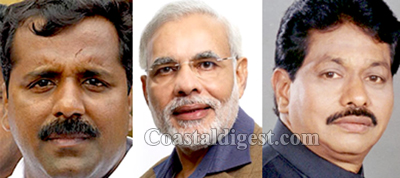
ut modi gandhiIn a letter sent to the Prime Minister, Mr Khader expressed shock over the recommendation put forward by Dilip Gandhi to reexamine the health effects of tobacco on an Indian population in concern with pictorial warnings implementation.

Dilip Gandhi, who head’s Parliamentary panel on subordinate legislation examining the provisions of Cigarettes and Other Tobacco Products Act, 2003 which had sought deferment of the move, earlier stated that there was no Indian study to confirm that use of tobacco products leads to cancer.

“If this report is true, it is disappointing as the health hazards of tobacco are well established worldwide over the decades. The carcinogenic chemicals in tobacco are the same worldwide and do not differ between countries in nature to harm human life. The same is proven well by the International agency for research on cancer- a wing of W.H.O,” said Mr Khader.

It is shocking that a senior MP is so poorly informed about the facts pertaining to harmful effects of tobacco. It also clearly shows the influence of the tobacco industry on the policy maker in a bid to distort science and influence policy. Tobacco is attributable cause for almost 40 % of cancers in India and majority of lung or heart diseases. It is appalling that Dilip Gandhi is challenging the recommendations of W.H.O, United Nations, UICC, CDC, NCI etc with regards to health effects of tobacco. In December 2010, Supreme Court had directed Ministry of Health to constitute an expert committee to study the harmful effects of tobacco. The committee submitted a damming report proving beyond doubt that tobacco is indeed very harmful, said Mr Khader in his letter.

Mr Khader further said: “This poor and unscientific approach by a policy maker can only make way for Acche Din to the tobacco industry, which contributes to highest deaths from NCD in our country. I strongly urge you to take cognizance of the issue and show your commitment for a Swasth Bharat by intervening in this policy measure that has potential to save lives.”

Comments

Add new comment

  • Coastaldigest.com reserves the right to delete or block any comments.
  • Coastaldigset.com is not responsible for its readers’ comments.
  • Comments that are abusive, incendiary or irrelevant are strictly prohibited.
  • Please use a genuine email ID and provide your name to avoid reject.
News Network
May 19,2020

Bengaluru, May 19: Containment zones in Karnataka will be much smaller in size under the latest lockdown norms. However, rules and loopholes will be tightened and action against violators will be stringent in order to check the spread of the disease.

Revised guidelines issued by the Centre to the state, reveal containment zones are delineated based on mapping of cases and contacts. Intensive action will be carried out in these areas with the aim of breaking the chain of transmission. Therefore, the area of a containment zone should be appropriately defined by the district administration/local urban bodies with technical inputs at local level.

The health department is considering shrinking the size of containment zones from the existing 100 metres to open up more space for economic activities. Medical education minister K Sudhakar, also a member of the Covid taskforce, said additional chief secretary (health department) Javed Akthar will issue a new definition of a containment zone after the Covid-19 taskforce holds its next meeting.

“We are planning to further shrink it and restrict containment zones to an apartment complex, independent house or even a lane where the Covid-19 patient resides,” Sudhakar said. He went on to say bigger containment zones will impede businesses and normal activities in the vicinity, something which the government wants to avoid.

The minister said Karnataka will also do away with colour-coding districts. “With restrictions being relaxed for almost all activities, it does not make sense to pursue with colour codes. It is either containment zone or outside containment zone,” he said.

In rural areas, the minister said containment zones will be identified by the taluk heads. Government sources say it is difficult to restrict activities to certain areas or smaller location in rural areas as farmers and people will have to travel to the outskirts of their villages for their livelihood.

An official said, a containment operation (large outbreak or cluster) is deemed successful when no case is reported in 28 days from the containment zone.

Comments

Add new comment

  • Coastaldigest.com reserves the right to delete or block any comments.
  • Coastaldigset.com is not responsible for its readers’ comments.
  • Comments that are abusive, incendiary or irrelevant are strictly prohibited.
  • Please use a genuine email ID and provide your name to avoid reject.
News Network
March 27,2020

Bengaluru, Mar 27: A 65-year-old coronavirus patient who died in Karnataka this morning after apparently contracting the infection on a train ride has raised concern about community transmission of the highly contagious disease.
The man, the 60th coronavirus patient in Karnataka, died in Tumakuru. It is not known for certain how he caught the virus. The Karnataka Health Department has posted a notice on Twitter asking whoever travelled with him on train to come forward.

He had no history of recent foreign travel but had apparently traveled to Delhi on March 5 by Sampark Kranti Express and returned on March 11.

On March 7, he arrived at Delhi's Nizamuddin station and participated in an event at Jamia Masjid.

The man took a train back on March 11 and arrived at Yeshwantpur in Bengaluru. From there, he took a bus on March 14 to his hometown Sira.

He first showed symptoms of COVID-19 on March 18 and was taken to a private hospital. He was sent home with medicines but his condition worsened.

On March 23, he was admitted to a district hospital, but checked himself out against all advice and went to a private hospital. When his health showed signs of deterioration, he was again sent to the district hospital, where he tested positive for coronavirus yesterday. He died around 10.30 am today.

The health department has since traced 24 people who came in direct contact with him and are so, in the high-risk category. Thirteen are in hospital and eight have tested negative.

"All passengers who had travelled with him on the train are being traced," K Rakesh Kumar, Deputy Commissioner, Tumakuru, was quoted as telling news agency ANI.

A 70-year old woman and a 76-year old man had died of coronavirus or COVID-19 earlier in Karnataka.

India has over 700 coronavirus cases, including 17 deaths.

Comments

Add new comment

  • Coastaldigest.com reserves the right to delete or block any comments.
  • Coastaldigset.com is not responsible for its readers’ comments.
  • Comments that are abusive, incendiary or irrelevant are strictly prohibited.
  • Please use a genuine email ID and provide your name to avoid reject.
coastaldigest.com news network
July 18,2020

Udupi, Jul 18: Noted multi-lingual scholar Dr Uliyar Padmanabha Upadhyaya passed away last night at a private hospital in Manipal. The 88-year-old was survived by a son and a daughter.

His wife Susheela Uadhyaya, who was also a multi-lingual scholar, had passed away in January 2014 at the age of 77. The duo had compiled the six-volume Tulu Lexicon. Its first volume was published in 1988 and the last volume in 1997.

Son of Sitaram Upadhyaya, who was a scholar in the court of the Raja of Travancore, Dr Padmanabha was born on April 10, 1932 at Uliyar in Majur Village near Kaup in Udupi district. 

The Upadhyaya couple had conducted serious research work in linguistics and folk culture and produced a number of books-some of them jointly, some individually and some in collaboration with others. 

Dr Padmanabha had acquired three Master of Arts degrees in Sanskrit, Kannada and Linguistics from Madras, Kerala and Pune Universities, Vidwan in Hindi and PhD in Linguistics from the Pune University for his thesis titled “A Comparative Study of Kannada Dialects”.

He was a visiting Professor at the Universities of London and Paris. He knew Hindi, Kannada, Tulu, Malayalam, Tamil, English, French and Olof, the language of Senegal in Africa.

His works include Nanjanagudu Kannada (Vokkaliga Dialect), Coorg Kannada, Kuruba - A Dravidian Language, Kannada - A Phonetic Language, Malayalam Language and Literature (with Ms. Susheela), Effect of Bilingualism on Bidar Kannada, Coimbatore Tamil, Kannada as Spoken by Different Population Groups in Mysore City, Dravidian and Negro African: Ethno Linguistic Study (with Ms. Susheela), Conversational Kannada, Coastal Karnataka and Bhuta Worship: Aspects of a Ritualistic Theatre (with Ms. Susheela).

Also Read: Eminent linguist Dr Susheela P Upadhyaya no more

Comments

Add new comment

  • Coastaldigest.com reserves the right to delete or block any comments.
  • Coastaldigset.com is not responsible for its readers’ comments.
  • Comments that are abusive, incendiary or irrelevant are strictly prohibited.
  • Please use a genuine email ID and provide your name to avoid reject.