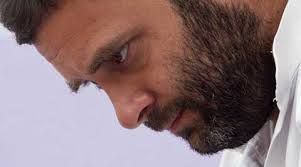
Veiled attack on Team Rahul by section of Cong leaders

May 22, 2014

New Delhi, May 22: In a veiled attack on 'Team Rahul' over Congress' poll debacle, a section of party leaders today said only those having experience of field work should be given "leadership posts" and wanted a "ruthless introspection" to help it bounce back.RaGa

Congress leader Milind Deora, who had yesterday said that Rahul Gandhi's advisers did not have their "ears to the ground" and those with "no electoral experience" were "calling the shots", today stuck to his stand, saying his comments are borne out of deep loyalty to the party and pain due to its performance in the polls.

"My comments are out of emotions of deep loyalty to the party, pain of our performance & a sincere desire to see us bounce back. Nothing more," Deora said on Twitter.

In comments that stoked a blame game within the party and appearing to question 'Team Rahul', he said, "Field party work & electoral battles are key to comprehend ground realities. This should form the basis for leadership posts in Congress."

Senior party leader Satyavrat Chaturvedi appeared to be in agreement with the views expressed by Deora and hoped that an "honest and ruthless introspection" is carried out to rectify the problems.

Chaturvedi said while whatever Deora stated might not be fully correct but "large portion of what he said is correct".

The remarks are considered significant in the wake of a growing perception in the party that a number of people with no electoral experience and novices in politics were given key roles in shaping up the decisions of the leadership on issues like campaigning and alliances.

AICC Secretary Priya Dutt, who met Congress President Sonia Gandhi today, also talked of a "disconnect" of the party leaders with the people.

"We need to bridge that gap. We need to bring that right upto the leadership. There is a lot of criticism. We have to look at where we have gone wrong in the past ten years," she said.

Both Deora and Dutt lost the elections in Mumbai.

They are considered to be part of Rahul's team and it may be mentioned that Deora's assertions in the past on some issues were also followed up by action taken by the Congress Vice President.

Senior Congress leader Capt Amarinder Singh, however, said the Congress should take "collective responsibility" for the rout in which the party got just 44 seats.

NCP leader Majid Memom said Deora's remarks signify that he has indirectly commented on Rahul also.

Comments

Add new comment

  • Coastaldigest.com reserves the right to delete or block any comments.
  • Coastaldigset.com is not responsible for its readers’ comments.
  • Comments that are abusive, incendiary or irrelevant are strictly prohibited.
  • Please use a genuine email ID and provide your name to avoid reject.
News Network
February 16,2020

Washington, Feb 16: India and the United States share "unshakeable" ties, said US Principal Deputy Assistant Secretary (PDAS), Alice Wells, on Sunday, adding that the upcoming visit of President Donald Trump will further strengthen the relationship between the two countries.

"The U.S. and #India enjoy a close partnership that grows stronger day by day. Together, we are breaking records. For example, we welcomed a record number of Indian exchange students to the US last year and hope to receive even more this year," said Bureau of South and Central Asian Affairs in a tweet attributed to Alice Wells.

"The ties between our countries are unshakeable, and we look forward to an even warmer relationship as @narendramodi hosts @POTUS later this month," it added.

Trump will pay a two-day state visit to India from February 24 at the invitation of Prime Minister Narendra Modi.

"India is at the heart of the Indo-Pacific region and plays an increasingly prominent role on the world's stage. The U.S. looks forward to partnering with #India at every step of the way, " Alice Wells further said.

According to the Ministry of External Affairs (MEA), Trump is expected to attend an event at the Motera Stadium in Ahmedabad on the lines of the ''Howdy Modi'' function that was addressed by the US President and PM Modi in Houston in September last year. Trump is slated to pay a two-day visit to India from February 24.

During the visit, Trump, who will be accompanied by First Lady Melania, will attend official engagements in New Delhi and Ahmedabad, and interact with a wide cross-section of the Indian society, the MEA said in a statement.

The announcement of Trump's first official visit to India was earlier made by the White House on Monday, which, in its statement, said that the US President and Modi had agreed during a recent phone conversation that the trip will "further strengthen the United States-India strategic partnership and highlight the strong and enduring bonds between the American and Indian people".

Comments

Add new comment

  • Coastaldigest.com reserves the right to delete or block any comments.
  • Coastaldigset.com is not responsible for its readers’ comments.
  • Comments that are abusive, incendiary or irrelevant are strictly prohibited.
  • Please use a genuine email ID and provide your name to avoid reject.
News Network
January 22,2020

Jan 22: India's ranking in the latest global Democracy Index has dropped 10 places to the 51st spot out of 167 owing to violent protests and threats to civil liberties challenging freedoms across the country.

Prime Minister Narendra Modi's government has been criticized by rights groups and western governments after shutting off the internet and mobile phone networks and detaining opposition politicians in Kashmir.

Modi’s government has also responded harshly to ongoing protests against a controversial, religion-based citizenship law. Muslims have said their neighborhoods have been targeted, while the central government has attempted to ban protests and urged TV news channels not to broadcast “anti-national” content. Some leaders in Modi’s ruling party called for “revenge” against protesters. India’s score in 2019 was its worst ranking since the EIU’s records began in 2006, and has fallen gradually since Modi was elected in 2014.

The Economist Intelligence Unit’s 2019 Democracy Index, which provides an annual comparative analysis of political systems across 165 countries and two territories, said the past year was the bleakest for democracies since the research firm began compiling the list in 2006.

“The 2019 result is even worse than that recorded in 2010, in the wake of the global economic and financial crisis,” the research group said in releasing the report on Wednesday.

The average global score slipped to 5.44 out of a possible 10 -- from 5.48 in 2018 -- driven mainly by “sharp regressions” in Latin America, Sub-Saharan Africa, the Middle East and North Africa. Apart from coup-prone Thailand, which improved its score after holding an election last year, there were also notable declines in Asia after a tumultuous period of protests and new measures restricting freedom across the region’s democracies.

Asia Declines

Hong Kong, meanwhile, fell three places to rank 75th out of 167 as more than seven months of violent and disruptive protests rocked the Asian financial hub. An aggressive police response early in the unrest, when protests were mostly peaceful, led to a “marked decline in confidence in government -- the main factor behind the decline in the territory’s score in our 2019 index,” the group said.

In Singapore, which ranked alongside Hong Kong at 75th, a new “fake news” law led to a deteriorating score on civil liberties.

“The government claims that the law was enacted simply to prevent the dissemination of false news, but it threatens freedom of expression in Singapore, as it can be used to curtail political debate and silence critics of the government,” EIU analysts said.

China’s score fell to just 2.26 in the EIU’s ranking, placing it near the bottom of the list at 153, as discrimination against minorities, repression and surveillance of the population intensified. Still, in China “the majority of the population is unconvinced that democracy would benefit the economy, and support for democratic ideals is absent,” the EIU said.

Comments

Add new comment

  • Coastaldigest.com reserves the right to delete or block any comments.
  • Coastaldigset.com is not responsible for its readers’ comments.
  • Comments that are abusive, incendiary or irrelevant are strictly prohibited.
  • Please use a genuine email ID and provide your name to avoid reject.
Agencies
May 27,2020

New Delhi, May 27: India’s fourth recession since Independence, first since liberalisation, and perhaps the worst to date is here, according to rating agency, Crisil.

CRISIL sees the Indian economy shrinking 5 per cent in fiscal 2021 (on-year), because of the Covid-19 pandemic. The first quarter will suffer a staggering 25 per cent contraction.

About 10 per cent of gross domestic product (GDP) in real terms could be permanently lost. "So going back to the growth rates seen before the pandemic is unlikely in the next three fiscals", Crisil said.

Crisil has revised its earlier forecast downwards. "Earlier, on April 28, we had slashed our prediction to 1.8 per cent growth from 3.5 per cent growth. Things have only gone downhill since", it said.

While we expect non-agricultural GDP to contract 6 per cent, agriculture could cushion the blow by growing at 2.5 per cent.

In the past 69 years, India has seen a recession only thrice as per available data in fiscals 1958, 1966 and 1980. The reason was the same each time a monsoon shock that hit agriculture, then a sizeable part of the economy.

"The recession staring at us today is different," it added. For one, agriculture could soften the blow this time by growing near its trend rate, assuming a normal monsoon. Two, the pandemic-induced lockdowns have affected most non-agriculture sectors. And three, the global disruption has upended whatever opportunities India had on the exports front.

Economic conditions have slid precipitously since the April-end forecast of 1.8 per cent GDP growth for fiscal 2021 (baseline), Crisil said.

On the lockdown extension, it said that the government has extended the lockdown four times to deal with the rising number of cases, curtailing economic activity severely (lockdown 4.0 is ending on May 31).

The first quarter of this fiscal will be the worst affected. June is unlikely to see major relaxations as the Covid-19 affliction curve is yet to flatten in India.

"Not only will the first quarter be a washout for the non-agricultural economy, services such as education, and travel and tourism among others, could continue to see a big hit in the quarters to come. Jobs and incomes will see extended losses as these sectors are large employers," Crisil said.

CRISIL also foresees economic activity in states with high Covid-19 cases to suffer prolonged disruption as restrictions could continue longer.

A rough estimate based on a sample of eight states, which contribute over half of India's GDP, shows that their 'red zones' (as per lockdown 3.0) contributed 42 per cent to the state GDP on average regardless of the share of such red zones.

On average, the orange zones contribute 46 per cent, while the green zones where activity is allowed to be close to normal contribute only 12 per cent to state GDP.

The economic costs are higher than earlier expectations, according to Crisil. The economic costs now beginning to show up in the hard numbers are far worse than initial expectations.

Industrial production for March fell by over 16%. The purchasing managers indices for the manufacturing and services sectors were at 27.4 and 5.4, respectively, in April, implying extraordinary contraction. That compares with 51.8 and 49.3, respectively, in March.

Exports contracted 60.3 per cent in April, and new telecom subscribers declined 35 per cent, while railway freight movement plunged 35 per cent on-year.

"Indeed, given one of the most stringent lockdowns in the world, April could well be the worst performing month for India this fiscal," it said.

Added to that is the economic package without enough muscle. The government recently announced a Rs 20.9 lakh crore economic relief package to support the economy. The package has some short-term measures to cushion the economy, but sets its sights majorly on reforms, most of which will have payoffs only over the medium term.

"We estimate the fiscal cost of this package at 1.2 per cent of GDP, which is lower than what we had assumed in our earlier estimate (when we foresaw a growth in GDP)," it said.

"We believe a catch-up to the pre-crisis trend level of GDP growth will not be possible in the next three fiscals despite policy support. Under the base case, we estimate a 10 per cent permanent loss to real GDP (from the decadal-trend level), assuming average growth of about 7 per cent between fiscals 2022 and 2024," Crisil said.

Interestingly, after the Global Financial Crisis (GFC), a sharp growth spurt helped catch up with the trend within two years. GDP grew 8.2 per cent on average in the two fiscals following the GFC. Massive fiscal spending, monetary easing and swift global recovery played a role in a V-shaped recovery.

To catch-up would require average GDP growth to surge to 11 per cent over the next three fiscals, something that has never happened before.

The research said that successive lockdowns have a non-linear and multiplicative effect on the economy a two-month lockdown will be more than twice as debilitating as a one-month imposition, as buffers keep eroding.

Partial relaxations continue to be a hindrance to supply chains, transportation and logistics. Hence, unless the entire supply chain is unlocked, the impact of improved economic activity will be subdued.

Therefore, despite the stringency of lockdown easing a tad in the third and the fourth phases, their negative impact on GDP is expected to massively outweigh the benefits from mild fiscal support and low crude oil prices, especially in the April-June quarter. "Consequently, we expect the current quarter's GDP to shrink 25 per cent on-year," it said.

Counting lockdown 4.0, Indians have had 68 days of confinement. S&P Global estimates that one month of lockdown shaves 3 per cent off annual GDP on average across Asia-Pacific.

Since India's lockdown has been the most stringent in Asia, the impact on economic growth will be correspondingly larger.

Google's Community Mobility Reports show a sharp fall in movement of people to places of recreation, retail shops, public transport and workplace travel. While data for May shows some improvement in India, mobility trends are much below the average or baseline, and lower compared with countries such as the US, South Korea, Brazil and Indonesia.


Comments

Add new comment

  • Coastaldigest.com reserves the right to delete or block any comments.
  • Coastaldigset.com is not responsible for its readers’ comments.
  • Comments that are abusive, incendiary or irrelevant are strictly prohibited.
  • Please use a genuine email ID and provide your name to avoid reject.