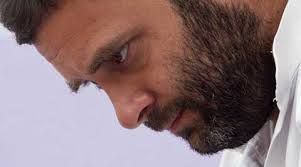
Veiled attack on Team Rahul by section of Cong leaders

May 22, 2014

New Delhi, May 22: In a veiled attack on 'Team Rahul' over Congress' poll debacle, a section of party leaders today said only those having experience of field work should be given "leadership posts" and wanted a "ruthless introspection" to help it bounce back.RaGa

Congress leader Milind Deora, who had yesterday said that Rahul Gandhi's advisers did not have their "ears to the ground" and those with "no electoral experience" were "calling the shots", today stuck to his stand, saying his comments are borne out of deep loyalty to the party and pain due to its performance in the polls.

"My comments are out of emotions of deep loyalty to the party, pain of our performance & a sincere desire to see us bounce back. Nothing more," Deora said on Twitter.

In comments that stoked a blame game within the party and appearing to question 'Team Rahul', he said, "Field party work & electoral battles are key to comprehend ground realities. This should form the basis for leadership posts in Congress."

Senior party leader Satyavrat Chaturvedi appeared to be in agreement with the views expressed by Deora and hoped that an "honest and ruthless introspection" is carried out to rectify the problems.

Chaturvedi said while whatever Deora stated might not be fully correct but "large portion of what he said is correct".

The remarks are considered significant in the wake of a growing perception in the party that a number of people with no electoral experience and novices in politics were given key roles in shaping up the decisions of the leadership on issues like campaigning and alliances.

AICC Secretary Priya Dutt, who met Congress President Sonia Gandhi today, also talked of a "disconnect" of the party leaders with the people.

"We need to bridge that gap. We need to bring that right upto the leadership. There is a lot of criticism. We have to look at where we have gone wrong in the past ten years," she said.

Both Deora and Dutt lost the elections in Mumbai.

They are considered to be part of Rahul's team and it may be mentioned that Deora's assertions in the past on some issues were also followed up by action taken by the Congress Vice President.

Senior Congress leader Capt Amarinder Singh, however, said the Congress should take "collective responsibility" for the rout in which the party got just 44 seats.

NCP leader Majid Memom said Deora's remarks signify that he has indirectly commented on Rahul also.

Comments

Add new comment

  • Coastaldigest.com reserves the right to delete or block any comments.
  • Coastaldigset.com is not responsible for its readers’ comments.
  • Comments that are abusive, incendiary or irrelevant are strictly prohibited.
  • Please use a genuine email ID and provide your name to avoid reject.
News Network
February 5,2020

New Delhi, Feb 5: Kapil Baisala who opened fired at the Shaheen Bagh protest site last week is a member of the Aam Aadmi Party, police said on Tuesday, sparking a war of words between the BJP and the AAP.

While the BJP accused Chief Minister Arvind Kejriwal of "playing" with the security of the country, the AAP hit back, stating the saffron party was indulging "dirty politics".

Deputy Commissioner of Police (Crime Branch) Rajesh Deo said that Baisala and his father joined the AAP in early 2019.

Baisala's family, however, refuted the police's claim.

Kapil Baisala's uncle Fatesh Singh told PTI, "I have no idea where these photographs are circulating from. My nephew Kapil had no association with any political party nor does any other member from the family. My brother, Gaje Singh, (Baisala's father) fought assembly elections in 2008 on a Bahujan Samaj Party ticket and lost. After that no one from our family had any links with any political party."

Singh added that Baisala also doesn't have friends associated with the AAP or any other political party.

Gaje had also contested the 2012 civic body polls from the BSP, the police said.

The police officer said they seized Baisala's mobile phone and retrieved WhatsApp data.

On Saturday, Baisala fired two rounds in air at Shaheen Bagh. According to eyewitnesses, the man shouted "Hindu Rashtra Zindabad" and fired two rounds.

He was overpowered by the police and later arrested.

In the pictures, it was seen that he and his father joined the party in the presence of Atishi Marlena, Sanjay Singh and other leaders, sources said.

The police said on Thursday, Baisala, along with his friend Sarthak Larolla, went to Shaheen Bagh from his village on a bike.

Through CCTV footage, it was found they took the DND flyover, Maharani Bagh, Sarai Jullena and reached Holy Family hospital, a senior police officer said.

"Baisala was not comfortable on the bike as he had hidden the pistol near his waist. They entered the hospital's parking where he adjusted the pistol, used the washroom and headed towards Shaheen Bagh," the senior official added.

When they reached the protest site, Larolla left the spot with the motorcycle and Baisala's mobile phone. Later, Baisala fired two rounds in the air and was apprehended. The weapon was recovered from near the spot, the police said.

Larolla joined the investigation and the mobile phone was seized from his residence.

Baisala has been remanded to police remand for two days.

He had bought the pistol around seven years ago for his brother's marriage. The source of the weapon from where he procured it is yet to identified, police said.

The sources said Baisala was previously also involved in firing incident but was never caught nor was a case registered against him.

Hitting out at the AAP, BJP president J P Nadda accused Kejriwal of playing with the security of the country and said that the people will give the party a befitting reply.

"I want to make clear to Kejriwal that this country is bigger than any election, any government, and the country will not forgive those who play with its security. The people of Delhi will give a befitting reply," Nadda tweeted.

Senior AAP leader Sanjay Singh asked on whose directions was the Delhi Police accusing his party.

"Before the police revealed it (Baisala being an AAP member), how did BJP's Delhi president Manoj Tiwari come to know about it," Singh asked and accused the police of maligning the party.

Comments

Add new comment

  • Coastaldigest.com reserves the right to delete or block any comments.
  • Coastaldigset.com is not responsible for its readers’ comments.
  • Comments that are abusive, incendiary or irrelevant are strictly prohibited.
  • Please use a genuine email ID and provide your name to avoid reject.
News Network
April 21,2020

New Delhi, Apr 21: The historic rout in oil markets that sent US crude prices plummeting to as much as minus USD 40 a barrel is unlikely to translate into any big reduction in petrol and diesel prices in India as domestic pricing is based on different benchmark, and refineries are already filled up to brim and cannot buy US crude just yet.

With storage capacity already overflowing amid coronavirus-induced demand collapse, traders rushed to to get rid of unwanted stocks triggering the collapse of US West Texas Intermediate (WTI) crude for May delivery.

Indian Oil Corp (IOC) Chairman Sanjiv Singh said the collapse was triggered by traders unable to take deliveries of crude they had previously booked because of a demand collapse. And so they paid the seller to keep oil in their storage.

"If you look at June futures, it is trading in positive territory... around USD 20 per barrel," he said.

Low oil prices may seem good in short-term but in the long run it will hurt the oil economy as producers will have no surplus to invest in exploration and production which will lead to a drop in production, he said.

He did not comment on retail fuel prices that have been static since March 16.

Oil companies have not changed rates despite a fall in international prices as they first adjusted them against the increase that was warranted from a Rs 3 per litre hike in excise duty and close to Re 1 per litre additional cost of switching over to cleaner BS-VI grade fuel from April 1.

Petrol in Delhi is priced at Rs 69.59 a litre and diesel comes for Rs 62.29 per litre.

"The negative price has no direct impact on India or Indian oil prices, as this has taken place due to crude oil produced and traded within the US. India's prices are driven partly by another benchmark, the Brent, which is still trading at USD 25/barrel. Therefore, the retail price of fuels in India are unlikely to fall," said Amit Bhandari, Fellow, Energy and Environment Studies, Gateway House.

Also, Indian refineries are already overflowing as fuel demand has evaporated due to the unprecedented nationwide lockdown imposed to curb spread of COVID-19. So, they can't rush to buy US crude.

The refineries have already cut operating rate to half because the fuel they produce has not been sold yet.

India imports 4 million barrels/day (1.4 billion barrels/year) of oil. The country has been benefitting from the falling prices of oil for the last five years, when oil dropped from a peak of USD 110/barrel to USD 50-60/barrel last year, enabling India to invest in public service programmes.

"However, the additional USD 30 fall of this week is good for India - but there is also a downside. If oil prices are too low, the economies of oil-rich gulf countries will be hurt, threatening the job prospects of the 8 million Indians working in the Gulf countries. India is the largest recipient of foreign remittances due to these workers – very low oil prices will hurt this cash stream," Bhandari said.

He said the negative price of oil shows how much oil oversupply exists in international markets today. "Global oil consumption has fallen due to the COVID-19 pandemic that traders are willing to pay customers to get rid of the barrels they can't store. The world does not have enough storage capacity, and dumping the oil is an environmental crime."

The first half of April saw Brent crude oil prices plummet 63.6 per cent to USD 26.9 per barrel. Prices of Western Texas Intermediate (WTI), the American oil, had also fallen similarly by 63.1 per cent.

But on April 20, WTI prices turned rapidly negative because traders on the Nymex exchange rushed to offload their May futures positions a day before expiry of contracts (on April 21).

Such WTI futures are traded on the Nymex exchange with contracts settled in physical crude oil. Problem is, those who had gone long are unable to find storage facilities for the oil and had to liquidate their contracts before expiry. This caused the plunge in WTI prices.

Contrast to this, June WTI Nymex futures prices is hovering around USD 21, while Brent for June delivery is at USD 25.

Miren Lodha, Director, CRISIL Research said the demand for crude oil was declining already because of economic slowdown when the COVID-19 pandemic-driven lockdowns crushed it further.

Consequently, oil demand is expected to contract by 8-10 million barrels per day (mbpd) in 2020 assuming demand recovery begins from the third quarter of the year, he said, adding if recovery doesn't happen by then, further demand destruction could occur.

On the supply side, producers reining in output following a strategic deal between OPEC members, Russia and the US.

Under this agreement, OPEC+ would reduce oil production by 9.7 mbpd for May and June, but gradually ease the curb to 7.7 mbpd between July and December 2020, and to 5.8 mbpd till April 2022 to stabilise prices.

"This is expected to reduce some surplus in the market by the end of 2020," Lodha said.

Crude oil demand is expected to decline by over 20 mbpd in April alone. Typically, monthly global demand is about 100 mbpd. Given this scenario, supply curbs would have limited influence.

Consequently, Brent oil prices is expected to be in the USD 25-30 range for the second quarter while increasing marginally in the last 2 quarters of 2020.

"The gigantic inventory build-ups and lack of storage facilities would also put pressure on prices," he said, adding overall Brent could average USD 30-35 in 2020, with a strong downward bias.


Comments

Add new comment

  • Coastaldigest.com reserves the right to delete or block any comments.
  • Coastaldigset.com is not responsible for its readers’ comments.
  • Comments that are abusive, incendiary or irrelevant are strictly prohibited.
  • Please use a genuine email ID and provide your name to avoid reject.
News Network
June 18,2020

New Delhi, Jun 18: The border clash between Indian and Chinese soldiers in Ladakh broke the brittle quiet – and also the sense of security for anxious Chinese nationals in India who fear a backlash with anti-Chinese sentiment spiralling in the country.

With the high altitude violent face-off in eastern Ladakh’s Galwan Valley spurring hashtags such as “Boycott China” and “Teach Lesson to China” and leading to street protests, the undercurrents of tension were evident.

Wary of being identified, some said they had been reassured by their friends but were still apprehensive for themselves and their families.

"They (Chinese families) don''t want to speak to the media. They are not going out and are worried about their security and well being. Their families are also worried back home," Mohammed Saqib, secretary general of the India China Economic & Cultural Council, told PTI.

He added that his Chinese friends in India been calling him since they heard news about Monday night’s clashes in which 20 Indian soldiers were killed -- the worst military confrontation in five decades -- and expressed concern over growing anti-China sentiments.

A Chinese national from Beijing working in Gurgaon for a Chinese mobile firm initially refused to talk, saying he did not want to speak to the media and later shared his thoughts only on condition of anonymity.

"There is talk of border standoff and tensions, but we know Indians are very warm people and that is why I have told my family that all is fine here and they should not worry," he said.

Another Chinese national working in Gurgaon said he and his family are feeling the stress amid the spiralling conflict between India and China, but many friends have been reassuring him.

"They (Chinese in India) are under a lot of stress naturally. Such a conflict puts a lot of stress as they could bear the brunt and the same applies to Indians in China," B R Deepak, professor at the Centre for Chinese and South East Asian Studies of the Jawaharlal Nehru University said.

He said it was unfortunate that the border standoff derailed the commemorative programmes aimed at strengthening ties at a time the two countries were gearing to celebrate 70 years of establishment of diplomatic ties.

Experts also feel the border clash is likely to have a significant negative impact on the economic and people to people ties.

There are scores of Chinese in India working in various Chinese firms and also those who are studying in universities like JNU.

About 3,000 Chinese people, doing business or studying in big cities in India, were stranded in India at the start of the COVID-19 crisis, and about half of them returned to China before the lockdown began on March 25.

The Chinese Embassy in New Delhi announced on May 25 that they will arrange for flights to take back students, tourists and businesspersons to five Chinese cities, including Shanghai and Guangzhou.

"It will impact the psychology of the Chinese here. There are 2,000 Chinese firms in various sectors in India which are going to be impacted," Deepak said.

Future investments from the Chinese side could also be impacted, he said.

Moreover, as far as people-to-people contacts are concerned, the number of Chinese students choosing India as a preferred destination is likely to go down, Deepak said.

Alka Acharya, another China expert, said there are two kinds of impacts of such an incident -- short term and medium term.

Usually after the initial nationalistic reaction in the short term things tend to normalise in the medium term, but with such a border clash happening for the first time in decades clearly the resonance would be much more in both India and China, said Acharya, professor at the Centre for East Asian Studies, School of International Studies, in JNU.

“Due to the impact of the COVID-19 crisis on the economy, whether India can take a hardline in terms of economics towards China, is a tricky question,” she said.

In the immediate context, there may be a dip in economic ties with calls for boycott of Chinese goods and services, Acharya said.

The manner in which this crisis is resolved will affect how ties will be affected in the medium term, she said.

The headlines have added to the anxiety.

A group of ex-armymen gathered near the Chinese embassy to protest the killing of 20 Indian Army personnel in Ladakh’s Galwan Valley. And another group of around 10 protesters belonging to the Swadeshi Jagaran Manch protested near the Teen Murti roundabout in Central Delhi.

The anti-China sentiment prevalent among the common public is also finding a reflection in government policy with sources saying the Department of Telecom (DoT) is set to ask state-owned Bharat Sanchar Nigam Ltd (BSNL) not to use Chinese telecom gear in its 4G upgradation.

Trade bodies like CAIT are also calling for a boycott of Chinese products.

And Chinese handset maker Oppo cancelled the livestream launch of its flagship 5G smartphone in the country amid protests.

Monday night’s clashes between the Chinese and Indian troops in Galwan Valley significantly escalated the already volatile border standoff between the two countries.

The casualties on the Chinese side are not yet known. However, government sources, citing an American intelligence report, claimed the total number of soldiers killed and seriously wounded could be 35.

Comments

Add new comment

  • Coastaldigest.com reserves the right to delete or block any comments.
  • Coastaldigset.com is not responsible for its readers’ comments.
  • Comments that are abusive, incendiary or irrelevant are strictly prohibited.
  • Please use a genuine email ID and provide your name to avoid reject.