


Venkaiah Naidu takes oath as Vice-President of India

Agencies
August 11, 2017


New Delhi, Aug 11: M Venkaiah Naidu was on Friday sworn in as the Vice President of India.

President Ramnath Kovind administered the oath of office to Naidu, 68, at a brief ceremony in the Durbar Hall of Rashtrapati Bhawan attended by political leaders cutting across party lines.

Wearing his trademark white panche (lungi) and white shirt, Naidu took oath in Hindi in the name of god.

While he is the 15th Vice President, he is the 13th person to hold the constitutional post. His predecessor Hamid Ansari and the first Vice President S Radhakrishnan had held the post for two consecutive terms.

Prime Minister Narendra Modi, former Vice President Ansari, Lok Sabha Speaker Sumitra Mahajan, former Prime Minister Manmohan Singh, leader of the opposition in the Rajya Sabha Ghulam Nabi Azad, BJP veteran L K Advani, several Union ministers, governors and chief ministers attended the ceremony.

SP leader Mulayam Singh Yadav, NCP's Tariq Anwar, CPI leader D Raja, TMC leaders Sudip Bandhopadhyay and Derek O' Brien and AIADMK's O Panneerselvam were also seen.

Delhi chief minister Arvind Kejriwal and his Bihar counterpart Nitish Kumar — who has joined hands with the BJP in his state — also attended the ceremony at Rashtrapati Bhawan.

After the ceremony, President Kovind, Prime Minister Modi, former Vice President Ansari, Vice Presdent Naidu, and Advani were seen seated together.

Naidu's wife M Usha was also present.

Born in a humble agricultural family in Andhra Pradesh's Nellore district, Naidu has served as BJP president, minister in various portfolios and a long-time Rajya Sabha member.

This remarkable career in politics has been more than four decades in the making.

It began in the 1970s when BJP's precursor Jana Sangh was a marginal player with little clout in the south and a young party worker kept himself busy putting up posters of stalwarts such as Atal Bihari Vajpayee and L K Advani.

As Vice President, Naidu will be the Rajya Sabha chairman and the government is hopeful that his presence will result in the House running more smoothly. Opposition members, who outnumber treasury benches in the House, have often blocked its legislations.

Comments

Wellwisher
 - 
Friday, 11 Aug 2017

God save our India and Indian citizens  from all devils and from criminal  force.

Add new comment

  • Coastaldigest.com reserves the right to delete or block any comments.
  • Coastaldigset.com is not responsible for its readers’ comments.
  • Comments that are abusive, incendiary or irrelevant are strictly prohibited.
  • Please use a genuine email ID and provide your name to avoid reject.
Agencies
July 29,2020

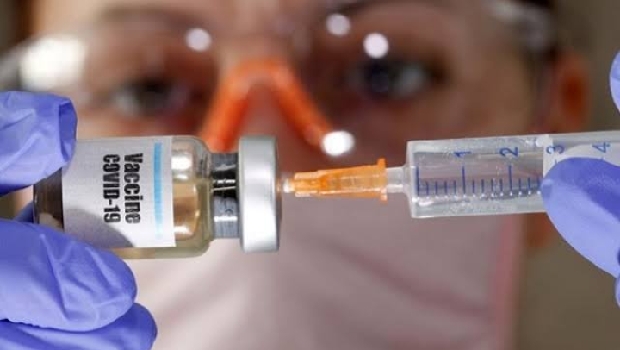
If everything goes as Russia’s expectation, it will be world’s first country to approve a coronavirus vaccine for widespread in the second week of August despite safety and efficacy concerns, according to a report. The adenoviral vector-based vaccine developed by Russian military and government researchers is currently in phase 2 trials.

According to a report from CNN, Russian officials are hoping to get approval for the COVID-19 vaccine developed by the Moscow-based Gamaleya Institute on Agust 10 or even before that. The officials told the outlet that the vaccine will be approved for public use with frontline healthcare workers receiving it first.

“It’s a Sputnik moment,” said Kirill Dmitriev, head of Russia’s sovereign wealth fund, which is financing Russian vaccine research, referring to the successful 1957 launch of the world’s first satellite by the Soviet Union, according to CNN.

“Americans were surprised when they heard Sputnik’s beeping. It’s the same with this vaccine. Russia will have got there first,” he was quoted as saying.

However, Russia is yet to release the scientific data on its coronavirus vaccine trials, hence, questions remain about the safety and efficacy of the vaccine, said the report. The vaccine is in the second phase of testing with developers planning to launch the phase 3 trials sometime after August 3.

Earlier, Interfax reported, citing Health Minister Mikhail Murashko, that the vaccine will be widely used in parallel with phase 3 trials. He said the country plans to vaccinate medics who are at high-risk for COVID-19 next month before clinical trials are completed.

Murashko added that individuals at higher risk of getting infected with the coronavirus such as older people or those with health conditions will also be prioritised for the vaccine, although he did not estimate or reveal when that would happen. The minister added 800 people will be recruited for the phase 3 trials.

Meanwhile, health officials were more cautious considering the fact that human testing of the vaccine is incomplete, and the state registration is expected to begin after August 3, reported The Moscow Times.

On Monday, Moderna and Pfizer announced the commencement of the final phase 3 trials of their candidate vaccines against the SARS-CoV-2 virus, which has so far claimed at least 654,477 lives and infected 16,514,500 people worldwide. 

Researchers will recruit up to 30,000 volunteers in separate trials both backed by the US government. India's first indigenous coronavirus vaccine, COVAXIN, is undergoing phase 1 human clinical trials across the country. More than 150 COVID-19 vaccines are being developed all over the world with at least six candidates already in late-stage clinical trials.

Comments

Add new comment

  • Coastaldigest.com reserves the right to delete or block any comments.
  • Coastaldigset.com is not responsible for its readers’ comments.
  • Comments that are abusive, incendiary or irrelevant are strictly prohibited.
  • Please use a genuine email ID and provide your name to avoid reject.
News Network
March 21,2020

New Delhi, Mar 21: Novel coronavirus cases in India rose to 258 on Saturday after 35 fresh cases were reported in various parts of the country, according to the Health Ministry.

Among the 258 are 39 foreign nationals, including 17 from Italy, three from the Philippines, two from the UK, one each belonging to Canada, Indonesia and Singapore.

The total figure also includes four deaths reported from Delhi, Karnataka, Punjab and Maharashtra.

"The total number of active COVID-19 cases across India stands at 231 so far," the ministry said, adding that 23 others have been cured/discharged/migrated while four have died.

Delhi has, so far, reported 26 positive cases, which include one foreigner, while Uttar Pradesh has recorded 24 cases, including one foreigner.

Maharashtra has 52 cases, including three foreigners, while Kerala has recorded 40 cases, which include seven foreign nationals.

Karnataka has 15 coronavirus patients. The number of cases in Ladakh rose to 13 and Jammu & Kashmir four. Telangana has reported 19 cases, which include 11 foreigners.

Rajasthan has also reported 17 cases, including two foreigners. Gujarat has reported seven cases so far.

Tamil Nadu, Andhra Pradesh and Uttarakhand have reported three cases each.

West Bengal, Odisha and Punjab each reported two cases while Puducherry, Chhattisgarh and Chandigarh reported one case each.

In Haryana, there are 17 cases, which include 14 foreigners.

Comments

Add new comment

  • Coastaldigest.com reserves the right to delete or block any comments.
  • Coastaldigset.com is not responsible for its readers’ comments.
  • Comments that are abusive, incendiary or irrelevant are strictly prohibited.
  • Please use a genuine email ID and provide your name to avoid reject.
News Network
March 2,2020

New Delhi, Mar 2: As communal violence spiked in north-east Delhi earlier this week, Hindu, Muslim and Sikh residents of a colony came together and stood guard against frenzied mobs which ran riot in nearby areas vandalising homes, shops and torching cars.

They have not let their guard down even as the situation is limping back to normalcy following four days of violence that has claimed at least 42 lives and left over 200 injured.

The B-Block colony in Yamuna Vihar has a Hindu-dominated Bahjanpura on one side and Muslim populated Ghonda on the other.

People from all faiths in the locality sit outside their homes at night and deal with any suspected outsider, Arib, a dentist in his 30s, said.

"It is the sloganeering by mobs that causes panic in the dead of night. Such slogans are from both sides and we hear groups of people moving forward towards our area.

"This is where we let the Muslim locals deal with Muslim groups and Hindu residents deal with Hindu groups coming from outside," he said.

Businessmen, doctors and people working at government offices stuck together as violence reached its crest on Monday and Tuesday, and have been guarding the locality round the clock.

Earlier, the locals had claimed inadequate police deployment in the area, but were satisfied as patrolling by security personnel increased in the last two days.

Charanjeet Singh, a Sikh who owns a transport firm, said residents have ensured that not too many people gather to guard the colony at night. It has been decided not use sticks or rods, an idea which seems to have worked in maintaining peace, he said.

"I was 10 years old when we came to this locality from Uttar Pradesh's Meerut in 1982. There were riots in 1984 and tension in 2002, but even then our area remained peaceful. We have always been united and that is the way we have helped each other," Singh, who is now in his 50s, told PTI.

Faisal, a businessman in his 30s, said after two days of major violence, there was palpable tension in the area. "Nobody could sleep in the neighbourhood even on Wednesday and Thursday when the situation was brought under control," he said.

Faisal said around 4 am on Wednesday, three to four miscreants had torched a car, but were chased away by vigilant residents. They raised an alarm and others gathered, saving other vehicles parked nearby from being damaged, he added.

On the idea of not keeping sticks while guarding B-Block, Singh said, "Violence begets violence, crowd begets crowd. We thought if somebody would see sticks or rods in our hands from a distance and large crowds standing guard, it is likely they would want to come prepared. This could fuel violence."

"Now, if there is some young man returning late in the night, we identify if he belongs to our area. If not, we normally inform him about the situation and guide him to his destination, if required," he added.

Seventy-year-old V K Sharma said people in his colony never had any trouble with each other, as he blamed "outside elements" for the violence in north-east Delhi.

"Some people have some problem with symbols. If they find a particular religion's symbol on a shop, home or a car, they vandalise it.

"This is on both sides, Hindus as well as Muslims. But not all people in all religion are like that. There are good people who outnumber these handful people involved in violence," he said.

The violence happened for two days but it would take months for fear to subside, Sharma said, as he took out his two granddaughters, aged nine and two, out for ice cream.

"I cannot reduce the tension outside my home, but at least I can make these kids feel good by reducing their craving for ice cream,” he added.

Colony resident Shiv Kumar, a property consultant, and Wasim, a government official, said they too were members of this voluntary guards' team of the colony which stays up at night to fend off miscreants.

Comments

Add new comment

  • Coastaldigest.com reserves the right to delete or block any comments.
  • Coastaldigset.com is not responsible for its readers’ comments.
  • Comments that are abusive, incendiary or irrelevant are strictly prohibited.
  • Please use a genuine email ID and provide your name to avoid reject.