Violence rocks Bengaluru for 2nd day; buses set on fire, police station attacked

April 19, 2016

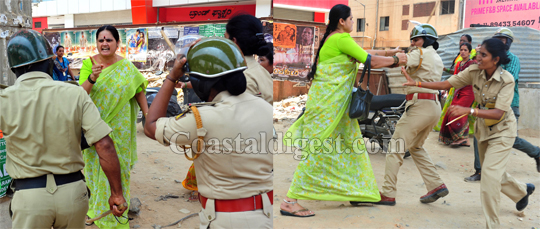
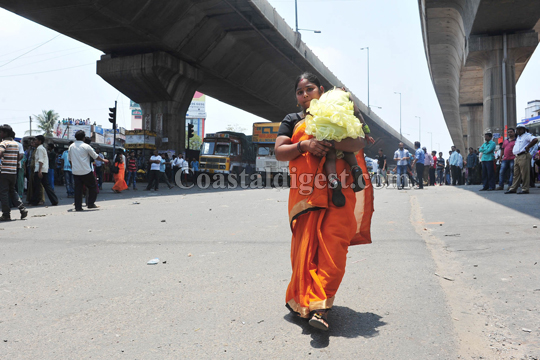
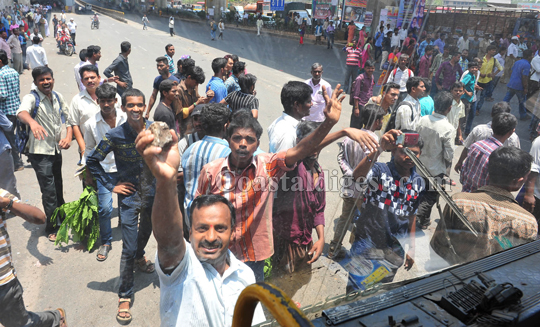
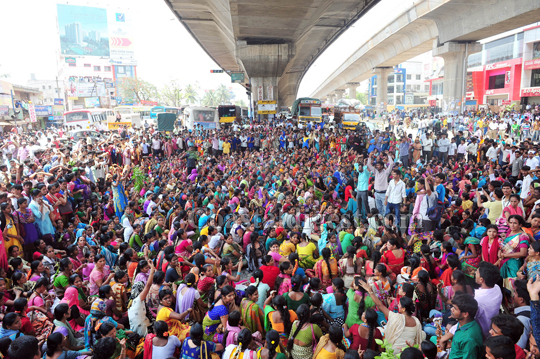
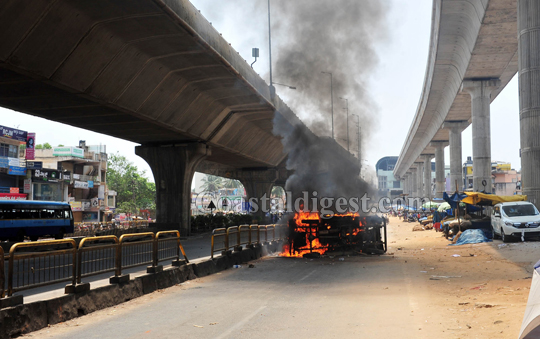
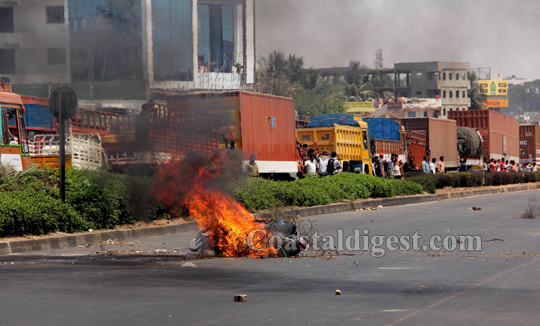
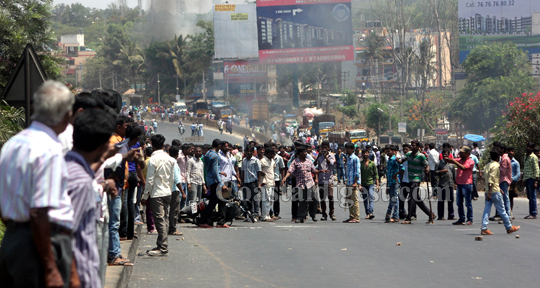
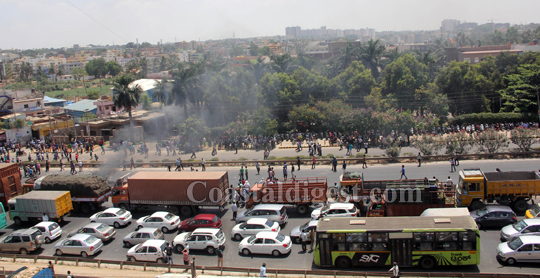
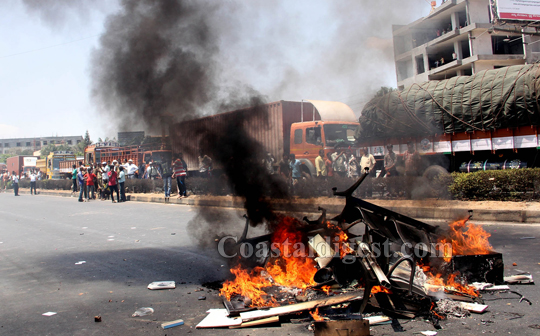
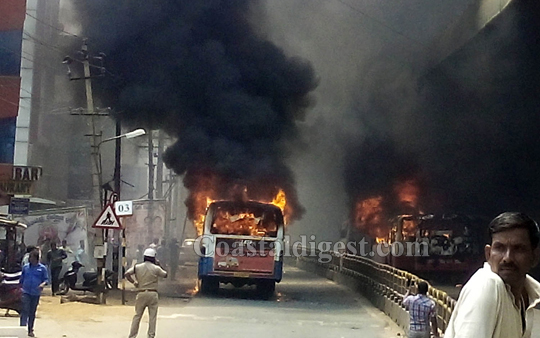
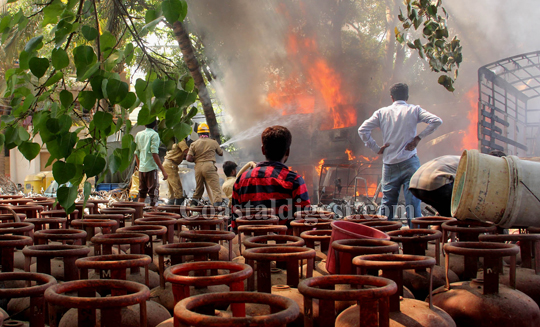
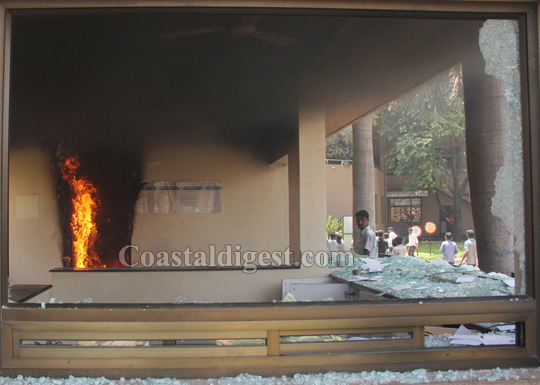
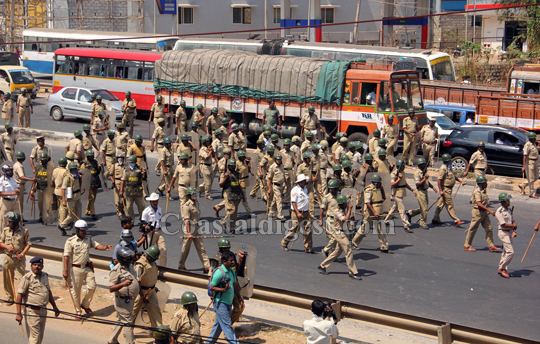
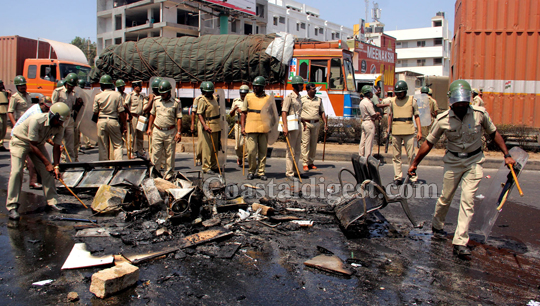
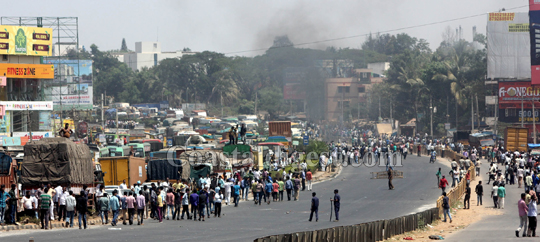
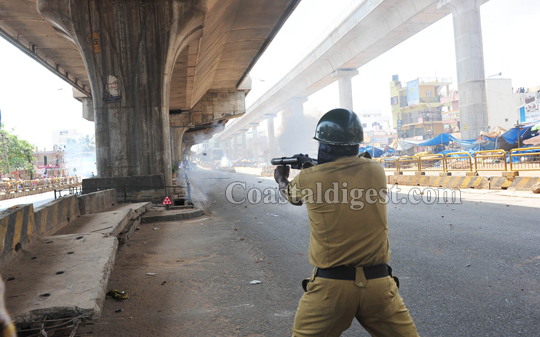
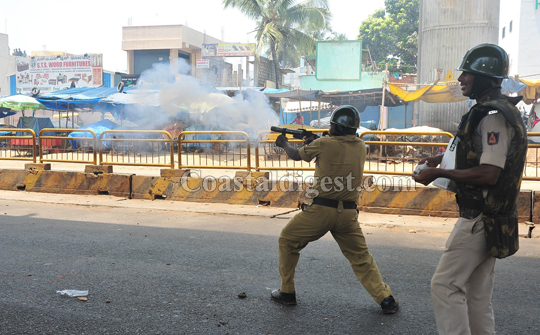
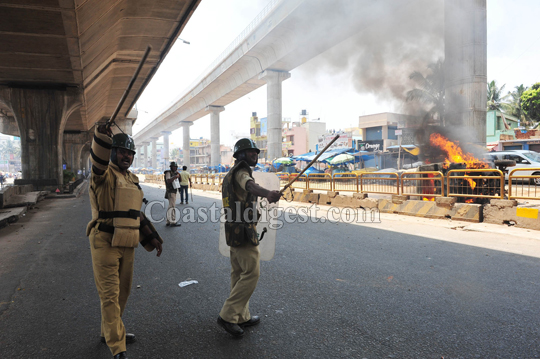
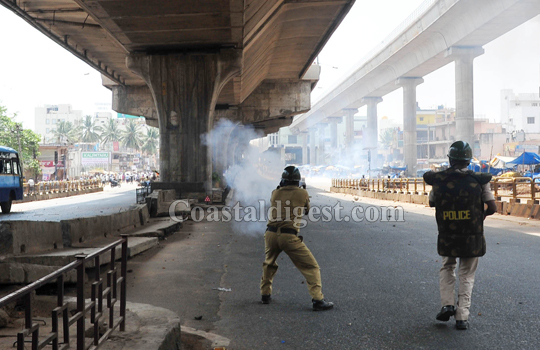
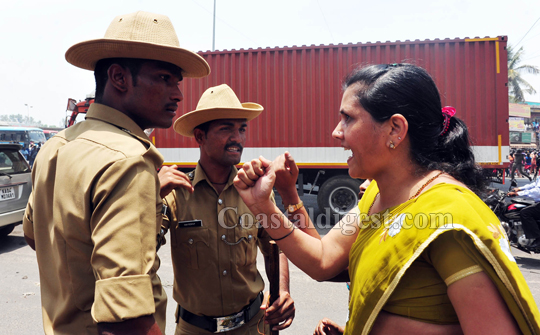
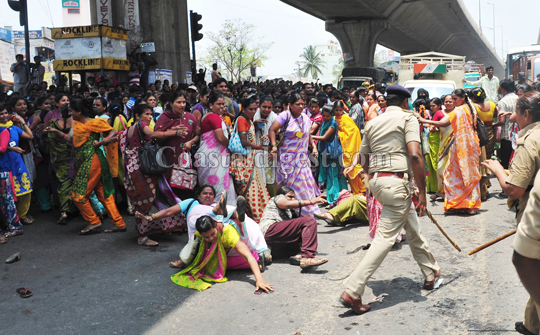
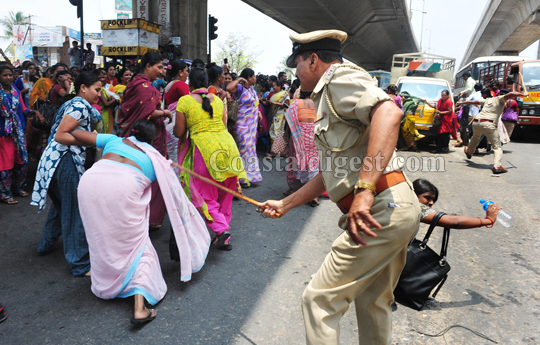
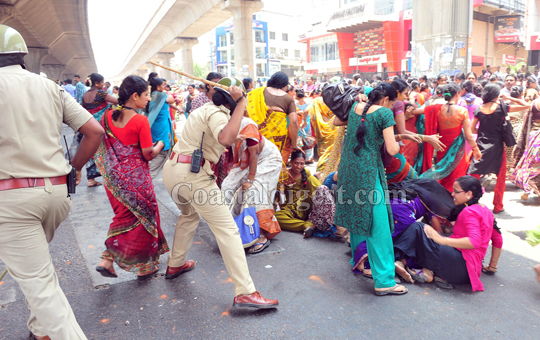
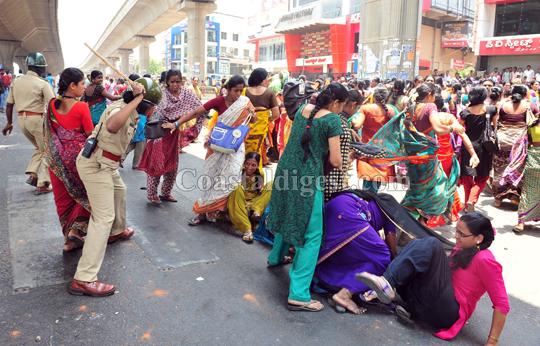
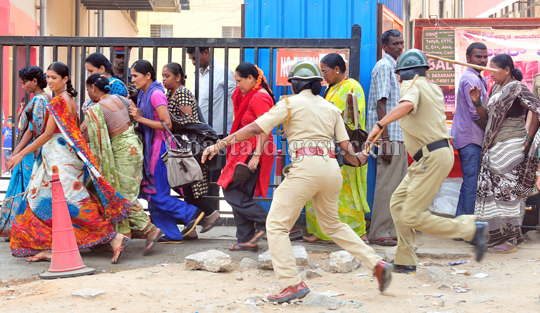
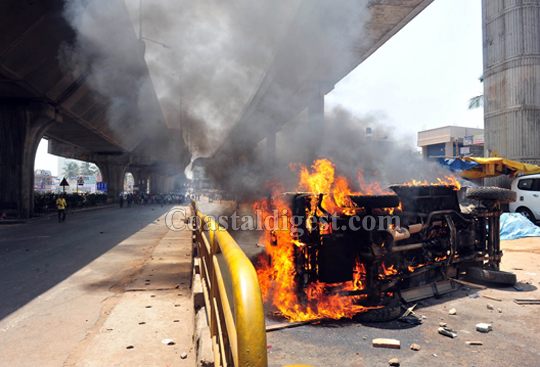
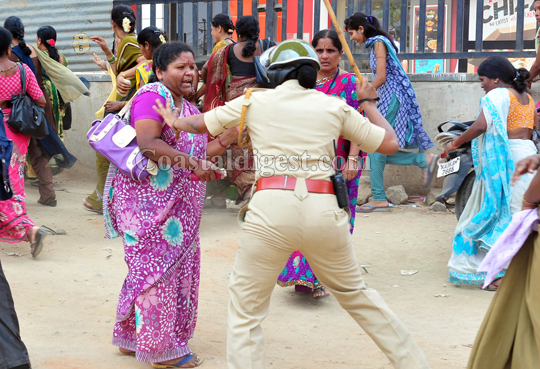
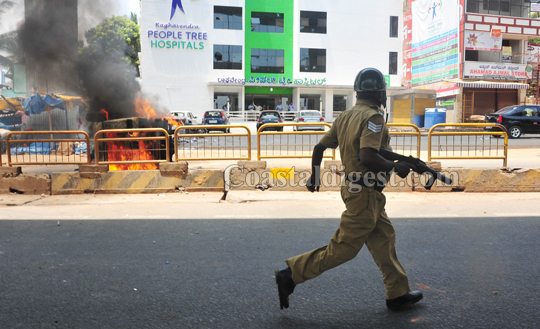
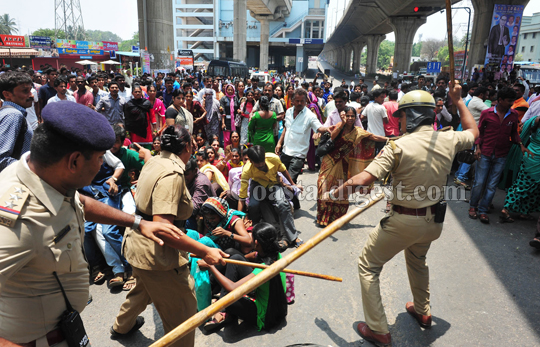
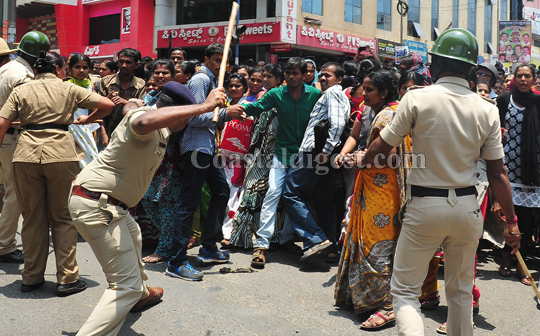
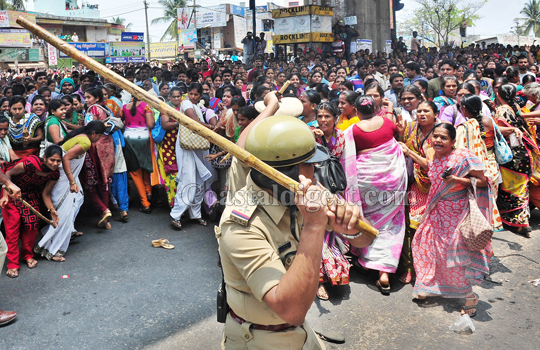
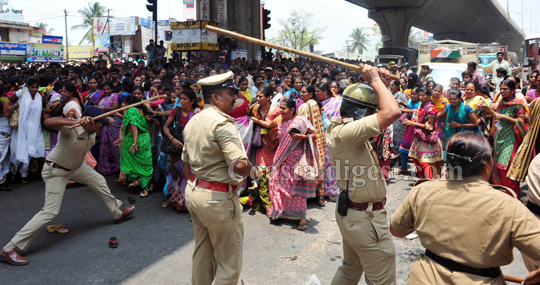
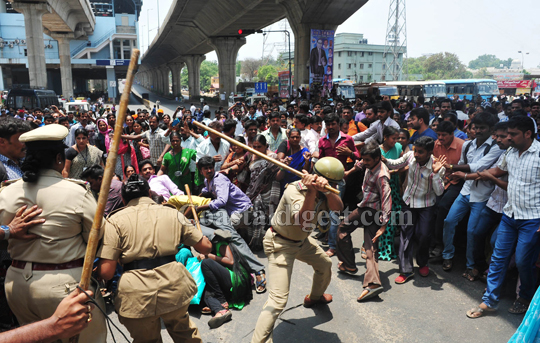
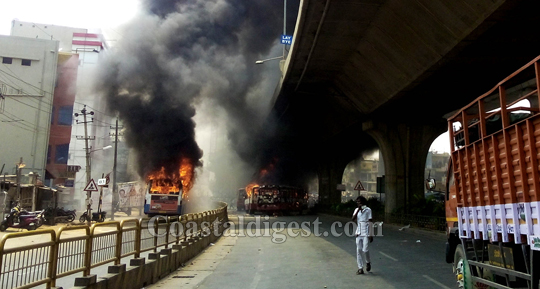
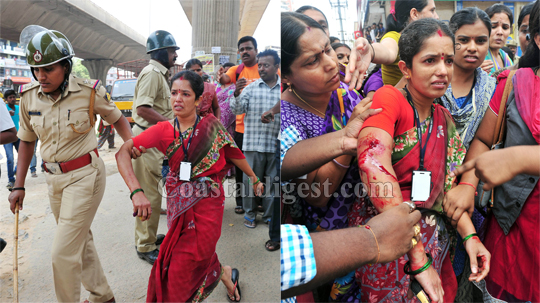
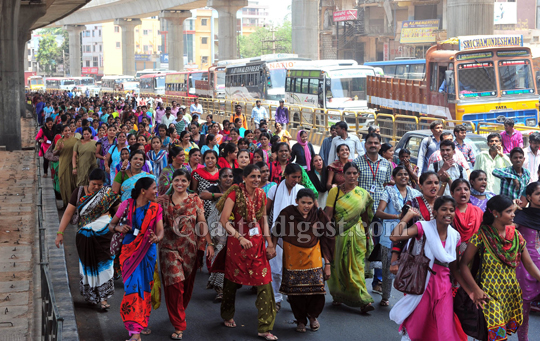
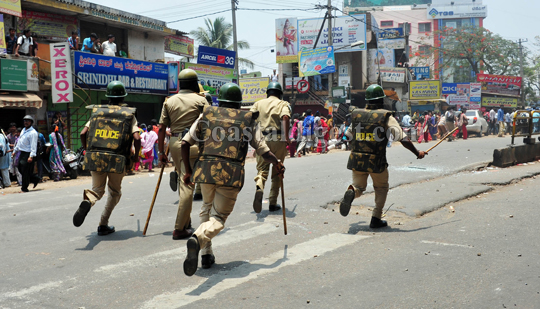
Bengaluru, Apr 19: Several buses were set on fire and a police station was attacked as protest by garment factory workers against the new provident fund rules turned violent on the second day of their stir here today.
garmentFv 28

Protesters pelted stones at Hebbagodi Police Station and torched seized vehicles parked there, as the spontaneous agitation with no trade union leading it spun out of control.

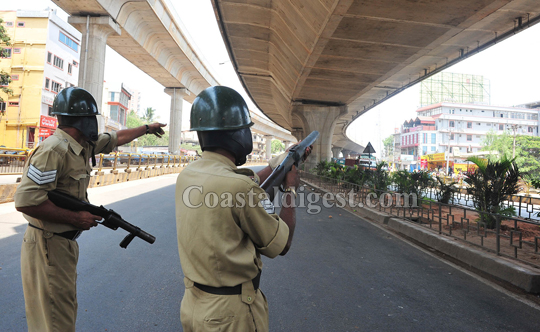
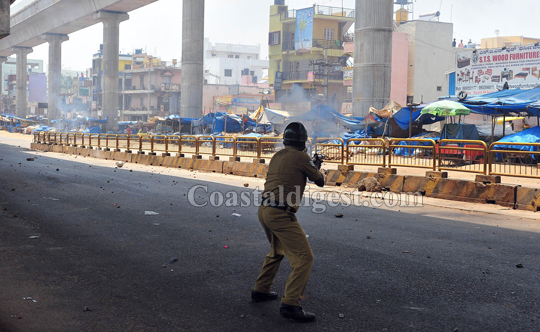
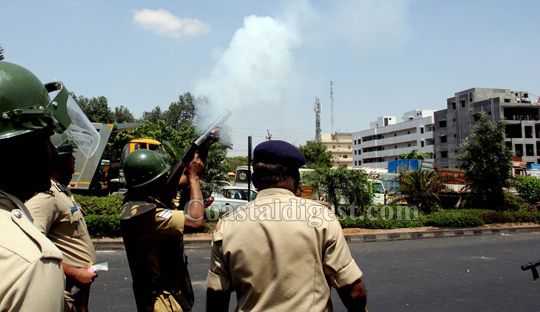
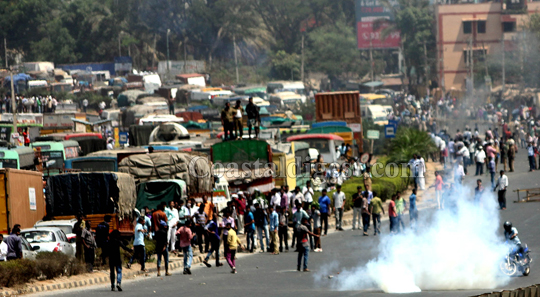
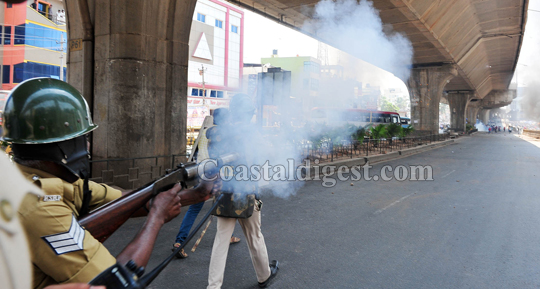
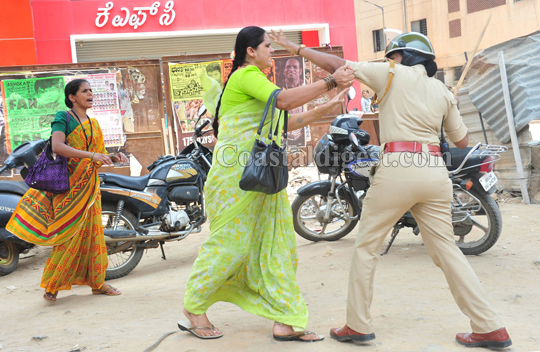
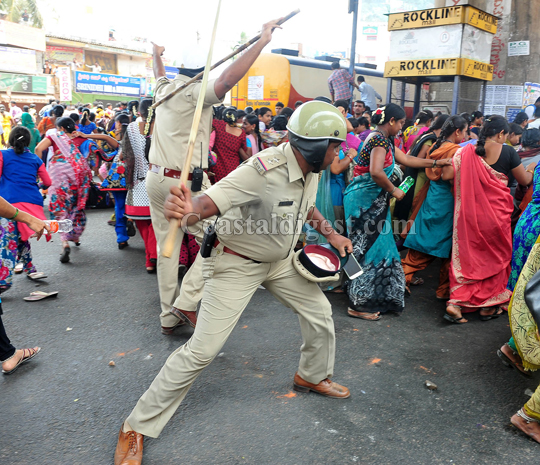
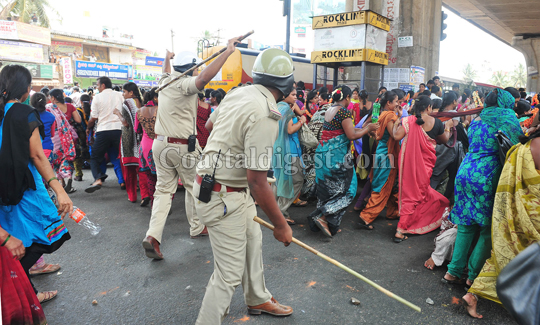
Police said they had to resort to lathicharge and fire teargas shells to disperse violent protesters.

At least two Karnataka State Road Transport Corporation buses and one of Bengaluru Metropolitan Transport Corporation have been set on fire, they said.

Incidents of stone-pelting on buses and other vehicles were reported from different parts of the city such as Bannerghatta and Jalahalli cross, as also near the Electronics City, the hub of IT firms.

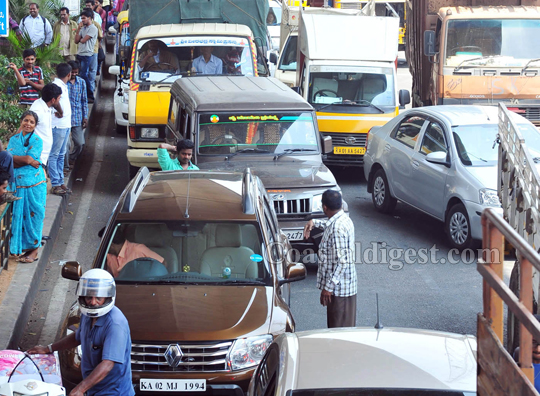
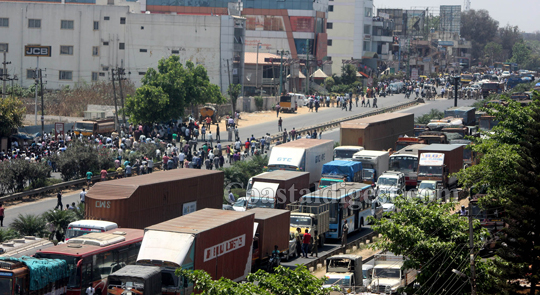
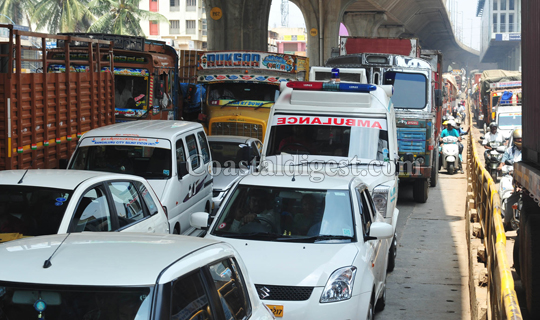
Traffic jams were reported at various entry and exit points in the city like Hosur Road, which leads to Electronics City and Tumkur Road, which has a large concentration of garment units.

City Police Commissioner N S Megharikh said the situation was under control, but there "are some issues" on the city's outskirts.

"...we are at work, our officers are at the spot, reinforcement has already gone there. The situation is being brought under control," he said.

Police said other workers too have joined garment workers in the protest today.
There are approximately over 12 lakh garment factory workers in Bengaluru, the city police chief said.

State DGP Om Prakash said the situation went out of control at Hebbagodi and Jalahalli, where reinforcements had been sent. The situation was being monitored by Additional Commissioner of Police.

He said police did not expect the protest to take a violent turn. "Strict action will be taken against those damaging public property and pelting stones at public," he said, and appealed to the protesters to hold discussions with the department concerned to resolve the issue.

"The situation is under control. It will come to normal shortly," he said.

Police had resorted to a 'mild' lathicharge yesterday to control a 'mob' of garment workers who pelted stones injuring four police personnel during the protest, police said.

Workers opposing amendment to Employees Provident Funds and Miscellaneous Provisions Act, 1952 have expressed fear that the new rule would take away their right over employer's contribution portion of provident fund till they attain 58 years.
garmentFv 1

garFv 2

garFv 1

garmentFv 2

garmentFv 3

garmentFv 4

garmentFv 5

garmentFv 6

garmentFv 7

garmentFv 8

garmntsPrst 1

garmntsPrst 2

garmntsPrst 3

garmntsPrst 4

garmntsPrst 5

garmntsPrst 6

garmntsPrst 7

garmntsPrst 8

garmntsPrst 9

garmntsPrst 10

garmntsPrst 11

garmntsPrst 12

garmntsPrst 13

garmntsPrst 14

garmntsPrst 15

garmntsPrst 16

garmentFv 9

garmentFv 10

garmentFv 11

garmentFv 13

garmentFv 14

garmentFv 15

garmentFv 16

garmentFv 17

garmentFv 18

garmentFv 19

garmentFv 20

garmentFv 21

garmentFv 22

garmentFv 23

garmentFv 24

garmentFv 25

garmntsV 1

garmentFv 26

garmentFv 27

garmentFv 12

garmentFv 29

garmentFv 30

garmentFv 31

garmentFv 32

Comments

Ahmed Ali K
 - 
Wednesday, 20 Apr 2016

Police team is playing cricket or what???

KhasaiKhaane
 - 
Wednesday, 20 Apr 2016

Gullible people voted for Modi, hoping for ache din... now protesting.. Being beaten up by Police. MoNa did what he promised, and you got what they did not want - LOL !

Why the hell do protesters damage and set fire on public property. Let them burn their own houses and vehicles!

Add new comment

  • Coastaldigest.com reserves the right to delete or block any comments.
  • Coastaldigset.com is not responsible for its readers’ comments.
  • Comments that are abusive, incendiary or irrelevant are strictly prohibited.
  • Please use a genuine email ID and provide your name to avoid reject.
Ram Puniyani
February 10,2020

Noam Chomsky is one of the leading peace workers in the world. In the wake of America’s attack on Vietnam, he brought out his classic formulation, ‘manufacturing consent’. The phrase explains the state manipulating public opinion to have the public approve of it policies—in this case, the attack of the American state on Vietnam, which was then struggling to free itself from French colonial rule.

In India, we are witness to manufactured hate against religious minorities. This hatred serves to enhance polarisation in society, which undermines India’s democracy and Constitution and promotes support for a Hindu nation. Hate is being manufactured through multiple mechanisms. For example, it manifests in violence against religious minorities. Some recent ghastly expressions of this manufactured hate was the massive communal violence witnessed in Mumbai (1992-93), Gujarat (2002), Kandhamal (2008) and Muzaffarnagar (2013). Its other manifestation was in the form of lynching of those accused of having killed a cow or consumed beef. A parallel phenomenon is the brutal flogging, often to death, of Dalits who deal with animal carcasses or leather.

Yet another form of this was seen when Shambhulal Regar, indoctrinated by the propaganda of Hindu nationalists, burned alive Afrazul Khan and shot the video of the heinous act. For his brutality, he was praised by many. Regar was incited into the act by the propaganda around love jihad. Lately, we have the same phenomenon of manufactured hate taking on even more dastardly proportions as youth related to Hindu nationalist organisations have been caught using pistols, while police authorities look on.

Anurag Thakur, a BJP minster in the central government recently incited a crowd in Delhi to complete his chant of what should happen to ‘traitors of the country...” with a “they should be shot”. Just two days later, a youth brought a pistol to the site of a protest at Jamia Millia Islamia university and shouted “take Azaadi!” and fired it. One bullet hit a student of Jamia. This happened on 30 January, the day Nathuram Godse had shot Mahatma Gandhi in 1948. A few days later, another youth fired near the site of protests against the CAA and NRC at Shaheen Bagh. Soon after, he said that in India, “only Hindus will rule”.

What is very obvious is that the shootings by those associated with Hindu nationalist organisations are the culmination of a long campaign of spreading hate against religious minorities in India in general and against Muslims in particular. The present phase is the outcome of a long and sustained hate campaign, the beginning of which lies in nationalism in the name of religion; Muslim nationalism and Hindu nationalism. This sectarian nationalism picked up the communal view of history and the communal historiography which the British introduced in order to pursue their ‘divide and rule’ policy.

In India what became part of “social common sense” was that Muslim kings had destroyed Hindu temples, that Islam was spread by force, and that it is a foreign religion, and so on. Campaigns, such as the one for a temple dedicated to the Hindu god Rama to be built at the site where the Babri masjid once stood, further deepened the idea of a Muslim as a “temple-destroyer”. Aurangzeb, Tipu Sultan and other Muslim kings were tarnished as the ones who spread Islam by force in the subcontinent. The tragic Partition, which was primarily due to British policies, and was well-supported by communal streams also, was entirely attributed to Muslims. The Kashmir conflict, which is the outcome of regional, ethnic and other historical issues, coupled with the American policy of supporting Pakistan’s ambitions of regional hegemony, (which also fostered the birth of Al-Qaeda), was also attributed to the Muslims.

With recurring incidents of communal violence, these falsehoods went on going deeper into the social thinking. Violence itself led to ghettoisation of Muslims and further broke inter-community social bonds. On the one hand, a ghettoised community is cut off from others and on the other hand the victims come to be presented as culprits. The percolation of this hate through word-of-mouth propaganda, media and re-writing of school curricula, had a strong impact on social attitudes towards the minorities.

In the last couple of decades, the process of manufacturing hate has been intensified by the social media platforms which are being cleverly used by the communal forces. Swati Chaturvedi’s book, I Am a Troll: Inside the Secret World of the BJP’s Digital Army, tells us how the BJP used social media to spread hate. Whatapp University became the source of understanding for large sections of society and hate for the ‘Other’, went up by leaps and bounds. To add on to this process, the phenomenon of fake news was shrewdly deployed to intensify divisiveness.

Currently, the Shaheen Bagh movement is a big uniting force for the country; but it is being demonised as a gathering of ‘anti-nationals’. Another BJP leader has said that these protesters will indulge in crimes like rape. This has intensified the prevalent hate.

While there is a general dominance of hate, the likes of Shambhulal Regar and the Jamia shooter do get taken in by the incitement and act out the violence that is constantly hinted at. The deeper issue involved is the prevalence of hate, misconceptions and biases, which have become the part of social thinking.

These misconceptions are undoing the amity between different religious communities which was built during the freedom movement. They are undoing the fraternity which emerged with the process of India as a nation in the making. The processes which brought these communities together broadly drew from Gandhi, Bhagat Singh and Ambedkar. It is these values which need to be rooted again in the society. The communal forces have resorted to false propaganda against the minorities, and that needs to be undone with sincerity.

Combating those foundational misconceptions which create hatred is a massive task which needs to be taken up by the social organisations and political parties which have faith in the Indian Constitution and values of freedom movement. It needs to be done right away as a priority issue in with a focus on cultivating Indian fraternity yet again.

Comments

Add new comment

  • Coastaldigest.com reserves the right to delete or block any comments.
  • Coastaldigset.com is not responsible for its readers’ comments.
  • Comments that are abusive, incendiary or irrelevant are strictly prohibited.
  • Please use a genuine email ID and provide your name to avoid reject.
News Network
June 25,2020

Bengaluru, Jun 25: A total of 442 new cases of COVID-19 were reported in Karnataka on Thursday taking the total count of cases in the state to 10,560.

According to the State Health Department, there are 3,716 active cases and 6,670 patients have been discharged after treatment. Six more deaths have been reported in the last 24 hours, taking the death toll to 170.

India's COVID-19 count reached 4,73,105 on Thursday with the highest single-day spike of 16,922 cases in the last 24 hours.

Comments

Add new comment

  • Coastaldigest.com reserves the right to delete or block any comments.
  • Coastaldigset.com is not responsible for its readers’ comments.
  • Comments that are abusive, incendiary or irrelevant are strictly prohibited.
  • Please use a genuine email ID and provide your name to avoid reject.
coastaldigest.com news network
June 14,2020

Newsroom, June 14: Bollywood star Sushant Singh Rajput, who was found dead in his house in Mumbai’s Bandra today, was heartbroken after the death of his former manager Disha Salian.

34-year-old actor had posted a heartfelt note after her death: “It’s such devastating news. My deepest condolences to Disha’s family and friends. May your soul rest in peace.” 

The police are considering 28-year-old Disha’s death as an accidental one and the investigation is on to find if it was a suicide. She died after falling off the 14th floor of a building in Malad, Mumbai on June 8.

It is not yet known if there is any connection between the two deaths. Sushant’s house help reportedly found him hanging inside his room on Sunday and cops are investigating the case. He was recently seen in Nitesh Tiwari’s Chhichhore and more recently on Netflix opposite Jacqueline Fernandez in Drive.

Who is Disha Salian?

Disha Salian hails from Karnataka’s coastal district of Udupi. She was born in 1992 into a business family background. She reportedly migrated to Mumbai with her family at an early age. 

After completing her education, she worked in the Times of India Group for more than three years. The she went on the become the celebrity manager at Media Vantage.
Apart from Sushant, she had great links with many popular celebrities like Bharti Singh, Alisha Panwar, and others.
Comments

Add new comment

  • Coastaldigest.com reserves the right to delete or block any comments.
  • Coastaldigset.com is not responsible for its readers’ comments.
  • Comments that are abusive, incendiary or irrelevant are strictly prohibited.
  • Please use a genuine email ID and provide your name to avoid reject.