


Want to come to India but passport suspended: Mallya to Court

September 9, 2016

New Delhi, Sep 9: Liquor baron Vijay Mallya today informed a Delhi court that he wants to come to India but is unable to travel back as his passport has been suspended by Indian authorities.
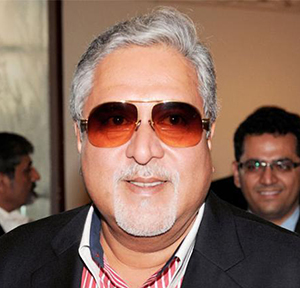
mallyaMallya made the submission through his counsel before Chief Metropolitan Magistrate Sumit Dass in a case lodged for allegedly evading summons in connection with a FERA violation matter.

On July 9, the court had cancelled the exemption from personal appearance granted to him and had directed him to appear before it. In his application moved through senior advocate Ramesh Gupta, Mallya requested the court that some time be given so that his appearance can be secured.

The counsel submitted the copy of an email sent by Mallya, stating that his passport was suspended on April 23, 2016 without giving him any opportunity of being heard.

Enforcement Directorate (ED), however, told the court that Mallya is already evading proceedings in several other cases and sought time to reply to the plea moved by him today. The court has now put up the matter for further hearing on October 4.

The exemption from personal appearance to Mallya was granted in December 2000 on ED's complaint for evading summons issued to him by it. The agency had issued summons to the businessman in connection with alleged payment of 200,000 dollars to a British firm for displaying Kingfisher logo in Formula One World Championships in London and some European countries in 1996, 1997 and 1998.

It had claimed that the money was allegedly paid without prior approval from RBI in violation of FERA norms. In its plea against Mallya filed through prosecutor N K Matta, ED had also sought issuance of non-bailable warrant against the Chairman of the now-defunct Kingfisher Airlines to secure his presence in the ongoing trial of the case, which is at its final stage.

The agency's plea had said Mallya was reported to be in the United Kingdom and his presence in the trial was essential and had sought court's direction to him to remain personally present in every hearing.

Matta had argued that the court should recall its December 2000 exemption order as a PMLA court in Mumbai has recently issued an open-ended warrant against him in connection with a money laundering case.

According to ED, Mallya was summoned on four occasions for questioning in connection with a contract signed in December 1995 with London-based firm Benetton Formula Ltd for promotion of the Kingfisher brand abroad.

When Mallya failed to appear before ED in response to the summons, a complaint was filed on March 8, 2000 before a court here and later on charges were framed against him under FERA.

Comments

Mahesh
 - 
Friday, 9 Sep 2016

wov thelike marre ninna...

TRUE INDIAN
 - 
Friday, 9 Sep 2016

Passport cancellation ensures his continued stay in United kingdom. What is said is a statement .he has not requested for revoking the cancellation and issue of a Passport. Why no action against the Bankers who are alleged for having intentionally failed to do due diligence before releasing money to Kingfisher Airlines. The question which comes to ones mind again and again is the loan was for an airline company and not the individual.Why only the individual is being targeted .even a high school child will know that such huge amounts are not given just at the asking for it. Who were the other politicians,Babus,Bankers being protected by ensuring Vijay Mallya staying at London. Is there a bigger Drama happening?

TRUE INDIAN
 - 
Friday, 9 Sep 2016

forget modi's black money. the white money which we had in india. mallya took and ran away.

Add new comment

  • Coastaldigest.com reserves the right to delete or block any comments.
  • Coastaldigset.com is not responsible for its readers’ comments.
  • Comments that are abusive, incendiary or irrelevant are strictly prohibited.
  • Please use a genuine email ID and provide your name to avoid reject.
Media Release
February 14,2020

Veteran journalist P. Sainath has said that the nation is in a crisis. And this crisis is not limited to just the rural area. It has become a national crisis at various areas such as agriculture, education, economy, job creation etc.

He was delivering the endowment lecture on the topic ‘Indian democracy at the post-liberalization and post-truth era’ at Media Manthan 2020 organized by the PG department of journalism and mass communication at St Aloysius College (Autonomous). 

Mr Sainath said that the many policies adopted in the 90s led to India becoming unusually unequal. Referring to the speech Ambedkar had made at the Constituent Assembly while handing over the draft of the Constitution, Mr Sainath said, “Ambedkar had warned about the weakness of Indian democracy that liberty without equality allows the supremacy of a few over the multitude. Liberty, equality and fraternity must be kept together as we cannot have one without the other.” 

Mr Sainath stated that the agrarian crisis was no longer about the loss of productivity, employment or about farmer suicide; it was a societal, civilizational crisis. Commenting on the lopsided policies such as cow-slaughter ban, he explained how cow slaughter ban had adversely affected many industries due to their interdependency. While Muslims who slaughtered cows were rendered helpless, the cattle traders who were mostly OBCs lost their earnings as the cattle prices crashed. An important industry like Kolhapur sandals industry in Maharashtra went bankrupt as a result of the cow slaughter ban in Maharashtra. He said the policymakers had no idea how the rural industries were interconnected. Demonetisation too devastated the rural economy as 98 percent of rural transactions happen through cash. 

Mr Sainath also spoke about the crisis of inequality which affects the Dalits and the Adivasis far more than anyone else as 90 percent of the rural households take home less than Rs 10,000/- per month. “Women are yet another group whose labour is never counted in the gross domestic product. Women and girls globally do unpaid work which amounts to about 12.5 billion working hours per year. Monetarily speaking, this is worth 10.8 trillion dollars,” Mr Sainath added. 

Speaking about the crisis of jobs Mr Sainath said that major companies were laying off employees just to create more profits for the investors and the adoption of artificial intelligence in the industry would further destroy millions of jobs.

Rector of St Aloysius College Institutions Fr Dionysius Vaz SJ, Principal Dr (Fr) Praveen Martis SJ, HOD of Journalism and Mass Communication department Dr (Fr) Melwyn Pinto SJ were present.

‘Veerappan and Vijay Mallya’s business models are interesting!’

Addressing the gathering during his endowment lecture on Friday, Mr Sainath made an interesting comment on the so called ‘revenue model’. “Whenever I visit IIMs and IITs for lectures on my PARI project, the students there ask me what my revenue model for my project is. I tell them that I do not have a revenue model. In fact, journalism does not begin with a revenue model. Gandhiji, Ambedkar, Bhagat Singh were all great journalists. But they did not have a revenue model,” Mr Sainath said.

On a lighter note, he said that the best revenue model that he liked was that of forest brigand Veerappan and liquor baron Vijay Mallya. “Veerappan ruled the forest for forty years and from the top ministers to the villagers he could dictate terms and liver royally. Similarly, Mallya’s revenue model was to steal the banks and run away abroad and live like a king,” Mr Sainath added.

Journalism is not and can never be a business. It is a calling, he opined. While newspaper can be a business, television can be a business, journalism per se cannot be reduced to a business. “Unfortunately today, journalists are recruited on a contract basis and they have no bargaining power; and there are no unions to fight for their cause. Hence, they are at the mercy of the corporate media houses for their survival and are made to write stories that cannot be called journalism,” Mr Sainath said.

Answering a question as to the pressures he faced as a journalist, he said that external pressures from the government or others could be very well handled. It is the internal pressures from once own media house that journalists find it difficult to manage.


Comments

Add new comment

  • Coastaldigest.com reserves the right to delete or block any comments.
  • Coastaldigset.com is not responsible for its readers’ comments.
  • Comments that are abusive, incendiary or irrelevant are strictly prohibited.
  • Please use a genuine email ID and provide your name to avoid reject.
News Network
June 4,2020

Bengaluru, Jun 4: Assuring support to reform the police department, Karnataka Chief Minister B S Yediyurappa on Thursday directed officials to strengthen Cyber Crime, Economic Offences & Narcotics (CEN) stations and forensic labs in the state.

The Chief Minister who held a review of the Home Department, lauded the work of police personnel during the COVID-19 crisis, and promised necessary help to reform the department.

Pointing at the changing scenario, the Chief Minister instructed officials to give priority to strengthen CEN stations, his office said in a release. Similarly, for quick detection of crimes, necessary action will be taken to strengthen forensic labs, he added. During the meeting it was also decided to continue more than 3,000 home guards, who were in the fear of losing jobs, and to deploy them to various departments.

Yediyurappa directed officials to take necessary steps to make home guard services available to private organisations also. Officials informed the Chief Minister that all necessary COVID-19 related precautions have been taken at prisons and no case has been reported so far at jails. They said as per Supreme Court directions, 5,005 people were released on bail and parole, and congestion of prisoners at prisons has been reduced from 110 per cent to 95 per cent.

Yediyurappa also asked the officials to submit a proposal based on facts towards development of basic amenities that comes under the Home Department.

Comments

Add new comment

  • Coastaldigest.com reserves the right to delete or block any comments.
  • Coastaldigset.com is not responsible for its readers’ comments.
  • Comments that are abusive, incendiary or irrelevant are strictly prohibited.
  • Please use a genuine email ID and provide your name to avoid reject.
News Network
May 3,2020

Bengaluru, May 3: Karnataka Chief Minister BS Yediyurappa requested his Maharashtra counterpart Uddhav Thackeray to release six TMC water from his state's reservoirs to rivers in Karnataka to meet acute drinking water shortage in North Karnataka.

Yediyurappa pointed out that the North Karnataka districts, namely Belagavi, Vijayapura, Bagalkot, Kalaburagi, Yadagiri and Raichur are facing acute shortage of drinking water due to onset of summer during early days of March this year.

"I request you to kindly direct the concerned authorities to release 3 TMC of water from Warna/Koyna reservoirs to Krishna river and 3 TMC of water from Ujjaini reservoir to Bhima river on humanitarian grounds for drinking purpose," Yediyurappa said in his letter.

He reminded Thackeray that even in the past the Maharashtra government had released water from its reservoirs to meet the drinking water needs of both human beings and livestock in drought-affected areas of Karnataka.

Comments

Add new comment

  • Coastaldigest.com reserves the right to delete or block any comments.
  • Coastaldigset.com is not responsible for its readers’ comments.
  • Comments that are abusive, incendiary or irrelevant are strictly prohibited.
  • Please use a genuine email ID and provide your name to avoid reject.