



New Delhi, Jul 1: Sixteen years in the making, India rolls out the Goods and Services Tax (GST) from July 1, 2017. The Narendra Modi-led government inaugurated the new indirect tax at the stroke of midnight of June 30 in Parliament.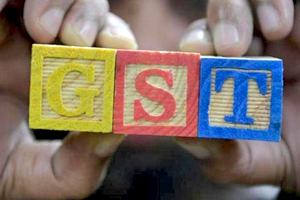
What is GST?
The GST is meant to be a unified indirect tax across the country on products and services. In the current system, tax is levied at each stage separately by the Union government and the States at varying rates, on the full value of the goods. But under the GST system, tax will be levied only on the value added at each stage. It is a single tax (collected at multiple points) with a full set-off for taxes paid earlier in the value chain.
Thus, the final consumer will bear only the GST charged by the last dealer in the supply chain with set-off benefits at all the previous stages.
What is State GST and Central GST?
For transactions within a State, there will be two components of GST - Central GST (CGST) and State GST (SGST) - levied on the value of goods and services. Both the Centre and the States will simultaneously levy GST across the value chain.
In the case of inter-State transactions, the Centre would levy and collect the Integrated Goods and Services Tax (IGST). The IGST would be roughly equal to CGST plus SGST.
Why was GST established?
The GST was established to subsume various indirect taxes levied at different levels, with the idea of reducing red-tape, plugging leakages and paving the way for a transparent indirect tax regime.
How will GST affect the common man?
The impact of the GST on the prices of goods and services will largely depend on the item in question. It will also depend upon the respective State governments and their intervention with respect to controlling prices of essential commodities. Milk, for example, which is likely to see a spike in prices after GST is implemented, can still be sold at cheaper rates, if the State government offers a subsidy on it.
How will GST help in getting rid of tax evasion?
A comprehensive IT system, GSTN, will allot universal GST numbers (similar to PAN) to all manufacturers, traders, stockists, wholesalers and retailers. This will simplify the administration of indirect taxes and plug leakages. The government also plans to incentivise tax compliance by traders.
Whether the GST will be beneficial to the poor or not only time can tell. Prices of vegetables and fruits are likely to rise under the GST regime and services such as eating at restaurants will get more expensive. What will likely get cheaper are items such as clothes, as cascading taxes at various stages of manufacturing would no longer apply to them.
Is GST going to benefit people below the poverty line?
(Answered by Grant Thornton India LLP)
With respect to those living below the poverty line, there might not be a direct impact of the GST on them as such since basic necessities like food are unlikely to attract the GST but increased collections of the GST with a larger tax base should provide an impetus to the government to allocate more money for social and poverty alleviation programmes. Thus, the GST should benefit all sections of the society. Additionally, the GST, being a nationwide tax, could lead to possibly higher inflation in the first few years of its introduction but would gradually increase the overall GDP.
How will GST affect tax deductions of a salaried person?
The GST is an indirect tax collected from customers who buy manufactured goods or services. So whether you are earning a salary or not, as long as you buy something, you’ll be paying tax.
Which are the items that could become costlier and which are those that could become cheaper?
(Answered by Deloitte Haskins & Sells LLP)
Broadly, services are expected to become costlier under the GST regime, as the expected GST rate would be higher than the existing service tax rate of 15%. Clearly, the GST is expected to bring down prices of indigenously manufactured goods on account of current effective indirect taxes (central excise @ 12.5%, State VAT @ 5%-15% etc.) being higher as compared to recommended lower GST rate @ 5% and standard GST rates @ 12% and 18%. Thus, price of certain category of goods may come down depending on the effective rate of indirect taxes being paid at present and the tax brackets under which goods are classified under the GST.


Comments
Add new comment