



What is GST and how will it affect the common man?

News Network
July 1, 2017

New Delhi, Jul 1: Sixteen years in the making, India rolls out the Goods and Services Tax (GST) from July 1, 2017. The Narendra Modi-led government inaugurated the new indirect tax at the stroke of midnight of June 30 in Parliament.gst-1
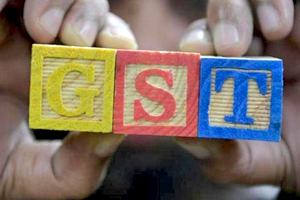
What is GST?

The GST is meant to be a unified indirect tax across the country on products and services. In the current system, tax is levied at each stage separately by the Union government and the States at varying rates, on the full value of the goods. But under the GST system, tax will be levied only on the value added at each stage. It is a single tax (collected at multiple points) with a full set-off for taxes paid earlier in the value chain.

Thus, the final consumer will bear only the GST charged by the last dealer in the supply chain with set-off benefits at all the previous stages.

What is State GST and Central GST?

For transactions within a State, there will be two components of GST - Central GST (CGST) and State GST (SGST) - levied on the value of goods and services. Both the Centre and the States will simultaneously levy GST across the value chain.

In the case of inter-State transactions, the Centre would levy and collect the Integrated Goods and Services Tax (IGST). The IGST would be roughly equal to CGST plus SGST.

Why was GST established?

The GST was established to subsume various indirect taxes levied at different levels, with the idea of reducing red-tape, plugging leakages and paving the way for a transparent indirect tax regime.

How will GST affect the common man?

The impact of the GST on the prices of goods and services will largely depend on the item in question. It will also depend upon the respective State governments and their intervention with respect to controlling prices of essential commodities. Milk, for example, which is likely to see a spike in prices after GST is implemented, can still be sold at cheaper rates, if the State government offers a subsidy on it.

How will GST help in getting rid of tax evasion?

A comprehensive IT system, GSTN, will allot universal GST numbers (similar to PAN) to all manufacturers, traders, stockists, wholesalers and retailers. This will simplify the administration of indirect taxes and plug leakages. The government also plans to incentivise tax compliance by traders.

Whether the GST will be beneficial to the poor or not only time can tell. Prices of vegetables and fruits are likely to rise under the GST regime and services such as eating at restaurants will get more expensive. What will likely get cheaper are items such as clothes, as cascading taxes at various stages of manufacturing would no longer apply to them.

Is GST going to benefit people below the poverty line?

(Answered by Grant Thornton India LLP)

With respect to those living below the poverty line, there might not be a direct impact of the GST on them as such since basic necessities like food are unlikely to attract the GST but increased collections of the GST with a larger tax base should provide an impetus to the government to allocate more money for social and poverty alleviation programmes. Thus, the GST should benefit all sections of the society. Additionally, the GST, being a nationwide tax, could lead to possibly higher inflation in the first few years of its introduction but would gradually increase the overall GDP.

How will GST affect tax deductions of a salaried person?

The GST is an indirect tax collected from customers who buy manufactured goods or services. So whether you are earning a salary or not, as long as you buy something, you’ll be paying tax.

Which are the items that could become costlier and which are those that could become cheaper?

(Answered by Deloitte Haskins & Sells LLP)

Broadly, services are expected to become costlier under the GST regime, as the expected GST rate would be higher than the existing service tax rate of 15%. Clearly, the GST is expected to bring down prices of indigenously manufactured goods on account of current effective indirect taxes (central excise @ 12.5%, State VAT @ 5%-15% etc.) being higher as compared to recommended lower GST rate @ 5% and standard GST rates @ 12% and 18%. Thus, price of certain category of goods may come down depending on the effective rate of indirect taxes being paid at present and the tax brackets under which goods are classified under the GST.

Comments

Add new comment

  • Coastaldigest.com reserves the right to delete or block any comments.
  • Coastaldigset.com is not responsible for its readers’ comments.
  • Comments that are abusive, incendiary or irrelevant are strictly prohibited.
  • Please use a genuine email ID and provide your name to avoid reject.
News Network
May 15,2020

Bengaluru, May 15: With lockdown-3 coming to an end in a couple of days, Karnataka Chief Minister B S Yediyurappa on Friday expressed confidence about the Centre announcing relaxation to "many things" after May 17.

"After May 17, the government of India is going to relax so many things, let us wait for it," he said in response to a question from reporters here. "According to me they (centre) will relax everything.... maybe for things like five-star hotels and others they may not give permission for the time being, but for other things they are going to give permission. Let's wait and see."

The nationwide lockdown was initially imposed from March 25 to April 14, then extended to May 3 and again to May 17 to prevent the spread of the novel coronavirus. Karnataka Tourism Minister C T Ravi on Wednesday had hinted at the state government permitting the opening of gyms, fitness centres and golf courses, also certain hotels for local tourism purpose after May 17, when the third phase of the COVID-19 induced lockdown comes to an end.

The Muzrai department (in charge of the administration of temples) was also planning to have a Standard Operating Procedure (SOP) in place, that needs to be followed at temples once they are opened for the public, officials have said. They said the opening of temples for the public is however subject to the MHA (Ministry of Home Affairs) guidelines.

During the recent video conferencing Prime Minister Narendra Modi had with Chief Ministers of various states, Yediyurappa had proposed doing away with district wise colour-coding and instead advocated strict cordoning of containment zones to control the spread of the pandemic.

He had pitched for resuming all economic activities in stand-alone establishments while continuing the restrictions on malls, cinema halls, dining facilities and establishments with centrally controlled air-conditioning. The CM had suggested that 50 to 100 meters around known clusters be declared as containment zones and commercial activities, including public transport, to be allowed in non- containment zones.

Comments

MR
 - 
Sunday, 17 May 2020

Please don't go out until May 31st.

Remember the Politicians and their famiies will stay inside  until May 31'st to protect their families.

If you go out and fall sick your whole family will suffer. So be smart and stay home.

Add new comment

  • Coastaldigest.com reserves the right to delete or block any comments.
  • Coastaldigset.com is not responsible for its readers’ comments.
  • Comments that are abusive, incendiary or irrelevant are strictly prohibited.
  • Please use a genuine email ID and provide your name to avoid reject.
News Network
July 14,2020

Bengaluru, July 14: The Karnataka government has allowed some relaxations during the week-long lockdown in Bengaluru urban and rural districts. The lockdown will commence from 8p.m. today (July 14) and end at 5a.m. on July 22.  The government has released the guidelines for lockdown.

Restrictions

*No new flights or trains will be permitted; only flights and trains already scheduled will continue to operate. Flight and train tickets shall serve as passes for movement by taxis/cab aggregators/auto rickshaws.

* Metro rail services prohibited

* Taxis and services of cab aggregators will be prohibited except for emergency and as permitted in guidelines.

* Schools, colleges, educational/training/coaching institutions etc. will remain closed. Online/distance learning shall continue to be permitted. Examination already scheduled shall be permitted

* Hotels, restaurants, and hospitality services, prohibited except those meant for health/police/government officials/healthcare workers. Hotels and restaurants shall be permitted to operate kitchens for takeaway/home delivery of food items only.

* All cinema halls, shopping malls, gymnasiums, sports complexes, stadia, swimming pools, entertainment parks, theatres, bars and auditoriums, assembly halls and similar places.

* All social/political/sports/entertainment/academic/cultural religious functions/other gatherings and large congregations.

* All religious places/places of worship shall be closed for public. Religious congregations are strictly prohibited. Commercial and private establishment shall be closed down

Relaxations (outside containment zone)

* Shops including ration shops (PDS), dealing with food, groceries, fruits and vegetables, etc. to open only from 5 am to 12 noon. Home delivery of essential items shall be encouraged.

* All facilities in the supply chain of essential goods, whether involved in manufacturing, wholesale or retail of such goods through local stores, large brick and mortar stores or e-commerce companies.

* All food processing and related industries.

* Banks, insurance offices and ATM.

* Print and electronic media.

* Telecommunication, internet services, broadcasting and cable services, IT and IT-enabled services with minimum staff for essential purposes. As far as possible, work from home should be encouraged.

* Delivery of essential items such as food, medicines, pharmaceuticals, medical equipment through e-commerce.

* Power generation, transmission and distribution units and services.

* Capital and debt market services and notified by the Securities and Exchange Board of India (Sebi)

* Cold storage and warehousing services.

* Private security services.

* Delivery of goods by E-Commerce companies. Industries/industrial establishments as listed below will be allowed to operate (outside containment zones):

i. Production units which require continuous process, and their supply chain.

ii. Food processing industries, manufacturing of essential goods, including drugs, pharmaceuticals, medical devices, their raw material and intermediates.

iii. Manufacturing of packing materials.

iv. Manufacturing and other industrial establishment with access control in Special Economic Zones (SEZs) or outside municipal limits and Export Oriented Units (EoUs), Industrial townships. Construction activities will be allowed in continuation of works in construction projects, where workers are available on site.

Comments

Add new comment

  • Coastaldigest.com reserves the right to delete or block any comments.
  • Coastaldigset.com is not responsible for its readers’ comments.
  • Comments that are abusive, incendiary or irrelevant are strictly prohibited.
  • Please use a genuine email ID and provide your name to avoid reject.
News Network
February 27,2020

Mangaluru, Feb 27: An utterly unprofessional thief, who fell asleep after breaking into a house, was caught by the house owner and handed over to the police in the coastal district of Dakshina Kannada.

The hilarious incident took place on Wednesday in the one-storey, tiled-roof house owned by Sudarshan at Ullas Junction under the limits of Uppinangady police station.

The thief, who gained entry into the house by removing the roof-tiles, has been identified as Anil Sahani, a native of Bihar’s Majipur district. He was snoring on the sofa with a set of keys clutched in his hand when the house owner woke up in the morning.

The house owner, who was sure that the thief was drunk, woke him up by hitting him with a stick and then handed him over to the police.

According to police, the thief was tired after removing the tiles on Tuesday night and hence he decided to take a nap soon after entering the house.

He grabbed a bunch of keys kept near the TV stand and then lied down on the sofa. He woke up only when the house owner hit him with a stick the next morning.

Comments

Naina Kudla
 - 
Thursday, 27 Feb 2020

Inspired by the Rabbit which was defeated by the Tortoise

Add new comment

  • Coastaldigest.com reserves the right to delete or block any comments.
  • Coastaldigset.com is not responsible for its readers’ comments.
  • Comments that are abusive, incendiary or irrelevant are strictly prohibited.
  • Please use a genuine email ID and provide your name to avoid reject.