



Will have to take military way if India doesn't listen, warns China

Agencies
July 4, 2017

Beijing, Jul 4: China would be forced to use a "military way" to end the standoff in the Sikkim sector if India "refuses to listen" to it, a Chinese expert has warned.
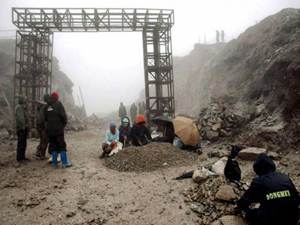
china copy copyAs the standoff at the Doklam area continued for the third week, the longest between the two countries, the official media and the think-tanks here have said that "war is possible if the conflict between India and China is not handled properly".

"China is trying its best to use historical lessons to reason with India and show sincerity in peacefully solving the problem, but if India refuses to listen, then China would have no other choice than to use a military way of solving the problem," Hu Zhiyong, a research fellow at the Shanghai Academy of Social Sciences, told the state-run Global Times.

Hu claimed that India is provoking China because it wanted to prove to the US that it could contain China while Prime Minister Narendra Modi was in the US.

But Hu said Trump was not like his predecessor Barack Obama.

"Obama believes India is important only because they share the same values, but Trump is very pragmatic, and he doesn't treat India as a valuable ally because New Delhi is too weak to confront Beijing," Hu opined.

Although India always treats China as its biggest rival, China does not think so as India lags far behind China, Song Zhongping, a Beijing-based military expert, was quoted as saying by the daily.

"Experts also scoffed at India's military threat after Indian Defense Minister Arun Jaitely asserted on Friday that the India of 2017 is different from what it was in 1962," said the report in the daily, known for its nationalist stance.

"The gap between the militaries of China and India today is even bigger than in 1962, and I hope India can keep calm for its own good," Hu said.

Since the standoff on June 6, when the People's Liberation Army (PLA) destroyed bunkers of the India Army claiming the area belonged to China, Chinese media have carried several pieces warning India for escalating border tension and "reminding" the Indian Army about the 1962 war.

Of the 3,488-km-long India-China border from Jammu and Kashmir to Arunachal Pradesh, a 220-km section falls in Sikkim.

Comments

Salman sheikh
 - 
Friday, 7 Jul 2017

There is a name of the film in tulu which have been released recently which suites them \AREYMARLER\"
This bloody goon is disturbing peace in DK ...only becoz of him innocent ppl has to lose their lives.."

Add new comment

  • Coastaldigest.com reserves the right to delete or block any comments.
  • Coastaldigset.com is not responsible for its readers’ comments.
  • Comments that are abusive, incendiary or irrelevant are strictly prohibited.
  • Please use a genuine email ID and provide your name to avoid reject.
Agencies
July 7,2020

Washington, Jul 7: US Secretary of State Mike Pompeo on Monday (local time) confirmed that the White House is "looking at" banning the Chinese social media apps including TikTok.

"With respect to Chinese apps on people's cell phones, I can assure you the United States will get this one right too. I don't want to get out in front of the President [Donald Trump], but it's something we're looking at," Pompeo was quoted by CNN during an interview with Fox News.

He said people should only download the app, "if you want your private information in the hands of the Chinese Communist Party."

Responding to his comments, a TikTok spokesperson said, "TikTok is led by an American CEO, with hundreds of employees and key leaders across safety, security, product and public policy here in the US."

"We have no higher priority than promoting a safe and secure app experience for our users.  We have never provided user data to the Chinese government, nor would we do so if asked," the spokesperson added.

The US politicians have repeatedly criticised TikTok, owned by Beijing-based startup ByteDance, of being a threat to national security because of its ties to China.

Recently, India banned 59 Chinese apps including TikTok following a violent standoff with Chinese troops. This move was lauded by the US officials.

Comments

Add new comment

  • Coastaldigest.com reserves the right to delete or block any comments.
  • Coastaldigset.com is not responsible for its readers’ comments.
  • Comments that are abusive, incendiary or irrelevant are strictly prohibited.
  • Please use a genuine email ID and provide your name to avoid reject.
News Network
February 11,2020

Feb 11: China reported 108 new coronavirus deaths on February 10, the highest daily toll since the outbreak began in Wuhan late last year, as two senior officials in the hard-hit province of Hubei were removed from their jobs.

The total number of deaths on the mainland reached 1,016 in the 24 hours until midnight, the National Health Commission said on Tuesday.

Some 2,478 new cases were confirmed, bringing the total to 42,638.

Of the new deaths, 103 were in the province of Hubei, including 67 in the provincial capital of Wuhan. The virus is thought to have originated there in a market that sold seafood as well as wild animals.

Two senior health officials in the province - Zhang Jin who was Party Secretary of the health commission for Hubei and Ling Yingzi who was director of the Hubei Provincial Health Commission - were both removed from their posts, state media reported on Tuesday,  a day after Chinese President Xi Jinping visited health facilities in Beijing.

In his first public appearance since the outbreak began, Xi donned a face mask and had his temperature checked while visiting medical workers and patients in the capital.

"We have seen very little of Xi Jinping since the outbreak began but he was out and about in Beijing on Monday," Al Jazeera's Katrina Yu said from Beijing. "He has been trying to rally the troops saying: 'We can win this battle.' But it's also a sign that the battle is far from over."

The other fatalities on Monday were in the provinces of Heilongjiang, Anhui and Henan and the cities of Tianjin and Beijing, the National Health Commission said.

During a meeting chaired by Premier Li Keqiang on Monday, a group of leaders tasked with beating the virus said it would work to solve raw material and labour shortages and boost supplies of masks and protective clothing.

They said nearly 20,000 medical personnel from around the country had already been sent to Wuhan, and more medical teams were also on the way.

Comments

Add new comment

  • Coastaldigest.com reserves the right to delete or block any comments.
  • Coastaldigset.com is not responsible for its readers’ comments.
  • Comments that are abusive, incendiary or irrelevant are strictly prohibited.
  • Please use a genuine email ID and provide your name to avoid reject.
News Network
May 19,2020

May 19: A Chinese laboratory has been developing a drug it believes has the power to bring the coronavirus pandemic to a halt.

The outbreak first emerged in China late last year before spreading across the world, prompting an international race to find treatments and vaccines.

A drug being tested by scientists at China's prestigious Peking University could not only shorten the recovery time for those infected, but even offer short-term immunity from the virus, researchers say.

Sunney Xie, director of the university's Beijing Advanced Innovation Center for Genomics, told AFP that the drug has been successful at the animal testing stage.

"When we injected neutralising antibodies into infected mice, after five days the viral load was reduced by a factor of 2,500," said Xie.

"That means this potential drug has (a) therapeutic effect."

The drug uses neutralising antibodies -- produced by the human immune system to prevent the virus infecting cells -- which Xie's team isolated from the blood of 60 recovered patients.

A study on the team's research, published Sunday in the scientific journal Cell, suggests that using the antibodies provides a potential "cure" for the disease and shortens recovery time.

Xie said his team had been working "day and night" searching for the antibody.

"Our expertise is single-cell genomics rather than immunology or virology. When we realised that the single-cell genomic approach can effectively find the neutralising antibody we were thrilled."

He added that the drug should be ready for use later this year and in time for any potential winter outbreak of the virus, which has infected 4.8 million people around the world and killed more than 315,000.

"Planning for the clinical trial is underway," said Xie, adding it will be carried out in Australia and other countries since cases have dwindled in China, offering fewer human guinea pigs for testing.

"The hope is these neutralised antibodies can become a specialised drug that would stop the pandemic," he said.

China already has five potential coronavirus vaccines at the human trial stage, a health official said last week.

But the World Health Organization has warned that developing a vaccine could take 12 to 18 months.

Scientists have also pointed to the potential benefits of plasma -- a blood fluid -- from recovered individuals who have developed antibodies to the virus enabling the body's defences to attack it.

More than 700 patients have received plasma therapy in China, a process which authorities said showed "very good therapeutic effects".

"However, it (plasma) is limited in supply," Xie said, noting that the 14 neutralising antibodies used in their drug could be put into mass production quickly.

Using antibodies in drug treatments is not a new approach, and it has been successful in treating several other viruses such as HIV, Ebola and Middle East Respiratory Syndrome (MERS).

Xie said his researchers had "an early start" since the outbreak started in China before spreading to other countries.

Ebola drug Remdesivir was considered a hopeful early treatment for COVID-19 -- clinical trials in the US showed it shortened the recovery time in some patients by a third -- but the difference in mortality rate was not significant.

The new drug could even offer short-term protection against the virus.

The study showed that if the neutralising antibody was injected before the mice were infected with the virus, the mice stayed free of infection and no virus was detected.

This may offer temporary protection for medical workers for a few weeks, which Xie said they are hoping to "extend to a few months".

More than 100 vaccines for COVID-19 are in the works globally, but as the process of vaccine development is more demanding, Xie is hoping that the new drug could be a faster and more efficient way to stop the global march of the coronavirus.

"We would be able to stop the pandemic with an effective drug, even without a vaccine," he said.

Comments

Add new comment

  • Coastaldigest.com reserves the right to delete or block any comments.
  • Coastaldigset.com is not responsible for its readers’ comments.
  • Comments that are abusive, incendiary or irrelevant are strictly prohibited.
  • Please use a genuine email ID and provide your name to avoid reject.