Will have to take military way if India doesn't listen, warns China

Agencies
July 4, 2017

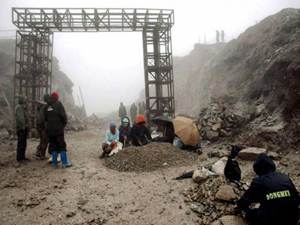
Beijing, Jul 4: China would be forced to use a "military way" to end the standoff in the Sikkim sector if India "refuses to listen" to it, a Chinese expert has warned.

china copy copyAs the standoff at the Doklam area continued for the third week, the longest between the two countries, the official media and the think-tanks here have said that "war is possible if the conflict between India and China is not handled properly".

"China is trying its best to use historical lessons to reason with India and show sincerity in peacefully solving the problem, but if India refuses to listen, then China would have no other choice than to use a military way of solving the problem," Hu Zhiyong, a research fellow at the Shanghai Academy of Social Sciences, told the state-run Global Times.

Hu claimed that India is provoking China because it wanted to prove to the US that it could contain China while Prime Minister Narendra Modi was in the US.

But Hu said Trump was not like his predecessor Barack Obama.

"Obama believes India is important only because they share the same values, but Trump is very pragmatic, and he doesn't treat India as a valuable ally because New Delhi is too weak to confront Beijing," Hu opined.

Although India always treats China as its biggest rival, China does not think so as India lags far behind China, Song Zhongping, a Beijing-based military expert, was quoted as saying by the daily.

"Experts also scoffed at India's military threat after Indian Defense Minister Arun Jaitely asserted on Friday that the India of 2017 is different from what it was in 1962," said the report in the daily, known for its nationalist stance.

"The gap between the militaries of China and India today is even bigger than in 1962, and I hope India can keep calm for its own good," Hu said.

Since the standoff on June 6, when the People's Liberation Army (PLA) destroyed bunkers of the India Army claiming the area belonged to China, Chinese media have carried several pieces warning India for escalating border tension and "reminding" the Indian Army about the 1962 war.

Of the 3,488-km-long India-China border from Jammu and Kashmir to Arunachal Pradesh, a 220-km section falls in Sikkim.

Comments

Salman sheikh
 - 
Friday, 7 Jul 2017

There is a name of the film in tulu which have been released recently which suites them \AREYMARLER\"
This bloody goon is disturbing peace in DK ...only becoz of him innocent ppl has to lose their lives.."

Add new comment

  • Coastaldigest.com reserves the right to delete or block any comments.
  • Coastaldigset.com is not responsible for its readers’ comments.
  • Comments that are abusive, incendiary or irrelevant are strictly prohibited.
  • Please use a genuine email ID and provide your name to avoid reject.
News Network
February 26,2020

Feb 26: China’s massive travel restrictions, house-to-house checks, huge isolation wards and lockdowns of entire cities bought the world valuable time to prepare for the global spread of the new virus.

But with troubling outbreaks now emerging in Italy, South Korea and Iran, and U.S. health officials warning Tuesday it’s inevitable it will spread more widely in America, the question is: Did the world use that time wisely and is it ready for a potential pandemic?

“It’s not so much a question of if this will happen anymore, but rather more a question of exactly when this will happen — and how many people in this country will have severe illness,” said Dr. Nancy Messonnier of the U.S. Centers for Disease Control and Prevention.

Some countries are putting price caps on face masks to combat price gouging, while others are using loudspeakers on trucks to keep residents informed. In the United States and many other nations, public health officials are turning to guidelines written for pandemic flu and discussing the possibility of school closures, telecommuting and canceling events.

Countries could be doing even more: training hundreds of workers to trace the virus’ spread from person to person and planning to commandeer entire hospital wards or even entire hospitals, said Dr. Bruce Aylward, the World Health Organization’s envoy to China, briefing reporters Tuesday about lessons learned by the recently returned team of international scientists he led.

“Time is everything in this disease,” Aylward said. “Days make a difference with a disease like this.”

The U.S. National Institutes of Health’s infectious disease chief, Dr. Anthony Fauci, said the world is “teetering very, very close” to a pandemic. He credits China’s response for giving other nations some breathing room.

China locked down tens of millions of its citizens and other nations imposed travel restrictions, reducing the number of people who needed health checks or quarantines outside the Asian country.

It “gave us time to really brush off our pandemic preparedness plans and get ready for the kinds of things we have to do,” Fauci said. “And we’ve actually been quite successful because the travel-related cases, we’ve been able to identify, to isolate” and to track down those they came in contact with.

With no vaccine or medicine available yet, preparations are focused on what’s called “social distancing” — limiting opportunities for people to gather and spread the virus.

That played out in Italy this week. With cases climbing, authorities cut short the popular Venice Carnival and closed down Milan’s La Scala opera house. In Japan, Prime Minister Shinzo Abe called on companies to allow employees to work from home, while the Tokyo Marathon has been restricted to elite runners and other public events have been canceled.

Is the rest of the world ready?

In Africa, three-quarters of countries have a flu pandemic plan, but most are outdated, according to authors of a modeling study published last week in The Lancet medical journal. The slightly better news is that the African nations most connected to China by air travel — Egypt, Algeria and South Africa — also have the most prepared health systems on the continent.

Elsewhere, Thailand said it would establish special clinics to examine people with flu-like symptoms to detect infections early. Sri Lanka and Laos imposed price ceilings for face masks, while India restricted the export of personal protective equipment.

India’s health ministry has been framing step-by-step instructions to deal with sustained transmissions that will be circulated to the 250,000 village councils that are the most basic unit of the country’s sprawling administration.

Vietnam is using music videos on social media to reach the public. In Malaysia, loudspeakers on trucks blare information through the streets.

In Europe, portable pods set up at United Kingdom hospitals will be used to assess people suspected of infection while keeping them apart from others. France developed a quick test for the virus and has shared it with poorer nations. German authorities are stressing “sneezing etiquette” and Russia is screening people at airports, railway stations and those riding public transportation.

In the U.S., hospitals and emergency workers for years have practiced for a possible deadly, fast-spreading flu. Those drills helped the first hospitals to treat U.S. patients suffering from COVID-19, the disease caused by the virus.

Other hospitals are paying attention. The CDC has been talking to the American Hospital Association, which in turn communicates coronavirus news daily to its nearly 5,000 member hospitals. Hospitals are reviewing infection control measures, considering using telemedicine to keep potentially infectious patients from making unnecessary trips to the hospital and conserving dwindling supplies of masks and gloves.

What’s more, the CDC has held 17 different calls reaching more than 11,000 companies and organizations, including stadiums, universities, faith leaders, retailers and large corporations. U.S. health authorities are talking to city, county and state health departments about being ready to cancel mass gathering events, close schools and take other steps.

The CDC’s Messonnier said Tuesday she had contacted her children’s school district to ask about plans for using internet-based education should schools need to close temporarily, as some did in 2009 during an outbreak of H1N1 flu. She encouraged American parents to do the same, and to ask their employers whether they’ll be able to work from home.

“We want to make sure the American public is prepared,” Messonnier said.

How prepared are U.S. hospitals?

“It depends on caseload and location. I would suspect most hospitals are prepared to handle one to two cases, but if there is ongoing local transmission with many cases, most are likely not prepared just yet for a surge of patients and the ‘worried well,’” Dr. Jennifer Lighter, a pediatric infectious diseases specialist at NYU Langone in New York, said in an email.

In the U.S., a vaccine candidate is inching closer to first-step safety studies in people, as Moderna Inc. has delivered test doses to Fauci’s NIH institute. Some other companies say they have candidates that could begin testing in a few months. Still, even if those first safety studies show no red flags, specialists believe it would take at least a year to have something ready for widespread use. That’s longer than it took in 2009, during the H1N1 flu pandemic — because that time around, scientists only had to adjust regular flu vaccines, not start from scratch.

The head of the World Health Organization, Tedros Adhanom Ghebreyesus, said the U.N. health agency’s team in China found the fatality rate between 2% and 4% in the hard-hit city of Wuhan, the virus’ epicenter, and 0.7% elsewhere.

The world is “simply not ready,” said the WHO’s Aylward. “It can get ready very fast, but the big shift has to be in the mindset.”

Aylward advised other countries to do “really practical things” now to get ready.

Among them: Do you have hundreds of workers lined up and trained to trace the contacts of infected patients, or will you be training them after a cluster pops up?

Can you take over entire hospital wards, or even entire hospitals, to isolate patients?

Are hospitals buying ventilators and checking oxygen supplies?

Countries must improve testing capacity — and instructions so health workers know which travelers should be tested as the number of affected countries rises, said Johns Hopkins University emergency response specialist Lauren Sauer. She pointed to how Canada diagnosed the first traveler from Iran arriving there with COVID-19, before many other countries even considered adding Iran to the at-risk list.

If the disease does spread globally, everyone is likely to feel it, said Nancy Foster, a vice president of the American Hospital Association. Even those who aren’t ill may need to help friends and family in isolation or have their own health appointments delayed.

“There will be a lot of people affected even if they never become ill themselves,” she said.

Comments

Add new comment

  • Coastaldigest.com reserves the right to delete or block any comments.
  • Coastaldigset.com is not responsible for its readers’ comments.
  • Comments that are abusive, incendiary or irrelevant are strictly prohibited.
  • Please use a genuine email ID and provide your name to avoid reject.
News Network
May 29,2020

Washington, May 29: US President Donald Trump while speaking with reporters at the White House on Thursday said that he is more liked in India than the media in his own country --the United States.

"I know. And they like me in India. I think they like me in India certainly more than the media likes me in this country, " Trump told reporters at his Oval office.

"And I like Modi (Prime Minister Narendra Modi). I like your prime minister a lot. He's a great gentleman. A great gentleman," he added further while briefing the reporters.

But when asked over ties between India and China, the US President said, "They have a big conflict going with India and China. Two countries with 1.4 billion people. Two countries with very powerful militaries. And India is not happy, and probably China is not happy."

Reiterating his offer to mediate between India and China on the border issue, Trump said that he spoke to Prime Minister Narendra Modi, who is not in "good mood" about the ongoing situation with Beijing.

However, informed sources from the Ministry of External Affairs told ANI on Friday that there has been no recent contact between Prime Minister Modi and the US President. The last conversation between them took place on April 4, 2020, on the subject of hydroxychloroquine.

Asked about his Wednesday's tweet regarding his offer to mediate between India and China, Trump said, "I would do that. If they (China and India) thought it would help." However, Trump did not clarify when did he speak to Modi.

Trump on Wednesday tweeted that he is "ready, willing and able to mediate" between India and China."We have informed both India and China that the United States is ready, willing and able to mediate or arbitrate their now raging border dispute," the US President said.

In response to Trump's mediation offer, India said on Thursday that it is engaged with the Chinese side to resolve the border issue peacefully.

India's Ministry of External Affairs spokesperson Anurag Srivastava said that the two sides have established mechanisms both at military and diplomatic levels to resolve situations that may arise in border areas peacefully through dialogue and "continue to remain engaged through these channels."

Indian and Chinese field commanders have been holding talks on de-escalating the tensions.

China has also struck a conciliatory tone on the border issue with India, saying the two countries pose no threat to each other and should resolve their differences through communication, while not allowing them to overshadow bilateral relations.

"We should never let differences overshadow our relations. We should resolve differences through communication. China and India should be good neighbours of harmonious coexistence and good partners to move forward hand in hand," said Chinese Ambassador to India, Sun Weidong, on Wednesday.

The tensions escalated between India and China following a number of confrontations between soldiers of both armies.

Troops of India and China were engaged in two face-offs in Eastern Ladakh and North Sikkim along the disputed Line of Actual Control (LAC), where troops from both sides suffered injuries early this month.

Studies over the anti-malarial drug, which is believed to cure the highly contagious coronavirus, have shown side-effects, according to the Centers for Disease Control and Prevention and the World Health Organisation. But Trump continues to defend his decision to take hydroxychloroquine saying he believes that it gives an additional level of safety.

Comments

Add new comment

  • Coastaldigest.com reserves the right to delete or block any comments.
  • Coastaldigset.com is not responsible for its readers’ comments.
  • Comments that are abusive, incendiary or irrelevant are strictly prohibited.
  • Please use a genuine email ID and provide your name to avoid reject.
Agencies
May 23,2020

Washington, May 23: President Donald Trump has labeled churches and other houses of worship as “essential" and called on governors nationwide to let them reopen this weekend even though some areas remain under coronavirus lockdown.

The president threatened Friday to “override” governors who defy him, but it was unclear what authority he has to do so.

“Governors need to do the right thing and allow these very important essential places of faith to open right now — for this weekend," Trump said at a hastily arranged press conference at the White House. Asked what authority Trump might have to supersede governors, White House press secretary Kayleigh McEnany said she wouldn't answer a theoretical question.

Trump has been pushing for the country to reopen as he tries to reverse an economic free fall playing out months before he faces reelection. White evangelical Christians have been among the president's most loyal supporters, and the White House has been careful to attend to their concerns throughout the crisis.

Following Trump's announcement, the Centers for Disease Control and Prevention released new guidelines for communities of faith on how to safely reopen, including recommendations to limit the size of gatherings and consider holding services outdoors or in large, well-ventilated areas.

Public health agencies have generally advised people to avoid gatherings of more than 10 people and encouraged Americans to remain 6 feet (1.8 meters) away from others when possible. Some parts of the country remain under some version of remain-at-home orders.

In-person religious services have been vectors for transmission of the virus. A person who attended a Mother's Day service at a church in Northern California that defied the governor's closure orders later tested positive, exposing more than 180 churchgoers. And a choir practice at a church in Washington state was labeled by the CDC as an early “superspreading" event.

But Trump on Friday stressed the importance of churches in many communities and said he was “identifying houses of worship — churches, synagogues and mosques — as essential places that provide essential services.”

“Some governors have deemed liquor stores and abortion clinics as essential” but not churches, he said. “It's not right. So I'm correcting this injustice and calling houses of worship essential." “These are places that hold our society together and keep our people united,” he added.

Dr. Deborah Birx, coordinator of the White House coronavirus task force, said faith leaders should be in touch with local health departments and can take steps to mitigate risks, including making sure those who are at high risk of severe complications remain protected.

“There's a way for us to work together to have social distancing and safety for people so we decrease the amount of exposure that anyone would have to an asymptomatic," she said.

A person familiar with the White House's thinking who spoke on condition of anonymity to discuss internal deliberations said Trump had called the news conference, which had not been on his public schedule, because he wanted to be the face of church reopenings, knowing how well it would play with his political base.

Churches around the country have filed legal challenges opposing virus closures.

In Minnesota, after Democratic Gov. Tim Walz this week declined to lift restrictions on churches, Roman Catholic and some Lutheran leaders said they would defy his ban and resume worship services. They called the restrictions unconstitutional and unfair since restaurants, malls and bars were allowed limited reopening.

Some hailed the president's move, including Kelly Shackelford, president of the conservative First Liberty Institute.

“The discrimination that has been occurring against churches and houses of worship has been shocking," he said in a statement. "Americans are going to malls and restaurants. They need to be able to go to their houses of worship.” But Rabbi Jack Moline, president of Interfaith Alliance, said it was “completely irresponsible” for Trump to call for a mass reopening of houses of worship.

“Faith is essential and community is necessary; however, neither requires endangering the people who seek to participate in them,” he said.

“The virus does not discriminate between types of gatherings, and neither should the president." Rhode Island Gov. Gina Raimondo, a Democrat, made clear that churches and other houses of worship will not resume in-person services in her state until at least next weekend and said she was skeptical Trump had the authority to impose such a requirement.

“It's reckless to force them to reopen this weekend. They're not ready,” she said. “We've got a good plan. I'm going to stick with it.” New Hampshire Gov. Chris Sununu, a Republican, said he would review the federal guidance, while maintaining a decision rests with him.

"Obviously we'd love to get to the point where we can get those open, but we'll look at the guidance documents and try to make some decisions rather quickly, depending on what it might say,” he said. “It's the governor's decision, of course.”

The CDC more than a month ago sent the Trump administration documents the agency had drafted outlining specific steps various kinds of organizations, including houses of worship, could follow as they worked to reopen safely.

But the White House dragged its feet, concerned that the recommendations were too specific and could give the impression the administration was interfering in church operations.

The guidance posted Friday contains most of the same advice as the draft guidance. It calls for the use of face coverings and recommends keeping worshippers 6 feet from one another and cutting down on singing, which can spread aerosolized drops that carry the virus.

Comments

Add new comment

  • Coastaldigest.com reserves the right to delete or block any comments.
  • Coastaldigset.com is not responsible for its readers’ comments.
  • Comments that are abusive, incendiary or irrelevant are strictly prohibited.
  • Please use a genuine email ID and provide your name to avoid reject.