


Will make profit of Rs 31 on each Rs 251 Smartphone: Mohit Goel

February 22, 2016

New Delhi, Feb 22: Since he announced the launch of a mobile phone for Rs 251, Mohit Goel has faced widespread scepticism, along with visits by police and income tax officials at his rented two-storey office in Noida. However, the Amity University graduate insists that he will not only deliver the phones at the stunning price he has quoted, but also make a profit of Rs 31 on each handset sold.
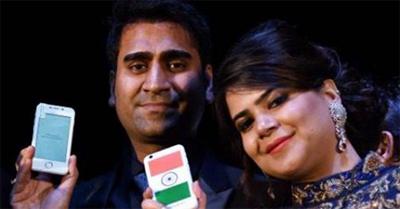
mohith1"Why am I being hounded? What wrong have I done?" Goel asked in the course of an exclusive interview with TOI. The director of Ringing Bells insists that his new venture is not a fly-by-night operation and will begin customer deliveries from April 15. "Has there ever been a case of income-tax evasion against me or my company, or has there been an FIR filed against me in any police station? Why am I being called a 'bhagora' (who'll run away with the money)? I intend to do a valid business, just like any other startup, and I have a business plan ready."

The company claims it has received over 7 crore registrations on its website since it started accepting applications on February 18. "We are taking online bookings for only 25 lakh units in the first batch due to limited supplies, while giving another 25 lakh through offline distributors. I will deliver the handsets before June 30. All the money that we receive from customers through the payment gateway will be kept in an escrow account and we will touch it only when we deliver the devices." The company has an account with ICICI Bank.

Goel, and his much-older confidant Ashok Chadha, who is the president of the company, insists that there have not been any infringements on design and other matters. "Some of the devices had the Adcom branding as we sourced panel (screen) from them. However, the final device will have our branding and the phone will have the same features and design that we had showcased."

The dual SIM Freedom 251 device carries a 4-inch display, 1 GB RAM, 8GB internal memory with a 1.3 GHZ quad-core processor, dual cameras and comes with a charger, headphone and one-year warranty.

The duo say that they have a carefully laid-out business model to manage the disruptive price for the device "The price that works out per device is roughly around Rs 1,500," Chadha says. insists, though significantly lowering it down from the Rs 2,500 he had announced on the day of the unveiling of the device. "We will source the devices from a supplier in Noida, who will be assembling the units for us after getting components from Taiwan." And while we do this, we also start the work to identify land and suppliers for setting up our manufacturing locations. For this, we have identified Noida while also looking at locations in Uttarakhand, West Bengal, Bihar and Punjab," Chadha says.

And just how does he bring down the cost to Rs 251, and also earn a profit? "Economies of scale gets it down to around Rs 1,200, and thereafter an online sales model cuts down marketing and sales expenses, giving us further savings," he says. And to this we will add marketing piggybacks from companies whose applications we load on the devices. We will save around Rs 300 per device more through this," Chadha says.

The unveiling of the phone on February 17 had created quite a flutter among existing handset suppliers, prompting industry body Indian Cellular Association to file a complaint with the government. (ICA) - which has members such as Samsung, Apple, Sony, Lava, Micromax, Karbonn, Motorola and HTC - ICA president Pankaj Mohindroo wrote a letter to telecom minister Ravi Shankar Prasad, expressing doubts about the intentions of Ringing Bells, saying it is not possible to supply a phone for Rs 251. Also, there were allegations that the company had ripped off the design of the prototype from American phone major Apple's iPhone, while also giving out devices sourced from a local electronics importer Adcom.

The company is also talking to large e-commerce companies, such as travel website Goibibo, to get their apps on the devices. "We will also monetize from the heavy traffic on our website and will make it into a marketplace for other brands to hop on. This will also help us to bring down the cost."

Comments

rampa
 - 
Monday, 22 Feb 2016

I think battery only original.

Add new comment

  • Coastaldigest.com reserves the right to delete or block any comments.
  • Coastaldigset.com is not responsible for its readers’ comments.
  • Comments that are abusive, incendiary or irrelevant are strictly prohibited.
  • Please use a genuine email ID and provide your name to avoid reject.
News Network
June 15,2020

Bengaluru, Jun 15: As the central government has not allowed reopening of gyms in the country amid COVID-19 pandemic, many gymnasiums in Bengaluru are on the verge of closing or sale.

Rakshith Gowda, a gym owner and secretary of gym owners association told ANI that they are not even able to pay rent of the premises which is Rs 60,000 to 1 lakh per month.

"The condition of the owners of the gym have worsened. We have to pay a minimum of Rs 60,000 - 100,000 rent of the building and for past 4 months we couldn't pay the rent, salary to trainers and cleaners, EMI," Gowda said.

"I urge the government to take necessary steps to bring up the gym sector as they have allowed opening up of shops, temples, malls. We urge the government to take proper steps in the interest of gyms," added Gowda.

Mahesh, a gymer said that he had to participate in a competition and due to lockdown he could not work on his bodybuilding.

"I was building my body for one year and due to lockdown I couldn't do the workout, I had to take part in a competition, now I need at least another one year to build my body back," Mahesh said.

Prasad, international bodybuilder said, "Most of the bodybuilders and gym owners are running gyms by taking loans, they are not in the situation to pay their loan EMIs."

"It's very important for us to reopen gyms and run them with all precautions and guidelines but the government is not allowing us to pay our loans and many gym owners and trainers are facing a tough time to earn living. We have requested Deputy Chief Minister Govind Karjol and cabinet ministers to allow us to open, but the government hasn't taken the decision in the interest of gyms which is creating more problems for us," Prasad said.

Comments

Add new comment

  • Coastaldigest.com reserves the right to delete or block any comments.
  • Coastaldigset.com is not responsible for its readers’ comments.
  • Comments that are abusive, incendiary or irrelevant are strictly prohibited.
  • Please use a genuine email ID and provide your name to avoid reject.
News Network
June 1,2020

Palakkad, Jun 1: An 11-month-old boy, whose parents are placed under COVID-19 quarantine, drowned in a bucket of water in Chalissery at Palakkad district.

The toddler Muhammed Nisan was the son of Muhammad Sadiq. The parents of the child are under home quarantine after Sadiq's brother, who is living in the same home was tested positive of COVID-19.

The child was found dead in a bucket of water kept in the bathroom on Saturday around 10 pm.

Chalissery police said that ''further actions will be taken only after the test result comes out. We have filed an unnatural death case on this.''

Since the family has been quarantined, the body of the baby has been shifted to the Thrissur Medical College for COVID-19 testing.

Comments

Add new comment

  • Coastaldigest.com reserves the right to delete or block any comments.
  • Coastaldigset.com is not responsible for its readers’ comments.
  • Comments that are abusive, incendiary or irrelevant are strictly prohibited.
  • Please use a genuine email ID and provide your name to avoid reject.
Agencies
June 17,2020

Riyadh, Jun 17: Saudi Arabia is expected to scale back or call off this year's hajj pilgrimage for the first time in its modern history, observers say, a perilous decision as coronavirus cases spike.

Muslim nations are pressing Riyadh to give its much-delayed decision on whether the annual ritual will go ahead as scheduled in late July.

But as the kingdom negotiates a call fraught with political and economic risks in a tinderbox region, time is running out to organise logistics for one of the world's largest mass gatherings.

A full-scale hajj, which last year drew about 2.5 million pilgrims, appears increasingly unlikely after authorities advised Muslims in late March to defer preparations due to the fast-spreading disease.

"It's a toss-up between holding a nominal hajj and scrapping it entirely," a South Asian official in contact with Saudi hajj authorities said.

A Saudi official said: "The decision will soon be made and announced."

Indonesia, the world's most populous Muslim nation, withdrew from the pilgrimage this month after pressing Riyadh for clarity, with a minister calling it a "very bitter and difficult decision".

Malaysia, Senegal and Singapore followed suit with similar announcements.

Many other countries with Muslim populations -- from Egypt and Morocco to Turkey, Lebanon and Bulgaria -- have said they are still awaiting Riyadh's decision.

In countries like France, faith leaders have urged Muslims to "postpone" their pilgrimage plans until next year due to the prevailing risks.

The hajj, a must for able-bodied Muslims at least once in their lifetime, represents a major potential source of contagion as it packs millions of pilgrims into congested religious sites.

But any decision to limit or cancel the event risks annoying Muslim hardliners for whom religion trumps health concerns.

It could also trigger renewed scrutiny of the Saudi custodianship of Islam's holiest sites -- the kingdom's most powerful source of political legitimacy.

A series of deadly disasters over the years, including a 2015 stampede that killed up to 2,300 worshippers, has prompted criticism of the kingdom's management of the hajj.

"Saudi Arabia is caught between the devil and the deep blue sea," Umar Karim, a visiting fellow at the Royal United Services Institute in London, told AFP.

"The delay in announcing its decision shows it understands the political consequences of cancelling the hajj or reducing its scale."

"Buying time"

The kingdom is "buying time" as it treads cautiously, the South Asian official said.

"At the last minute if Saudi says 'we are ready to do a full hajj', (logistically) many countries will not be in a position" to participate, he said.

Amid an ongoing suspension of international flights, a reduced hajj with only local residents is a likely scenario, the official added.

A decision to cancel the hajj would be a first since the kingdom was founded in 1932.

Saudi Arabia managed to hold the pilgrimage during previous outbreaks of Ebola and MERS.

But it is struggling to contain the virus amid a serious spike in daily cases and deaths since authorities began easing a nationwide lockdown in late May.

In Saudi hospitals, sources say intensive care beds are fast filling up and a growing number of health workers are contracting the virus as the total number of cases has topped 130,000. Deaths surpassed 1,000 on Monday.

To counter the spike, authorities this month tightened lockdown restrictions in the city of Jeddah, gateway to the pilgrimage city of Mecca.

"Heartbroken"

"The hajj is the most important spiritual journey in the life of any Muslim, but if Saudi Arabia proceeds in this scenario it will not only exert pressure on its own health system," said Yasmine Farouk from the Carnegie Endowment for International Peace.

"It could also be widely held responsible for fanning the pandemic."

A cancelled or watered-down hajj would represent a major loss of revenue for the kingdom, which is already reeling from the twin shocks of the virus-induced slowdown and a plunge in oil prices.

The smaller year-round umrah pilgrimage was already suspended in March.

Together, they add $12 billion to the Saudi economy every year, according to government figures.

A negative decision would likely disappoint millions of Muslim pilgrims around the world who often invest their life savings and endure long waiting lists to make the trip.

"I can't help but be heartbroken -- I've been waiting for years," Indonesian civil servant Ria Taurisnawati, 37, told AFP as she sobbed.

"All my preparations were done, the clothes were ready and I got the necessary vaccination. But God has another plan."

Comments

Add new comment

  • Coastaldigest.com reserves the right to delete or block any comments.
  • Coastaldigset.com is not responsible for its readers’ comments.
  • Comments that are abusive, incendiary or irrelevant are strictly prohibited.
  • Please use a genuine email ID and provide your name to avoid reject.