


Will make profit of Rs 31 on each Rs 251 Smartphone: Mohit Goel

February 22, 2016

New Delhi, Feb 22: Since he announced the launch of a mobile phone for Rs 251, Mohit Goel has faced widespread scepticism, along with visits by police and income tax officials at his rented two-storey office in Noida. However, the Amity University graduate insists that he will not only deliver the phones at the stunning price he has quoted, but also make a profit of Rs 31 on each handset sold.
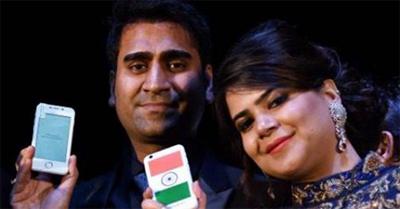
mohith1"Why am I being hounded? What wrong have I done?" Goel asked in the course of an exclusive interview with TOI. The director of Ringing Bells insists that his new venture is not a fly-by-night operation and will begin customer deliveries from April 15. "Has there ever been a case of income-tax evasion against me or my company, or has there been an FIR filed against me in any police station? Why am I being called a 'bhagora' (who'll run away with the money)? I intend to do a valid business, just like any other startup, and I have a business plan ready."

The company claims it has received over 7 crore registrations on its website since it started accepting applications on February 18. "We are taking online bookings for only 25 lakh units in the first batch due to limited supplies, while giving another 25 lakh through offline distributors. I will deliver the handsets before June 30. All the money that we receive from customers through the payment gateway will be kept in an escrow account and we will touch it only when we deliver the devices." The company has an account with ICICI Bank.

Goel, and his much-older confidant Ashok Chadha, who is the president of the company, insists that there have not been any infringements on design and other matters. "Some of the devices had the Adcom branding as we sourced panel (screen) from them. However, the final device will have our branding and the phone will have the same features and design that we had showcased."

The dual SIM Freedom 251 device carries a 4-inch display, 1 GB RAM, 8GB internal memory with a 1.3 GHZ quad-core processor, dual cameras and comes with a charger, headphone and one-year warranty.

The duo say that they have a carefully laid-out business model to manage the disruptive price for the device "The price that works out per device is roughly around Rs 1,500," Chadha says. insists, though significantly lowering it down from the Rs 2,500 he had announced on the day of the unveiling of the device. "We will source the devices from a supplier in Noida, who will be assembling the units for us after getting components from Taiwan." And while we do this, we also start the work to identify land and suppliers for setting up our manufacturing locations. For this, we have identified Noida while also looking at locations in Uttarakhand, West Bengal, Bihar and Punjab," Chadha says.

And just how does he bring down the cost to Rs 251, and also earn a profit? "Economies of scale gets it down to around Rs 1,200, and thereafter an online sales model cuts down marketing and sales expenses, giving us further savings," he says. And to this we will add marketing piggybacks from companies whose applications we load on the devices. We will save around Rs 300 per device more through this," Chadha says.

The unveiling of the phone on February 17 had created quite a flutter among existing handset suppliers, prompting industry body Indian Cellular Association to file a complaint with the government. (ICA) - which has members such as Samsung, Apple, Sony, Lava, Micromax, Karbonn, Motorola and HTC - ICA president Pankaj Mohindroo wrote a letter to telecom minister Ravi Shankar Prasad, expressing doubts about the intentions of Ringing Bells, saying it is not possible to supply a phone for Rs 251. Also, there were allegations that the company had ripped off the design of the prototype from American phone major Apple's iPhone, while also giving out devices sourced from a local electronics importer Adcom.

The company is also talking to large e-commerce companies, such as travel website Goibibo, to get their apps on the devices. "We will also monetize from the heavy traffic on our website and will make it into a marketplace for other brands to hop on. This will also help us to bring down the cost."

Comments

rampa
 - 
Monday, 22 Feb 2016

I think battery only original.

Add new comment

  • Coastaldigest.com reserves the right to delete or block any comments.
  • Coastaldigset.com is not responsible for its readers’ comments.
  • Comments that are abusive, incendiary or irrelevant are strictly prohibited.
  • Please use a genuine email ID and provide your name to avoid reject.
News Network
June 8,2020

Bengaluru, Jun 8: More than two months after the nationwide lockdown was imposed to curb the spread of coronavirus, people offered prayers at Bengaluru's Saint Mary's Church and Shree Dodda Ganapathi Temple as the government has allowed reopening of religious places from today.

Fewer devotees here visited Saint Mary's Church in Shivaji Nagar and were seen maintaining social distancing inside the church premises.

Meanwhile, people queued outside Shree Dodda Ganapathi Temple at Basavanagudi to offer prayers in the wee hours of Monday.

Floor markings have been made here to maintain social distancing.

Social distancing norms are also being followed in Hubli's Nagashetty Koppa where only a few devotees thronged the temple on Monday morning.

In Kalaburagi's Sharana Basaveshwara Temple the visiting hours for devotees have been fixed from 7 am to 10 am and three hours in the evening from 5 pm to 8 pm.

Thermal screening is being conducted here and a disinfectant tunnel has also been installed at the entry point.

Floor markings have also been made here to ensure social distancing while barricades have also been installed on the temple premises.

Comments

Add new comment

  • Coastaldigest.com reserves the right to delete or block any comments.
  • Coastaldigset.com is not responsible for its readers’ comments.
  • Comments that are abusive, incendiary or irrelevant are strictly prohibited.
  • Please use a genuine email ID and provide your name to avoid reject.
Ram Puniyani
February 4,2020

As democracy is seeping in slowly all over the world, there is an organization which is monitoring the degree of democracy in the individual countries, The Economist Intelligence Unit. As such in each country there are diverse factors which on one hand work to deepen it, while others weaken it. Overall there is a march from theoretical democracy to substantive one. The substantive democracy will herald not just the formal equality, freedom and community feeling in the country but will be founded on the substantive quality of these values. In India while the introduction of modern education, transport, communication laid the backdrop of beginning of the process, the direction towards deepening of the process begins with Mahatma Gandhi when he led the non-cooperation movement in 1920, in which average people participated. The movement of freedom for India went on to become the ‘greatest ever mass movement’ in the World.

The approval and standards for democracy were enshrined in Indian Constitution, which begins ‘We the people of India’, and was adopted on 26th January 1950. With this Constitution and the policies adopted by Nehru the process of democratization started seeping further, the dreaded Emergency in 1975, which was lifted later restored democratic freedoms in some degree. This process of democratisation is facing an opposition since the decade of 1990s after the launch of Ram Temple agitation, and has seen the further erosion with BJP led Government coming to power in 2014. The state has been proactively attacking civil liberties, pluralism and participative political culture with democracy becoming flawed in a serious way. And this is what got reflected in the slipping of India by ten places, to 51st, in 2019. On the index of democracy India slipped down from the score of 7.23 to 6.90. The impact of sectarian BJP politics is writ on the state of the nation, country.

Ironically this lowering of score has come at a time when the popular protests, the deepening of democracy has been given a boost and is picking up with the Shaheen Bagh protests. The protest which began in Shaheen Bagh, Delhi in the backdrop of this Government getting the Citizenship amendment Bill getting converted into an act and mercilessly attacking the students of Jamia Milia Islamia, Aligarh Muslim University along with high handed approach in Jamia Nagar and neighbouring areas.  From 15th December 2019, the laudable protest is on.

It is interesting to note that the lead in this protest has been taken by the Muslim women, from the Burqa-Hijab clad to ‘not looking Muslim’ women and was joined by students and youth from all the communities, and later by the people from all the communities. Interestingly this time around this Muslim women initiated protest has contrast from all the protests which earlier had begun by Muslims. The protests opposing Shah Bano Judgment, the protests opposing entry of women in Haji Ali, the protests opposing the Government move to abolish triple Talaq. So far the maulanas from top were initiating the protests, with beard and skull cap dominating the marches and protests. The protests were by and large for protecting Sharia, Islam and were restricted to Muslim community participating.

This time around while Narendra Modi pronounced that ‘protesters can be identified by their clothes’, those who can be identified by their external appearance are greatly outnumbered by all those identified or not identified by their appearance.

The protests are not to save Islam or any other religion but to protect Indian Constitution. The slogans are structured around ‘Defence of democracy and Indian Constitution’. The theme slogans are not Allahu Akbar’ or Nara-E-Tadbeer’ but around preamble of Indian Constitution. The lead songs have come to be Faiz Ahmad Faiz’s ‘Hum Dekhenge’, a protest against Zia Ul Haq’s attempts to crush democracy in the name of religion. Another leading protest song is from Varun Grover, ‘Tanashah Aayenge…Hum Kagaz nahin Dikhayenge’, a call to civil disobedience against the CAA-NRC exercise and characterising the dictatorial nature of the current ruling regime.

While BJP was telling us that primary problem of Muslim women is Triple talaq, the Muslim women led movements has articulated that primary problem is the very threat to Muslim community. All other communities, cutting across religious lines, those below poverty line, those landless and shelter less people also see that if the citizenship of Muslims can be threatened because of lack of some papers, they will be not far behind in the victimization process being unleashed by this Government.

While CAA-NRC has acted as the precipitating factor, the policies of Modi regime, starting from failure to fulfil the tall promises of bringing back black money, the cruel impact of demonetisation, the rising process of commodities, the rising unemployment, the divisive policies of the ruling dispensation are the base on which these protest movements are standing. The spread of the protest movement, spontaneous but having similar message is remarkable. Shaheen Bagh is no more just a physical space; it’s a symbol of resistance against the divisive policies, against the policies which are increasing the sufferings of poor workers, the farmers and the average sections of society.

What is clear is that as identity issues, emotive issues like Ram Temple, Cow Beef, Love Jihad and Ghar Wapasi aimed to divide the society, Shaheen Bagh is uniting the society like never before. The democratisation process which faced erosion is getting a boost through people coming together around the Preamble of Indian Constitution, singing of Jan Gan Man, waving of tricolour and upholding the national icons like Gandhi, Bhagat Singh, Ambedkar and Maulana Azad. One can feel the sentiments which built India; one can see the courage of people to protect what India’s freedom movement and Indian Constitution gave them.

Surely the communal forces are spreading canards and falsehood against the protests. As such these protests which is a solid foundation of our democracy. The spontaneity of the movement is a strength which needs to be channelized to uphold Indian Constitution and democratic ethos of our beloved country.

Comments

Add new comment

  • Coastaldigest.com reserves the right to delete or block any comments.
  • Coastaldigset.com is not responsible for its readers’ comments.
  • Comments that are abusive, incendiary or irrelevant are strictly prohibited.
  • Please use a genuine email ID and provide your name to avoid reject.
News Network
April 24,2020

Udupi, Apr 24: While several state governments and NGOs are actively working to provide essentials to the needy amid the COVID-19 lockdown, a fisherwoman in Karnataka's Udupi has proved that even a small gesture of help for others can make a huge difference in the society.
A fisherwoman, Sharadakka, distributed rice to 140 needy families in her neighbourhood during the ongoing lockdown. The contribution was made by spending all her life savings amounting to Rs 30,000. The amount was saved by her over a period of time in an effort to build a house for herself.
On Thursday Udupi Deputy Commissioner G. Jagadeesh visited her and ensured help to build her house.
"Spending her meagre earnings, Sharadakka generously filled many empty stomachs amid the nation-wide lockdown, which is a matter of pride," said the Deputy Commissioner.

Comments

Add new comment

  • Coastaldigest.com reserves the right to delete or block any comments.
  • Coastaldigset.com is not responsible for its readers’ comments.
  • Comments that are abusive, incendiary or irrelevant are strictly prohibited.
  • Please use a genuine email ID and provide your name to avoid reject.