Will Siddaramaiah's younger son enter politics?

August 24, 2016

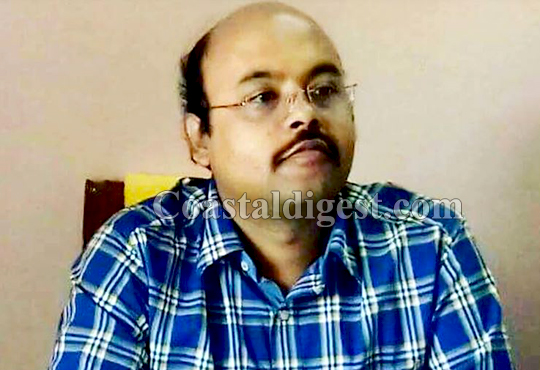
YathindraBengaluru, Aug 24: Chief Minister Siddaramaiah's younger son Yathindra says he will visit his father's constituency Varuna in Mysuru at least once or twice a week.

With his elder brother Rakesh's demise, Dr Yathindra feels he should act as a bridge between the people of the constituency and his father. Unlike his father and brother, Dr Yathindra, a health professional, has stayed away from politics.

On Sunday, he visited the family house in Ramakrishna Nagar in Mysuru, where he interacted with some representatives from the Varuna constituency. This sparked off speculation about his possible foray into politics.

On Tuesday, Dr Yathindra said he is not sure about his future plans. “But I have decided to keep in touch with the people of the constituency to address their grievances for the next one-and-a-half years. I have a diagnostic centre in Bengaluru. It will not be very difficult for me to take time off from my profession and visit Varuna once or twice a week,” he said.

He said that after his brother's demise, the people of the constituency started reaching out to him and advising him that he should step in, as they felt “deserted”.

“The people have no direct access to my father and they had expressed their concerns. I have not decided to enter politics or even join the party. My father has appointed a lot of officers to oversee development works in Varuna, and I will act as a coordinator,” he added.

Stating that he had never discussed politics with his brother, he said that he was surprised to see the rapport Rakesh had established with the people.

“My brother and I rarely met, and never discussed politics. But after his death, my mother requested me to step in. She does not want anybody taking undue advantage of our situation,” he added. Dr Yathindra said that his father had neither asked him to oversee activities in Varuna nor had he taken objection to his latest decision.

Comments

naren kotian
 - 
Wednesday, 24 Aug 2016

I know mr dr yatheendra in person ,he can never be a good leader ... its end of Khangrace in old mysore ... JDS- BJP nexus will crush them very badly .

Mahesh
 - 
Wednesday, 24 Aug 2016

Family members should not be engaged in govt work.

Priyanka
 - 
Wednesday, 24 Aug 2016

Rakesh misused the power and money of govt by going to tomorrow land party. what can people expect from this fellow?

Add new comment

  • Coastaldigest.com reserves the right to delete or block any comments.
  • Coastaldigset.com is not responsible for its readers’ comments.
  • Comments that are abusive, incendiary or irrelevant are strictly prohibited.
  • Please use a genuine email ID and provide your name to avoid reject.
Media Release
February 14,2020

Veteran journalist P. Sainath has said that the nation is in a crisis. And this crisis is not limited to just the rural area. It has become a national crisis at various areas such as agriculture, education, economy, job creation etc.

He was delivering the endowment lecture on the topic ‘Indian democracy at the post-liberalization and post-truth era’ at Media Manthan 2020 organized by the PG department of journalism and mass communication at St Aloysius College (Autonomous). 

Mr Sainath said that the many policies adopted in the 90s led to India becoming unusually unequal. Referring to the speech Ambedkar had made at the Constituent Assembly while handing over the draft of the Constitution, Mr Sainath said, “Ambedkar had warned about the weakness of Indian democracy that liberty without equality allows the supremacy of a few over the multitude. Liberty, equality and fraternity must be kept together as we cannot have one without the other.” 

Mr Sainath stated that the agrarian crisis was no longer about the loss of productivity, employment or about farmer suicide; it was a societal, civilizational crisis. Commenting on the lopsided policies such as cow-slaughter ban, he explained how cow slaughter ban had adversely affected many industries due to their interdependency. While Muslims who slaughtered cows were rendered helpless, the cattle traders who were mostly OBCs lost their earnings as the cattle prices crashed. An important industry like Kolhapur sandals industry in Maharashtra went bankrupt as a result of the cow slaughter ban in Maharashtra. He said the policymakers had no idea how the rural industries were interconnected. Demonetisation too devastated the rural economy as 98 percent of rural transactions happen through cash. 

Mr Sainath also spoke about the crisis of inequality which affects the Dalits and the Adivasis far more than anyone else as 90 percent of the rural households take home less than Rs 10,000/- per month. “Women are yet another group whose labour is never counted in the gross domestic product. Women and girls globally do unpaid work which amounts to about 12.5 billion working hours per year. Monetarily speaking, this is worth 10.8 trillion dollars,” Mr Sainath added. 

Speaking about the crisis of jobs Mr Sainath said that major companies were laying off employees just to create more profits for the investors and the adoption of artificial intelligence in the industry would further destroy millions of jobs.

Rector of St Aloysius College Institutions Fr Dionysius Vaz SJ, Principal Dr (Fr) Praveen Martis SJ, HOD of Journalism and Mass Communication department Dr (Fr) Melwyn Pinto SJ were present.

‘Veerappan and Vijay Mallya’s business models are interesting!’

Addressing the gathering during his endowment lecture on Friday, Mr Sainath made an interesting comment on the so called ‘revenue model’. “Whenever I visit IIMs and IITs for lectures on my PARI project, the students there ask me what my revenue model for my project is. I tell them that I do not have a revenue model. In fact, journalism does not begin with a revenue model. Gandhiji, Ambedkar, Bhagat Singh were all great journalists. But they did not have a revenue model,” Mr Sainath said.

On a lighter note, he said that the best revenue model that he liked was that of forest brigand Veerappan and liquor baron Vijay Mallya. “Veerappan ruled the forest for forty years and from the top ministers to the villagers he could dictate terms and liver royally. Similarly, Mallya’s revenue model was to steal the banks and run away abroad and live like a king,” Mr Sainath added.

Journalism is not and can never be a business. It is a calling, he opined. While newspaper can be a business, television can be a business, journalism per se cannot be reduced to a business. “Unfortunately today, journalists are recruited on a contract basis and they have no bargaining power; and there are no unions to fight for their cause. Hence, they are at the mercy of the corporate media houses for their survival and are made to write stories that cannot be called journalism,” Mr Sainath said.

Answering a question as to the pressures he faced as a journalist, he said that external pressures from the government or others could be very well handled. It is the internal pressures from once own media house that journalists find it difficult to manage.


 

Comments

Add new comment

  • Coastaldigest.com reserves the right to delete or block any comments.
  • Coastaldigset.com is not responsible for its readers’ comments.
  • Comments that are abusive, incendiary or irrelevant are strictly prohibited.
  • Please use a genuine email ID and provide your name to avoid reject.
coastaldigest.com news network
July 24,2020

Mangaluru, July 24: Karnataka's Dakshina Kannada district reported 8 new Covid-19 deaths in the last two days taking the toll to over 100. The district has recorded 107 Covid-19 deaths till now.

Deputy Commissioner Sindhu B Rupesh on Friday said a 44-year-old man from Mangaluru with the symptoms of respiratory failure, ARDS, AKI MODS hypertension, was admitted to a private hospital on July 19 and died on July 22. His throat swab tested positive for Covid-19 on Friday.

Another 56-year-old man from Mangaluru, who died on July 23, was suffering from urinary tract infection, MODS-septic shock, type II diabetes mellitus, hypothyroidism, systematic hypertension and IHD and had tested positive for Covid-19.

Mangaluru saw two more deaths -- a 75-year-old woman suffering from COPD with type 2 respiratory failure and multi-organ dysfunction syndrome with septic shock and a 65-year-old woman, who was suffering from BP and diabetes and admitted to a private hospital on July 13 and died on July 23.

A 61-year-old woman from Puttur, who was suffering from diabetes mellitus and hypertension and was undergoing treatment at a private hospital, died on July 23.

A 67-year-old man from Bhadravathi in Shivamogga, who was admitted to Wenlock Hospital on July 13 and was suffering from pneumonia and respiratory infection, died on July 23. He too tested positive for Covid-19.

Some of the other deaths were those of -- a 42-year-old man from Bantwal suffering from type 1 respiratory failure, urosepsis and uncontrolled type 2 diabetes and a 67-year-old man from Bhadravathi suffering from acute myocardial infarction, uncontrolled type 2 diabetes and systematic hypertension, Both died at private hospitals on July 23.

180 fresh cases

The Covid-19 graph slightly moved downward with the recording of 180 fresh cases, including four police personnel from Puttur police station. Of the positive cases, 56 are the primary contacts of the infected persons, 68 are suffering from Influenza-Like Illness (ILI) and 10 with the symptoms of Severe Acute Respiratory Infection (SARI).

The contacts of 45 persons who tested positive are being traced. One person with international travel history has also tested positive.

A total of 125 persons recovered and were discharged from hospitals, thus taking the tally of the total discharges to 1987.

Comments

Add new comment

  • Coastaldigest.com reserves the right to delete or block any comments.
  • Coastaldigset.com is not responsible for its readers’ comments.
  • Comments that are abusive, incendiary or irrelevant are strictly prohibited.
  • Please use a genuine email ID and provide your name to avoid reject.
News Network
January 10,2020

Bengaluru, Jan 10: Education technology company Byju’s is learnt to have raised $200 million in a funding round from Tiger Global Management, which has valued the Bengaluru-based start-up at around $8 billion, making it the third-largest unicorn (start-up valued over $1 billion) in the country.

With this, the Byju Raveendran-founded company has seen over 50 per cent jump in its valuation in just around nine months. In March 2019, Byju’s was valued $5.4 billion, when it raised around $31 million from General Atlantic, and Chinese investment giant Tencent.

At the current valuation, Byju’s has now replaced home-grown cab-hailing major Ola as the third-largest unicorn, next only to Paytm and OYO, which are valued around $16 billion and $10 billion, respectively.

Byju’s confirmed the transaction through a press statement, though the company declined to share any specific details of the deal. Tiger Global could not be immediately reached for its comments.

“We are happy to partner with a strong investor like Tiger Global Management. They share our sense of purpose and this partnership will advance our long-term vision of creating an impact by changing the way students learn,” said Raveendran. “This partnership is both a validation of the impact created by us so far and a vote of confidence for our long-term vision.”

This is Tiger Global’s first investment in the edutech space in India after Vendantu, an online tutoring platform, where it, along with WestBridge Capital, led a $42-million round in August.

An early backer of India’s internet growth story, the New York-headquartered Tiger Global has been a prolific investor in the Indian start-up space. Its portfolio in the country ranges from consumer focused e-commerce companies that are vital for the growth of the sector, such as Flipkart, Delhivery, Grofers, Quikr and PolicyBazaar, to mention a few.

After tasting success with Flipkart, one of its earliest investments, where it had pumped in around $1 billion, the PE major is now doubling down its focus on the Indian start-up space, under its new investment head Scott Shleifer.

Shleifer, who set up international private equity practice for Tiger Global, is said to be as aggressive deal maker like his predecessor Lee Fixel, who left the investment firm in March. Since then, Tiger has also invested in a host of technology-focused companies in diverse sectors including Ninjacart, CRED, NoBroker and Facilio to mention a few.

“Byju’s has emerged as the leader in the Indian education-tech sector. They are pioneering technology shaping the future of learning for millions of school students in India,” Shleifer was quoted in the press statement issued by the edutech firm.

Comments

Add new comment

  • Coastaldigest.com reserves the right to delete or block any comments.
  • Coastaldigset.com is not responsible for its readers’ comments.
  • Comments that are abusive, incendiary or irrelevant are strictly prohibited.
  • Please use a genuine email ID and provide your name to avoid reject.