Won’t ascend Paryaya Peetha for 6th time; will guild my heir if I were alive: Pejawar seer

coastaldigest.com news network
December 29, 2017

Udupi, Dec 29: Vishwesha Tirtha Swami, the chief pontiff of Paryaya Pejawar Mutt, who is vacating the Paryaya Peeth soon, has made it clear that he would not ascend the Paryaya Peetha for the sixth time as he would be 100 years old then.

Paryaya Peetha is the rotating presidency of the eight mutts of Udupi’s Krishna temple. During two year Paryaya term, the chief pontiff of the one of the eight mutts will take the responsibility of the puja and administration of the temple.

The 86-year-old Vishwesha Tirtha is the only seer among the Ashta Mutt swamijis to have ascended the Paryaya Peetha of the 800-year-old Sri Krishna Mutt/Temple five times ever since the biennial Paryaya system began here in 1522. He had taken over the responsibility for the fifth time on 18 January 2016, from Kaniyoor Mutt's Vidhyavallabhatirtha Swamiji.

Replying to the queries of media persons on Thursday, here the seer said that he already was suffering from some health problems and hence he would not think of taking over the responsibility once again after 16 years. “If I were alive I would guide Vishwaprasanna Tirtha, who will ascend the Paryaya Peetha,” he said.

After stepping down from the Paryaya Peetha, the he would take up the work of construction of an educational institution and a hospital on the outskirts of Hubballi, construction of a student hostel in Shivamogga and Mysuru, and the construction of a Krishna Temple in Pune, the seer said.

He said that the achievements of his fifth Paryaya included the renovation of the inner yard (“Ola Pauli”) of the Sri Krishna Mutt/Temple, construction of the Madhwangana Hall above the Rajangana Hall, the construction of a three-storey building housing 20 dormitories, a guesthouse and extension of the existing Yatri Nivas. All these works together had cost around Rs. 11 crore.

He had also constructed a building for a residential educational institution at Pajaka, the birthplace of the exponent of Dvaita philosophy, Sri Madhwacharya, at a cost of Rs. 5 crore. To a query, he said that the project of planting of one crore saplings could not be fully implemented.

A series of programmes will mark the valedictory of the historic fifth Paryaya of the seer from January 1 to 14, 2018. As part of the valedictory of his fifth Paryaya, he will perform the 36th Sudha Mangalotsava on January 5 along with Vishwaprasanna Tirtha, junior seer of his mutt. Satyatma Tirtha Swami of Uttardi Mutt will attend the function.

The Chandrika Mangalotsava will be held on January 6. Vidyashreesha Tirtha Swami of Vyasaraja Mutt will attend it. A large number of scholars of Dvaita philosophy from across the State were expected to participate in these two functions.

A Philosophy Conference will be held here on January 8 and 9. Scholars of Advaita, Vishishtadvaita and Dvaita philosophies from across the country will participate in the conference. The valedictory function of the religious discourses will be held on January 14, he said.
Comments

Suresh Ullal
 - 
Friday, 29 Dec 2017

May God Bless You Living Legend

Unknown
 - 
Friday, 29 Dec 2017

Among us  (Muslims) no leader can be like this. All are ambitious. Learn from seer

Gopal
 - 
Friday, 29 Dec 2017

Great model to soceity. He dont want position to serve his people. Great swamiji.. God bless you

Ramakrishna
 - 
Friday, 29 Dec 2017

We expect more spiritual and moral guidance from you seer..

Yogesh
 - 
Friday, 29 Dec 2017

Great seer. Great decision. All politicians should learn from from. After vacating he's going to serve people. 

Add new comment

  • Coastaldigest.com reserves the right to delete or block any comments.
  • Coastaldigset.com is not responsible for its readers’ comments.
  • Comments that are abusive, incendiary or irrelevant are strictly prohibited.
  • Please use a genuine email ID and provide your name to avoid reject.
Ram Puniyani
June 29,2020

In Minneapolis, US an African American, George Floyd lost his life as the white policeman, Derek Chauvin, caught hold of him and put his knee on his neck. This is a technique developed by Israel police. For nine long minutes the knee of the while policeman was on the neck of George, who kept shouting, I can’t breathe.

Following this gruesome murder America erupted with protests, ‘Black lives matter’. The protestors were not just African Americans but also a large section of whites. Within US one police Chief apologized for the act of this. In a touching gesture of apology the police force came on its knees. This had reverberations in different parts of the World.

The act was the outcome of the remnants of the racial hatred against blacks by the whites. It is the hatred and the perceptions which are the roots of such acts of violence. What was also touching that the state of democracy in US is so deep that even the police apologized, the nation, whites and blacks, stood up as a sensitive collective against this violence.

US is not the only country where the brutal acts of violence torment the marginalized sections of society. In India there is a list of dalits, minorities and adivasis who are regularly subjected to such acts. But the reaction is very different. We have witnessed the case of Tabrez Ansari, who was tied to the pole by the mob and beaten ruthlessly. When he was taken to police station, police took enough time to take him to hospital and Tabrez died.

Mohsin Sheikh, a Pune techie was murdered by Hindu Rashtra Sena mob, the day Modi came to power in 2014. Afrazul was killed by Shambhulal Regar, videotaped the act released on social media. Regar believed that Muslims are indulging in love Jihad, so deserve such a fate. Mohammad Akhlaq is one among many names who were mob lynched on the issue of beef cow. The list can fill pages after pages.

Recently a young dalit boy was shot dead for the crime of entering a temple. In Una four dalits were stripped above waste and beaten mercilessly. Commenting on this act the Union Minister Ramvilas Paswan commented that it is a minor incident. Again the list of atrocities against dalits is long enough. The question is what Paswan is saying is the typical response to such gruesome murders and tortures. In US loss of one black life, created the democratic and humane response. In India there is a general silence in response to these atrocities. Some times after a good lapse of time, the Prime Minister will utter, ‘Mother Bharati has lost a son’. Most of the time victim is blamed. Some social groups raise their voice in some fora but by and large the deafening silence from the country is the norm.

India is regarded as the largest democracy. Democracy is the rule of law, and the ground on which the injustices are opposed. In America though the present President is insensitive person, but its institutions and processes of democratic articulations are strong. The institutions have deepened their roots and though prejudices may be guiding the actions of some of the officers like the killer of George, there are also police officers who can tell their President to shut up if he has nothing meaningful to say on the issue. The prejudices against Blacks may be prevalent and deep in character, still there are large average sections of society, who on the principles of ‘Black lives matter’. There are large sections of vocal population who can protest the violation of basic norms of democracy and humanism.

In India by contrast there are multiple reasons as to why the lives of Tabrez Ansari, Mohammad Akhlaq, Una dalit victims and their likes don’t matter. Though we claim that we are a democracy, insensitivity to injustices is on the rise. The strong propaganda against the people from margins has become so vicious during last few decades that any violence against them has become sort of a new normal. The large populace, though disturbed by such brutalities, is also fed the strong dose of biases against the victims. The communal forces have a great command over effective section of media and large section of social media, which generates Hate against these disadvantaged groups, thereby the response is muted, if at all.

As such also the process of deepening of our democracy has been weak. Democracy is a dynamic process; it’s not a fixed entity. Decades ago workers and dalits could protest for their rights. Now even if peasants make strong protests, dominant media presents it as blocking of traffic! How the roots of democracy are eroded and are visible in the form where the criticism of the ruling dispensation is labelled as anti National..

Our institutions have been eroded over a period of time, and these institutions coming to the rescue of the marginalized sections have been now become unthinkable. The outreach of communal, divisive ideology, the ideology which looks down on minorities, dalits and Adivasis has risen by leaps and bounds.

The democracy in India is gradually being turned in to a hollow shell, the rule of law being converted in to rule of an ideology, which does not have faith in Indian Constitution, which looks down upon pluralism and diversity of this country, which is more concerned for the privileges of the upper caste, rich and affluent. The crux of the matter is the weak nature of democracy, which was on way to become strong, but from decades of 1980s, as emotive issues took over, the strength of democracy started dwindling, and that’s when the murders of the types of George Floyd, become passé. One does complement the deeper roots of American democracy and its ability to protect the democratic institutions, which is not the case in India, where protests of the type, which were witnessed after George Floyd’s murder may be unthinkable, at least in the present times. 

Comments

Add new comment

  • Coastaldigest.com reserves the right to delete or block any comments.
  • Coastaldigset.com is not responsible for its readers’ comments.
  • Comments that are abusive, incendiary or irrelevant are strictly prohibited.
  • Please use a genuine email ID and provide your name to avoid reject.
coastaldigest.com news network
July 29,2020

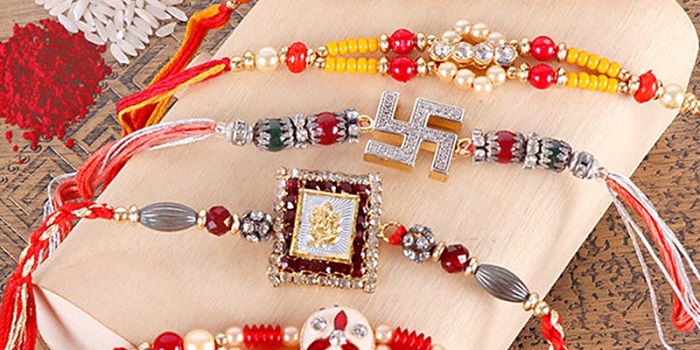
Mangaluru, Jul 29: Ahead of popular Hindu festival Raksha Bandhan, Karnataka postal circle has introduced an online portal 'Rakhi Post' to deliver rakhis across the country amid the COVID-19 outbreak.

This year Raksha Bandhan will be celebrated on Monday, August 3.

This service can be used to send rakhis to people across the country without violating the coronavirus norms.

Speaking to news agency, Senior Superintendent of Post offices, Shriharsha N said, "I am happy to announce that Karnataka postal circle has introduced an online portal 'rakhi post' to deliver rakhis to people during coronavirus phase."

"People willing to avail this service can visit this portal and pay a nominal amount of Rs 100 to send a rakhi," Shriharsha said.

The official has suggested to avail the service before July 31 for the timely delivery of rakhis.

The portal is also offering a special service to send rakhis to the soldier deployed on the borders. "We have also introduced a unique feature to deliver rakhis to Indian soldiers on the borders," he added.

Comments

Add new comment

  • Coastaldigest.com reserves the right to delete or block any comments.
  • Coastaldigset.com is not responsible for its readers’ comments.
  • Comments that are abusive, incendiary or irrelevant are strictly prohibited.
  • Please use a genuine email ID and provide your name to avoid reject.
Agencies
June 13,2020

New Delhi, Jun 13: Loss of smell or taste has been added to the list of COVID-19 symptoms, according to the revised clinical management protocols released by the Union Health Ministry on Saturday.

The ministry said that coronavirus-infected patients reporting to various COVID-19 treatment facilities have been reporting symptoms like fever, cough, fatigue, shortness of breath, expectoration, myalgia, rhinorrhea, sore throat and diarrhea.

They have also complained of loss of smell (anosmia) or loss of taste (ageusia) preceding the onset of respiratory symptoms.

Older people and immune-suppressed patients in particular may present with atypical symptoms such as fatigue, reduced alertness, reduced mobility, diarrhoea, loss of appetite, delirium, and absence of fever, the ministry said.

Children might not have reported fever or cough as frequently as adults.

The US's national public health institute, the Centers for Disease Control and Prevention (CDC), had in early May incorporated "a new loss of taste or smell" in the list of COVID-19 symptoms.

According to the data from Integrated Health Information Platform and Integrated Disease Surveillance Programme, portal case investigation forms for COVID 19 (n=15,366), the details on the signs and symptoms reported are (as on June 11), fever (27 per cent), cough (21 pc), sore throat (10 pc), breathlessness (8 pc), Weakness (7 pc), running nose (3pc ) and others 24 pc.

According to the health ministry, people infected by the novel coronavirus are the main source of infection.

Direct person-to-person transmission occurs through close contact, mainly through respiratory droplets that are released when the infected person coughs, sneezes, or talks.

These droplets may also land on surfaces, where the virus remains viable. Infection can also occur if a person touches an infected surface and then touches his or her eyes, nose, or mouth.

The median incubation period is 5.1 days (range 2–14 days). The precise interval during which an individual with COVID-19 is infectious is uncertain.

As per the current evidence, the period of infectivity starts 2 days prior to onset of symptoms and lasts up to 8 days.

The extent and role played by pre-clinical/ asymptomatic infections in transmission still remain under investigation.

Comments

Add new comment

  • Coastaldigest.com reserves the right to delete or block any comments.
  • Coastaldigset.com is not responsible for its readers’ comments.
  • Comments that are abusive, incendiary or irrelevant are strictly prohibited.
  • Please use a genuine email ID and provide your name to avoid reject.