Work unitedly to realise Abdul Kalam’s dream of developed India: Modi

Agencies
July 27, 2017

Rameswaram, Jul 27: Prime Minister Narendra Modi on Thursday urged the people to work together to fulfil former president A P J Abdul Kalam’s dream of seeing a developed India by 2022 when it celebrates its 75th Independence Day. “There are 125 crore people and if each one takes one step, then the country would be 125 crore steps ahead,” he told a public meeting near this island, the home town of the late ‘Missile Man’, after inaugurating his national memorial.narendra

Various schemes launched by central government whether it was “Stand up India or Start up India, ‘Amrut’ cities or smart cities or Clean India projects would go a long way in realising Kalam’s dream of “developed India”, he said. In a reference to epic ‘Ramayana’, Modi said even a small squirrel had helped Lord Ram in constructing the ‘Ramasethu’ (bridge) for him to cross over to Sri Lanka.

“If people are committed like that squirrel, the country can scale great heights,” Modi said addressing a gathering at Mandapam, about 15 kms from Rameswaram. He urged the youth and pilgrims visiting this holy town to include a visit to Kalam’s memorial, designed and built by the Defence Research and Development Organisation (DRDO) with which the former president was associated with for a long time.

Modi heaped praise on labourers involved in the construction of the memorial, saying they had not charged for the extra two hours they had put in every day. After sweating it out from 8 AM to 5 PM, they would later take a break for one hour and put in two additional man hours. They had refused payment for these extra two hours, saying it was their way of contributing towards the memory of Kalam, Modi said, adding this deserved a standing ovation.

The audience was immediately on its feet applauding the the labourers, architects and workers who had toiled in raising the structure. Paying rich tributes to Kalam, whose second death anniversary was observed, Modi said the former president continues to inspire crores of countrymen. “People from every corner of the country come here (mostly on pilgrimage). I urge them, the tour operators and youth — whenever you come here, add to your programme a visit to this memorial,” Modi said.

The Prime Minister pointed out that Kalam loved the youths and the students very much, and it was for their benefit that Stand Up and Start Up schemes had been launched. The Mudra bank loan scheme had been launched to provide loans for the youths without any guarantee and it had benefited over eight crore people, including one crore from Tamil Nadu, he said.
A new India and a new Tamil Nadu could be developed with the cooperation of the central and state governments, he said. Ten cities in the state had been chosen for the smart city project and 33 towns for development under the AMRUT (Atal Mission for Rejuvenation and Urban Transformation) scheme, he said.
The central government had allocated Rs.900 crore for the Smart City and Rs.4,700 crore for the AMRUT scheme, he said the latter would ensure availability of better power, water, sanitation and other essential infrastructure. The Prime Minister hoped that the ‘Sagar Mala’ scheme, linking the coastal areas spreading through the country’s 7,500 km coastal line, would bring more investments and benefit people in a big way.

Announcing the launch of deep sea fishing to Rameswaram fishermen under hte Blue Revolution scheme, for which Rs 1,500 crore had been allocated, he said it would help fishermen to get better revenue and at the same time overcome problems relating to the fishing in the Palk Strait. The Prime Minister also flagged off a weekly train to Ayodhya in Uttar Pradesh from Rameswaram.

In order to help the people worship at Ramar Sethu, the mythical bridge believed to have been built by Lord Rama, the Rameswaram-Dhanushkodi road which was destroyed in the devastating cyclone decades ago had been rebuilt. Modi also unveiled synopsis of Green Rameswaram scheme, a pet project of late Kalam, presented by the local Vivekananda Kendra.

He recalled that it was in Rameswaram that Swami Vivekananda placed his first step when he returned from America in 1897. Earlier, after inaugurating the memorial, Modi paid floral tributes to Kalam at his ‘samadhi’. Evincing keen interest in the features of the memorial, which has on display replicas of rockets and missiles on which the late scientist had worked, the Prime Minister viewed it for about 15 minutes.

It has been built at a cost of Rs 15 crore on land alloted by the Tamil Nadu government at Kalam’s village Peikarambu. On the occasion, the Prime Minister also unveiled a wooden statue of Kalam playing the ‘veena’. The former president was adept at playing the musical instrument. The memorial also has about 900 paintings and 200 rare photographs of the late scientist, who held the office of the president from 2002 to 2007.

Modi was accompanied by Tamil Nadu Governor Ch Vidyasagar Rao, Chief Minister K Palaniswami, Union ministers Pon Radhakrishnan, Nirmala Sitharaman and NDA’s vice presidential nominee M Venakaiah Naidu. The prime minister earlier unfurled the national flag at the entrance of the memorial. Later, he interacted with family members of Kalam.

Modi was seen affectionately holding the hands of Kalam’s elder brother A P J Mohamed Muthumeeran Maraikaya.

Comments

Raj
 - 
Friday, 28 Jul 2017

Congrats Sir. May you achieve many more feats in your career. Good luck

Add new comment

  • Coastaldigest.com reserves the right to delete or block any comments.
  • Coastaldigset.com is not responsible for its readers’ comments.
  • Comments that are abusive, incendiary or irrelevant are strictly prohibited.
  • Please use a genuine email ID and provide your name to avoid reject.
News Network
January 24,2020

New Delhi, Jan 24: Although India's Ujjwala programme encouraged adoption of liquefied petroleum gas (LPG) for cooking among the poor, households availing the scheme have not shifted away from using highly polluting fuels like firewood, a study reveals.

The researchers, including those from the University of British Columbia (UBC) in Canada, found that additional incentives to encourage regular use of cooking gas are necessary for a complete transition to clean cooking fuel among poor rural households.

They noted that about 2.9 billion people across Asia, Africa, and Latin America burn solid fuels like firewood to meet their cooking energy needs.

This has significant negative implications for public health, the environment, and societal development, according to the researchers.

Through the Pradhan Mantri Ujjwala Yojana (PMUY), India has provided capital cost subsidies to poor women to adopt a clean-burning cooking fuel or LPG.

The researchers explained that within the first 40 months of the scheme, more than 80 million households obtained LPG stoves.

However, the full benefits of LPG adoption depend on near complete replacement of polluting fuels with LPG, according to a research-based policy brief published in the journal Nature Energy.

The scientists said this cannot be assumed solely on the basis of LPG presence in the household.

"Our research shows that Ujjwala was able to attract new consumers rapidly, but those consumers did not start using LPG on a regular basis," Abhishek Kar, a postdoc at Columbia University in the US, told PTI.

The study analysed LPG sales data for over 25,000 consumers, including PMUY beneficiaries, as well as general rural LPG consumers in Koppal district of Karnataka.

The scientists employed data covering all LPG purchases of PMUY beneficiaries through their first year in the programme.

They also assessed the general rural population's purchases during their first five years as consumers to assess the effect of experience on use.

The findings estimate that an average rural family needs to purchase five 14.2 kilogramme-cylinders annually to meet half of their cooking needs.

However, the study said just seven per cent of PMUY beneficiaries in Koppal purchased five or more cylinders annually, suggesting that the beneficiaries seldom use LPG.

The general (nonPMUY) consumers in this region use on average two times more LPG cylinders than PMUY beneficiaries, the researchers noted.

Yet, only 45 per cent of nonPMUY consumers use five or more cylinders per year -- even after several years of experience with LPG, they said.

The team assessed price and seasonal factors affecting LPG use among the general population over a three-year period.

It found that LPG consumers are sensitive to price and seasonality -- LPG cylinder refill rates are lower in the summer when agricultural activity is limited, and cash is scarce.

"There was no scheme incentives to promote use, except general LPG subsidies which is available to all, including the urban middle class," said Kar, who was a Ph.D. scholar at UBC when the research was published.

"If there is no additional income, what cost would a poor family on an already tight budget cut to pay for an extra expense on a regular basis.

"Ujjwala has started the scheme of 5 kg-cylinder in response, but the impact of that on LPG sales is still publicly unknown," he said.

These findings, the researchers noted, suggest the need for additional measures to promote regular LPG use for all rural populations.

Although the finding come from a single district in Southern India, it may also apply to other areas with similar socio-economic conditions, they said.

A more expansive evaluation of PMUY would help design targeted incentives to transform infrequent users to regular users, according to the researchers.

Comments

Add new comment

  • Coastaldigest.com reserves the right to delete or block any comments.
  • Coastaldigset.com is not responsible for its readers’ comments.
  • Comments that are abusive, incendiary or irrelevant are strictly prohibited.
  • Please use a genuine email ID and provide your name to avoid reject.
Agencies
July 30,2020

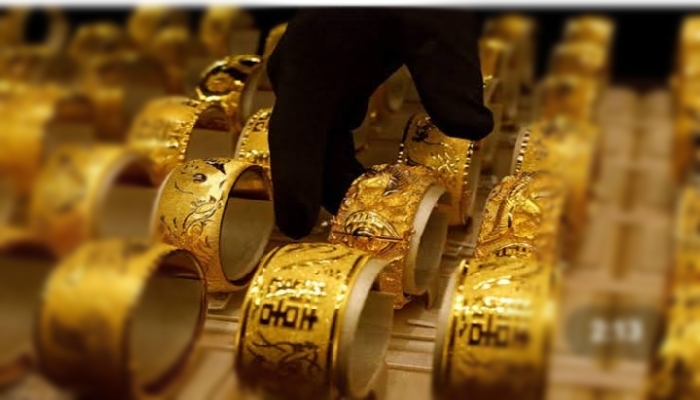
New Delhi, Jul 30: India's gold demand in 2020 is expected to fall to the lowest level in 26 years with domestic bullion prices hitting a record high and as falling disposable incomes could curtail retail purchases, the World Gold Council (WGC) said on Thursday.

Lower demand by the world's second-biggest bullion consumer could limit a rally in global prices, which hit a record high earlier this month, although it could also reduce India's trade deficit and support the ailing rupee.

"Fast rising gold prices could act as headwinds," said Somasundaram PR, the managing director of WGC's Indian operations.

Local gold futures have jumped 35% so far this year after rising a quarter in 2019.

India's gold consumption in the first half of 2020 plunged 56% on-year to 165.6 tonnes. Meanwhile, the coronavirus-triggered lockdown also slashed demand by 70% in the June quarter to 63.7 tonnes, the lowest in more than a decade, the WGC said in a report published on Thursday.

Millions of Indians have lost their jobs or taken a pay cut after the country imposed a lockdown on its 1.3 billion people to curb the spread of the virus that has infected more than 1.5 million Indians.

Consumption is generally high during the June quarter due to weddings and key festivals such as Akshaya Tritiya, but lockdown restrictions kept shoppers indoors this year.

The weak demand in the first half could drag down India's gold consumption in 2020 to the lowest since 1994, when demand stood at 415 tonnes, Somasundaram said, adding that it is still difficult to provide an estimate for full-year demand as the coronavirus crisis is still unfolding.

"Indian demand has previously jumped as much as 300 tonnes in a quarter. Latent demand could come out in the second half," Somasundaram said.

Comments

Add new comment

  • Coastaldigest.com reserves the right to delete or block any comments.
  • Coastaldigset.com is not responsible for its readers’ comments.
  • Comments that are abusive, incendiary or irrelevant are strictly prohibited.
  • Please use a genuine email ID and provide your name to avoid reject.
News Network
January 17,2020

New Delhi, Jan 17: Airports in Srinagar and Jammu are to be “immediately” brought under the security cover of the CISF in view of the arrest of DSP Davinder Singh, a Jammu and Kashmir government order has said.

The two sensitive airports are to be “handed over” to the CISF by January 31, the order of the Jammu and Kashmir Home Department to the Director General of Police (DGP) said.

“This issue (CISF security at Srinagar and Jammu airports) has acquired immediacy in view of the recent developments relating to the arrest of Davinder Singh, DSP airport security, for trying to assist militants to travel to other parts of the country,” the order issued on Wednesday said.

Police had arrested Singh, a deputy superintendent of police, at Mir Bazar in Jammu and Kashmir’s Kulgam district on Saturday, along with Hizbul Mujahideen terrorists Naveed Baba and Altaf, besides a lawyer who was operating as an overground worker for terror outfits.

The two airports are guarded by the CRPF and the J-K Police at present.

The Union government had last year decided that the Central Industrial Security Force (CISF) will be handed over security of these two airports along with the one in Leh in view of their sensitive and strategic location and the threats it faced related to possible terrorist and hijack attempts.

CISF is the national civil aviation security force and at present it guards 61 airports including the ones at Delhi and Mumbai.

News agency had on January 13 reported that the Union home ministry sanctioned about 800 personnel to the CISF in order to take over security duties at the three airports of the newly created Union Territories of Jammu and Kashmir and Ladakh.

As per the original plan, the CISF was to take over Jammu airport by next month and the Srinagar and Leh airports after the spell of severe cold ends.

However, officials said, keeping in mind the arrest of the DSP and his alleged links, the latest order has been issued which also directs the J-K Police to make arrangements for accommodation, transport and other logistical requirements of the armed contingent of the CISF on a quick basis.

Once inducted at the most-sensitive Srinagar airport, the CISF will secure access control at both city and air side (tarmac area) while the CRPF will be responsible for securing the outer periphery. At the Jammu airport, the peripheral security duties will be rendered by the JK Police.

An assortment of surveillance and security gadgets like CCTVs, observation monitors, hand-held metal detectors, bullet-proof patrol vehicles and bomb detection and disposal equipment are also being provided by the airport operator, the Airports Authority of India (AAI), to the CISF.

The Union government sometime back made it clear that CISF will be the only civil airports guarding force and all such facilities in the country will be gradually brought under its command to bolster aviation security and tighten anti-terror and anti-hijack protocols.

Comments

Add new comment

  • Coastaldigest.com reserves the right to delete or block any comments.
  • Coastaldigset.com is not responsible for its readers’ comments.
  • Comments that are abusive, incendiary or irrelevant are strictly prohibited.
  • Please use a genuine email ID and provide your name to avoid reject.