Philippines COVID-19 tally exceeds 100,000 with fourth consecutive record breaking rise

Agencies
August 3, 2020

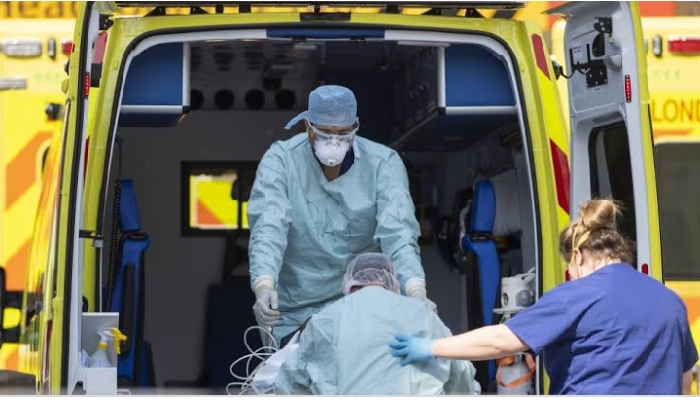
Manila, Aug 2: The number of COVID-19 cases in the Philippines has exceeded the 100,000 marks with a record 5,032 new infections registered on Sunday, the Health Ministry's data showed.

With the total cases now reaching 103,185, the spread of COVID-19 in the Southeast Asian nation is steeply rising. The daily growth rate just this Thursday set a record at over 3,800 cases, the next day there were nearly 4,000 new infections detected and on Saturday, over 4,800 cases were detected.

More than 65,000 people have recovered from the ailment, while 2,059 people have died.

The Philippines' epidemiological dynamic mirrors that of many Southeast Asian nations, where COVID-19 infections have only recently begun to climb. 

Most other nations in Europe and the Americas experienced an initial spread of the virus which later tailed off only to begin climbing again after easing of restrictions.

Comments

Add new comment

  • Coastaldigest.com reserves the right to delete or block any comments.
  • Coastaldigset.com is not responsible for its readers’ comments.
  • Comments that are abusive, incendiary or irrelevant are strictly prohibited.
  • Please use a genuine email ID and provide your name to avoid reject.
News Network
June 12,2020

Washington, Jun 12: US President Donald Trump is considering suspending a number of employment visas including the H-1B, most sought-after among Indian IT professionals, in view of the massive unemployment in America due to the coronavirus pandemic, according to a media report.

The proposed suspension could extend into the government’s new fiscal year beginning October 1, when many new visas are issued, The Wall Street Journal reported on Thursday, quoting unnamed administration officials.

“That could bar any new H-1B holder outside the country from coming to work until the suspension is lifted, though visa holders already in the country are unlikely to be affected,” the daily reported.

H-1B is the most coveted foreign work visas for technology professionals from India.

Such a decision by the Trump administration is likely to have an adverse impact on thousands of Indian IT professionals. Already a large number of Indians on the H-1B visas have lost their jobs and are headed back home during the coronavirus pandemic.

The White House, however, said that no final decision has been made and the administration is considering various proposals.

“The administration is currently evaluating a wide range of options, formulated by career experts, to protect American workers and job seekers especially disadvantaged and underserved citizens — but no decisions of any kind have been made,” White House spokesman Hogan Gidley said in a statement.

In addition to the H-1B visas, the suspension could apply to the H-2B visa for short-term seasonal workers, the J-1 visa for short-term workers including camp counselors and au pairs and the L-1 visa for internal company transfers, the financial daily reported.

Meanwhile, the US Chambers of Commerce CEO Thomas Donohue on Thursday wrote a letter to Trump, expressing concern over his reported move on temporary work visas.

“As the economy rebounds, American businesses will need assurances that they can meet all their workforce needs. To that end, it is crucial that they have access to talent both domestically and from around the world,” Donohue wrote in a letter to Trump.

According to The Hill newspaper, Donohue said that American businesses need L-1 visa holders, who have a work visa valid for a relatively short amount of time, for necessary expertise.

He noted the importance of H-1B visa holders, who have a work visa valid for multiple years, for various industries, including technology, accounting and manufacturers, the newspaper said.

“Policies that would, for example, impose wide-ranging bans on the entry of nonimmigrant workers or impose burdensome new regulatory requirements on businesses that employ foreign nationals would undermine that access to talent and in the process, undercut our economy’s ability to grow and create jobs,” Donohue added.

Comments

Add new comment

  • Coastaldigest.com reserves the right to delete or block any comments.
  • Coastaldigset.com is not responsible for its readers’ comments.
  • Comments that are abusive, incendiary or irrelevant are strictly prohibited.
  • Please use a genuine email ID and provide your name to avoid reject.
Agencies
August 7,2020

Moscow, Aug 7: Russia will register its first vaccine against the coronavirus on August 12, Deputy Health Minister Oleg Gridnev said on Friday.

The vaccine has been developed jointly by the Gamaleya Research Institute and the Russian Defence Ministry.

"The vaccine developed by the Gamaleya centre will be registered on August 12. At the moment, the last, third, stage is underway. The trials are extremely important. We have to understand that the vaccine must be safe. Medical professionals and senior citizens will be the first to get vaccinated," Gridnev told reporters at the opening of a cancer centre building in the city of Ufa.

According to the minister, the effectiveness of the vaccine will be judged when the population immunity has formed.

Clinical trials of the vaccine began on June 18 and included 38 volunteers. All of the participants developed immunity. 

The first group was discharged on July 15 and the second group on July 20.

Comments

Add new comment

  • Coastaldigest.com reserves the right to delete or block any comments.
  • Coastaldigset.com is not responsible for its readers’ comments.
  • Comments that are abusive, incendiary or irrelevant are strictly prohibited.
  • Please use a genuine email ID and provide your name to avoid reject.
News Network
May 6,2020

Washington, May 6: At a time when the coronavirus pandemic has squeezed them, multi-national companies in America are laying off workers while paying cash dividends to their shareholders. Thus making the workers bear the brunt of the sacrifices while the shareholders continue to collect.

The Washington Post said in one of its reports that five big American companies have paid a combined USD 700 million to shareholders while cutting jobs, closing plants and leaving thousands of their workers filing for unemployment benefits.

Since the pandemic was declared an emergency, Caterpillar has suspended operations at two plants and a foundry, Levi Strauss has closed stores, and toolmaker Stanley Black & Decker has been planning layoffs and furloughs.

Steelcase, an office furniture manufacturer, and World Wrestling Entertainment have also shed employees.

Executives of those companies told the Post that the layoffs support the long-term health of their companies, and often the executives are giving up a piece of their salaries. Furloughed workers can apply for unemployment benefits.

But distributing millions of dollars to shareholders while leaving many workers without a paycheck is unfair, critics argue, and belies the repeated statements from executives about their concern for employees' welfare during the coronavirus crisis.

Caterpillar, for example, announced a USD 500 million distribution to shareholders April 8, about two weeks after indicating that operations at some plants would stop. The company however declined to divulge how many workers are affected.

"We are taking a variety of actions globally, but we aren't going to discuss the number of impacted people," spokeswoman of the company, Kate Kenny, said in a reply to an email by the Post.

This spate of dividends is also likely to revive long-standing debates about economic rewards.

"There are no hard-and-fast rules about this," said Amy Borrus, deputy director of the Council of Institutional Investors, a group that argues for shareholder rights and represents pension funds and other long-term investors.

Many large US companies choose to issue a regular, quarterly dividend to shareholders, often increasing it, and they boast about these payments because they help keep the share price higher than it might otherwise be. Those companies might be reluctant to announce that they are cutting or suspending their dividend during a crisis, Borrus was further quoted as saying.

But "companies have to be mindful of the optics of paying dividends if they're laying off thousands of workers," she added.

On March 26, Caterpillar had announced that because of the pandemic, it was "temporarily suspending operations at certain facilities." Two plants, in East Peoria, Ill., and Lafayette, Ind., were coming to a halt, as well as a foundry in Mapleton, Ill., according to news reports.

"We are taking a variety of actions at our global facilities to reduce production due to weaker customer demand, potential supply constraints and the spread of the covid-19 pandemic and related government actions," Kenny said via email.

"These actions include temporary facility shutdowns, indefinite or temporary layoffs," she added.

Similarly, Levi Strauss announced April 7 that the company would stop paying store workers, and about 4,000 are now on furlough. On the same day, the company announced that it was returning USD 32 million to shareholders.

"As this human and economic tragedy unfolds globally over the coming months, we are taking swift and decisive action that will ensure we remain a winner in our industry," Chip Bergh, president and chief executive of the company, also told the Post.

Stanley Black & Decker announced on April 2 that it was planning furloughs and layoffs because of the pandemic. Two weeks later, it issued a dividend to shareholders of about USD 106 million.

The notion that a company's primary purpose is to serve shareholders gained prominence in the 1980s but has come under attack in recent years, even from business executives, the newspaper reported.

Corporate decisions to suspend dividends and buybacks are complex, however, and it is difficult to know whether these suspensions of dividend and buyback programs were motivated by a desire to conserve cash in anticipation of bad times, and how much they are prompted by a sense of obligation to employees.

Over recent decades, the mandate to "maximize shareholder value" has become orthodoxy, for many, and it is often unclear what motivates companies to pare dividends or buybacks for shareholders, said William Lazonick, an emeritus economics professor at the University of Massachusetts at Lowell, who has been one of the leading critics of companies that distribute cash to shareholders through stock buybacks and dividends rather than reinvesting the profits into employees, innovation and production.


Comments

Add new comment

  • Coastaldigest.com reserves the right to delete or block any comments.
  • Coastaldigset.com is not responsible for its readers’ comments.
  • Comments that are abusive, incendiary or irrelevant are strictly prohibited.
  • Please use a genuine email ID and provide your name to avoid reject.