


Yettinahole project a blunder; it can't quench the thirst of parched districts'

[email protected] (CD Network)
September 29, 2016

Bengaluru, Sep 29: A new study conducted by a team of the Indian Institute of Science, Bengaluru concluded that the Rs 13,000-crore Yettinahole diversion project doesn't hold much water to quench the thirst of the parched districts of Kolar, Chikkaballapur, Tumakuru and Bengaluru Rural.
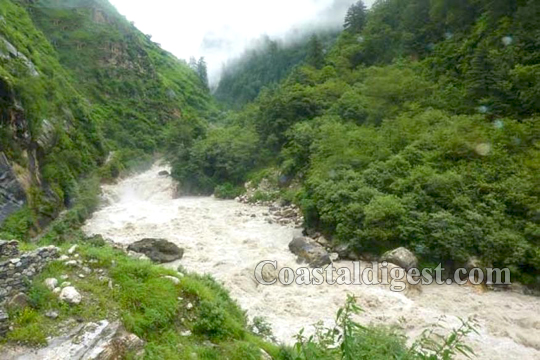
Yettinahole

Headed by TV Ramachandra and comprising of experts like Barat Aithal and S Vinay, the study team after visiting spots and using the latest technology, including remote sensors, found that Yettinahole can generate only 9.5 tmcft of water against 24 tmcft as claimed by the state government which is awaiting environmental clearance to go ahead with project. The team has called the project as an "an ecological blunder".

The study, Environment Flow Assessment in a Lotic Ecosystem of Central Western Ghat, was published in international journal Hydrology Current Research. The Karnataka government, some experts and leaders seeking project implementation had slammed its earlier findings saying it lacked conviction.

The government has already spent Rs 1,690 crore for the project and set up a dedicated authority to oversee its implementation. The project is now temporarily halted following a green bench order besides widespread protests in the coastal belt as the Yettinahole project aims at diverting 24.01 tmcft of water from Nethravathi's tributaries.

The report highlights alterations in the catchment integrity (land cover) or water diversions would result in variation in the natural flow, affecting the biodiversity of the riparian and aquatic habitats, and more importantly, people's livelihood dependent on fishing in the downstream.

The sustainable option to meet water requirements in arid regions, the study points out, would be to rejuvenate existing lakes and ponds, reuse treated waste water, recharge groundwater resources, plant native species of plants in the catchment areas and implement soil and water conservation through microwatershed approaches.

Sources in the water resources department, however, said they will not give much credence to the report but wait for the one by an expert committee set up by the government. On June 9, 2016, the government formed a panel under the chairmanship of Central Water Commission former chairman A K Bajaj. "The committee met just once but nothing much has happened after that. I partly endorse the views of the fresh report prepared by IISc scientists that Yettinahole cannot generate 24 tmcft of water and it greatly affects the ecology,'' said environmentalist Yellappa Reddy.

Comments

Mahesh
 - 
Thursday, 29 Sep 2016

from the beginning only we all know about this fraud supported by congress govt to loot all public money, all corrupt politicians will die one day a dog death. so many people are working hard to get their livelihood in this.. these rich people collecting money in the name of tax and misusing for their posh life.

Add new comment

  • Coastaldigest.com reserves the right to delete or block any comments.
  • Coastaldigset.com is not responsible for its readers’ comments.
  • Comments that are abusive, incendiary or irrelevant are strictly prohibited.
  • Please use a genuine email ID and provide your name to avoid reject.
News Network
May 2,2020

Bengaluru, May 2: The Centre’s classification of districts created confusion in Karnataka as the state’s own categorisation deviates significantly from the health ministry’s list.

For instance, the Centre put the number of districts in the red zone in state at three, while the state Covid-19 war room puts it at 14. Bengaluru Urban and Mysuru figure in the red zone in both lists. While Bengaluru Rural with zero active cases on May 1makes it to the Centre’s red-zone list, it is in the orange zone according to the state.

In addition to these two, the state classifies Belagavi, Kalaburagi, Vijayapura, Bagalkot, Mandya, Bidar, Dakshina Kannada, Chikkaballapura, Dharwad, Gadag, Tumakuru and Davanagere as red-zone districts.

State Covid war-room authorities said they would take a look at the Centre’s criteria for classification and take a call. Besides, incharge Munish Mudgil pointed out that states are allowed to make additions to the red and orange zones. According to the Centre’s list, Karnataka has 13 districts in the orange zone and 14 in the green zone.

Sudan said, “the districts were earlier designated as hotspots or red zones, orange zones and green zones primarily based on the cumulative cases reported and the doubling rate. Since recovery rates have gone up, the districts are now being designated across various zones duly broad-basing the criteria.

This classification takes into consideration incidence of cases, doubling rate, extent of testing and surveillance feedback. A district will be considered under the green zone if there are no confirmed cases so far or if there is no reported case in the past 21 days.”

Comments

Add new comment

  • Coastaldigest.com reserves the right to delete or block any comments.
  • Coastaldigset.com is not responsible for its readers’ comments.
  • Comments that are abusive, incendiary or irrelevant are strictly prohibited.
  • Please use a genuine email ID and provide your name to avoid reject.
coastaldigest.com news network
May 20,2020

Mangaluru/Udupi, May 20: Islamic scholars belonging to different schools of thoughts including two prominent Qadis have issued special guidelines asking all Muslims in the region to offer prayers and celebrate Eid al-Fitr at home this year in keeping with the extended covid-19 lockdown.

Eid al-Fitr which marks the end of the month-long dawn-to-sunset fasting of Ramadan is rather a ‘humanitarian event’ than a fiesta. This year Eid is likely to be observed in coastal Karnataka on May 23 or May 24 depending on sighting of the new moon.  

Amid the Covid-19 pandemic, the Muslims are preparing for — and reconciling itself to — a most unusual Eid bereft of all the usual trappings like huge prayer congregations, ceaseless shopping, social visits and the inviting warmth of an Eid Mubarak embrace.

In their separate messages, Udupi Qadi Bekal Ibrahim Musliyar and Mangaluru Qadi Twaqa Ahmed Musliyar have urged Muslims to refrain from all kinds of public gatherings during Eid. Noting that Muslims in the region have followed all the advisories in issued by the government to contain the spread of coronavirus in the blessed month of Ramadan, they have urged them to follow the guidelines during Eid too.

On social media groups, messages like “no new clothes, just wear your best clothes” are being circulated among family and friends, urging people to fill the festive void with the spirit of giving. The suggestions range from paying a needy child’s school fee or someone’s rent to helping a lockdown-hit trader revive his business.

Following guidelines are issued by the top clerics ahead Eid

1) There will be no Eid prayer in mosques or Eid-gahs. Hence, Muslims should offer Eid al-Fitr prayer in their homes with family members.

2) Distributing Zakat al-Fitr among needy is mandatory. However necessary safety measures should be taken while going out such as wearing masks and maintaining physical distance. As there is lockdown from 7 p.m. to 7 a.m. every day, Zakat al-Fitr can be distributed a day before Eid or on the day of Eid before evening. 

3) Women, children and elderly people should not step out of the houses.

4) Avoid visiting graveyards or other places.

5) All mosques are closed due to lockdown. Hence, observe Eid in a simple way and set an example for the society. 

6) Strictly follow all the guidelines issued by the state and central governments

Comments

Add new comment

  • Coastaldigest.com reserves the right to delete or block any comments.
  • Coastaldigset.com is not responsible for its readers’ comments.
  • Comments that are abusive, incendiary or irrelevant are strictly prohibited.
  • Please use a genuine email ID and provide your name to avoid reject.
News Network
April 27,2020

New Delhi, Apr 27: Indian prime minister Narendra Modi has said the monthlong ongoing lockdown has yielded positive results and that the country has managed to save “thousands of lives”.

Modi, who had a videoconference with various heads of the states on Monday, said the impact of the coronavirus, however, will remain visible in the coming months, according to a press statement released by his office. On the issue of getting back Indians who are overseas, the Prime Minister said that this has to be done keeping in mind the fact that they don’t get inconvenienced and their families are not under any risk.

During the meeting with state heads, Modi advocated for social distancing of at least 6 feet and the use of face masks as a rapid response to tackle COVID-19.

He said that states should put their efforts of converting hotspots, or red zones, into “orange and thereafter green zones”.

India last week eased the lockdown by allowing shops to reopen and manufacturing and farming activities to resume in rural areas to help millions of poor, daily-wage earners. But the economic costs of the nationwide lockdown continue to mount in a country of 1.3 billion people.

Modi, who put India under a strict lockdown on March 25, did not say if the lockdown restrictions will extend after May 3.

India has confirmed over 27,000 cases of the coronavirus, including 872 deaths.

Comments

Add new comment

  • Coastaldigest.com reserves the right to delete or block any comments.
  • Coastaldigset.com is not responsible for its readers’ comments.
  • Comments that are abusive, incendiary or irrelevant are strictly prohibited.
  • Please use a genuine email ID and provide your name to avoid reject.