



Young Saudi nurses struggle with expectations versus reality of the job

March 23, 2017

Jeddah, Mar 23: Young Saudi nurses have difficulties reconciling their expectations working in a hospital with the reality of long hours, intense work and social and family pressures.
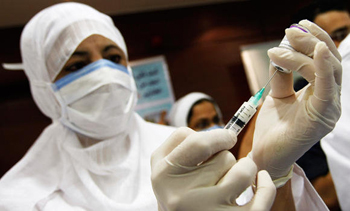
SaudiTwo Saudi nurses presented a study they conducted on intern nurses and the difficulties they face during their internship, which sometimes lead young women to leave the nursing profession.

Noof Janbi and Lama Alsini are Saudi nurses-to-be currently completing their internship at King Faisal Specialist Hospital and Research Center (KFSHRC) in Jeddah. Janbi is studying at King Saud bin Abdulaziz University for Health Science, and Alsini studies at Jeddah’s King Abdulaziz University. Both are members of the Saudi Nursing Pioneers Committee.

Their study, “The Journey Between Ideal and Actual: Experiences of Intern Nurses ‘Becoming’ as They Transition into Clinical Interdisciplinary,” focuses on five nursing students from King Abdulaziz University and eight from King Saud University. Their subjects completed five months of nursing internship.

New nurses, the study concluded, still struggle with uncertainty and fear due to their perceived reality between ideal and actual in exploring the qualitative literature. New interns experience turbulent emotions before clinical placements and their perceptions of the “actual” clinical placements shows that they are “not belonging.”

Despite the changes that have emerged on the Saudi society, nursing as a profession still faces negative perceptions from Saudi society, which, sometimes leads some nursing interns to withdraw from the field. Twelve-hour shifts may not be easy to accept either by the nurse’s family. In some cases, Saudi nurses are deprived from marriage or get divorced.

“Some of the interns had difficulties in separating from their role as students to interns, which is a totally different role,” co-author Janbi told Arab News. “Also, difficulties in adjusting with the new hosptial envioronment and working hours (was a problem).”

One intern, who spoke on the condition that she would not be identified, told Arab News that “before the internship, unfortuately, my expectations were high. However, I was shocked at the beginning that I, as a student holding a baccalaureate degree, don’t participate in the developoment of a treatment plan or rehabilitation of the patient.”

Janbi and Alsini relied their experiences for part of the study, which addressed emotional rediscovering, identity adjusting, competence and boundaries.

The study’s findings showed that new nurses still suffer from identifying between the ideal and actual perceived reality, which can cause an emotional roller coaster and make them give up nursing.

Janbi and Alsini recommended in-depth orientation and explanations to new nurses and emotional support for the interns to avoid emotional instability.

The study’s authors also recommended educational programs on how to deal with nursing interns, starting gradually with the duties (new nurses can start working eight hours, then 10 hours and later can achieve the 12-hour shift) to reduce physical exhaustion and help cope better. The study also recommended that help should be provided to nurse managers to plan improved clinical and educational practices of a nurse intern by having a better understanding of the expectations verses the actual experience of the job.

“I am sure the international guests would agree with me, that these are presentations (done by Saudi health professionals) that should not be just kept in Saudi Arabia,” said Dr. Mustafa Bodrick, a fulltime consultant in nursing education and practice at the Saudi Commission for Health Specialties. “I think that they should look into international conferences. These ladies should go and speak and fly the flag and show what Saudi nurses are actually doing in this part of the world to contribute to the global advancement of nursing.”

Bodrick invited the two authors to the Saudi Commission for Health Specialties to present their paper in order to be taken into consideration.

Bodrick asked for a copy of the paper. He said he believes that “there is a moral obligation to pass this research on to all the deans in the Kingdom of Saudi Arabia.”

He said the Saudi Commission for Health Specialties’ intention is to partner with Janbi and Alsini as to how to respond to their recommendations.

“In Islam, we talk about intentions and actions – we should not only talk about intentions, but actions have to follow,” Bodrick said.

The paper will be submitted to the Saudi Commission for Health Specialties to be published in its journal.

Nursing is a difficult field, said Dr. Rosemarie Lawrence an acting education coordinator and intern coordinator for King Faisal Specialist Hospital and Research Center in Jeddah.

“When I first started in this country many, many years ago, there was a stigma attached to nursing, as if nursing had no place, no belonging, but things have changed,” she said.

Many people now realize that nursing is an amazing field of a career.

“Saudi nurses are growing and they started believing in themselves. They do not have to be great; they just need to believe in themselves, because once they do, that way growth comes. ”

From a Saudi nurses’ perspective, nurses in the Kingdom try their best to improve the image of nursing as a profession in the country.

“We support them through involving them to be part of the organizing committee of this international symposium, to put them in the right direction,” said Amna Hamzah Al-Shelali an education coordinator in the Nursing Development and Saudization Department at KFSHRC.

Al-Shelali told Arab News that King Faisal Specialist Hospital is planning to have an advanced nursing diploma in October 2017. “This comes within our responsibility to developed and support our Saudi nurses to be in a very specialized area like oncology – as cancer, according to statistics, is No. 1 disease in the Kingdom. So we are trying to develop them in this specialty.

“As you saw today, there were educators, coordinators, nurses and undergraduates from Jeddah and Riyadh interacting and exchanging experiences. We are trying to link and think as to how to improve and have a lead, not only in Saudi Arabia, but regionally and internationally. So proudly, I say that we are in the front,” Al-Shelali said.

Comments

Add new comment

  • Coastaldigest.com reserves the right to delete or block any comments.
  • Coastaldigset.com is not responsible for its readers’ comments.
  • Comments that are abusive, incendiary or irrelevant are strictly prohibited.
  • Please use a genuine email ID and provide your name to avoid reject.
Agencies
June 29,2020

Protests condemning the Israeli plan to annex parts of the occupied West Bank are set to take place in the United States and Europe on the same day prime minister Benjamin Netanyahu plans to begin the process.

The demonstrations will be held on Wednesday in Chicago, San Diego, Brooklyn, Los Angeles and San Francisco. Other Western cities will also witness similar protests, including Toronto, Madrid and Valencia.

Students for Justice in Palestine, Jewish Voice for Peace, and American Muslims for Palestine are among the pro-Palestinian groups organizing the protests.

The Samidoun Palestinian Prisoner Solidarity Network, one of the organizers, urged "direct actions and popular mobilizations in [Palestinian] refugee camps, cities and villages," and professed "loyalty to the martyrs" on its call for the events.

Another group, Al-Awda or the Palestinian Right to Return Coalition, decried "72 years of genocide, ethnic cleansing and dispossession" of Palestinians.

It also tied their demonstrations to the protests against anti-black racism in the US and beyond.

"We demand the defunding and dismantling of US police alongside the defunding and dismantling of Zionist colonialism and racist Israeli apartheid," Al-Awda said on its website.

Netanyahu has set July 1 as the date for the start of cabinet discussions on the annexation plan.

He has been driven ahead by US President Donald Trump, who unveiled a “peace” plan for the Middle East in January that effectively sidelines the Palestinians altogether.

The plan, which Trump himself has described as the “deal of the century,” envisions Jerusalem al-Quds as “Israel’s undivided capital” and allows the Tel Aviv regime to annex settlements in the occupied West Bank and the Jordan Valley. The plan also denies Palestinian refugees the right of return to their homeland, among other controversial terms.

The Palestinians want the West Bank as part of a future independent Palestinian state with East Jerusalem al-Quds as its capital.

Comments

Add new comment

  • Coastaldigest.com reserves the right to delete or block any comments.
  • Coastaldigset.com is not responsible for its readers’ comments.
  • Comments that are abusive, incendiary or irrelevant are strictly prohibited.
  • Please use a genuine email ID and provide your name to avoid reject.
Agencies
July 26,2020

Jeddah, Jul 26: The city of Makkah is opening its arms again to welcome pilgrims for the annual Hajj — although only a handful compared with previous years.

Because of the COVID-19 pandemic, this year’s event is limited to about 1,000 pilgrims, all from inside Saudi Arabia, about 700 of whom are expatriates.

Abdullah Al-Kathiri, an Emirati and a recovered COVID-19 patient, postponed his pilgrimage last year because it coincided with his wedding plans. “I’ve heard from many who’ve performed the pilgrimage in past years that it was always a smooth process, even with the massive numbers,” he said. “So you could imagine how it would be with the limited number of pilgrims this year. Surely it will be a great experience.”

Khadija, a Bulgarian expatriate, was overcome with tears when she heard she would be performing Hajj this year. “I didn’t expect they’d accept,” she said. “I’m sure this year’s Hajj will be an exceptional one in all respects.”

Dr. Haifa Yousef Hamdoon, a Tunisian physician in Qassim, is another who did not expect to be accepted because of the low numbers this year. “When I received confirmation of my request, I was overjoyed and couldn’t believe it,” she said.

Mu’taz Mohamed, a Sudanese pilgrim who also lives in Qassim region, praised the preventive and precautionary health measures taken in order to ensure his safety and that of other pilgrims, to enable them to perform the rituals safely.

After completing their arrival procedures, the pilgrims were taken to their accommodation in Makkah, supervised by the Ministry of Hajj and Umrah. They will stay there for four days before beginning their pilgrimage on July 30.

Comments

Add new comment

  • Coastaldigest.com reserves the right to delete or block any comments.
  • Coastaldigset.com is not responsible for its readers’ comments.
  • Comments that are abusive, incendiary or irrelevant are strictly prohibited.
  • Please use a genuine email ID and provide your name to avoid reject.
Saudi Gazette
May 27,2020

Riyadh, May 27: Following the announcement of easing of lockdown measures, which includes reopening of all mosques for daily congressional as well as Friday prayers across the Kingdom except the holy city of Makkah, the Ministry of Islamic Affairs, Call and Guidance has set mandatory guidelines.

In a circular issued to mosque staff, Minister of Islamic Affairs, Call and Guidance Sheikh Abdullatif Al-Asheikh has instructed that all mosques must comply with the following precautionary measures and instructions:

1. Open mosques 15 minutes before the Adhan and close them 10 minutes after prayer

2. Reduce the waiting period between the Adhan and Iqamah to 10 minutes

3. Open windows and doors from entering time to the end of the prayer

4. Remove copies of Holy Qur’an and other books temporarily from mosques

5. Ensure attendees keep a distance of two meters between each other

6. Ensure one space is left between each row

7. Close all water coolers and refrigerators

8. Do not allow distribution of water or food in mosques

9. Close toilets and places of ablution

Precautionary measures on Friday prayers are as follows:

1. Open mosques 20 minutes before Friday prayer and closing them 20 minutes after prayer.

2. Friday sermon with prayer should not exceed 15 minutes.

The circular also stipulates to keep the suspension of the religious courses, programs and lectures, as well as the memorizing Holy Qur'an sessions in the mosques and to continue education and lectures remotely until further notice.

The circular pointed out that the imams of mosques should urge the worshipers to take the following precautionary measures:

1. Wear a face mask

2. Bring their own prayer rugs and not leave them after the prayer

3. Prevent accompanying children under 15 years of age from entering mosques

4. Perform ablution at home

5. Avoid crowding when entering or exiting mosques

Meanwhile, the spokesman of the Ministry of Interior clarified later in the day that people are allowed to perform congressional prayers in their locality during the time of curfew.

Comments

Add new comment

  • Coastaldigest.com reserves the right to delete or block any comments.
  • Coastaldigset.com is not responsible for its readers’ comments.
  • Comments that are abusive, incendiary or irrelevant are strictly prohibited.
  • Please use a genuine email ID and provide your name to avoid reject.