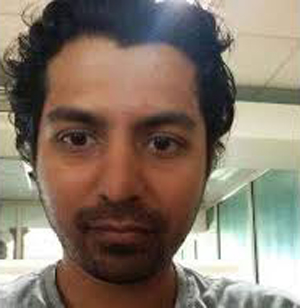
Young techie goes missing after visiting Sri Sri's Art of Living ashram

[email protected] (CD Network)
October 13, 2016

Bengaluru, Oct 13: A young software engineer has been reported missing after he left Sri Sri Ravi Shankar's The Art of Living ashram on Kanakapura Road in Bengaluru on Tuesday.

asThe family members of Aditya Shrivastava (31) have filed a missing complaint in his hometown of Hyderabad. Kaggalipura police station in Kanakapura Main Road in the city has also registered a similar complaint.

Kaggalipura police said Shrivastava attended a Navaratri celebration at the ashram. He last messaged his fiance Krithika, at 9pm Monday, saying he was on his way to catch a bus to Hyderabad.

According to a family friend, he visited a friend on Monday afternoon, and returned by 6pm. At 8.30pm, he called his mother to say he had reached the bus stop."We are working with police and authorities in both cities but need help from everyone possible," wrote one of his friends on Facebook.

Police, who tracked the last signal from his phone to Bellandur, said they are going through CCTV footage to ascertain if he left the city.

Comments

Satyameva jayate
 - 
Thursday, 13 Oct 2016

May be he found or questioned any foul play there for sure......

Mohammed
 - 
Thursday, 13 Oct 2016

Wht jihad is this .....cn anyone nme

Rikaz
 - 
Thursday, 13 Oct 2016

Bangalore is not a safest place anymore....need to take precaution....

Add new comment

  • Coastaldigest.com reserves the right to delete or block any comments.
  • Coastaldigset.com is not responsible for its readers’ comments.
  • Comments that are abusive, incendiary or irrelevant are strictly prohibited.
  • Please use a genuine email ID and provide your name to avoid reject.
News Network
May 9,2020

New Delhi, May 9: The Finance Ministry on Friday announced relief to those who have been facing difficulty with their residency status in India under section 6 of the Income-tax Act due to lockdown and suspension of international flights owing to COIVD-19 outbreak, as they have had to prolong their stay in India.

According to a Central Board of Direct Taxes (CBDT) release, Finance Minister Nirmala Sitharaman today allowed discounting of prolonged stay period in India for the purpose of determining residency status after considering various representations received from people who had to prolong their stay in India due to lockdown and suspension of international flights.

They expressed concern that they will be required to file tax returns as Indian residents and not as NRIs after 120 days of stay.

The Finance Ministry stated that the lockdown continues during the financial year 2020-21 and it is not yet clear when international flight operations would resume, a circular excluding the period of stay of these individuals up to the date of resumption of international flight operations shall be issued for determination of the residential status for the financial year 2020-21.

A circular also said that in order to avoid genuine hardship in such cases, the CBDT has decided that for the purposes of determining the residential status under section 6 of the Act during the previous year 2019-20 in respect of an individual who has come to India on a visit before March 22, 2020 and:

(a) has been unable to leave India on or before March 31, 2020, his period of stay in India from March 22, 2020 to March 31, 2020 shall not be taken into account; or

(b) has been quarantined in India on account of novel coronavirus (Covid-19) on or after March 1, 2020 and has departed on an evacuation flight on or before March 31, 2020 or has been unable to leave India on or before March 31, 2020, his period of stay from the beginning of his quarantine to his date of departure or March 31, 2020, as the case may be, shall not be taken into account; or

(c) has departed on an evacuation flight on or before March 31, 2020, his period of stay in India from March 22, 2020 to his date of departure shall not be taken into account."

The release said there are number of individuals who had come on a visit to India during the previous year 2019-20 for a particular duration and intended to leave India before the end of the previous year for maintaining their status as non-resident or not ordinary resident in India.

"However, due to declaration of the lockdown and suspension of international flights owing to outbreak of COVID-19, they are required to prolong their stay in India. The status of an individual whether he is resident in India or a non-resident or not ordinarily resident, is dependent, inter-alia, on the period for which the person is in India during a year," it said.

Comments

Add new comment

  • Coastaldigest.com reserves the right to delete or block any comments.
  • Coastaldigset.com is not responsible for its readers’ comments.
  • Comments that are abusive, incendiary or irrelevant are strictly prohibited.
  • Please use a genuine email ID and provide your name to avoid reject.
News Network
March 13,2020

Bengaluru, Mar 13: In the wake of coronavirus outbreak, Karnataka chief minister BS Yediyurappa has summoned an emergency meeting with ministers and senior officials on Friday to discuss the situation.

The schools, malls and other public places have been shut to control the spread of the deadly virus.

Schools in the state have announced early summer vacation for their students this academic year as a precautionary measure amid Covid-19 scare.

Comments

Add new comment

  • Coastaldigest.com reserves the right to delete or block any comments.
  • Coastaldigset.com is not responsible for its readers’ comments.
  • Comments that are abusive, incendiary or irrelevant are strictly prohibited.
  • Please use a genuine email ID and provide your name to avoid reject.
Agencies
May 8,2020

Washington D.C., May 8: The prime time for brain development in a child's life is the first year, where the infant spends most of the time asleep. It is the time when neural connections form and sensory memories are encoded.

However, when sleep is disrupted, as occurs more often among children with autism, brain development may be affected, too.

New research led by the University of Washington finds that sleep problems in a baby's first 12 months may not only precede an autism diagnosis but also may be associated with altered growth trajectory in a key part of the brain, the hippocampus.

The study, which was published in the American Journal of Psychiatry, researchers report that in a sample of more than 400 taken of 6- to 12-month-old infants, those who were later diagnosed with autism were more likely to have had difficulty falling asleep.

It also states that this sleep difficulty was associated with altered growth trajectories in the hippocampus.

"The hippocampus is critical for learning and memory, and changes in the size of the hippocampus have been associated with poor sleep in adults and older children.

As many as 80 per cent of the children with autism spectrum disorder have sleep problems," said Annette Estes, director of the UW Autism Center and senior author of the study.

"In our clinical experience, parents have a lot of concerns about their children's sleep, and in our work on early autism intervention, we observed that sleep problems were holding children and families back," added Estes, who is also a UW professor of speech and hearing sciences.

"It could be that altered sleep is part-and-parcel of autism for some children. One clue is that behavioural interventions to improve sleep don't work for all children with autism, even when their parents are doing everything just right. This suggests that there may be a biological component to sleep problems for some children with autism," said Estes.

To consider links among sleep, brain development, and autism, researchers at the IBIS Network looked at MRI scans of 432 infants, surveyed parents about sleep patterns, and measured cognitive functioning using a standardized assessment.

At the outset of the study, infants were classified according to their risk for developing autism: Those who were at higher risk of developing autism -- about two-thirds of the study sample -- had an older sibling who had already been diagnosed.

Infant siblings of children with autism have a 20 per cent chance of developing autism spectrum disorder -- a much higher risk than children in the general population.

In the current study, 127 of the 432 infants were identified as "low risk" at the time the MRI scans were taken because they had no family history of autism.

They later evaluated all the participants at 24 months of age to determine whether they had developed autism. Of the roughly 300 children originally considered "high familial risk," 71 were diagnosed with autism spectrum disorder at that age.

Problems with sleep were more common among the infants later diagnosed with an autism spectrum disorder, as were larger hippocampi. No other subcortical brain structures were affected, including the amygdala, which is responsible for certain emotions and aspects of memory, or the thalamus, a signal transmitter from the spinal cord to the cerebral cortex.

The authors note that while parents reported more sleep difficulties among infants who developed autism compared to those who did not, the differences were very subtle and only observed when looking at group averages across hundreds of infants.

Sleep patterns in the first years of life change rapidly as infants transition from sleeping around the clock to a more adult-like sleep/wake cycle. Until further research is completed, Estes said, it is not possible to interpret challenges with sleep as an early sign of increased risk for autism.


Comments

Add new comment

  • Coastaldigest.com reserves the right to delete or block any comments.
  • Coastaldigset.com is not responsible for its readers’ comments.
  • Comments that are abusive, incendiary or irrelevant are strictly prohibited.
  • Please use a genuine email ID and provide your name to avoid reject.