Young techie kills wife for oversharing on social media, hangs himself

January 20, 2017

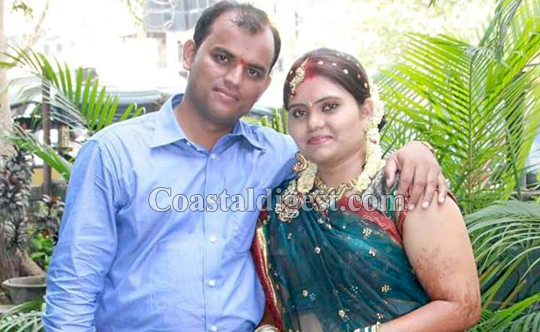
Pune, Jan 20: Furious over a social media post, a techie in Pune allegedly strangled his wife and then hung himself at their home on Tuesday.
Techie

Rakesh Gangurde, 34, left a suicide note in which he reportedly said he was upset with his wife Sonali for sharing too much about their lives on social media.

Rakesh and 28-year-old Sonali had been married for four years and didn't have children. They allegedly fought frequently over Sonali's social media posts.

"As per the purported suicide note left by Rakesh, he was not happy with Sonali, who used to discuss details of family planning and other marital details with her friends on social media and that prompted him to take the drastic step," a police officer told the Press Trust of India.

Sonali's brothers found their bodies on Wednesday night when he came for a visit. Her mother had called her from Nashik but had grown worried when there was no response. She then called her sons and asked them to check on their sister.

The brothers went to the apartment and found it locked from inside. Alarmed, they called the police, who broke open the door. They found Rakesh hanging from a nylon rope and Sonali lying on the bed, the police officer said.

Rakesh, a science graduate as well as an MBA, was employed with a private firm.

He allegedly resigned a few days back and was about to start a new one. Sonali Gangurde, a computer engineer, had stopped working a few months ago, the police say.

Comments

abdul aziz s.a.
 - 
Saturday, 21 Jan 2017

SAD, why it happens more now a days, life is important , God had created us to be patience and follow life easily

Add new comment

  • Coastaldigest.com reserves the right to delete or block any comments.
  • Coastaldigset.com is not responsible for its readers’ comments.
  • Comments that are abusive, incendiary or irrelevant are strictly prohibited.
  • Please use a genuine email ID and provide your name to avoid reject.
News Network
August 6,2020

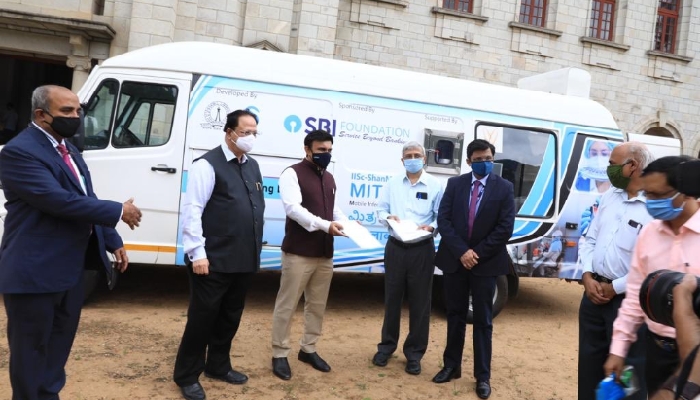
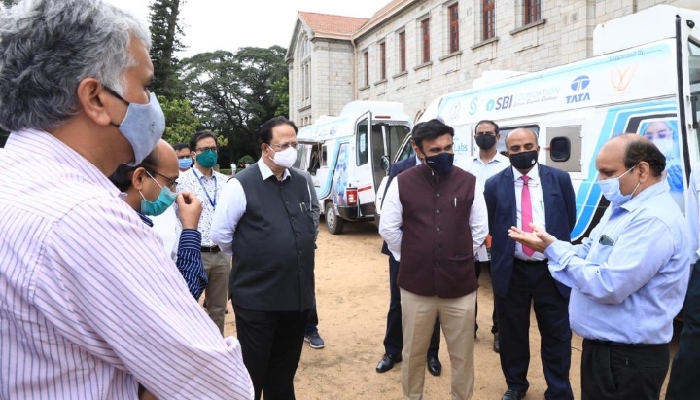
Bengaluru, Aug 5: Touted as a first of its kind in the nation, a mobile Covid-19 lab was inaugurated on Wednesday by the Karnataka Medical Education Minister Dr K Sudhakar.

The lab, approved by the Indian Council of Medical Research (ICMR) can do 9,000 RT-PCR (reverse transcription-polymerase chain reaction) tests per month, an official press release said here. "This is a unique lab having all safety features and capable of producing 100% accurate results within four hours," Dr Sudhakar was quoted as saying in the press release.

The Indian Institute of Science (IISC) had developed the lab and handed it over to the Rajiv Gandhi University of Health Sciences (RGUHS).

The mobile lab can also be used for molecular diagnostic-testing and can be deployed in coronavirus hot spots quickly, the release said adding, apart from Covid-19, the lab can be utilised for testing H1N1, HCV, TB, HPV and HIV among others.

Comments

Add new comment

  • Coastaldigest.com reserves the right to delete or block any comments.
  • Coastaldigset.com is not responsible for its readers’ comments.
  • Comments that are abusive, incendiary or irrelevant are strictly prohibited.
  • Please use a genuine email ID and provide your name to avoid reject.
News Network
April 2,2020

The current physical distancing guidelines provided by the World Health Organisation (WHO) and by the US Centers for Disease Control and Prevention (CDC) may not be adequate to curb the coronavirus spread, according to a research which says the gas cloud from a cough or sneeze may help virus particles travel up to 8 metres. The research, published in the Journal of the American Medical Association, noted that the the current guidelines issued by the WHO and CDC are based on outdated models from the 1930s of how gas clouds from a cough, sneeze, or exhalation spread.

Study author, MIT associate professor Lydia Bourouiba, warned that droplets of all sizes can travel 23 to 27 feet, or 7-8 metres, carrying the pathogen.

According to Bourouiba, the current guidelines are based on "arbitrary" assumptions of droplet size, "overly simplified", and "may limit the effectiveness of the proposed interventions" against the deadly pandemic.

 She explained that the old guidelines assume droplets to be one of two categories, small or large, taking short-range semi-ballistic trajectories when a person exhales, coughs, or sneezes.

However based on more recent discoveries, the MIT scientist said, sneezes and coughs are made of a puff cloud that carries ambient air, transporting within it clusters of droplets of a wide range of sizes.

Bourouiba warned that this puff cloud, with ambient air entrapped in it, can offer the droplets moisture and warmth that can prevent it from evaporation in the outer environment.

"The locally moist and warm atmosphere within the turbulent gas cloud allows the contained droplets to evade evaporation for much longer than occurs with isolated droplets," she said.

"Under these conditions, the lifetime of a droplet could be considerably extended by a factor of up to 1000, from a fraction of a second to minutes," the researcher explained in the study.

The MIT scientist, who has researched the dynamics of coughs and sneezes for years, added that these droplets settle along the trajectory of a cough or sneeze contaminating surfaces, with their residues staying suspended in the air for hours.

"Even when maximum containment policies were enforced, the rapid international spread of COVID-19 suggests that using arbitrary droplet size cutoffs may not accurately reflect what actually occurs with respiratory emissions, possibly contributing to the ineffectiveness of some procedures used to limit the spread of respiratory disease," Bourouiba wrote in the study

Comments

Add new comment

  • Coastaldigest.com reserves the right to delete or block any comments.
  • Coastaldigset.com is not responsible for its readers’ comments.
  • Comments that are abusive, incendiary or irrelevant are strictly prohibited.
  • Please use a genuine email ID and provide your name to avoid reject.
News Network
January 30,2020

Mangaluru: The police team investigating the case of bomb planting at the international airport here on January 20, took suspect Aditya Rao to several places in the city where he had frequented in the past few months, police said on Wednesday.

Police had earlier recovered a box from his bank locker at Udupi that contained a white powder which he claimed was cyanide. The substance has been sent to the Forensic Science laboratory for confirmation.

On further interrogation, Rao told police that he had a locker in a bank in Mangaluru also, where he was taken. Only some papers were seen in the locker, police said. He was also taken to the room where he stayed while he was working at a hotel in Balmatta here and to a hardware workshop from where he had purchased some spare parts, they said.

A 'live' explosive device was found in an unattended bag near a ticket counter of the departure gate of the airport here on January 20, triggering a scare before it was defused at a nearby open ground.

Police had released a picture of a man captured on CCTV camera as the suspect who placed the bomb and Rao later surrendered. Meanwhile, sources said the airport authorities got an anonymous call on Monday evening that a bomb had been planted in the airport. After thorough search, it was found to be a hoax. City police commissioner P S Harsha has warned of stringent action against those who make such calls.

Comments

Add new comment

  • Coastaldigest.com reserves the right to delete or block any comments.
  • Coastaldigset.com is not responsible for its readers’ comments.
  • Comments that are abusive, incendiary or irrelevant are strictly prohibited.
  • Please use a genuine email ID and provide your name to avoid reject.