You're a fighter, will overcome this challenge: Modi to UK PM who tests coronavirus positive

News Network
March 27, 2020

New Delhi, Mar 27: Prime Minister Narendra Modi on Friday described British premier Boris Johnson as a "fighter" and hoped he recovers from coronavirus infection.

"Dear PM @BorisJohnson, you're a fighter and you will overcome this challenge as well," Modi tweeted.

He said he prays for his good health and extends best wishes in ensuring a healthy UK.

Johnson said on Friday that he has tested positive for coronavirus after experiencing mild symptoms and is now self-isolating at 10 Downing Street in line with the medical advice.

"I am now self-isolating, but I will continue to lead the government's response via video-conference as we fight this virus," he said.

Comments

Kannadiga
 - 
Friday, 27 Mar 2020

Fit for only bogus comments and not  for countrymens welfare. A present we all can see Kerala CMs action and program. Each and every one has to salute him i/o  Taal Bajao foolinesh.


Add new comment

  • Coastaldigest.com reserves the right to delete or block any comments.
  • Coastaldigset.com is not responsible for its readers’ comments.
  • Comments that are abusive, incendiary or irrelevant are strictly prohibited.
  • Please use a genuine email ID and provide your name to avoid reject.
News Network
February 19,2020

New Delhi, Feb 19: India will switch to the world's cleanest petrol and diesel from April 1 as it leapfrogs straight to Euro-VI emission compliant fuels from Euro-IV grades now - a feat achieved in just three years and not seen in any of the large economies around the globe.

India will join the select league of nations using petrol and diesel containing just 10 parts per million of sulphur as it looks to cut vehicular emissions that are said to be one of the reasons for the choking pollution in major cities.

Sanjiv Singh, Chairman of Indian Oil Corp (IOC) - the firm that controls roughly half of the country's fuel market, said almost all refineries began producing ultra-low sulphur BS-VI (equivalent to Euro-VI grade) petrol and diesel by the end of 2019 and oil companies have now undertaken the tedious task of replacing every drop of fuel in the country with the new one.

"We are absolutely on track for supplying BS-VI fuel from April 1. Almost all refineries have begun supplying BS-VI fuel and the same has reached storage depots across the country," he said.

From storage depots, the fuel has started travelling to petrol pumps and in the next few weeks all of them will only have BS-VI grade petrol and diesel, he said. "We are 100 per cent confident that fuel that will flow from nozzles at all the petrol pumps in the country on April 1 will be BS-VI emission compliant fuel."

India adopted Euro-III equivalent (or Bharat Stage-III) fuel with a sulphur content of 350 ppm in 2010 and then took seven years to move to BS-IV that had a sulphur content of 50 ppm. From BS-IV to BS-VI it took just three years.

"It was a conscious decision to leapfrog to BS-VI as first upgrading to BS-V and then shifting to BS-VI would have prolonged the journey to 4 to 6 years. Besides, oil refineries, as well as automobile manufacturers, would have had to make investments twice - first to producing BS-V grade fuel and engines and then BS-VI ones," he said.

State-owned oil refineries spent about Rs 35,000 crore to upgrade plants that could produce ultra-low sulphur fuel. This investment is on top of Rs 60,000 crore they spent on refinery upgrades in the previous switchovers.

BS-VI has a sulphur content of just 10 ppm and emission standards are as good as CNG.

Originally, Delhi and its adjoining towns were to have BS-VI fuel supplies by April 2019 and the rest of the country was to get same supplies from April 2020.

But oil marketing companies switched over to supply of BS-VI grade fuels in the national capital territory of Delhi on April 1, 2018.

The supply of BS-VI fuels was further extended to four contiguous districts of Rajasthan and eight of Uttar Pradesh in the National Capital Region (NCR) on April 1, 2019, together with the city of Agra.

BS-VI grade fuels were made available in 7 districts of Haryana from October 1, 2019.

Singh said the new fuel will result in a reduction in NOx in BS-VI compliant vehicles by 25 per cent in petrol cars and by 70 per cent in diesel cars.

The switchover, he said, is a tedious task as every drop of old, higher-sulphur content fuel has to be flushed out in depots, pipelines and tanks before being replaced by BS-VI.

"We are confident of disruption-free switchover to BS-VI supplies across the country," he said. "What we will be supplying is the best quality available anywhere in the world. You don't have any better fuel that is supplied in any part of the world. Perhaps our BS-VI fuel will be better than equivalent fuel in some parts of the US and Europe."

India adopted a fuel upgradation programme in the early 1990s. Low lead gasoline (petrol) was introduced in 1994 in Delhi, Mumbai, Kolkata and Chennai. On February 1, 2000, unleaded gasoline was mandated nationwide.

Similarly, BS-2000 (Euro-I equivalent, BS-1) vehicle emission norms were introduced for new vehicles from April 2000. BS-II (Euro-II equivalent) emission norms for new cars were introduced in Delhi from 2000 and extended to the other metro cities in 2001.

Benzene limits have been reduced progressively from 5 per cent in 2000 to 1 per cent nationwide. Lead content in gasoline was removed in phases and only unleaded gasoline is being produced and sold from February 1, 2000.

The octane number of gasoline signifies the improved performance of the engine. Loss in octane number due to phasing out of lead was made up by installing new facilities in the refinery and changes in refinery operation. RON (Research Octane Number) of gasoline for BS-2000 spec was increased to 88. This has over time been increased to 91.

Singh said sulphur reduction will reduce Particulate Matter (PM) emissions even in the in-use older generation diesel vehicles.


Comments

Add new comment

  • Coastaldigest.com reserves the right to delete or block any comments.
  • Coastaldigset.com is not responsible for its readers’ comments.
  • Comments that are abusive, incendiary or irrelevant are strictly prohibited.
  • Please use a genuine email ID and provide your name to avoid reject.
coastaldigest.com news network
July 27,2020

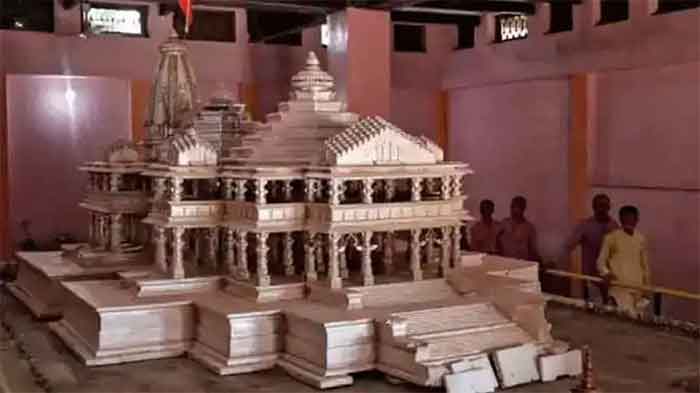
Ayodhya, Jul 27: With days to go for the August 5 "bhoomi pujan" ceremony of the Ram temple in Ayodhya, the mosques adjacent to the demolished Babri Masjid premises are spreading the message of a peaceful coexistence of Hindus and Muslims.

There are eight mosques and two mausoleums located close to the 70-acre Babri Masjid premises mandated by the Supreme Court for a temple of Sri Ram.

Azaan and namaaz are offered in the mosques and the annual "Urs" is held at the mausoleums without any objection from the local Hindus.

The eight mosques located near the upcoming Ram temple premises are Masjid Dorahikuan, Masjid Mali Mandir ke Bagal, Masjid Kaziyana Achchan ke Bagal, Masjid Imambara, Masjid Riyaz ke Bagal, Masjid Badar Paanjitola, Masjid Madaar Shah and Masjid Tehribazar Jogiyon ki.

The two mausoleums are Khanqaahe Muzaffariya and Imambara.

"It is the greatness of Ayodhya that the mosques surrounding the Ram temple are giving a strong message of communal harmony to the rest of the world," Haji Asad Ahmad, the corporator of the Ram Kot ward, said. The Ram temple area is situated in Ahmad's ward.

"Muslims take out the 'juloos' of Barawafaat that goes through the periphery of Ram Janmabhoomi. All religious functions and rituals of Muslims are respected by their fellow citizens," the corporator said.

Asked for a comment on the presence of mosques near the upcoming Ram temple premises, the chief priest of the temple, Acharya Satyendra Das, said, "We had a dispute only with the structure that was connected to the name of (Mughal emperor) Babur. We have never had any issue with the other mosques and mausoleums in Ayodhya. This is a town where Hindus and Muslims live in peace."

"Muslims offer namaaz, we perform our puja. The mosques around us will strengthen Ayodhya's communal harmony and peace will prevail," he added.

Both Hindus and Muslims have accepted the Supreme Court verdict over Ram Janmabhoomi, Das said, adding, "We have no dispute with each other."

Sayyad Akhlaq Ahmad Latifi, the "sajjada nasheen" and "pir" of the 500-year-old Khanqaahe Muzaffariya mausoleum, said Muslims in Ayodhya are performing all religious practices freely.

"We offer prayers five times a day in the mosque at Khanqaah and hold the yearly 'Urs'," he added.

"What a scene would it be -- a grand Ram temple surrounded by small mosques and mausoleums and everyone offering prayers according to their beliefs. That will be representative of the true culture of India," Mahant Yugal Kishore Sharan Shastri, the chief priest of the Sarayu Kunj temple adjacent to the Ram Janmabhoomi premises, said.

Reacting to the presence of mosques and mausoleums near the Ram Janmabhoomi premises, Triloki Nath Pandey, the decree holder of the land as the "first friend of Ram Lalla" as mandated by the Supreme Court, said, "We do not have any objection to either those mosques or any other mosques. We will not trigger a dispute regarding any structure, Ayodhya must live in peace and communal harmony."

Mahant Raju Das, the priest of the Hanumangarhi temple, said, "The presence of the mosques tells the story of Ayodhya's communal harmony. A Ram mandir will be built and there will be no objection to the mosques or religious practices of Muslims."

Comments

Add new comment

  • Coastaldigest.com reserves the right to delete or block any comments.
  • Coastaldigset.com is not responsible for its readers’ comments.
  • Comments that are abusive, incendiary or irrelevant are strictly prohibited.
  • Please use a genuine email ID and provide your name to avoid reject.
News Network
January 1,2020

Pune, Jan 1: Maharashtra Deputy Chief Minister Ajit Pawar and Vanchit Bahujan Aghadi president Prakash Ambedkar paid tributes at the 'Jay Stambh' near here on Wednesday on the 202nd anniversary of Koregaon Bhima battle.

Lakhs of people congregate every year at the 'Jay Stambh' (victory pillar) near Koregaon Bhima village to offer tributes on the anniversary of the battle, which was fought on January 1, 1818 between the British East India Company and the Peshwa faction of the Maratha Confederacy.

Violence broke out during the bicentenary celebrations of the Koregaon Bhima battle on January 1, 2018 in which one person was killed and several others were injured.

Police have made elaborate security arrangements to ensure no untoward incident takes place during the congregation at the victory pillar, an official said.

Talking to reporters after visiting the victory pillar, Pawar said he came to offer tributes on behalf of the people of Maharashtra.

"This pillar has history and every year lakhs of people come here. Some untoward incidents took place two years ago, but the government is taking utmost care and elaborate police bandobast has been made here to ensure that no untoward incident takes place," he said.

Pawar also urged people to visit the war memorial in a peaceful manner.

"I appeal to people to come here and offer their tributes, but maintain peace and do not believe in rumours," the NCP leader said.

Prakash Ambedkar also offered his tributes at the victory pillar.

Pune Police last week issued notices to several people, including right-wing leaders Milind Ekbote and Sambhaji Bhide, and members of Kabir Kala Manch, barring them from entering the district for four days from December 29.

The notices, as part of preventive action, were issued to all those against whom cases were registered in connection with the violence two years ago.

Ekbote was arrested in March 2018 for allegedly instigating and orchestrating the violence around Koregaon Bhima.

Bhide was also booked and named in the FIR, but never arrested.

The police attributed the violence to the Elgar Parishad conclave held here on December 31, 2017, where provocative speeches were allegedly made.

They are also probing the alleged "Maoist link" of some activists to the Elgar Parishad conclave.

Several Dalit groups observe the anniversary of the Koregaon Bhima battle, in which the British defeated the Peshwas of Maharashtra.

The memorial, located at Perne village on Pune- Ahmednagar road, was constructed by the British in the memory of soldiers who died in the battle.

Dalit leaders commemorate the British victory as soldiers from the Mahar community were part of the East India Company's forces.

The Peshwas were Brahmins, and the victory is seen as a symbol of assertiveness by Dalits.

Comments

Add new comment

  • Coastaldigest.com reserves the right to delete or block any comments.
  • Coastaldigset.com is not responsible for its readers’ comments.
  • Comments that are abusive, incendiary or irrelevant are strictly prohibited.
  • Please use a genuine email ID and provide your name to avoid reject.