


Zakir Naik's IRF in HC against its immediate ban

January 13, 2017

New Delhi, Jan 13: Islamic Research Foundation of Indian Islamic preacher Zakir Naik today challenged in Delhi High Court the Centre's decision to immediately ban the organisation, claiming no reasons were given for taking such action under Unlawful Activities Prevention Act (UAPA).
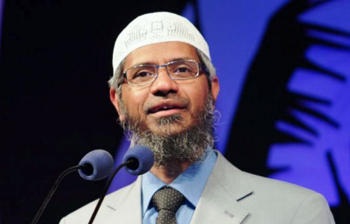
naikJustice Sanjeev Sachdeva, before whom the matter was listed, heard part arguments on behalf of the organisation and the Centre and asked the government to produce the relevant record on January 17 so that the court can see whether there was material for urgent ban of IRF.

IRF, in its plea, has challenged the November 17, 2016, notification of the Ministry of Home Affairs (MHA) which had imposed an immediate ban on the organisation under UAPA.

According to IRF, the notification gives no reason and cites no material for taking such a step as was required by the law laid down by the Supreme Court.

It said the immediate ban was imposed without giving them any show cause notice.

As per the Centre's notification, read out in the court by Additional Solicitor General (ASG) Sanjay Jain, the need for taking the "urgent step" was felt in view of the apprehension that Indian youths could be "radicalised" or "motivated" by the alleged statements and speeches made by IRF and its members, including its President, Naik, to join terror groups like ISIS, which is a cause of global concern.

Opposing the maintainability of the plea, the ASG said the government did not want to wait for some "catastrophic" incident or "pralay" to happen before taking a decision.

He argued the notification mentions that Naik was making statements which not only allegedly extolled Osama bin Laden but also promoted terrorism.

He also said that as per the notification, Naik was also accused of making statements which were "derogatory of other religions" and thus, "spreading communal disharmony".

He said that Mumbai Police had already lodged an FIR against six others of IRF on a complaint by the father of a Kerala-based youth who joined ISIS.

ASG Jain further said that some terrorists and ISIS sympathisers arrested by the authorities have allegedly claimed "they were inspired by the fundamental statements made by IRF".

The ASG said the matter is now before the Tribunal, set up under the UAPA, which will take up the issue on February 6 on which date the organisation will be provided all the affidavits filed by the government.

IRF, on the other hand, contended that dates or content of the alleged speeches and statements have not been mentioned in the notification.

It also said the Tribunal refused to accept or admit, before February 6, its plea challenging the immediate ban and thus, it had to come to the high court.

It said that it was limiting its plea to the immediate ban and not raising the issue of freezing of its accounts under the Foreign Contribution Regulation Act.

Comments

shahid
 - 
Sunday, 15 Jan 2017

daane poora chaddinaklu comment maltonduller

REALITY
 - 
Friday, 13 Jan 2017

All Haters
Atleast use your God given intellect on what he says and then think about your blind support to the devils knowingly or unknowingly.... One day you will surely come to know that ZN was speaking the TRUTH and You guys did not use your intellect to verify on what he says .... is it reallly there in VEDAS that it says NA TASYA PRATIMA ASTI.. there is no image of God (Then What im I worshiping ,,,, it may be the devils who doesnt want to know the TRUTH... ) cos devil knows he is in hell after disobeying the God who created him too... and he wants YOU to to follow in this deception.
Stop listening to your EGO and Verify what ZN says and then analyse. God says his creation needs to think and PONDER... So please PONDER & WAKE UP . its the REALITY that there is only ONE GOD (We humans have no power to see him (just like the air, we still believe it even though we did not see air) for whole of creation in this worlds...

Many things we believe which we dont see... What if ZN is telling the TRUTH? Y dont you verify ... Are you guys that lazy.. to check, investigate, research and reply to him the way he says the truth about other religions...

Dean
 - 
Friday, 13 Jan 2017

Many people are converted to Islam not by force but by beautiful teaching of Islam. Since Sri ravishankar could not debate him, he is using saffron government against him but Inshallah he will not succeed.

ISLAM IS RELIGION OF PEACE. TASTE IT YOU WILL NEVER LEAVE IT. IM LOVING IT.

analyst
 - 
Friday, 13 Jan 2017

Anti islam forces active enlarge. On the otherhand hindutva fringe outfits are given free hand to spread hatred. Hypocracy at its peak. Indeed a big question mark on indian judicial system.

Add new comment

  • Coastaldigest.com reserves the right to delete or block any comments.
  • Coastaldigset.com is not responsible for its readers’ comments.
  • Comments that are abusive, incendiary or irrelevant are strictly prohibited.
  • Please use a genuine email ID and provide your name to avoid reject.
News Network
March 24,2020

Mangaluru, Mar 24: A Covid-19 patient from Kasaragod, who recently came from abroad travelled to Mangaluru twice, revealed Karnataka department of health and family welfare.

The 54-year-old person is confirmed as Covid-19 positive case yesterday.

He landed at Mangalore International Airport on March 10 at 5.30pm by Air India Express flight.

From there, he had travelled in his own vehicle to Kasaragod. He had coffee near Kasaragod and reached home at 7.30pm.

On March 11, he had visited local fish market and returned home at 10pm.

He had consulted a local doctor at Kasaragod on March 18 and later visited to Kasturba Medical College, Attavar at 3pm, visited reception and consulted a doctor.

He had tea at KMC canteen and travelled in an auto to Medicity and brought medicines and returned to Kasaragod by KSRTC bus.

Again he travelled to Mangaluru on March 20 in a private vehicle and visited a doctor and returned back to Kasargod in a private vehicle.

The health department has requested all passengers who travelled in the above said flight/aircraft, and KSRTC bus can self-report by dialing 104 or other helpline numbers.

Comments

Add new comment

  • Coastaldigest.com reserves the right to delete or block any comments.
  • Coastaldigset.com is not responsible for its readers’ comments.
  • Comments that are abusive, incendiary or irrelevant are strictly prohibited.
  • Please use a genuine email ID and provide your name to avoid reject.
coastaldigest.com news network
May 4,2020

Mangaluru, May 4: No major crowds were seen in the coastal city of Mangaluru today except in front of the liquor shops after the district administration relaxed the lockdown norms for 12 hours a day (between 7am and 7pm).

There was no mad rush of vehicles either on city roads when the relaxed lockdown began. There were fewer people to buy essentials in front of grocery and vegetable shops as they had time till late evening.

There was no let down in the number of police pickets as well as curbs on vehicular movement across the city either. 

The government has allowed sale of liquor in CL2 (standalone wine shops) and CL 11 (MSIL outlets) to mop up revenues when Lockdown-3 commenced from Monday. Compared the other parts of Karnataka, the size of queues in front of liquor shops in Mangaluru were smaller. 

Like other parts of the country, the lockdown was imposed in the coastal district on March 24 to prevent the spread of Covid-19. Prior to that, a curfew was imposed in the district from March 22 midnight. The lockdown did not apply to essential services such as sale of food, groceries, milk, vegetables, fruits, and meat and fish. Gradually the district administration had to intensify the lockdown and allow those shops to remain open only between 7 a.m. and 12 noon. 

With the lockdown relaxation extending till 7 p.m., Mangaluru today witnessed people and private vehicles moving freely in the afternoon for the first time in more than a month. However, only those who had to go for work and do other essential activities were seen on roads. After 7 p.m. movements of all kinds of vehicles will be prohibited. 

The relaxation was to facilitate economic activities that had come to a standstill during the first two phases of lockdown. Mangaluru City Police Commissioner Dr P S Harsha, meanwhile, warned the people against misusing lockdown relaxation and venturing out without any genuine reason.

Comments

Add new comment

  • Coastaldigest.com reserves the right to delete or block any comments.
  • Coastaldigset.com is not responsible for its readers’ comments.
  • Comments that are abusive, incendiary or irrelevant are strictly prohibited.
  • Please use a genuine email ID and provide your name to avoid reject.
Agencies
May 8,2020

Washington D.C., May 8: The prime time for brain development in a child's life is the first year, where the infant spends most of the time asleep. It is the time when neural connections form and sensory memories are encoded.

However, when sleep is disrupted, as occurs more often among children with autism, brain development may be affected, too.

New research led by the University of Washington finds that sleep problems in a baby's first 12 months may not only precede an autism diagnosis but also may be associated with altered growth trajectory in a key part of the brain, the hippocampus.

The study, which was published in the American Journal of Psychiatry, researchers report that in a sample of more than 400 taken of 6- to 12-month-old infants, those who were later diagnosed with autism were more likely to have had difficulty falling asleep.

It also states that this sleep difficulty was associated with altered growth trajectories in the hippocampus.

"The hippocampus is critical for learning and memory, and changes in the size of the hippocampus have been associated with poor sleep in adults and older children.

As many as 80 per cent of the children with autism spectrum disorder have sleep problems," said Annette Estes, director of the UW Autism Center and senior author of the study.

"In our clinical experience, parents have a lot of concerns about their children's sleep, and in our work on early autism intervention, we observed that sleep problems were holding children and families back," added Estes, who is also a UW professor of speech and hearing sciences.

"It could be that altered sleep is part-and-parcel of autism for some children. One clue is that behavioural interventions to improve sleep don't work for all children with autism, even when their parents are doing everything just right. This suggests that there may be a biological component to sleep problems for some children with autism," said Estes.

To consider links among sleep, brain development, and autism, researchers at the IBIS Network looked at MRI scans of 432 infants, surveyed parents about sleep patterns, and measured cognitive functioning using a standardized assessment.

At the outset of the study, infants were classified according to their risk for developing autism: Those who were at higher risk of developing autism -- about two-thirds of the study sample -- had an older sibling who had already been diagnosed.

Infant siblings of children with autism have a 20 per cent chance of developing autism spectrum disorder -- a much higher risk than children in the general population.

In the current study, 127 of the 432 infants were identified as "low risk" at the time the MRI scans were taken because they had no family history of autism.

They later evaluated all the participants at 24 months of age to determine whether they had developed autism. Of the roughly 300 children originally considered "high familial risk," 71 were diagnosed with autism spectrum disorder at that age.

Problems with sleep were more common among the infants later diagnosed with an autism spectrum disorder, as were larger hippocampi. No other subcortical brain structures were affected, including the amygdala, which is responsible for certain emotions and aspects of memory, or the thalamus, a signal transmitter from the spinal cord to the cerebral cortex.

The authors note that while parents reported more sleep difficulties among infants who developed autism compared to those who did not, the differences were very subtle and only observed when looking at group averages across hundreds of infants.

Sleep patterns in the first years of life change rapidly as infants transition from sleeping around the clock to a more adult-like sleep/wake cycle. Until further research is completed, Estes said, it is not possible to interpret challenges with sleep as an early sign of increased risk for autism.

Comments

Add new comment

  • Coastaldigest.com reserves the right to delete or block any comments.
  • Coastaldigset.com is not responsible for its readers’ comments.
  • Comments that are abusive, incendiary or irrelevant are strictly prohibited.
  • Please use a genuine email ID and provide your name to avoid reject.