


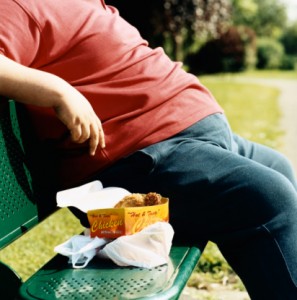
10 reasons you can't afford to be obese

[email protected] (Health Me Up)
August 29, 2014

ObeseObesity is by definition excess of fat storage rather than weight. Men with more than 25% of total body fat and women with more than 30% total body fat are considered obese.

There are many different ways to classify obesity. In accordance with endocrine and pathogen of the metabolic disease, obesity can be divided into simple obesity, secondary obesity and drug-induced obesity. Obesity, a growing health problem, is the door to a lot of illness and life threatening conditions that can make your life a living hell. Dr Ramen Goel, Head, Bariatric Surgery, Nova Specialty Surgery, Tardeo Mumbai, explains 10 reasons why obesity is bad for your health.

Type 2 diabetes

Obesity is one of the major causes of type 2 diabetes. Studies suggest that higher than normal body weight greatly increases the risk of getting diabetes. Uncontrolled diabetes in return leads to all serious complications such as high BP, heart attacks, brain strokes, blindness, kidney failures and nerve damages with amputations.

Heart attack

Obesity and overweight are linked to several factors that increase one's risk for cardiovascular disease (heart attack). Abdominal obesity or pot belly is said to be one of the major risk factors that can lead to heart ailments.

High blood pressure

Weight gain and hypertension are interconnected as increased weight raises the risk of developing high blood pressure. Weight reduction can actually help normalize the blood pressure. No wonder doctors recommend those suffering from hypertension to exercise and maintain their body weight.

Obstructive sleep apnea

Obesity results in obstructive sleep apnea where the person is not able to sleep well and snores, while remaining drowsy during the day. It is a respiratory problem in which breathing is stopped intermittently during sleep. Besides problem of sleep this results in high BP, heart failure etc.

Gout

An obese person is four times as likely to develop gout- a medical problem that affects joints, as someone with a normal body weight. In gout people have increased uric acid levels which results in painful, red and inflamed joints. With weight loss, the uric acid levels in the blood can decrease.

High cholesterol

One of the major risks in being overweight is the development of high cholesterol. Obesity increases the levels of triglycerides and bad cholesterol (LDL) in the body. Obese people generally have low levels of good cholesterol (HDL). High level of LDL and low level of HDL are major causes of atherosclerosis which results in narrowing of blood vessels leading to heart attack.

GERD

Recent research suggests that obesity is driving rise in people suffering from acid reflux. Obesity increases reflux because abdominal fat puts pressure on the ring of muscle at the bottom of the oesophagus - the 10-inch tube connecting the throat to the stomach - which normally prevents stomach acid from flowing back. The condition leads to heartburn.

Osteoarthritis

Being overweight puts extra stress on the joints, such as the knees, and consequently is a risk factor for developing osteoarthritis. Increased body weight puts more stress on joint surfaces causing damage.

Cancer

Medical research suggests that obesity plays an important role in cancer and that the lifetime risk of cancers is more among obese individuals. Obese people have higher chances of getting bowel, breast and esophageal cancers.

Heart failure

Worldwide research suggests that increased body-mass index is associated with an increased risk of heart failure.

Comments

Add new comment

  • Coastaldigest.com reserves the right to delete or block any comments.
  • Coastaldigset.com is not responsible for its readers’ comments.
  • Comments that are abusive, incendiary or irrelevant are strictly prohibited.
  • Please use a genuine email ID and provide your name to avoid reject.
Agencies
May 10,2020

Washington D.C., May 9: Do the middle age feel much stressful now, and seems to have changed over time, if compared to the life in the 90s? Well, this recent study indicates that it might be true.

The study has signalled to the fact that life may become more stressful majorly for middle-aged people than it was in the 1990s. The researchers reached this analysis even before the novel coronavirus started sweeping the globe.

A team of researchers led by Penn State found that across all ages, there was a slight increase in daily stress in the 2010s compared to the 1990s. But when researchers restricted the sample to people between the ages of 45 and 64, there was a sharp increase in daily stress.

"On average, people reported about 2 percent more stressors in the 2010s compared to people in the past," said David M. Almeida, professor of human development and family studies at Penn State.

"That's around an additional week of stress a year. But what really surprised us is that people at mid-life reported a lot more stressors, about 19 percent more stress in 2010 than in 1990. And that translates to 64 more days of stress a year."

Almeida said the findings were part of a larger project aiming to discover whether health during the middle of Americans' lives has been changing over time.

"Certainly, when you talk to people, they seem to think that daily life is more hectic and less certain these days," Almeida said.

For the study, the researchers collected data from 1,499 adults in 1995 and 782 different adults in 2012.

Almeida said the goal was to study two cohorts of people who were the same age at the time the data was collected but born in different decades. All study participants were interviewed daily for eight consecutive days.

During each daily interview, the researchers asked the participants about their stressful experiences throughout the previous 24 hours.

They asked questions related to arguments with family or friends or feeling overwhelmed at home or work, so and so. The participants were also asked how severe their stress was and whether those stressors were likely to impact other areas of their lives.

"We were able to estimate not only how frequently people experienced stress, but also what those stressors mean to them," Almeida said.

"For example, did this stress affect their finances or their plans for the future. And by having these two cohorts of people, we were able to compare daily stress processes in 1990 with daily stress processes in 2010," Almeida added.

After analyzing the data, the researchers found that participants reported significantly more daily stress and lower well-being in the 2010s compared to the 1990s.

Additionally, participants reported a 27 percent increase in the belief that stress would affect their finances and a 17 percent increase in the belief that stress would affect their future plans.

Almeida said he was surprised not that people were more stressed now than in the 90s, but at the age group that was mainly affected.

"We thought that with economic uncertainty, life might be more stressful for younger adults. But we didn't see that. We saw more stress for people at mid-life," Almeida said.

"And maybe that's because they have children who are facing an uncertain job market while also responsible for their own parents. So it's this generational squeeze that's making stress more prevalent for people at mid-life," he concluded.

Comments

Add new comment

  • Coastaldigest.com reserves the right to delete or block any comments.
  • Coastaldigset.com is not responsible for its readers’ comments.
  • Comments that are abusive, incendiary or irrelevant are strictly prohibited.
  • Please use a genuine email ID and provide your name to avoid reject.
Agencies
July 21,2020

New Delhi, Jul 21: The Centre has written to all states and union territories warning against the use of N-95 masks with valved respirators by people, saying these do not prevent the virus from spreading out and are "detrimental" to the measures adopted for its containment.

The Director General of Health Services (DGHS) in the Ministry of Health, in a letter to the Principal Secretaries of health and medical education of states, said it has been observed that there is "inappropriate use" of N-95 masks, particularly those with valved respirators, by the public other than designated health workers.

The DGHS referred to the advisory on the use of homemade protective cover for face and mouth available on the website of the Ministry of Health.

"It is to bring to your knowledge that the use of valved respirator N-95 masks is detrimental to the measures adopted for preventing the spread of coronavirus as it does not prevent the virus from escaping out of the mask. In view of the above, I request you to instruct all concerned to follow the use of face/mouth cover and prevent inappropriate use of N-95 masks," DGHS Rajiv Garg said in the letter.

The government had in April issued an advisory on the use of homemade protective cover for face and mouth, asking people to wear it, particularly when they step out of their residences.

The advisory stressed such face covers must be washed and cleaned each day, as instructed, and stated that any used cotton cloth can be used to make this face cover.

The colour of the fabric does not matter but one must ensure that the fabric is washed well in boiling water for five minutes and dried well before making the face cover. Adding salt to this water is recommended, it said.

It also listed the procedures of making such homemade masks, asking to ensure it fits the face well and there are no gaps on the sides.

It urges people to wash hands thoroughly before wearing the face cover, switching to another fresh one as the face cover becomes damp or humid, and never reusing it after single use without cleaning it.

"Never share the face cover with anyone. Every member in a family should have separate face cover," the advisory stated.

India's COVID-19 case tally crossed the 11-lakh mark on Monday, while the total number of recovered patients increased to over seven lakh, according to Union health ministry data.

The death toll due to the disease rose to 27,497 with 681 fatalities reported in one day.

The ministry data updated at 8 am on Monday showed that a record single-day jump of 40,425 COVID-19 cases had taken the total number of cases to 11,18,043.

Comments

Add new comment

  • Coastaldigest.com reserves the right to delete or block any comments.
  • Coastaldigset.com is not responsible for its readers’ comments.
  • Comments that are abusive, incendiary or irrelevant are strictly prohibited.
  • Please use a genuine email ID and provide your name to avoid reject.
News Network
May 13,2020

California, May 13: A fasting-mimicking diet could be more effective at treating some types of cancer when combined with vitamin C, suggests a new study conducted by the scientists from USC and the IFOM Cancer Institute in Milan.

In studies on mice, researchers found that the combination delayed tumour progression in multiple mouse models of colorectal cancer; in some mice, it caused disease regression. The results were published in the journal Nature Communications.

"For the first time, we have demonstrated how a completely non-toxic intervention can effectively treat an aggressive cancer," said Valter Longo, the study senior author and the director of the USC Longevity Institute at the USC Leonard Davis School of Gerontology and professor of biological sciences at the USC Dornsife College of Letters, Arts and Sciences.

"We have taken two treatments that are studied extensively as interventions to delay ageing-- a fasting-mimicking diet and vitamin C -- and combined them as a powerful treatment for cancer," added Longo.

The researchers said that while fasting remains a challenging option for cancer patients, a safer, more feasible option is a low-calorie, plant-based diet that causes cells to respond as if the body were fasting.

Their findings suggest that a low-toxicity treatment of fasting-mimicking diet plus vitamin C has the potential to replace more toxic treatments.

Results of prior research on the cancer-fighting potential of vitamin C have been mixed. Recent studies, though, are beginning to show some efficacy, especially in combination with chemotherapy.

In this new study, the research team wanted to find out whether a fasting-mimicking diet could enhance the high-dose vitamin C tumour-fighting action by creating an environment that would be unsustainable for cancer cells but still safe for normal cells.

"Our first in vitro experiment showed remarkable effects. When used alone, fasting-mimicking diet or vitamin C alone reduced cancer cell growth and caused a minor increase in cancer cell death. But when used together, they had a dramatic effect, killing almost all cancerous cells," said Longo.

Longo and his colleagues detected this strong effect only in cancer cells that had a mutation that is regarded as one of the most challenging targets in cancer research.

These mutations in the KRAS gene signal the body is resisting most cancer-fighting treatments, and they reduce a patient's survival rate. KRAS mutations occur in approximately a quarter of all human cancers and are estimated to occur in up to half of all colorectal cancers.

The study also provided clues about why previous studies of vitamin C as a potential anticancer therapy showed limited efficacy. By itself, a vitamin C treatment appears to trigger the KRAS-mutated cells to protect cancer cells by increasing levels of ferritin, a protein that binds iron.

But by reducing levels of ferritin, the scientists managed to increase vitamin C's toxicity for the cancer cells. Amid this finding, the scientists also discovered that colorectal cancer patients with high levels of the iron-binding protein have a lower chance of survival.

"In this study, we observed how fasting-mimicking diet cycles are able to increase the effect of pharmacological doses of vitamin C against KRAS-mutated cancers," said Maira Di Tano, a study co-author at the IFOM, FIRC Institute of Molecular Oncology in Milan, Italy.

"This occurs through the regulation of the levels of iron and of the molecular mechanisms involved in oxidative stress. The results particularly pointed to a gene that regulates iron levels: heme-oxygenase-1," added Tano.

The research team's prior studies showed that fasting and a fasting-mimicking diet slow cancer's progression and make chemotherapy more effective in tumour cells while protecting normal cells from chemotherapy-associated side effects. The combination enhances the immune system's anti-tumour response in breast cancer and melanoma mouse models.

The scientists believe cancer will eventually be treated with low-toxicity drugs in a manner similar to how antibiotics are used to treat infections that kill particular bacteria, but which can be substituted by other drugs if the first is not effective.

To move toward that goal, they say they needed to first test two hypotheses: that their non-toxic combination interventions would work in mice, and that it would look promising for human clinical trials.

In this new study, they said that they've demonstrated both. At least five clinical trials, including one at USC on breast cancer and prostate cancer patients, are now investigating the effects of the fasting-mimicking diets in combination with different cancer-fighting drugs.

Comments

Add new comment

  • Coastaldigest.com reserves the right to delete or block any comments.
  • Coastaldigset.com is not responsible for its readers’ comments.
  • Comments that are abusive, incendiary or irrelevant are strictly prohibited.
  • Please use a genuine email ID and provide your name to avoid reject.