



2 billion years of volcanic activity on Mars unveiled

February 3, 2017

Feb 3: Scientists have uncovered evidence of at least two billion years of volcanic activity on Mars, after analysing a meteorite from the red planet.
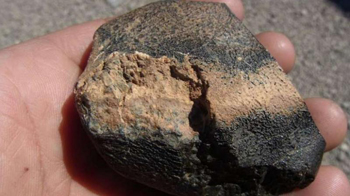
volcanicThe finding confirms that some of the longest-lived volcanoes in the solar system may be found on the red planet.

Shield volcanoes and lava plains formed from lava flowing over long distances, similar to the formation of the Hawaiian Islands.

The largest Martian volcano, Olympus Mons, is nearly 27.3 kilometres high. That is almost triple the height of Earth's tallest volcano, Mauna Kea, at 10 kilometres.

The findings offer new clues to how the planet evolved and insight into the history of volcanic activity on Mars, said

Tom Lapen, a professor at the University of Houston in the US.

Much of what we know about the composition of rocks from volcanoes on Mars comes from meteorites found on Earth.

Analysis of different substances provides information about the age of the meteorite, its magma source, length of time in space and how long the meteorite was on Earth's surface.

Something slammed into the surface of Mars one million years ago, hitting a volcano or lava plain. This impact ejected rocks into space. Fragments of these rocks crossed

Earth's orbit and fell as meteorites.

The meteorite, known as Northwest Africa 7635 and discovered in 2012, was found to be a type of volcanic rock called a shergottite.

Eleven of these Martian meteorites, with similar chemical composition and ejection time, have been found.

"We see that they came from a similar volcanic source. Given that they also have the same ejection time, we can conclude that these come from the same location on Mars," said Lapen.

Together, these meteorites provide information about a single location on Mars. Previously analysed meteorites range in age from 327 million to 600 million years old.

In contrast, the meteorite analysed by researchers was formed 2.4 billion years ago and suggests that it was ejected from one of the longest-lived volcanic centres in the solar system.

The study was published in the journal Science Advances.

Comments

Add new comment

  • Coastaldigest.com reserves the right to delete or block any comments.
  • Coastaldigset.com is not responsible for its readers’ comments.
  • Comments that are abusive, incendiary or irrelevant are strictly prohibited.
  • Please use a genuine email ID and provide your name to avoid reject.
Agencies
February 23,2020

Google has indexed invite links to private WhatsApp group chats, meaning anyone can join various private chat groups (including several porn-sharing groups) with a simple search.

According to a report in Motherboard, invitations to WhatsApp group chats were being indexed by Google.

The team found private groups using specific Google searches and even joined a group intended for NGOs accredited by the UN and had access to all the participants and their phone numbers.

Journalist Jordan Wildon said on Twitter that he discovered that WhatsApp's "Invite to Group Link" feature lets Google index groups, making them available across the internet since the links are being shared outside of WhatsApp's secure private messaging service.

"Your WhatsApp groups may not be as secure as you think they are," Wildon tweeted on Friday, adding that using particular Google searches, people can discover links to the chats.

According to app reverse-engineer Jane Wong, Google has around 470,000 results for a simple search of "chat.whatsapp.com", part of the URL that makes up invites to WhatsApp groups.

WhatsApp spokesperson Alison Bonny said: "Like all content that is shared in searchable public channels, invite links that are posted publicly on the internet can be found by other WhatsApp users."

"The links that users wish to share privately with people they know and trust should not be posted on a publicly accessible website," Bonny told The Verge.

Danny Sullivan, Google's public search liaison, tweeted: "Search engines like Google & others list pages from the open web. That's what's happening here. It's no different than any case where a site allows URLs to be publicly listed. We do offer tools allowing sites to block content being listed in our results."

Comments

Add new comment

  • Coastaldigest.com reserves the right to delete or block any comments.
  • Coastaldigset.com is not responsible for its readers’ comments.
  • Comments that are abusive, incendiary or irrelevant are strictly prohibited.
  • Please use a genuine email ID and provide your name to avoid reject.
Agencies
July 25,2020

In a study conducted in 117 countries, researchers have found that the world is experiencing the most dramatic reduction in the seismic noise (the hum of vibrations in the planet's crust) in recorded history due to global COVID-19 lockdowns.

Measured by instruments called seismometers, seismic noise is caused by vibrations within the Earth, which travel like waves and the waves can be triggered by earthquakes, volcanoes, and bombs - but also by daily human activity like travel and industry.

This quiet period was likely caused by the total global effect of social distancing measures, closure of services and industry, and drops in tourism and travel, the study published in the journal Science, reported.

The new research, led by the Royal Observatory of Belgium and five other institutions around the world including Imperial College London (ICL), showed that the dampening of 'seismic noise' caused by humans was more pronounced in more densely populated areas.

"Our study uniquely highlights just how much human activities impact the solid Earth, and could let us see more clearly than ever what differentiates human and natural noise," said study co-author Stephen Hicks from ICL in the UK.

For the findings, the research team looked at seismic data from a global network of 268 seismic stations in 117 countries and found significant noise reductions compared to before any lockdown at 185 of those stations.

Researchers tracked the 'wave' of quietening between March and May as worldwide lockdown measures took hold.

The largest drops in vibrations were seen in the most densely populated areas, like Singapore and New York City, but drops were also seen in remote areas like Germany's the Black Forest and Rundu in Namibia.

Citizen-owned seismometers, which tend to measure more localised noise, noted large drops around universities and schools around Cornwall, UK and Boston, US - a drop in noise 20 per cent larger than seen during school holidays.

The findings showed that countries like Barbados, where lockdown coincided with the tourist season, saw a 50 per cent decrease in noise.

"The changes have also given us the opportunity to listen in to the Earth's natural vibrations without the distortions of human input," the study authors wrote.

Earlier in April, a study published in the journal Nature, reported at least a 30 per cent reduction in that amount of ambient human noise since lockdown began in Belgium.

Comments

Add new comment

  • Coastaldigest.com reserves the right to delete or block any comments.
  • Coastaldigset.com is not responsible for its readers’ comments.
  • Comments that are abusive, incendiary or irrelevant are strictly prohibited.
  • Please use a genuine email ID and provide your name to avoid reject.
Agencies
January 20,2020

Washington D.C., Jan 20: An American bride asked for money from her invitees so that they can be on the 'exclusive guest list'.

Weddings can be surely expensive. But is it feasible for one to charge the guests to make up for the expenses?

According to Fox News, that is exactly what happened in a recent American wedding. A 19-year-old shared on Reddit that her cousin was getting married on Sunday and announced that she would charge 50 dollars to those who wanted to attend her wedding.

"She said that they can Venmo her money so there won't be no [sic] problems and everyone who paid will be added onto the 'exclusive guest list' which basically means you won't have to wait in line while other guests pay," wrote the user named DaintySheep.

While she refused to pay for entry into her cousin's wedding the bride-to-be contacted the elders in the family which ended up in an embarrassing situation.

"She wanted to get the money she spent on her special day back. I told her I wouldn't be able to come because this was outrageous and that I wish her well on her special day. She contacted my aunt and my aunt called me cheap and rude. My parents offered to pay for my entry, but I refused," continued the disheartened girl.

While in almost every nook and cranny of the world gifting the bride-groom with money is a tradition, asking for money from friends and family to replenish the money spent on a wedding is can be said to be a rare scenario.

Comments

Add new comment

  • Coastaldigest.com reserves the right to delete or block any comments.
  • Coastaldigset.com is not responsible for its readers’ comments.
  • Comments that are abusive, incendiary or irrelevant are strictly prohibited.
  • Please use a genuine email ID and provide your name to avoid reject.