


200 Million Indians Suffer From High Blood Pressure: Global Study

November 17, 2016

London, Nov 17: The number of people with high blood pressure has almost doubled in 40 years to over 1.1 billion worldwide, scientists said, with the burden of the condition shifting from the rich to the poor.BP-696x428
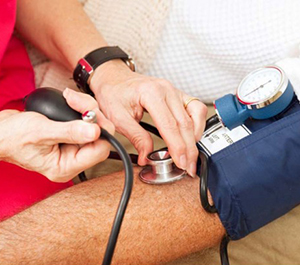
In the largest study of its kind analyzing blood pressure in every nation between 1975 and 2015, the scientists said that it has dropped sharply in wealthy countries – possibly due to healthier diets and lifestyles – but risen in poorer ones.

The increases are especially significant in Africa and South Asia, the researchers said, and could be partly due to poor nutrition in childhood.

High blood pressure, also known as hypertension, puts extra strain on the blood vessels and major organs such as the heart, brain and kidneys. It is the world’s top cause of cardiovascular disease, which leads to strokes and heart attacks, and is estimated to cause 7.5 million deaths a year worldwide.

Led by World Health Organisation researchers working with hundreds of scientists internationally, this study covered blood pressure measurements from nearly 20 million people and was published in The Lancet medical journal.

In Europe, Britain had the lowest proportion of people with high blood pressure in 2015. South Korea, the United States and Canada had the lowest hypertension rates in the world.

More than half the world’s adults with high blood pressure in 2015 lived in Asia, the study estimated. Some 226 million people in China have high blood pressure, it said, as do 200 million in India.

“High blood pressure is no longer related to affluence – as it was in 1975 – but is now a major health issue linked with poverty,” said Majid Ezzati, a professor at Imperial College London’s school of public health.

He said that while he could not be sure of why the data showed high blood pressure as more of a problem in poorer countries, it may be partly due to overall better health and more consumption of fruit and vegetables in wealthy societies.

In rich countries, the condition is also caught more frequently and earlier, and managed more effectively with medicines, Ezzati said.

Blood pressure is defined by two numbers – systolic pressure, which represents the force with which the heart pumps blood into the blood vessels, and diastolic pressure, a measure of the resistance to the blood flow in the body’s blood vessels.

Both numbers are measured in millimetres of mercury (mmHg). High blood pressure is defined as 140/90 mmHg or higher.

The condition is caused by a number of factors including having a diet high in salt and low in fruit and vegetables, and not taking enough exercise.

Comments

Add new comment

  • Coastaldigest.com reserves the right to delete or block any comments.
  • Coastaldigset.com is not responsible for its readers’ comments.
  • Comments that are abusive, incendiary or irrelevant are strictly prohibited.
  • Please use a genuine email ID and provide your name to avoid reject.
News Network
July 9,2020

Washington, Jul 9: Ayurvedic practitioners and researchers in India and the US are planning to initiate joint clinical trials for Ayurveda formulations against the novel coronavirus, the Indian envoy here has said.

In a virtual interaction with a group of eminent Indian-American scientists, academicians, and doctors on Wednesday, Indian Ambassador to the US Taranjit Singh Sandhu said the vast network of institutional engagements have brought scientific communities between the two countries together in the fight against Covid-19.

 “Our Institutions have also been collaborating to promote Ayurveda through joint research, teaching and training programs. Ayurvedic practitioners and researchers in both the countries are planning to initiate joint clinical trials of Ayurvedic formulations against Covid-19,” Sandhu said.

“Our scientists have been exchanging knowledge and research resources on this front,” he said.

The Indo-US Science Technology Forum (IUSSTF) has always been instrumental in promoting excellence in science, technology, and innovation through collaborative activities.

To address Covid-19-related challenges, the IUSSTF had given a call to support joint research and start-up engagements. A large number of proposals are being reviewed on fast track mode by the experts on both the sides, he said.

“Indian pharmaceutical companies are global leaders in producing affordable low-cost medicines and vaccines and will play an important role in the fight against this pandemic,” Sandhu said.

According to the ambassador, there are at least three ongoing collaborations between Indian vaccine companies with US-based institutions.

These collaborations would be beneficial not just to India and the US, but also for the billions who would need to be vaccinated against Covid-19 across the world, he noted.

Asserting that innovation will be the key driver in pandemic response and recovery, he said tech-companies and start-ups have already begun to take the lead in this direction.

"Telemedicine and telehealth will evolve as will other digital platforms across sectors," he said.

Noting that there has been a longstanding collaboration between India and the US in the health sector, he said scientists have been working together in several programs to understand important diseases at the basic and clinical level.

Many such programs have been focused on translational research to develop new therapeutics and diagnostics.

There are over 200 ongoing NIH funded projects in India involving 20 institutions from NIH network and several eminent institutions in India engaged in a wide spectrum of research areas to create health care solutions, the senior diplomat said.

The collaboration under Vaccine Action Program (VAP) resulted in the development of ROTAVAC vaccine against rotavirus which causes severe diarrhea in children.

The vaccine was developed by an Indian company (Bharat Biotech) at an affordable cost. It has been commercialised and introduced in the Expanded Program on Immunisation.

Development of many other vaccines such as TB, Influenza, Chikungunya are also in progress under the VAP, he said.

 “As I speak, the VAP meeting is in progress where experts from both countries are deeply engaged in technical discussions to expedite development of Covid-19 vaccine,” Sandhu said in his remarks.

During the interaction, the eminent experts appreciated India's handling of the Covid-19 pandemic and offered their valuable suggestions and best practices in this regard.

They shared their ideas on deepening the knowledge partnership between India and the US.

The experts who took part in the interaction, were drawn from wide-ranging fields including artificial intelligence, quantum information science, biomedical engineering, robotics, mechanical engineering, earth and ocean science, virology, physics, astrophysics, and health sciences.

Prominent among those who attended the virtual interaction were Subhash Kak Regents Professor at Oklahoma State University, Dr Vijay Kuchroo, Samuel L Wasserstrom Professor of Neurology at Harvard Medical School, Dr Ashish M Kamat, Professor of Urology at MD Anderson Cancer Center, Ashutosh Chilkoti, Alan L Kaganov Professor of Biomedical Engineering and Chair of the Department of Biomedical Engineering at Duke University; and Prof Manu Prakash, a professor in Department of Bioengineering at Sandford University, among others.

Comments

Add new comment

  • Coastaldigest.com reserves the right to delete or block any comments.
  • Coastaldigset.com is not responsible for its readers’ comments.
  • Comments that are abusive, incendiary or irrelevant are strictly prohibited.
  • Please use a genuine email ID and provide your name to avoid reject.
News Network
February 12,2020

Washington, Feb 12: People who are optimistic may contribute to the health of their partners, staving off the risk factors leading to Alzheimer's disease, dementia and cognitive decline as they grow old together, according to a study.

The research, published in the Journal of Personality, followed nearly 4,500 heterosexual couples from the US Health and Retirement Study for up to eight years.

The researchers found a potential link between being married to an optimistic person and preventing the onset of cognitive decline, due to a healthier environment at home.

"We spend a lot of time with our partners.They might encourage us to exercise, eat healthier or remind us to take our medicine," said William Chopik, an assistant professor at the Michigan State University in the US.

"When your partner is optimistic and healthy, it can translate to similar outcomes in your own life. You actually do experience a rosier future by living longer and staving off cognitive illnesses," Chopik said.

An optimistic partner may encourage eating healthy foods, or working out together to develop healthier lifestyles, the researchers said.

For example, if a person quits smoking or starts exercising, their partner is close to following suit, they said.

"We found that when you look at the risk factors for what predicts things like Alzheimer's disease or dementia, a lot of them are things like living a healthy lifestyle," Chopik said.

"Maintaining a healthy weight and physical activity are large predictors.There are some physiological markers as well. It looks like people who are married to optimists tend to score better on all of those metrics," he said.

The researchers said there is a sense where optimists lead by example, and their partners follow their lead.

They also suggest that when couples recall shared experiences together, richer details from the memories emerge.

Chopik noted while there is a heritable component to optimism, there is some evidence to suggest that it's a trainable quality.

"There are studies that show people have the power to change their personalities, as long as they engage in things that make them change," Chopik said.

"Part of it is wanting to change. There are also intervention programs that suggest you can build up optimism," he added.

Comments

Add new comment

  • Coastaldigest.com reserves the right to delete or block any comments.
  • Coastaldigset.com is not responsible for its readers’ comments.
  • Comments that are abusive, incendiary or irrelevant are strictly prohibited.
  • Please use a genuine email ID and provide your name to avoid reject.
Agencies
March 11,2020

With the sales of chicken and mutton going down due to the coronavirus scare, it is the humble 'Kathal' (jackfruit) is emerging as an acceptable alternative.

'Kathal' is now selling at ₹120 per kilogram -- an increase of more than 120 per cent over the normal ₹50 per kilogram.

The jackfruit, in fact, is now priced higher than chicken which is selling at ₹80 per kilogram due to poor demand.

"It is better having a 'Kathal' biryani instead of a mutton biryani. It tastes reasonably good. The only problem is that 'Kathal' has been sold out in the vegetable market and is difficult to find," said Purnima Srivastava whose family savours non-vegetarian food on a regular basis.

The corona scare has hit poultry business so hard and the Poultry Farm Association recently organized a Chicken Mela in Gorakhpur to dispel the misconception that birds are carriers of the deadly virus.

"In fact, we gave away plateful of chicken dishes for Rs 30 to encourage people to savour the delicacies. We cooked one thousand kilograms of chicken for the Mela and the entire stock was sold out," said Vineet Singh, head of the Poultry Farm Association.

However, the Mela did not do much to dispel the fears about chicken, mutton or fish consumption amid the virus outbreak.

Comments

Add new comment

  • Coastaldigest.com reserves the right to delete or block any comments.
  • Coastaldigset.com is not responsible for its readers’ comments.
  • Comments that are abusive, incendiary or irrelevant are strictly prohibited.
  • Please use a genuine email ID and provide your name to avoid reject.