


200 Million Indians Suffer From High Blood Pressure: Global Study

November 17, 2016

London, Nov 17: The number of people with high blood pressure has almost doubled in 40 years to over 1.1 billion worldwide, scientists said, with the burden of the condition shifting from the rich to the poor.BP-696x428
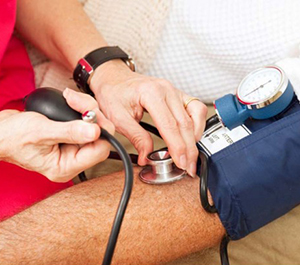
In the largest study of its kind analyzing blood pressure in every nation between 1975 and 2015, the scientists said that it has dropped sharply in wealthy countries – possibly due to healthier diets and lifestyles – but risen in poorer ones.

The increases are especially significant in Africa and South Asia, the researchers said, and could be partly due to poor nutrition in childhood.

High blood pressure, also known as hypertension, puts extra strain on the blood vessels and major organs such as the heart, brain and kidneys. It is the world’s top cause of cardiovascular disease, which leads to strokes and heart attacks, and is estimated to cause 7.5 million deaths a year worldwide.

Led by World Health Organisation researchers working with hundreds of scientists internationally, this study covered blood pressure measurements from nearly 20 million people and was published in The Lancet medical journal.

In Europe, Britain had the lowest proportion of people with high blood pressure in 2015. South Korea, the United States and Canada had the lowest hypertension rates in the world.

More than half the world’s adults with high blood pressure in 2015 lived in Asia, the study estimated. Some 226 million people in China have high blood pressure, it said, as do 200 million in India.

“High blood pressure is no longer related to affluence – as it was in 1975 – but is now a major health issue linked with poverty,” said Majid Ezzati, a professor at Imperial College London’s school of public health.

He said that while he could not be sure of why the data showed high blood pressure as more of a problem in poorer countries, it may be partly due to overall better health and more consumption of fruit and vegetables in wealthy societies.

In rich countries, the condition is also caught more frequently and earlier, and managed more effectively with medicines, Ezzati said.

Blood pressure is defined by two numbers – systolic pressure, which represents the force with which the heart pumps blood into the blood vessels, and diastolic pressure, a measure of the resistance to the blood flow in the body’s blood vessels.

Both numbers are measured in millimetres of mercury (mmHg). High blood pressure is defined as 140/90 mmHg or higher.

The condition is caused by a number of factors including having a diet high in salt and low in fruit and vegetables, and not taking enough exercise.

Comments

Add new comment

  • Coastaldigest.com reserves the right to delete or block any comments.
  • Coastaldigset.com is not responsible for its readers’ comments.
  • Comments that are abusive, incendiary or irrelevant are strictly prohibited.
  • Please use a genuine email ID and provide your name to avoid reject.
Agencies
March 15,2020

Should you let your babies "cry it out" or rush to their side? Researchers have found that leaving an infant to 'cry it out' from birth up to 18 months does not adversely affect their behaviour development or attachment.

The study, published in the Journal of Child Psychology and Psychiatry, found that an infant's development and attachment to their parents is not affected by being left to "cry it out" and can actually decrease the amount of crying and duration.

"Only two previous studies nearly 50 or 20 years ago had investigated whether letting babies 'cry it out' affects babies' development. Our study documents contemporary parenting in the UK and the different approaches to crying used," said the study's researcher Ayten Bilgin from the University of Warwick in the UK.

For the study, the researchers followed 178 infants and their mums over 18 months and repeatedly assessed whether parents intervened immediately when a baby cried or let the baby let it cry out a few times or often.

They found that it made little difference to the baby’s development by 18 months.

The use of parent’s leaving their baby to ‘cry it out’ was assessed via maternal report at term, 3, 6 and 18 months and cry duration at term, 3 and 18 months.

Duration and frequency of fussing and crying was assessed at the same ages with the Crying Pattern Questionnaire.

According to the researchers, how sensitive the mother is in interaction with their baby was video-recorded and rated at 3 and 18 months of age.

Attachment was assessed at 18 months using a gold standard experimental procedure, the strange situation test, which assesses how securely an infant is attached to the major caregiver during separation and reunion episodes.

Behavioural development was assessed by direct observation in play with the mother and during assessment by a psychologist and a parent-report questionnaire at 18 months.

Researchers found that whether contemporary parents respond immediately or leave their infant to cry it out a few times to often makes no difference on the short - or longer term relationship with the mother or the infants behaviour.

This study shows that 2/3 of mum's parent intuitively and learn from their infant, meaning they intervene when they were just born immediately, but as they get older the mother waits a bit to see whether the baby can calm themselves, so babies learn self-regulation.

Comments

Add new comment

  • Coastaldigest.com reserves the right to delete or block any comments.
  • Coastaldigset.com is not responsible for its readers’ comments.
  • Comments that are abusive, incendiary or irrelevant are strictly prohibited.
  • Please use a genuine email ID and provide your name to avoid reject.
Agencies
July 3,2020

Apart from the many benefits of doing exercise, new research has now found that exercise can slow down or prevent the development of macular degeneration and may benefit other common causes of vision loss, such as glaucoma and diabetic retinopathy.

The new study from the University of Virginia School of Medicine found that exercise reduced the harmful overgrowth of blood vessels in the eyes of lab mice by up to 45 per cent. This tangle of blood vessels is a key contributor to macular degeneration and several other eye diseases.

The study represents the first experimental evidence showing that exercise can reduce the severity of macular degeneration, a leading cause of vision loss, the scientists report. Ten million Americans are estimated to have the condition.

"There has long been a question about whether maintaining a healthy lifestyle can delay or prevent the development of macular degeneration. The way that question has historically been answered has been by taking surveys of people, asking them what they are eating and how much exercise they are performing," said researcher Bradley Gelfand, PhD, of UVA's Center for Advanced Vision Science.

"That is basically the most sophisticated study that has been done. The problem with that is that people are notoriously bad self-reporters ... and that can lead to conclusions that may or not be true. This [study] offers hard evidence from the lab for the very first time," Gelfand added.

Enticingly, the research found that the bar for receiving the benefits from exercise was relatively low - more exercise didn't mean more benefit.

"Mice are kind of like people in that they will do a spectrum of exercise. As long as they had a wheel and ran on it, there was a benefit. The benefit that they obtained is saturated at low levels of exercise," Gelfand said.

An initial test comparing mice that voluntarily exercised versus those that did not found that exercise reduced the blood vessel overgrowth by 45%. A second test, to confirm the findings, found a reduction of 32 per cent.

The scientists aren't certain exactly how exercise is preventing the blood vessel overgrowth. There could be a variety of factors at play, they say, including increased blood flow to the eyes.

Gelfand, of UVA's Department of Ophthalmology and Department of Biomedical Engineering, noted that the onset of vision loss is often associated with a decrease in exercise.

"It is fairly well known that as people's eyes and vision deteriorate, their tendency to engage in physical activity also goes down. It can be a challenging thing to study with older people. ... How much of that is one causing the other?" he said.
The researchers already have submitted grant proposals in hopes of obtaining funding to pursue their findings further.

"The next step is to look at how and why this happens, and to see if we can develop a pill or method that will give you the benefits of exercise without having to exercise," Gelfand said.

He explained, "We're talking about a fairly elderly population [of people with macular degeneration], many of whom may not be capable of conducting the type of exercise regimen that may be required to see some kind of benefit." (He urged people to consult their doctors before beginning any aggressive exercise program.)
Gelfand, a self-described couch potato, disclosed a secret motivation for the research: "One reason I wanted to do this study was sort of selfish. I was hoping to find some reason not to exercise," he joked. "It turned out exercise really is good for you."

Comments

Add new comment

  • Coastaldigest.com reserves the right to delete or block any comments.
  • Coastaldigset.com is not responsible for its readers’ comments.
  • Comments that are abusive, incendiary or irrelevant are strictly prohibited.
  • Please use a genuine email ID and provide your name to avoid reject.
Agencies
March 16,2020

New Delhi, Mar 16: A recent survey across 140 districts of the country shows that about 54 per cent of Indians are finding travelling to be unsafe as the deadly coronavirus (COVID-19) pandemic sweeps globally.

The big worry that people have is community transmission, something that researchers from around the world have approximated at 10 per cent of total infections and more common in places like Wuhan in China, South Korea, Iran and Italy.

The months of March to June have historically been high travel season for most Indians, largely due to the summer vacations in schools. "But it seems that Indians do not want to take a chance with this rather scary virus and are either cancelling or postponing their travel plans," concluded the survey by LocalCircles.

The survey gathered more than 22,000 responses from participants in tier one, two and three cities. It said 48 per cent Indians plan to cancel their international business travel for the next four months.

Besides, nearly 38 per cent of respondents said they had to pay cancellation fee to the website, travel agent, airline or railways.

"These are testing times for the entire travel and tourism industry -- airlines, hotels, travel agents as well as small tour and taxi operators. The best solution at this point is to adjust cost structures, stay flexible and work with a collective approach to minimise the period of impact to both citizens and business," said LocalCircles.

Comments

Add new comment

  • Coastaldigest.com reserves the right to delete or block any comments.
  • Coastaldigset.com is not responsible for its readers’ comments.
  • Comments that are abusive, incendiary or irrelevant are strictly prohibited.
  • Please use a genuine email ID and provide your name to avoid reject.