


200 Million Indians Suffer From High Blood Pressure: Global Study

November 17, 2016

London, Nov 17: The number of people with high blood pressure has almost doubled in 40 years to over 1.1 billion worldwide, scientists said, with the burden of the condition shifting from the rich to the poor.BP-696x428
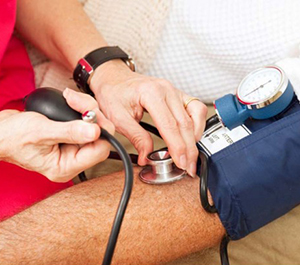
In the largest study of its kind analyzing blood pressure in every nation between 1975 and 2015, the scientists said that it has dropped sharply in wealthy countries – possibly due to healthier diets and lifestyles – but risen in poorer ones.

The increases are especially significant in Africa and South Asia, the researchers said, and could be partly due to poor nutrition in childhood.

High blood pressure, also known as hypertension, puts extra strain on the blood vessels and major organs such as the heart, brain and kidneys. It is the world’s top cause of cardiovascular disease, which leads to strokes and heart attacks, and is estimated to cause 7.5 million deaths a year worldwide.

Led by World Health Organisation researchers working with hundreds of scientists internationally, this study covered blood pressure measurements from nearly 20 million people and was published in The Lancet medical journal.

In Europe, Britain had the lowest proportion of people with high blood pressure in 2015. South Korea, the United States and Canada had the lowest hypertension rates in the world.

More than half the world’s adults with high blood pressure in 2015 lived in Asia, the study estimated. Some 226 million people in China have high blood pressure, it said, as do 200 million in India.

“High blood pressure is no longer related to affluence – as it was in 1975 – but is now a major health issue linked with poverty,” said Majid Ezzati, a professor at Imperial College London’s school of public health.

He said that while he could not be sure of why the data showed high blood pressure as more of a problem in poorer countries, it may be partly due to overall better health and more consumption of fruit and vegetables in wealthy societies.

In rich countries, the condition is also caught more frequently and earlier, and managed more effectively with medicines, Ezzati said.

Blood pressure is defined by two numbers – systolic pressure, which represents the force with which the heart pumps blood into the blood vessels, and diastolic pressure, a measure of the resistance to the blood flow in the body’s blood vessels.

Both numbers are measured in millimetres of mercury (mmHg). High blood pressure is defined as 140/90 mmHg or higher.

The condition is caused by a number of factors including having a diet high in salt and low in fruit and vegetables, and not taking enough exercise.

Comments

Add new comment

  • Coastaldigest.com reserves the right to delete or block any comments.
  • Coastaldigset.com is not responsible for its readers’ comments.
  • Comments that are abusive, incendiary or irrelevant are strictly prohibited.
  • Please use a genuine email ID and provide your name to avoid reject.
Agencies
May 6,2020

Washington D.C., May 5: Working from home has become the new normal ever since the outbreak of coronavirus and in today's time the work duties can be easily dealt with by means of mobile devices at home.

However, this easy use of technology, mobile devices for that matter, has the potential to blur the fine line between work and the other daily life routines.

But, contrary to the belief, a study at the University of Jyvaskyla reveals that the mixing of work and other daily life routines may have more benefits than previously assumed, and points to the importance of boundary-spanning communication.

A smartphone enables phone calls, email, and file transfers from the comfort of home. The study shows that there may be more effective ways to maximise the benefits of smartphone use, without diminishing employees' flexibility and the use of these technologies.

"People often forget to talk about positive effects, such as autonomy and freedom the employees gain when they have the flexibility to schedule their work," said Postdoctoral Researcher Ward van Zoonen from JYU, who with his colleagues examined the use of smartphones for work matters outside working hours.

The study paid special attention to the benefits of talking about domestic matters with the immediate supervisor outside the working hours given to an employee.

"This reduces the conflict between work and other life," van Zoonen said.

"If people in an organisation strive for more dialogue between employees' different life domains, it is possible to create a functional environment where people can talk about different matters."

The research findings show that when employees communicate across boundaries and talk at work about their life in other respects, they can receive new kinds of support and understanding from their immediate supervisor.

"This kind of communication creates a low threshold for contacting one's supervisor, which helps employees build a balance between the different domains of their lives and strengthens their organisational identification," said Professor Anu Sivunen describing the findings.

This means that tight working time restrictions to protect employees might not be beneficial after all, if they hinder reaching the positive results indicated in this research.

For the study, a survey was taken of 367 employees who were asked questions such as -- how much they talk about their work with their family, and how much they talk about their family with their immediate supervisor.

"Both supervisors and their employees answered the surveys, and the study actually focused on their mutual communication," Sivunen said.

"Usually people at workplaces are interested in how communication within the work community is succeeding. It is often forgotten how an immediate supervisor can take an employer's other life into account and thereby help the employee gain work-related benefits."

"Communication with one's immediate supervisor during flexible working hours, also on matters other than work, could ease the daily lives of many employees if they could share the possible challenges of their family life or free time with their supervisor in these settings," Sivunen added.

According to the study, such a practice could make the supervisor aware of the employee's situation as he/she works from home and the related impacts on their work performances.

Comments

Add new comment

  • Coastaldigest.com reserves the right to delete or block any comments.
  • Coastaldigset.com is not responsible for its readers’ comments.
  • Comments that are abusive, incendiary or irrelevant are strictly prohibited.
  • Please use a genuine email ID and provide your name to avoid reject.
Agencies
April 28,2020

As the world grapples with the impact of the novel coronavirus, daily interaction with the outside world --- public and retail spaces, restaurants, educational institutions, and even with each other has been and will continue to be reoriented prioritising personal hygiene and public health.

The sensibilities are building towards and leading to major changes in how the country's food service industry is expected to operate.

Based on a recent consumer survey by restaurant tech platform, Dineout, Indian diners are now ranking safety assurances and premier hygiene as top factors when it comes to choosing a restaurant to dine in.

The survey by Dineout conducted across 20 cities revealed that in a post-COVID-19 era, 81 per cent diners will prefer digital menus at restaurants, while 77 per cent of people will continue to want to dine out.

The survey found that 23 per cent people would prefer continuing with delivery/takeaway and online payment becomes the most preferred option with 60 per cent votes.
 
Diner's response to Contactless Dining:


Over 96 per cent demand better waitlist management
 
81 per cent consumers would rather scan a QR on their phone to place an order instead of handling physical menus or tablet-based digital menus.
 
After a dining experience, 60 per cent prefer seamless wallet-based digital payments over cash/cards 85 per cent would choose a digital valet over waiting in possibly contaminated public spaces and 84 per cent would prefer offering digital feedback over physical feedback collection.


What do people want to eat?
 
The report also revealed that most of India has been craving Pizza since the lockdown, except in Chennai, Hyderabad and Kolkata where their popular and indigenous Biryani recipes reign supreme. 
 
Which restaurants are diners waiting to go to?
 
77 per cent respondents claimed that they are waiting to dine out with friends and family once the lockdown is lifted.
 
Big Chill, Barbeque Nation and Social emerged as favourites in Delhi, while Mumbaikars picked Global Fusion, Poptates and Asia Kitchen. Bangaloreans miss going to pubs like Toit, Vapour and Barbeque Nation.
 
Aminia, Arsalan and Momo I Am emerge as the top picks in Kolkata.
 
Contrary to popular belief, Delhitties picked vegetarian over non-vegetarian food.
 
Bangaloreans and Lucknowis would rather have their drinks over food.
 
Besides the new parameters for restaurant selection, the factors deciding consumer delight have also seen a major overhaul as hygiene takes precedence. Consumers would prefer that the total number of reservations in a certain period be limited with the option to pre-select the seating, ample amounts of sanitisers at tables along with UV sanitised utensils whenever possible.
 
Hygiene ratings with detailed hygiene information, regular hygiene checks & usage of mask and disposable gloves by waiters are likely to be the new standard, with diners expecting service personnel to sanitise tables & chairs after every use.
 
Dineout recently unveiled the �contactless dining suite' to help restaurants survive and thrive in a post-COVID-19 world. The brand will also provide PPE Safety Kits to Restaurants to help ensure hygiene measures and is facilitating COVID free certification for restaurants through a licensed lab to ensure all microbiological tests are in place before restaurants restart post the lockdown.

Comments

Add new comment

  • Coastaldigest.com reserves the right to delete or block any comments.
  • Coastaldigset.com is not responsible for its readers’ comments.
  • Comments that are abusive, incendiary or irrelevant are strictly prohibited.
  • Please use a genuine email ID and provide your name to avoid reject.
Agencies
June 28,2020

As the COVID-19 wave sweeps strongly across the country, including in Tamil Nadu, mental health experts say the pandemic has triggered panic attacks among those who tested positive for the virus, causing bouts of depression and even driving some to the brink of suicide.

According to experts, nervousness, fear of contamination, panic attacks, constant reassurance seeking behaviour, sleep disturbance, excessive worry, feelings of helplessness and probability of an economic slowdown are the major factors leading to depression and anxiety among the people.

Potential job losses, financial burden, uncertainty about the future and fears of running out of food and necessities add to the worries.

Online platforms too have seen a growing number of people seeking help for mental health issues, ranging from anxiety and loneliness to concerns over productivity and job loss since the outbreak of COVID-19.

Director of Institute of Mental Health here, Dr R Purna Chandrika said towards April end about 3,632 calls were received and psychiatric counselling was provided to 2,603 callers.

"We have dedicated services at our centres in the districts and the calls meant for government medical college hospitals are routed to the respective institutions," she said.

Due to heavy virus caseloads, making this city the major contributor to the state's tally, the Greater Chennai Corporation too started a free helpline to help residents cope up with stress during the pandemic.

"From the psychological perspective, we don't find a single human being who is not feeling some degree of stress or anxiety due to coronavirus. The intensity and impact varies from person to person," said Lt Col N T Rajan, director of Chennai-based Mastermind Foundation.

The organisation is involved in free counselling throughout India ever since the first case of the deadly virus was reported in the country.

The foundation's recommendation on not to deploy the vulnerable in the police force, especially those above 50 years and women personnel with children below five years for COVID-19 related duty, was accepted and implemented by the Punjab government.

Psychiatrists feel that further worsening situations could lead to severe mental health issues, even triggering suicidal tendencies.

"Further worsening depression may lead to severe mental health issues and suicidal tendencies," said Dr S Senthil Kumar, a psychiatrist.

However, not all of them require medicines, he added.

"The situation is serious. There should be counselling at three stages--on coping with the virus, how to face it if tested positive and how to face life once treated and discharged from the hospital," Rajan said.

Awareness was of paramount importance, he said and warned the pandemic could cause panic attacks while in hospital or drive them to the brink of suicide.

Tamil Nadu, one of the worst affected states with a virus count in excess of 74,000 as of Friday, has witnessed a few instances of suicides allegedly related to COVID-19.

Hari Singh, owner of popular 'Iruttu Kadai' halwa shop in Tirunelveli, allegedly died by committing suicide on Thursday after being tested positive for COVID-19. He was 80.

Earlier in May, two COVID-19 patients in their 50s allegedly committed suicide in separate instances, at the government hospitals they were admitted to for treatment.

In the city corporation limits, a three-member team comprising a psychiatrist, counsellor and a social worker work for the respective zones.

"We direct certain sections of people like those with withdrawal symptoms and people requiring pills, to visit the doctor at their corporation zonal at a specific time, for medicines," a health worker of the civic body said.

Health platform, Lybrate reported an increase of 180 per cent in online patient consultations related to mental health on its platform between March 1 and June 20 across the country.

The largest increase came from Mumbai and Delhi, followed by Pune, Ahmedabad, Chennai and Bengaluru.

The biggest jump was witnessed in the age group of 25 and 45 years.

Comments

Add new comment

  • Coastaldigest.com reserves the right to delete or block any comments.
  • Coastaldigset.com is not responsible for its readers’ comments.
  • Comments that are abusive, incendiary or irrelevant are strictly prohibited.
  • Please use a genuine email ID and provide your name to avoid reject.