



2015 clocked up 16 million cases of fatal lung infection; India said to be major contributor

Agencies
July 9, 2017

New Delhi, Jul 9: Pollution, excessive smoking and other factors contribute towards lung infections, some of which can also prove fatal.

A team of researchers, including one of Indian-origin, have unfortunately found that 2015 recorded a total of 16 million cases globally of a fatal lung infection called Respiratory Syncytial Virus (RSV).lung
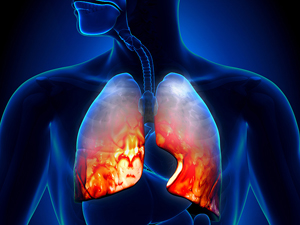
India, along with China, Nigeria, Pakistan and Indonesia, is a major contributor.

RSV is a common and highly contagious virus that infects the respiratory tract, causing breathing difficulties and wheezing in most children before their second birthday.

The study, reported in the journal Lancet, noted that there are more than 33 million cases of RSV infection in children under five each year worldwide.

"We are at an opportune time to step up efforts to prevent RSV infection in young children. With more than 60 candidate vaccines in clinical development, it is likely that an RSV vaccine will be available in the next 5-7 years," said lead researcher Harish Nair, Professor at the University of Edinburgh.

With approximately three million children admitted to the hospital each year with the virus, it is estimated that more than 115,000 children under five are dying each year from complications associated with the infection.

Almost half of those who die in hospital are younger than six months old and more than 99 percent of deaths occur in developing countries. Half of the RSV deaths in these countries occur outside the hospital, the study reported.

The findings highlight the pressing need for affordable treatments and vaccines as a priority to combat the virus.

For most babies and young children, RSV causes nothing more than symptoms of a cold but in some cases, however, it can lead to severe lung complications such as pneumonia or bronchiolitis.

"Our findings will provide better evidence to inform global funding priorities to accelerate vaccine development. It will assist policy makers and experts prepare for early introduction of this vaccine in developing countries," Nair added.

For the study, the team analysed data from 329 studies of RSV infections worldwide.

Comments

Add new comment

  • Coastaldigest.com reserves the right to delete or block any comments.
  • Coastaldigset.com is not responsible for its readers’ comments.
  • Comments that are abusive, incendiary or irrelevant are strictly prohibited.
  • Please use a genuine email ID and provide your name to avoid reject.
Agencies
June 27,2020

After admitting that the world may have a COVID-19 vaccine within one year or even a few months earlier, the World Health Organisation (WHO) on Friday said that UK-based AstraZeneca is leading the vaccine race while US-based pharmaceutical major Moderna is not far behind.

WHO Chief Scientist Soumya Swaminathan stated that the AstraZeneca's coronavirus vaccine candidate is the most advanced vaccine currently in terms of development.

"I think AstraZeneca certainly has a more global scope at the moment in terms of where they are doing and planning their vaccine trials," she told the media.

AstraZeneca's Covid-19 vaccine candidate developed by researchers from the Oxford University will likely provide protection against the disease for one year, the British drug maker's CEO told Belgian radio station Bel RTL this month.

The Oxford University last month announced the start of a Phase II/III UK trial of the vaccine, named AZD1222 (formerly known as ChAdOx1 nCoV-19), in about 10,000 adult volunteers. Other late-stage trials are due to begin in a number of countries.

Last week, Swaminathan had said that nearly 2 billion doses of the COVID-19 vaccine would be ready by the end of next year.

Addressing the media from Geneva, she said that "at the moment, we do not have a proven vaccine but if we are lucky, there will be one or two successful candidates before the end of this year" and 2 billion doses by the end of next year.

Scientists predict that the world may have a COVID-19 vaccine within one year or even a few months earlier, said the Director-General of the World Health Organization even as he underlined the importance of global cooperation to develop, manufacture and distribute the vaccines.

However, making the vaccine available and distributing it to all will be a challenge and will require political will, WHO chief Tedros Adhanom Ghebreyesus said on Thursday during a meeting with the European Parliament's Committee for Environment, Public Health and Food Safety.

One option would be to give the vaccine only to those who are most vulnerable to the virus.

There are currently over 100 COVID-19 vaccine candidates in various stages of development.

Comments

Add new comment

  • Coastaldigest.com reserves the right to delete or block any comments.
  • Coastaldigset.com is not responsible for its readers’ comments.
  • Comments that are abusive, incendiary or irrelevant are strictly prohibited.
  • Please use a genuine email ID and provide your name to avoid reject.
Agencies
July 21,2020

New Delhi, Jul 21: The Centre has written to all states and union territories warning against the use of N-95 masks with valved respirators by people, saying these do not prevent the virus from spreading out and are "detrimental" to the measures adopted for its containment.

The Director General of Health Services (DGHS) in the Ministry of Health, in a letter to the Principal Secretaries of health and medical education of states, said it has been observed that there is "inappropriate use" of N-95 masks, particularly those with valved respirators, by the public other than designated health workers.

The DGHS referred to the advisory on the use of homemade protective cover for face and mouth available on the website of the Ministry of Health.

"It is to bring to your knowledge that the use of valved respirator N-95 masks is detrimental to the measures adopted for preventing the spread of coronavirus as it does not prevent the virus from escaping out of the mask. In view of the above, I request you to instruct all concerned to follow the use of face/mouth cover and prevent inappropriate use of N-95 masks," DGHS Rajiv Garg said in the letter.

The government had in April issued an advisory on the use of homemade protective cover for face and mouth, asking people to wear it, particularly when they step out of their residences.

The advisory stressed such face covers must be washed and cleaned each day, as instructed, and stated that any used cotton cloth can be used to make this face cover.

The colour of the fabric does not matter but one must ensure that the fabric is washed well in boiling water for five minutes and dried well before making the face cover. Adding salt to this water is recommended, it said.

It also listed the procedures of making such homemade masks, asking to ensure it fits the face well and there are no gaps on the sides.

It urges people to wash hands thoroughly before wearing the face cover, switching to another fresh one as the face cover becomes damp or humid, and never reusing it after single use without cleaning it.

"Never share the face cover with anyone. Every member in a family should have separate face cover," the advisory stated.

India's COVID-19 case tally crossed the 11-lakh mark on Monday, while the total number of recovered patients increased to over seven lakh, according to Union health ministry data.

The death toll due to the disease rose to 27,497 with 681 fatalities reported in one day.

The ministry data updated at 8 am on Monday showed that a record single-day jump of 40,425 COVID-19 cases had taken the total number of cases to 11,18,043.

Comments

Add new comment

  • Coastaldigest.com reserves the right to delete or block any comments.
  • Coastaldigset.com is not responsible for its readers’ comments.
  • Comments that are abusive, incendiary or irrelevant are strictly prohibited.
  • Please use a genuine email ID and provide your name to avoid reject.
Agencies
May 30,2020

Drinking coffee may help reduce the risk of certain digestive disorders, including gallstone disease and pancreatitis, a new study has suggested.

The study from the Institute for Scientific Information on Coffee (ISIC) also highlighted other beneficial effects that coffee consumption may have on the process of digestion, including supporting gut microflora and promoting gut motility.

"Data indicates benefits against common digestive complaints such as constipation, as well as a potential reduction in the risk of more serious conditions like chronic liver diseases," said study author Carlo La Vecchia from the University of Milan in Italy.

Gallstone disease is a common digestive disorder, caused by the accumulation of gallstones in the gallbladder or bile duct, which affects approximately 10-15 per cent of the adult population.

While the mechanism by which coffee may protect against gallstone disease is not yet known, it has been observed that the risk for the condition declines with increasing daily consumption of coffee, the researchers said.

Caffeine is thought to play a role in these associations, as the same effect is not observed with decaffeinated coffee.

A common question among consumers and focus area for research is whether coffee is associated with heartburn or gastro-oesophageal reflux disease (GORD).

While a small number of studies have suggested an association between coffee drinking and GORD, the majority of studies reviewed suggest that coffee is not a major trigger of these conditions.

The report also reviewed a growing area of health and nutrition research, namely: the effect of coffee on the gut microflora (microorganism populations).

Recent studies suggest that populations of the beneficial gut bacteria Bifidobacterium spp, increase after drinking coffee.

The findings showed the dietary fibre and polyphenols found in coffee, support the healthy growth of microflora populations.

Additional research findings highlighted that coffee consumption is thought to stimulate digestion by encouraging the release of gastric acid, bile and pancreatic secretions.

Coffee is one of the most widely researched components of the diet, and its effect on digestion remains a growing area of research, the researchers noted.

Comments

Add new comment

  • Coastaldigest.com reserves the right to delete or block any comments.
  • Coastaldigset.com is not responsible for its readers’ comments.
  • Comments that are abusive, incendiary or irrelevant are strictly prohibited.
  • Please use a genuine email ID and provide your name to avoid reject.