2019 polls: Shatrughan Sinha keeps all sides guessing

Agencies
December 23, 2018

Patna, Dec 23: Amid speculation that he may be denied a BJP ticket for Lok Sabha polls and join the RJD, actor-turned-politician Shatrughan Sinha has kept all sides guessing by saying that people should instead speculate whether he would contest on a BJP ticket or not.

Sinha, who has represented his native Patna Sahib as a BJP MP for two consecutive terms, said his remarks on various issues which have not been liked by some party leaders, were meant to "show the mirror" to the BJP and cannot be termed as "anti-party."

"Instead of guessing whether they (BJP leaders) will give me the ticket or not speculation should be whether I will take the ticket or not," Sinha told PTI.

The actor-turned BJP leader met jailed RJD president Lalu Prasad in Ranchi on Saturday.

Though he said the meeting with Prasad at the Rajendra Institute of Medical Sciences was personal, the timing of the meeting assumes significance.

Speculation is rife that Sinha, whose attack on his party has sharpened in recent times, may enter into fray from Patna Sahib from Prasad's party if he is denied a BJP ticket for the Lok Sabha polls.

Sinha, popularly known as "Bihari Babu", has on several occasions made it clear that the "place (constituency) will be the same, even if the situation changes."

He said loss of power in three states of Madhya Pradesh, Rajasthan and Chhattisgarh is enough to show that the situation is not good in the NDA.

"Many people have left, some others are preparing to leave and others driving tough negotiations...all said and done the party's popularity and that of one leader and two-men Army have taken a beating," he said.

He was alluding to Hindustani Awam Morcha (HAM) chief and former Bihar chief minister Jitan Ram Manjhi and RLSP leader Upendra Kushwaha leaving NDA and LJP of Union minister Ram Vilas Paswan bargaining hard with a "weakened" BJP.

The actor-politician, who served as a Cabinet minister in the NDA ministry of Atal Bihari Vajpayee and was a star campaigner for BJP for a long time before falling out with the current leadership after being ignored in the 2015 Bihar Assembly polls, has been critical of the party functioning, alleging all power is vested in one leader (Prime Minister Narendra Modi) and two-men Army (Modi and BJP president Amit Shah).

Maintaining that the "writing is on the wall", the BJP leader said, "There is still some time and some hope left if party veterans like L K Advani, Murli Manohar Joshi and Arun Shourie are brought at the front."

On his remarks on GST, demonetisation and the party functioning often putting the BJP in an embarrassing situation, Sinha said he had been manifesting peoples' voice and not asking for any personal favour for himself.

Besides meeting Prasad and praising his younger son Tejashwi Yadav as "Bihar's face" and "its future", the BJP leader has been frequently seen sharing the dais with former union ministers Yashwant Sinha and Arun Shourie and at functions of Aam Aadmi Party (AAP) much to the discomfort of partymen.

Comments

Add new comment

  • Coastaldigest.com reserves the right to delete or block any comments.
  • Coastaldigset.com is not responsible for its readers’ comments.
  • Comments that are abusive, incendiary or irrelevant are strictly prohibited.
  • Please use a genuine email ID and provide your name to avoid reject.
News Network
January 12,2020

Kolkata, Jan 12: Prime Minister Narendra Modi on Sunday announced that Kolkata Port Trust will be renamed as Syama Prasad Mukherjee Port.

Addressing the gathering at the inauguration of 150th anniversary celebrations of Kolkata Port Trust, he said: "I announce the renaming of the Kolkata Port Trust to Dr Shyama Prasad Mukherjee Port. He is a living legend who was a leader for development and fought on the forefront for the idea of One Nation, One Constitution."

"This port represents industrial, spiritual and self-sufficiency aspirations of India. Today, when the port is celebrating its 150th anniversary, it is our responsibility to make it a powerful symbol of New India," Modi said.

The Prime Minister said that the Bharatiya Jana Sangh founder had set the stone for industrialization in India. "Chittaranjan Locomotive Factory, Hindustan Aircraft Factory, Damodar Valley Corporation and several others saw active participation from him," he said.

The Prime Minister also felicitated the two oldest pensioners of the Kolkata Port Trust, Nagina Bhagat and Naresh Chandra Chakraborty.

Comments

Add new comment

  • Coastaldigest.com reserves the right to delete or block any comments.
  • Coastaldigset.com is not responsible for its readers’ comments.
  • Comments that are abusive, incendiary or irrelevant are strictly prohibited.
  • Please use a genuine email ID and provide your name to avoid reject.
coastaldigest.com web desk
June 16,2020

New Delhi, Jun 16: Despite Prime Minister Narendra Modi led government’s attempt to downplay the border dispute with China, matters have heated up unprecedentedly along the Line of Actual Control (LAC)- the effective Sino-India border in Eastern Ladakh. 

The country has lost three precious lives – an army officer and two soldiers. The last time blood was spilled on the LAC, before the latest episode, was 45 years ago when the Chinese ambushed an Assam Rifles patrol in Tulung La.

India had lost four soldiers on October 20, 1975 in Tulung La, the last time bullets were fired on the India-China border though both the countries witnessed bitter stand-offs later at Sumdorong Chu valley in 1987, Depsang in 2013, Chumar in 2014 and Doklam in 2017.

Between 1962 and 1975, the biggest clash between India and China took place in Nathu La pass in 1967 when reports suggest that around 80 Indian soldiers were killed and many more Chinese personnel.

While three soldiers, including a Commanding Officer, were killed in the latest episode in Galwan Valley, the government describes it as a "violent clash" and does not mention opening fire.

New Delhi described the locality where the 1975 incident took place as "well within" its territory only to be rebuffed by Beijing as "sheer reversal of black and white and confusion of right and wrong".

The Ministry of External Affairs had then said that the Chinese had crossed the LAC and ambushed the soldiers while Beijing claimed the Indians entered their territory and did not return despite warnings.

The Indian government maintained that the ambush on the Assam Rifles' patrol in 1975 took place "500 metres south of Tulung" on the border between India and Tibet and "therefore in Indian territory". It said Chinese soldiers "penetrating" Indian territory implied a "change in China's position" on the border question but the Chinese denied this and blamed India for the incident.

The US diplomatic cables quoted an Indian military intelligence officer saying that the Chinese had erected stone walls on the Indian side of Tulung La and from these positions fired several hundred rounds at the Indian patrol.

"Four of the Indians had gone into a leading position while two (the ones who escaped) remained behind. The senior military intelligence officer emphasised that the soldiers on the Indian patrol were from the area and had patrolled that same region many times before," the cable said.

One of the US cables showed that former US Secretary of State and National Security Adviser Henry Kissinger sought details of the October 1975 clash "without approaching the host governments on actual location of October 20 incident". He also wanted to know what ground rules were followed regarding the proximity of LAC by border patrols.

A cable sent from the US mission in India on November 4, 1975 appeared to have doubts about the Chinese account saying it was "highly defensive".

"Given the unsettled situation on the sub-continent, particularly in Bangladesh, both Chinese and Indian authorities have authorised stepped up patrols along the disputed border. The clash may well have ensued when two such patrols unexpectedly encountered each other," it said.

Another cable from China on the same day quoted another October 1974 cable, which spoke about Chinese officials being concerned for long that "some hotheaded person on the PRC (People's Republic of China) might provoke an incident that could lead to renewed Sino-Indian hostilities. It went on to say that this clash suggested that "such concerns and apprehensions are not unwarranted".

According to the United States diplomatic cables, Chinese Foreign Ministry on November 3, 1975 disputed the statement of the MEA spokesperson, who said the incident took place inside Indian territory.

The Chinese had said "sheer reversal of black and white and confusion of right and wrong". In its version of the 1975 incident, they said Indian troops crossed the LAC at 1:30 PM at Tulung Pass on the Eastern Sector and "intruded" into their territory when personnel at the Civilian Checkpost at Chuna in Tibet warned them to withdraw.

Ignoring this, they claimed, Indian soldiers made "continual provocation and even opened fire at the Chinese civilian checkpost personnel, posing a grave threat to the life of the latter. The Chinese civilian checkpost personnel were obliged to fire back in self defence."

The Chinese Foreign Ministry spokesperson had also said they told the Indian side that they could collect the bodies "anytime" and on October 28, collected the bodies, weapons and ammunition and "signed a receipt".

The US cables from the then USSR suggested that the official media carried reports from Delhi on the October 1975 incident and they cited only Indian accounts of the incident "ridiculing alleged Chinese claims that the Indians crossed the line and opened fire first".

Comments

Add new comment

  • Coastaldigest.com reserves the right to delete or block any comments.
  • Coastaldigset.com is not responsible for its readers’ comments.
  • Comments that are abusive, incendiary or irrelevant are strictly prohibited.
  • Please use a genuine email ID and provide your name to avoid reject.
coastaldigest.com news network
July 27,2020

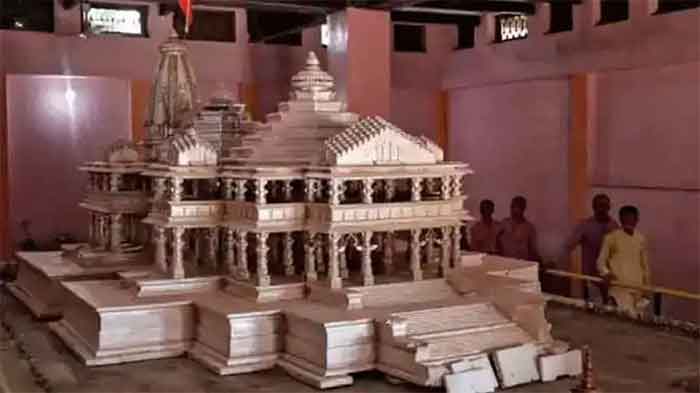
Ayodhya, Jul 27: With days to go for the August 5 "bhoomi pujan" ceremony of the Ram temple in Ayodhya, the mosques adjacent to the demolished Babri Masjid premises are spreading the message of a peaceful coexistence of Hindus and Muslims.

There are eight mosques and two mausoleums located close to the 70-acre Babri Masjid premises mandated by the Supreme Court for a temple of Sri Ram.

Azaan and namaaz are offered in the mosques and the annual "Urs" is held at the mausoleums without any objection from the local Hindus.

The eight mosques located near the upcoming Ram temple premises are Masjid Dorahikuan, Masjid Mali Mandir ke Bagal, Masjid Kaziyana Achchan ke Bagal, Masjid Imambara, Masjid Riyaz ke Bagal, Masjid Badar Paanjitola, Masjid Madaar Shah and Masjid Tehribazar Jogiyon ki.

The two mausoleums are Khanqaahe Muzaffariya and Imambara.

"It is the greatness of Ayodhya that the mosques surrounding the Ram temple are giving a strong message of communal harmony to the rest of the world," Haji Asad Ahmad, the corporator of the Ram Kot ward, said. The Ram temple area is situated in Ahmad's ward.

"Muslims take out the 'juloos' of Barawafaat that goes through the periphery of Ram Janmabhoomi. All religious functions and rituals of Muslims are respected by their fellow citizens," the corporator said.

Asked for a comment on the presence of mosques near the upcoming Ram temple premises, the chief priest of the temple, Acharya Satyendra Das, said, "We had a dispute only with the structure that was connected to the name of (Mughal emperor) Babur. We have never had any issue with the other mosques and mausoleums in Ayodhya. This is a town where Hindus and Muslims live in peace."

"Muslims offer namaaz, we perform our puja. The mosques around us will strengthen Ayodhya's communal harmony and peace will prevail," he added.

Both Hindus and Muslims have accepted the Supreme Court verdict over Ram Janmabhoomi, Das said, adding, "We have no dispute with each other."

Sayyad Akhlaq Ahmad Latifi, the "sajjada nasheen" and "pir" of the 500-year-old Khanqaahe Muzaffariya mausoleum, said Muslims in Ayodhya are performing all religious practices freely.

"We offer prayers five times a day in the mosque at Khanqaah and hold the yearly 'Urs'," he added.

"What a scene would it be -- a grand Ram temple surrounded by small mosques and mausoleums and everyone offering prayers according to their beliefs. That will be representative of the true culture of India," Mahant Yugal Kishore Sharan Shastri, the chief priest of the Sarayu Kunj temple adjacent to the Ram Janmabhoomi premises, said.

Reacting to the presence of mosques and mausoleums near the Ram Janmabhoomi premises, Triloki Nath Pandey, the decree holder of the land as the "first friend of Ram Lalla" as mandated by the Supreme Court, said, "We do not have any objection to either those mosques or any other mosques. We will not trigger a dispute regarding any structure, Ayodhya must live in peace and communal harmony."

Mahant Raju Das, the priest of the Hanumangarhi temple, said, "The presence of the mosques tells the story of Ayodhya's communal harmony. A Ram mandir will be built and there will be no objection to the mosques or religious practices of Muslims."

Comments

Add new comment

  • Coastaldigest.com reserves the right to delete or block any comments.
  • Coastaldigset.com is not responsible for its readers’ comments.
  • Comments that are abusive, incendiary or irrelevant are strictly prohibited.
  • Please use a genuine email ID and provide your name to avoid reject.