3 simple exercises for a flat tummy

January 23, 2014

FitnessWant that enviable washboard ab? Practicing these moves regularly will help you

Don't want to end up injured or exhausted? Don't overdo things on the workout front. Instead, aim for a brisk 20-minute walk every day to burn fat, plus do the following exercises to help tone your abdominal muscles.

Bicycle crunch: Lie down with your back pressed onto the floor. Bring your hands behind your head. Starting with your legs bent at a 45-degree angle, bring the right knee into the chest while straightening out your left leg. At the same time, rotate your top half so your left elbow goes to your right knee, then switch to the other side. Repeat for one minute,three times a day.

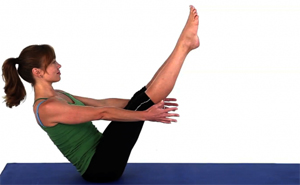
The boat: Sit on the floor, with your knees bent and feet flat and tilt back, extending your legs so your body forms a right angle. Pull your abs in to balance. Extend your arms at shoulder height past your knees. Hold for five slow breaths and return to your starting position. Repeat five times a day.

The plank: Lie face down then lift yourself up on to your toes and forearms, with your elbows bent at 90 degrees. Keeping your core muscles -— your stomach and bottom — tight and your legs straight, hold for 10 seconds. Repeat three times a day, gradually building to 40 seconds each.

Comments

Add new comment

  • Coastaldigest.com reserves the right to delete or block any comments.
  • Coastaldigset.com is not responsible for its readers’ comments.
  • Comments that are abusive, incendiary or irrelevant are strictly prohibited.
  • Please use a genuine email ID and provide your name to avoid reject.
News Network
February 22,2020

Feb 22: The subjective feeling of well-being experienced by many people with the practice of meditation is associated with specific changes in the brain, according to a study which may lead to better clinical recommendations of the practice.

The study, published in the journal Brain and Cognition, examined the effects of the technique known as Transcendental Meditation (TM), which consists of the silent repetition of a meaningless sound.

In the study, the researchers from the IMT School for Advanced Studies Lucca in Italy, enrolled 34 healthy young volunteers and divided them in two groups.

They said the first group practised TM 40 minutes per day in two sessions of 20 minutes each, one in the morning and the other in the evening.

The second group, the scientists said, did not change its daily routine.

Using questionnaires, they also measured the anxiety and stress levels of all the participants at the beginning of the study, as well as the subjects' ability to manage stressful situations.

According to the researchers, the participants were also subjected to a functional magnetic resonance imaging (fMRI) brain scan, in order to measure the organ's activity at rest, and changes in the excitation among different cerebral areas.

They repeated the tests after three months, at the end of the study.

According to the study, the levels of anxiety and stress perceived by the subjects who followed the meditation program were significantly reduced in comparison with those of the volunteers who did not practice TM.

"Magnetic resonance imaging also shows that the reduction of anxiety levels is associated with specific changes in the connectivity between different cerebral areas, such as precuneus, left parietal lobe and insula, which all have an important role in the modulation of emotions and inner states," said study co-author Giulia Avvenuti from the IMT School for Advanced Studies Lucca.

"In the control group, instead, none of these changes was observed. The fact that Transcendental Meditation has measurable effects on the 'dialogue' between brain structures involved in the modulation of affective states opens new perspectives for the understanding of brain-mind relationships," said Pietro Pietrini, IMT School's Director, and co-author of the study.

"It also extends the results of recent research suggesting that drugs therapies and psychotherapy leverage on the same biological mechanism," Pietrini said.

According to the researchers, even a few months of practice of TM can have positive effects which can be correlated with measurable changes in the brain.


Comments

Add new comment

  • Coastaldigest.com reserves the right to delete or block any comments.
  • Coastaldigset.com is not responsible for its readers’ comments.
  • Comments that are abusive, incendiary or irrelevant are strictly prohibited.
  • Please use a genuine email ID and provide your name to avoid reject.
Agencies
June 21,2020

Lower neighbourhood socioeconomic status and greater household crowding increase the risk of becoming infected with SARS-CoV-2, the virus that causes COVID-19, warn researchers.

"Our study shows that neighbourhood socioeconomic status and household crowding are strongly associated with risk of infection," said study lead author Alexander Melamed from Columbia University in the US.

"This may explain why Black and Hispanic people living in these neighbourhoods are disproportionately at risk for contracting the virus," Melamed added.

For the findings, published in the journal JAMA, the researchers examined the relationships between COVID-19 infection and neighbourhood characteristics in 396 women who gave birth during the peak of the Covid-19 outbreak in New York City. Since March 22, all women admitted to the hospitals for delivery have been tested for the virus, which gave the researchers the opportunity to detect all infections -- including infections with no symptoms -- in a defined population

The strongest predictor of COVID-19 infection among these women was residence in a neighbourhood where households with many people are common.The findings showed that women who lived in a neighbourhood with high household membership were three times more likely to be infected with the virus. Neighbourhood poverty also appeared to be a factor, the researchers said.Women were twice as likely to get COVID-19 if they lived in neighbourhoods with a high poverty rate, although that relationship was not statistically significant due to the small sample size.

The study revealed that there was no association between infection and population density.

"New York City has the highest population density of any city in the US, but our study found that the risks are related more to density in people's domestic environments rather than density in the city or within neighbourhoods," says co-author Cynthia Gyamfi-Bannerman."

The knowledge that SARS-CoV-2 infection rates are higher in disadvantaged neighbourhoods and among people who live in crowded households could help public health officials target preventive measures," the authors wrote.

Recently, another study published in the Journal of the American Planning Association, showed that dense areas were associated with lower COVID-19 death rates.

Comments

Add new comment

  • Coastaldigest.com reserves the right to delete or block any comments.
  • Coastaldigset.com is not responsible for its readers’ comments.
  • Comments that are abusive, incendiary or irrelevant are strictly prohibited.
  • Please use a genuine email ID and provide your name to avoid reject.
Agencies
February 11,2020

Using smartphone for long hours every day may do you more harm than you can probably think of. Researchers have found that spending a lot of time with the device and on social media may lead to mental distress and suicidality among adolescents.

The findings, published in the journal CMAJ (Canadian Medical Association Journal) contains guidance for physicians, parents and teachers on how to help teenagers manage smartphone and social media use for a healthy balance between sleep, academic work, social activity, interpersonal relationships and online activity.

"Physicians, teachers and families need to work together with youth to decrease possible harmful effects of smartphones and social media on their relationships, sense of self, sleep, academic performance, and emotional well-being," said lead author of the study Elia Abi-Jaoude from Toronto Western Hospital in Canada.

This review of evidence, led by the Hospital for Sick Children (SickKids), focuses on smartphone use and does not consider online gaming.

"For adolescents today, who have not known a world without social media, digital interactions are the norm, and the potential benefits of online access to productive mental health information -- including media literacy, creativity, self-expression, sense of belonging and civic engagement -- as well as low barriers to resources such as crisis lines and Internet-based talking therapies cannot be discounted," the authors wrote.

The researchers recommend that doctors should ask teenagers to reduce social media use rather than eradicate it completely and encourage parents to be part of the conversations.

Parents should discuss appropriate smartphone use with teenagers to determine together how to reduce risks and set boundaries.

A recent poll from the US indicates that 54 per cent of teenagers think they spend too much time on their smartphones and about half said they were cutting back on usage.

"Encouragingly, youth are increasingly recognising the negative impact of social media on their lives and starting to take steps to mitigate it," the authors wrote.

Comments

Add new comment

  • Coastaldigest.com reserves the right to delete or block any comments.
  • Coastaldigset.com is not responsible for its readers’ comments.
  • Comments that are abusive, incendiary or irrelevant are strictly prohibited.
  • Please use a genuine email ID and provide your name to avoid reject.