


300,000 illegal expats deported from Saudi in 5 months

March 23, 2015

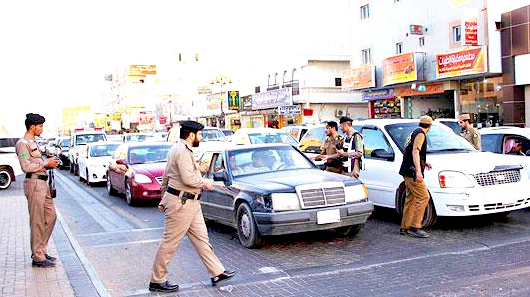
Riyadh, Mar 23: Recent statistics released by the Ministry of Interior have revealed that nearly 300,000 violators of the Kingdom’s labor and residency regulations have been deported during the past five months.

“An average of 2,000 illegal expats are sent out of the Kingdom every day,” the ministry said as Saudi authorities continued their campaign throughout the country to flush out violators.
illegal expats

The information showed that Border Guard patrols arrested 900,000 infiltrators who tried to enter the Kingdom illegally, with 84 percent of them coming through the southern borders. There are currently 15,769 violators in shelters awaiting completion of deportation procedures.

During the past two weeks security officers and Labor Ministry officials conducted coordinated raids in different parts of Tabuk and netted more than 1,500 illegals.

Lt. Col. Khaled Al-Ghabban, spokesman of Tabuk police, said security officers have been deployed in different parts of the region, including the main streets, to check documents of expats.

“During the past month, we have arrested 2,750 violators. We also targeted employers who provide jobs to illegals violating laws,” he said, adding that police would not show any leniency toward illegals.

Gen. Mohammed Al-Ghamdi, spokesman of Border Guards, said his officers are more than ready to face intruders.

Comments

Add new comment

  • Coastaldigest.com reserves the right to delete or block any comments.
  • Coastaldigset.com is not responsible for its readers’ comments.
  • Comments that are abusive, incendiary or irrelevant are strictly prohibited.
  • Please use a genuine email ID and provide your name to avoid reject.
News Network
July 23,2020

Beirut, Jul 23: The pandemic will exact a heavy toll on Arab countries, causing an economic contraction of 5.7% this year, pushing millions into poverty and compounding the suffering of those affected by armed conflict, a U.N. report said Thursday.

The U.N.'s Economic and Social Commission for Western Asia expects some Arab economies to shrink by up to 13%, amounting to an overall loss for the region of $152 billion.

Another 14.3 million people are expected to be pushed into poverty, raising the total number to 115 million — a quarter of the total Arab population, it said. More than 55 million people in the region relied on humanitarian aid before the COVID-19 crisis, including 26 million who were forcibly displaced.

Arab countries moved quickly to contain the virus in March by imposing stay-at-home orders, restricting travel and banning large gatherings, including religious pilgrimages.

Arab countries as a whole have reported more than 830,000 cases and at least 14,717 deaths. That equates to an infection rate of 1.9 per 1,000 people and 17.6 deaths per 1,000 cases, less than half the global average of 42.6 deaths, according to the U.N.

But the restrictions exacted a heavy economic toll, and authorities have been forced to ease them in recent weeks. That has led to a surge in cases in some countries, including Lebanon, Iraq and the Palestinian territories.

Wealthy Gulf countries were hit by the pandemic at a time of low oil prices, putting added strain on already overstretched budgets. Middle-income countries like Jordan and Egypt have seen tourism vanish overnight and a drop in remittances from citizens working abroad.

War-torn Libya and Syria have thus far reported relatively small outbreaks. But in Yemen, where five years of civil war had already generated the world's worst humanitarian crisis, the virus is running rampant in the government-controlled south while rebels in the north conceal its toll.

Rola Dashti, the head of the U.N. commission, said Arab countries need to “turn this crisis into an opportunity” and address longstanding issues, including weak public institutions, economic inequality and over-reliance on fossil fuels.

“We need to invest in survival, survival of people and survival of businesses,” she said.

Comments

Add new comment

  • Coastaldigest.com reserves the right to delete or block any comments.
  • Coastaldigset.com is not responsible for its readers’ comments.
  • Comments that are abusive, incendiary or irrelevant are strictly prohibited.
  • Please use a genuine email ID and provide your name to avoid reject.
Agencies
July 28,2020

Dubai, Jul 28: Abu Dhabi Commercial Bank (ADCB) (ADCB.AD) is letting go hundreds of employees, sources said, the latest in a round of lay-offs by regional banks as pressure mounts to cut costs amid lower oil prices and the coronavirus crisis.

The UAE’s third-biggest lender is laying off 400 employees, two sources familiar with the matter said, after it had committed to not cutting staff because of the crisis.

In a statement, a spokesman said ADCB had pursued efficiency over the last decade by managing out its lowest underachievers after regular reviews, while ensuring talent was deployed in high-growth areas, such as digital banking.

“A certain number of redundancies are therefore expected every year in the normal course of business,” the bank spokesman added.

The sources said the cuts would involve ADCB’s consumer business and several in top management were among those being let go. One source said the bank was looking to close 20 branches.

In March, ADCB had declared, “No employee will be made redundant during 2020 as a result of the COVID-19 pandemic.”

UAE banks have been hit by government measures to rein in the spread of the virus, forcing many businesses to shut temporarily.

Last week, Dubai’s largest bank, Emirates NBD, reported a slump of 58% in profits. In June, sources told Reuters the bank started a new round of hundreds of lay-offs.

In May, ADCB reported a fall of 84% in first-quarter net profit as it took impairments of $292 million on debt exposure to troubled hospital operator NMC Health and payments group Finablr.

It was a major lender, with an exposure of about $981 million, to NMC Health, which went into administration this year after months of turmoil following questions over financial reporting.

Comments

Add new comment

  • Coastaldigest.com reserves the right to delete or block any comments.
  • Coastaldigset.com is not responsible for its readers’ comments.
  • Comments that are abusive, incendiary or irrelevant are strictly prohibited.
  • Please use a genuine email ID and provide your name to avoid reject.
News Network
April 24,2020

Riyadh, Apr 24: As many as eleven Indian nationals have died due to COVID-19 in Saudi Arabia.

"As per information available with the Embassy as of April 22, eleven Indian nationals (four in Madinah, three in Makkah, two in Jeddah, one in Riyadh and one in Dammam) have passed away due to COVID-19 in Saudi Arabia," the Embassy of India in Saudi Arabia said in a press release on Wednesday.

It urged the Indian community to remain calm and avoid spreading of rumours amid the COVID-19 crisis.

"The Embassy also reiterates the need for the community to remain calm and avoid spreading of rumours that may create panic. It is important that social media is not used to disseminate false messages and spread hatred along communal lines that can vitiate the atmosphere," the Embassy said.

"As stated by Prime Minister Narendra Modi, COVID-19 does not see race, religion, colour, caste, creed, language or borders before striking, and our response and conduct should attach primacy to unity and brotherhood," it said.

Moreover, several measures on the supply of food, medicines and other emergency assistance to Indians in need are being implemented across the Kingdom.

Earlier, Indian Ambassador to Saudi Arabia, Ausaf Sayeed on April 22 had interacted with Indian community volunteers from the smaller towns all across the Kingdom to discuss the impact of the COVID-19 situation, and evaluate the implementation of various measures to ensure the welfare of Indian nationals.

Comments

Add new comment

  • Coastaldigest.com reserves the right to delete or block any comments.
  • Coastaldigset.com is not responsible for its readers’ comments.
  • Comments that are abusive, incendiary or irrelevant are strictly prohibited.
  • Please use a genuine email ID and provide your name to avoid reject.