4 Keys to Building Muscle Fast

December 25, 2013

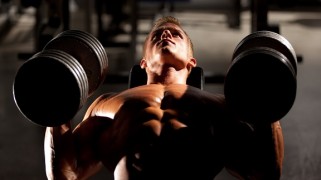
Build-Chest-MuscleDec 25: There’s a reason why you’re spending countless hours in the gym but still looking scrawny and not brawny: muscle mass isn’t built solely in the weight room. In fact, what you’re doing at the kitchen table–and even in the bedroom—may be more important for gaining muscle mass than what you’re lifting. (Of course what you’re lifting, and how often you’re lifting it, matters a lot too.) For any athlete looking to add size fast, the following four factors are critical.

Essential Exercises

Isolation training, where you focus on a single muscle, is nearly pointless for athletes. If your goal is to develop size, you need to perform complex lifts that recruit several muscle groups at the same time. So ditch moves like arm curls in favor of full-body movements like Chin-Ups. You’ll cause more muscle stimulation throughout your body, leading to more muscle growth. The following eight exercises are essential to anyone looking to pack on muscle mass fast.

• Squat

• Deadlift

• Lunges

• Split Squat

• Bench Press

• Military Press

• Chin-Ups/Pull-Ups

• DB Rows

Correct Sets and Reps

Knowing the right exercises is only half of the muscle-building battle in the gym. The other half is knowing how many of those moves you should perform, and how frequently you should perform them. Thankfully, the National Strength and Conditioning Association (NSCA) has studied that exact subject, diligently working to determine the ideal combo of sets, reps and rest to optimize hypertrophy (the fancy word for “muscle growth”). Based on their studies, they recommend:

• Sets: 3-6

• Reps: 6-12

• Rest between sets: 30 to 90 seconds

• Workout frequency: 2 or 3 days per week

The NSCA also found that muscles need 48 hours of rest to fully recover from a workout. So if you whaled on your legs on Monday, don’t work them again until Wednesday.

A Powerful Diet

Of course you want to eat a well-rounded diet that provides plenty of nutrients through fruits, vegetables and whole grains, but the two most important dietary elements for muscle growth and development are protein and water. The NSCA recommends athletes consume about 1 gram of protein per pound of body weight per day. Remember to eat for the body you want, not the body you have. So if you weigh 170 pounds but want to get to 200, take in 200 grams of protein each day.

Since muscles are about 75% water, anyone looking to add size should be drinking plenty of H2O. A good target for men is to drink about 3.7 liters (about 125 oz.) per day, while women should aim for 2.7 liters (a little more than 90 oz.) per day. Since you lose water through sweat during workouts, you need to drink even more on gym days.

Proper Rest

You may think you’re getting “swole” in the gym, but in reality most muscle growth occurs during the REM cycle of sleep. So no matter how much you lift, you won’t get the growth you want if you’re not getting enough sleep. (Check out Secrets for Muscle-Building Sleep.)

Athletes should aim for at least eight hours of sleep per night—as many as 10 if they can spare the time. Rid your room of computers, TVs, phones, and other distractions that can disturb your sleep. And drop the room temperature to between 60 and 65 degrees Fahrenheit if possible. Cool temps induce sleepiness, helping you reach the deeper REM phase sooner.

Learn more about getting bigger by checking out STACK's Guide to Building Muscle.

Comments

Add new comment

  • Coastaldigest.com reserves the right to delete or block any comments.
  • Coastaldigset.com is not responsible for its readers’ comments.
  • Comments that are abusive, incendiary or irrelevant are strictly prohibited.
  • Please use a genuine email ID and provide your name to avoid reject.
Agencies
July 30,2020

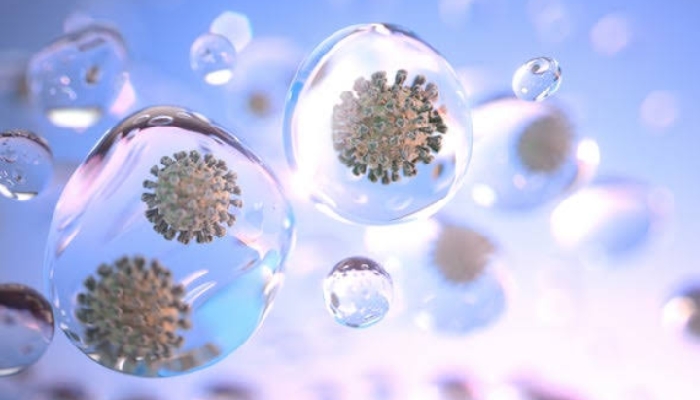
New York, Jul 30: Can the coronavirus spread through the air? Yes, it's possible.

The World Health Organisation recently acknowledged the possibility that Covid-19 might be spread in the air under certain conditions.

Recent Covid-19 outbreaks in crowded indoor settings — restaurants, nightclubs and choir practices — suggest the virus can hang around in the air long enough to potentially infect others if social distancing measures are not strictly enforced.

Experts say the lack of ventilation in these situations is thought to have contributed to spread, and might have allowed the virus to linger in the air longer than normal.

In a report published in May, researchers found that talking produced respiratory droplets that could remain in the air in a closed environment for about eight to 14 minutes.

The WHO says those most at risk from airborne spread are doctors and nurses who perform specialized procedures such as inserting a breathing tube or putting patients on a ventilator.

Medical authorities recommend the use of protective masks and other equipment when doing such procedures.

Scientists maintain it's far less risky to be outside than indoors because virus droplets disperse in the fresh air, reducing the chances of Covid-19 transmission.

Comments

Add new comment

  • Coastaldigest.com reserves the right to delete or block any comments.
  • Coastaldigset.com is not responsible for its readers’ comments.
  • Comments that are abusive, incendiary or irrelevant are strictly prohibited.
  • Please use a genuine email ID and provide your name to avoid reject.
Agencies
July 15,2020

The first COVID-19 vaccine tested in the US revved up people's immune systems just the way scientists had hoped, researchers reported Tuesday -- as the shots are poised to begin key final testing.

No matter how you slice this, this is good news, Dr. Anthony Fauci, the U.S. government's top infectious disease expert, told The Associated Press.

The experimental vaccine, developed by Fauci's colleagues at the National Institutes of Health and Moderna Inc., will start its most important step around July 27: A 30,000-person study to prove if the shots really are strong enough to protect against the coronavirus.

But Tuesday, researchers reported anxiously awaited findings from the first 45 volunteers who rolled up their sleeves back in March. Sure enough, the vaccine provided a hoped-for immune boost.

Those early volunteers developed what are called neutralizing antibodies in their bloodstream -- molecules key to blocking infection -- at levels comparable to those found in people who survived COVID-19, the research team reported in the New England Journal of Medicine.

This is an essential building block that is needed to move forward with the trials that could actually determine whether the vaccine does protect against infection, said Dr. Lisa Jackson of the Kaiser Permanente Washington Research Institute in Seattle, who led the study.

There's no guarantee but the government hopes to have results around the end of the year -- record-setting speed for developing a vaccine.

The vaccine requires two doses, a month apart.

There were no serious side effects. But more than half the study participants reported flu-like reactions to the shots that aren't uncommon with other vaccines -- fatigue, headache, chills, fever and pain at the injection site. For three participants given the highest dose, those reactions were more severe; that dose isn't being pursued.

Some of those reactions are similar to coronavirus symptoms but they're temporary, lasting about a day and occur right after vaccination, researchers noted.

Small price to pay for protection against COVID, said Dr. William Schaffner of Vanderbilt University Medical Center, a vaccine expert who wasn't involved with the study.

He called the early results a good first step, and is optimistic that final testing could deliver answers about whether it's really safe and effective by the beginning of next year.

It would be wonderful. But that assumes everything's working right on schedule, Schaffner cautioned.

Moderna's share price jumped nearly 15 percent in trading after US markets closed. Shares of the company, based in Cambridge, Massachusetts, have nearly quadrupled this year.

Tuesday's results only included younger adults. The first-step testing later was expanded to include dozens of older adults, the age group most at risk from COVID-19.

Those results aren't public yet but regulators are evaluating them. Fauci said final testing will include older adults, as well as people with chronic health conditions that make them more vulnerable to the virus and Black and Latino populations likewise affected.

Nearly two dozen possible COVID-19 vaccines are in various stages of testing around the world. Candidates from China and Britain's Oxford University also are entering final testing stages.

The 30,000-person study will mark the world's largest study of a potential COVID-19 vaccine so far. And the NIH-developed shot isn't the only one set for such massive U.S. testing, crucial to spot rare side effects. The government plans similar large studies of the Oxford candidate and another by Johnson & Johnson; separately, Pfizer Inc. is planning its own huge study.

Already, people can start signing up to volunteer for the different studies.

People think this is a race for one winner. Me, I'm cheering every one of them on, said Fauci, who directs NIH's National Institute of Allergy and Infectious Diseases.

We need multiple vaccines. We need vaccines for the world, not only for our own country. Around the world, governments are investing in stockpiles of hundreds of millions of doses of the different candidates, in hopes of speedily starting inoculations if any are proven to work.

Comments

Add new comment

  • Coastaldigest.com reserves the right to delete or block any comments.
  • Coastaldigset.com is not responsible for its readers’ comments.
  • Comments that are abusive, incendiary or irrelevant are strictly prohibited.
  • Please use a genuine email ID and provide your name to avoid reject.
News Network
March 5,2020

Bergen, Mar 5: Divorce of parents may impact the academics of children negatively, suggests a new study.

According to the study, parental divorce is associated with a lower grade point average (GPA) among adolescents, with a stronger association seen in teens with more educated mothers.

The study was published in the journal PLOS ONE.

Children and adolescents with divorced or separated parents are known to do less well in school than adolescents with nondivorced parents and to be less well-adjusted, on average, across a spectrum of physical and mental health outcomes.

In the new study, researchers used data from the youth@hordaland study, a population-based survey of adolescents aged 16-19 conducted in the spring of 2012 in Hordaland County, Norway.

19,439 adolescents were invited to participate and 10,257 agreed; of those, 9,166 are included in the current study.

Overall, adolescents with divorced parents had a 0.3 point lower GPA (standard error 0.022, p<0.01) than their peers.

Controlling for parental education reduced the effect by 0.06 points to 0.240 (SE 0.021, p<0.01). This heterogeneity was predominantly driven by maternal education levels, the researchers found.

After controlling for paternal education and income measures, divorce was associated with a 0.120 point decrease in GPA among adolescents whose mothers had a secondary school education level; a 0.175 point decrease when mothers had a Bachelor's level education; and a 0.209 point decrease when mothers had a Master's or PhD level education (all estimates relative to adolescents with a mother who had a basic level of education, such as ISCED 0-2).

Due to the cross-sectional structure of the study, researchers could not investigate specific changes between pre- and post-divorce family life, and future studies are needed to investigate potential mechanisms (such as reduced parental monitoring or school-involvement) which might drive this finding.

Nonetheless, this study provides new evidence that the negative association between divorce and teens' GPA is especially strong in families with more educated mothers.

"Among Norwegian adolescents, parental divorce was hardly associated with GPA among youth whose parents have low educational qualifications. In contrast, among adolescents with educated or highly educated mothers, divorce was significantly associated with lower GPA," said the authors.

Comments

Add new comment

  • Coastaldigest.com reserves the right to delete or block any comments.
  • Coastaldigset.com is not responsible for its readers’ comments.
  • Comments that are abusive, incendiary or irrelevant are strictly prohibited.
  • Please use a genuine email ID and provide your name to avoid reject.