



Up to 70 migrants drown after their boat sinks off Tunisia

Agencies
May 11, 2019

Tunis, May 11: As many as 70 migrants trying to reach Europe from Libya drowned Friday when their boat capsized in the Mediterranean Sea, and at least 16 others on the boat were rescued, according to UN migration officials and Tunisia’s state news agency.

The International Organization for Migration called it the deadliest migrant boat sinking since January, and it comes as overall migrant arrivals to Europe are decreasing.

The smuggling boat was coming from Libya when it sent a distress signal in international waters early Friday off the Tunisian coastal city of Sfax, according to an IOM official in Tunisia. She said between 60 and 70 people drowned.

Tunisia’s state news agency TAP said 70 people drowned as the boat sank and that fishing boats rescued 16 others.

The survivors of the sinking are now being questioned and cared for by Tunisian authorities, the IOM official said. She said they included people from Bangladesh and Morocco, among other nationalities.

Joel Millman, an IOM spokesman in Geneva, said the reported death toll is the largest number of migrants killed since a Jan. 19 sinking in which 117 people were reported missing and presumed dead.

So far this year, 17,000 migrants and refugees have entered Europe by sea, about 30 percent fewer than the 24,000 arriving during the same period last year, according to the IOM. It said 443 people have reportedly died on dangerous Mediterranean Sea crossings so far this year, compared to 620 deaths for the same period in 2018.

Libya’s navy said Friday it rescued 213 Europe-bound African and Arab migrants off the Mediterranean coast this week. It said they were handed over to Libyan police after having received humanitarian and medical aid.

Lawless Libya in North Africa became a major conduit for African migrants and refugees fleeing to Europe after an uprising toppled and killed longtime dictator Muammar Qaddafi in 2011. Libyan authorities have stepped up efforts to stem the flow of migrants, with European assistance.

But human rights groups have strongly criticized Libya for its detention centers, saying migrants being sent back to Libya faced hunger, beatings, torture, rapes and a lack of medical care.

In addition, the head of the self-styled Libyan National Army launched an offensive against the government in the Libyan capital of Tripoli last month. The UN health agency says 443 people have died, 2,110 have been wounded and nearly 60,000 have been displaced by the violence.

Comments

Add new comment

  • Coastaldigest.com reserves the right to delete or block any comments.
  • Coastaldigset.com is not responsible for its readers’ comments.
  • Comments that are abusive, incendiary or irrelevant are strictly prohibited.
  • Please use a genuine email ID and provide your name to avoid reject.
KT
June 15,2020

Dubai, Jul 15: His Highness Sheikh Mohammed bin Rashid Al Maktoum, Vice President and Prime Minister of UAE and Ruler of Dubai, announced the launch of a 'New Media Academy in Dubai on Monday - a new institution that will train people on the science of digital media.

Taking to Twitter, Sheikh Mohammed said that new media is a new science that has its own set of special tools and secrets, and that the future cadres of UAE must be at the forefront of it.

"The academy will prepare new experts and managers in the field of communication in government and private institutions, as well as training professional social media influencers", Sheikh Mohammed tweeted, adding that the new media is providing new job opportunities and careers today, and will always be a main supporter in the journey of development.

Comments

Add new comment

  • Coastaldigest.com reserves the right to delete or block any comments.
  • Coastaldigset.com is not responsible for its readers’ comments.
  • Comments that are abusive, incendiary or irrelevant are strictly prohibited.
  • Please use a genuine email ID and provide your name to avoid reject.
News Network
April 11,2020

Dubai, Apr 11: Saudi Arabia has reported another 382 new cases of coronavirus, bringing the total number of infections in the country to 4,033, the Ministry of Health announced on Saturday.

The ministry also confirmed five more deaths from the virus, pushing the death toll in Kingdom to 52.

A total of 35 people has made full recovery from the deadly disease, taking the tally of patients recovered to 720.

Comments

Add new comment

  • Coastaldigest.com reserves the right to delete or block any comments.
  • Coastaldigset.com is not responsible for its readers’ comments.
  • Comments that are abusive, incendiary or irrelevant are strictly prohibited.
  • Please use a genuine email ID and provide your name to avoid reject.
Agencies
August 2,2020

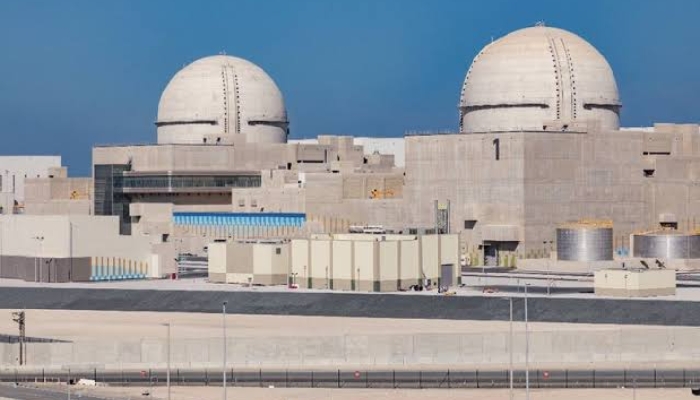
Dubai, Aug 2: The United Arab Emirates (UAE) announced on Saturday that it has started operations in the first of four reactors at the Barakah nuclear power station - the first nuclear power plant in the Arab world.

Emirates Nuclear Energy Corporation (ENEC), which is building and operating the plant with Korea Electric Power Corporation (KEPCO) said in a press release that its subsidiary Nawah Energy Company "has successfully started up Unit 1 of the Barakah Nuclear Energy Plant, located in the Al Dhafrah Region of Abu Dhabi".

That signals that Unit 1, which had fuel rods loaded in March, has achieved "criticality" - a sustained fission chain reaction.

"The start-up of Unit 1 marks the first time that the reactor safely produces heat, which is used to create steam, turning a turbine to generate electricity," said ENEC.

Barakah, which was originally scheduled to open in 2017, has been dogged by delays and is billions of dollars over budget. It has also raised myriad concerns among nuclear energy veterans who are concerned about the potential risks Barakah could visit upon the Arabian Peninsula, from an environmental catastrophe to a nuclear arms race.

Paul Dorfman, an honorary senior research fellow at the Energy Institute, University College London and founder and chair of the Nuclear Consulting Group, has criticised the Barakah reactors' "cheap and cheerful" design that he says cuts corners on safety.

Dorfman authored a report (PDF) last year detailing key safety features Barakah's reactors lack, such as a "core catcher" to literally stop the core of a reactor from breaching the containment building in the event of a meltdown. The reactors are also missing so-called Generation III Defence-In-Depth reinforcements to the containment building to shield against a radiological release resulting from a missile or fighter jet attack.

Both of these engineering features are standard on new reactors built in Europe, says Dorfman.

There have been at least 13 aerial attacks on nuclear facilities in the Middle East - more than any other region on earth.

The vulnerability of critical infrastructure in the Arabian Peninsula was further laid bare last year after Saudi Arabia's oil facilities at Abqaiq and Khurais were attacked by 18 drones and seven cruise missiles - an assault that temporarily knocked out more than half of the kingdom's oil production.

On Saturday, Dorfman reiterated his concern that there is no regional protocol in place to determine liability should an accident or incident at Barakah result in radioactive contamination spreading from the UAE to its neighbours. 

"Given Barakah has started up, because of all the well-rehearsed nuclear safety and security problems, it may be critically important that the Gulf states collectively evolve a Nuclear Accident Liability Convention, so that if anything does go wrong, victim states may have some sort of redress," Dorfman told Al Jazeera. 

The UAE has substantial oil and gas reserves, but it has made huge investments in developing alternative energy sources, including nuclear and solar.

Experts though have questioned why the UAE - which is bathed in sunlight and wind - has pushed ahead with nuclear energy - a far more expensive and riskier option than renewable energy sources.

When the UAE first announced Barakah in 2009, nuclear power was cheaper than solar and wind. But by 2012 - when the Emirates started breaking ground to build the reactors - solar and wind costs had plummeted dramatically.

Between 2009 and 2019, utility-scale average solar photovoltaic costs fell 89 percent and wind fell 43 percent, while nuclear jumped 26 percent, according to an analysis by the financial advisory and asset manager Lazard.

There are also concerns about the potential for Barakah to foment nuclear proliferation in the Middle East - a region rife with geopolitical fault lines and well-documented history of nuclear secrecy.

The UAE has sought to distance itself from the region's bad behaviour by agreeing not to enrich its own uranium or reprocess spent fuel. It has also signed up to the United Nation's nuclear watchdog's Additional Protocol, significantly enhancing inspection capabilities, and secured a 123 Agreement with the United States that allows bilateral civilian nuclear cooperation.

Comments

Add new comment

  • Coastaldigest.com reserves the right to delete or block any comments.
  • Coastaldigset.com is not responsible for its readers’ comments.
  • Comments that are abusive, incendiary or irrelevant are strictly prohibited.
  • Please use a genuine email ID and provide your name to avoid reject.