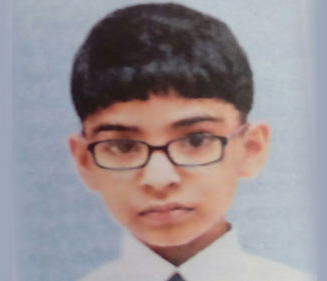
8-year-old Indian dies after falling out of car in UAE

[email protected] (CD Network)
January 12, 2016

Dubai, Jan 12: An 8-year-old Indian boy died after falling out of the car in which he was travelling with his family in United Arab Emirates.

vismayaA grade three student of the Indian School in Ras Al Khaimah (RAK), Vismaya Chandran died on Sunday night after falling through the window of the vehicle which was being driven by his father.

The family members were on their way to a picnic at Jebel Jais.

The accident happened after 4.30pm and the boy was rushed to hospital where he succumbed to his injuries.

The body is now in the Al Saif Hospital in Ras Al Khaimah and will be repatriated to India.

Vismaya’s father Sajeesh Chandran said he was driving when the accident happened near Al Rams, about four kilometres away from Ras Al Khaimah.

“It skidded off the road and stopped in the middle of rocks and rubble. The glass window was locked, but somehow it opened and he fell out.

“He had a serious head injury and died 45 minutes after reaching the hospital.”

The boy’s mother Deepa and younger sister Thanmaya were also in the vehicle.

“We are all sad that one of our best students died. We reopened school on Sunday, but Vismaya was absent,” said Mohammed Ali, Principal, Indian School, Ras Al Khaiamah.

“The school called for a special morning assembly to condole his sad demise,” he said.

Comments

Tahir
 - 
Tuesday, 12 Jan 2016

Inna Lillahi wa inna ilaihi raji'un

Add new comment

  • Coastaldigest.com reserves the right to delete or block any comments.
  • Coastaldigset.com is not responsible for its readers’ comments.
  • Comments that are abusive, incendiary or irrelevant are strictly prohibited.
  • Please use a genuine email ID and provide your name to avoid reject.
News Network
July 26,2020

Bengaluru, Jul 26: Today, one of the Co-founders of Infosys, SD Shibulal announced that over the last three days (22nd - 24th July) his family members have sold a portion of (representing approximately 0.20 per cent of the paid-up equity share capital) their holding in Infosys Ltd on the stock exchanges.

Proceeds from the partial stake monetization will be utilized for a combination of philanthropic and investment activities.

The sale was executed by Citigroup Global Markets India Private Limited as the Sole Broker.

The Founders, have served Infosys in various capacities, since its inception in 1981 until October 2014. Over the three decades, the Founders have nurtured the company transforming it into one of the professionally run companies in India with a global presence.

This press release is for information purposes only and is not an offer to sell, or a solicitation of an offer to buy, any of the shares described herein. The shares have not been and will not be registered under the US Securities Act of 1933, as amended (the "US Securities Act"), or in any state or other jurisdiction of the United States.

Securities may not be offered or sold in the United States absent registration or an applicable exemption from the registration requirements under the US Securities Act. 

There has not been and there will not be any public offering of the shares in the United States.

Comments

Add new comment

  • Coastaldigest.com reserves the right to delete or block any comments.
  • Coastaldigset.com is not responsible for its readers’ comments.
  • Comments that are abusive, incendiary or irrelevant are strictly prohibited.
  • Please use a genuine email ID and provide your name to avoid reject.
News Network
January 8,2020

Bengaluru, Jan 8: The Karnataka high court on Tuesday directed the government to submit steps taken in respect of the order of Lokyukta in relation to the Kethaganahalli landgrab case involving former chief minister HD Kumaraswamy, his relatives and former minister DC Thammanna.

A division bench headed by Chief Justice Abhay Shreeniwas Oka gave the direction on a PIL filed by Samaj Parivartan Samudaya (SPS), an NGO. The petitioner said despite an order from the Lokayukta on August 5, 2014, to take action within 15 days, no action has been initiated till date in respect of encroachment of a huge tract of land in Kethaganahalli along Bengaluru-Mysuru highway.

SPS says the land was purchased in 1979 contrary to norms of Karnataka Land Revenue Act. It claims Kumaraswamy and others paid only Rs 5,000 per acre, although the prevailing market rate was Rs 25,000 to Rs 30,000 per acre.

Comments

Add new comment

  • Coastaldigest.com reserves the right to delete or block any comments.
  • Coastaldigset.com is not responsible for its readers’ comments.
  • Comments that are abusive, incendiary or irrelevant are strictly prohibited.
  • Please use a genuine email ID and provide your name to avoid reject.
Agencies
May 8,2020

Washington D.C., May 8: The prime time for brain development in a child's life is the first year, where the infant spends most of the time asleep. It is the time when neural connections form and sensory memories are encoded.

However, when sleep is disrupted, as occurs more often among children with autism, brain development may be affected, too.

New research led by the University of Washington finds that sleep problems in a baby's first 12 months may not only precede an autism diagnosis but also may be associated with altered growth trajectory in a key part of the brain, the hippocampus.

The study, which was published in the American Journal of Psychiatry, researchers report that in a sample of more than 400 taken of 6- to 12-month-old infants, those who were later diagnosed with autism were more likely to have had difficulty falling asleep.

It also states that this sleep difficulty was associated with altered growth trajectories in the hippocampus.

"The hippocampus is critical for learning and memory, and changes in the size of the hippocampus have been associated with poor sleep in adults and older children.

As many as 80 per cent of the children with autism spectrum disorder have sleep problems," said Annette Estes, director of the UW Autism Center and senior author of the study.

"In our clinical experience, parents have a lot of concerns about their children's sleep, and in our work on early autism intervention, we observed that sleep problems were holding children and families back," added Estes, who is also a UW professor of speech and hearing sciences.

"It could be that altered sleep is part-and-parcel of autism for some children. One clue is that behavioural interventions to improve sleep don't work for all children with autism, even when their parents are doing everything just right. This suggests that there may be a biological component to sleep problems for some children with autism," said Estes.

To consider links among sleep, brain development, and autism, researchers at the IBIS Network looked at MRI scans of 432 infants, surveyed parents about sleep patterns, and measured cognitive functioning using a standardized assessment.

At the outset of the study, infants were classified according to their risk for developing autism: Those who were at higher risk of developing autism -- about two-thirds of the study sample -- had an older sibling who had already been diagnosed.

Infant siblings of children with autism have a 20 per cent chance of developing autism spectrum disorder -- a much higher risk than children in the general population.

In the current study, 127 of the 432 infants were identified as "low risk" at the time the MRI scans were taken because they had no family history of autism.

They later evaluated all the participants at 24 months of age to determine whether they had developed autism. Of the roughly 300 children originally considered "high familial risk," 71 were diagnosed with autism spectrum disorder at that age.

Problems with sleep were more common among the infants later diagnosed with an autism spectrum disorder, as were larger hippocampi. No other subcortical brain structures were affected, including the amygdala, which is responsible for certain emotions and aspects of memory, or the thalamus, a signal transmitter from the spinal cord to the cerebral cortex.

The authors note that while parents reported more sleep difficulties among infants who developed autism compared to those who did not, the differences were very subtle and only observed when looking at group averages across hundreds of infants.

Sleep patterns in the first years of life change rapidly as infants transition from sleeping around the clock to a more adult-like sleep/wake cycle. Until further research is completed, Estes said, it is not possible to interpret challenges with sleep as an early sign of increased risk for autism.


Comments

Add new comment

  • Coastaldigest.com reserves the right to delete or block any comments.
  • Coastaldigset.com is not responsible for its readers’ comments.
  • Comments that are abusive, incendiary or irrelevant are strictly prohibited.
  • Please use a genuine email ID and provide your name to avoid reject.