AirAsia plane with 162 aboard missing en route to Singapore

December 28, 2014

AirAsia plane1

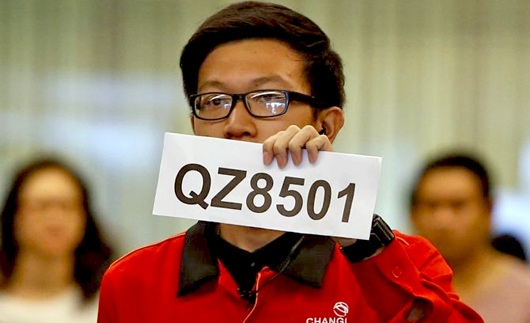
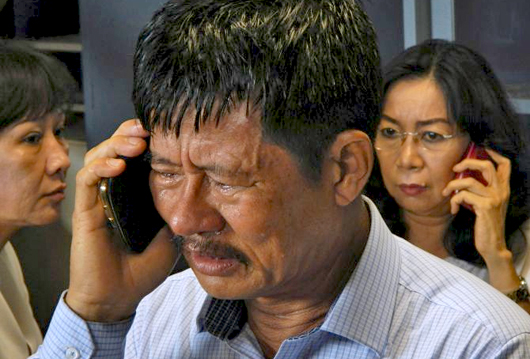
Singapore/Jakarta, Dec 28: An AirAsia plane with 162 people aboard went missing en route from Indonesia to Singapore this morning shortly after the pilots requested a change of flight plan because of weather, the third major aviation incident this year involving a Malaysian carrier.

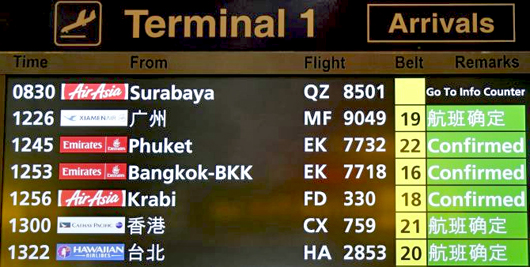
AirAsia Flight QZ8501 with 155 people on board -- including one British, one Malaysian, one Singaporean, three Koreans, -- and seven crew members lost contact with air traffic control at 0724 local time Indonesia (0454 IST).

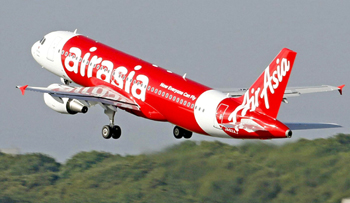
Sixteen children and one infant were among the passengers on board the AirAsia Airbus A320-200 that went missing on the flight from Surabaya, Indonesia, to Singapore.

At a press conference this morning, Indonesian officials said the plane was several hours past the time when its fuel would have been exhausted.AirAsia flight
There were unconfirmed media reports that a aircraft crashed in the waters of East Belitung, off the east coast of Sumatra.

The exact location of the crash site has not been identified, media reports said.

The aircraft was in the Indonesian Flight Information Region (FIR), more than 200 nm southeast of the Singapore -- Jakarta FIR boundary, when contact was lost, Civil Aviation Authority of Singapore (CAAS) said.

Contact with the plane was lost 42 minutes after takeoff. There were no Indian nationals on board.

The plane took off from Surabaya (Indonesia) at 5:20 am local time and was scheduled to land at Singapore's Changi Airport at 8:30 am.

A statement on AirAsia's Facebook page said: "AirAsia Indonesia regrets to confirm that flight QZ8501 from Surabaya to Singapore has lost contact with air traffic control at 0724hrs this morning."

"At the present time we unfortunately have no further information regarding the status of the passengers and crew members on board, but we will keep all parties informed as more information becomes available," the Malaysia-based carrier said in a statement.

The aircraft was an Airbus A320-200 with the registration number PK-AXC.

"At this time, search and rescue operations are in progress and AirAsia is cooperating fully and assisting the rescue service," the statement said.

Indonesian Transport Ministry official Hadi Mustofa said the plane had asked for an unusual route before it lost contact, local media reported.

Air Asia said the pilot had requested "deviation" from the its flight plan because of bad weather.

"The aircraft... was requesting deviation due to en route weather," it said.

Indonesia's National Search and Rescue Agency (Basarnas) Bangka Belitung said it has dispatched one vessel to search for AirAsia flight QZ8501.

"We received information from Basarnas in Jakarta that contact had been lost with an AirAsia flight over Bangka Belitung waters...We then dispatched a vessel with a search and rescue team of 22 members to check the information," Febi Imam Saputra, an information official at Basarnas Bangka Belitung, was quoted as saying by the Indonesian Antara news agency.

"If we look at the map, these coordinates refer to an area around 20 nautical miles from East Belitung," said Febi.

Search and rescue operations have been activated by the Indonesian authorities from the Pangkal Pinang Search and Rescue office.

Indonesian authorities have mobilised search and rescue operation near Belitung Island, deploying five ships and a surveillance aircraft carrying 15 Indonesian Air Force personnel.

The Civil Aviation Authority of Singapore has confirmed that it is linking up with Indonesian authorities to help locate the missing plane. Australia and Malaysia have also offered assistance.

A massive search is underway for the missing plane. The last detected position of the missing AirAsia Indonesia Flight QZ8501 is believed to be between Tanjung Pandan on Belitung island and Kalimantan, Indonesia, according to Indonesia's Director of Air Transport, Djoko Murjatmodjo.

"The position where contact was lost was between Tanjung Pandan and Pontianak, about 100 nautical miles south-east of Tanjung Pandan," said Djoko.

The pilot Captain Iriyanto has an experience of6,100 flying hours.

AirAsia Group CEO Tony Fernandes has asked his company to stay strong. "Thank you for all your thoughts and prayers. We must stay strong," tweeted Fernandes, an ethnic Indian, who set up the budget airlines which now flies to several countries.

Fernandes has said that he is heading to Indonesia.

Malaysia has also offered assistance in the search operation.

AirAsia is popular in the region as a budget carrier. It has about 100 destinations, with subsidiaries in several Asian countries.

The loss of contact with the AirAsia plane comes nearly 10 months after the disappearance of Malaysia Airlines Flight MH370, which went missing on March 8.

Searchers are yet to find any debris from Flight MH370, which officials believe crashed in the southern Indian Ocean.

Another Malaysia Airlines plane MH17 was shot down over Ukraine in July, killing all 298 on board.

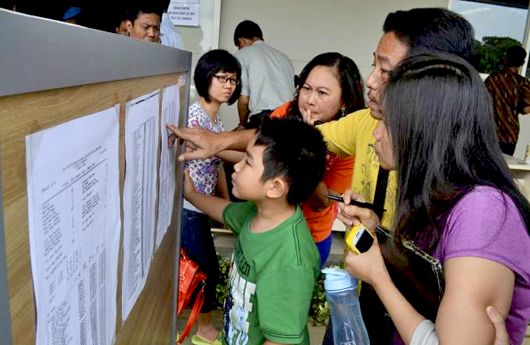
AirAsia plane3

AirAsia plane2

AirAsia plane4

AirAsia plane5


Comments

Add new comment

  • Coastaldigest.com reserves the right to delete or block any comments.
  • Coastaldigset.com is not responsible for its readers’ comments.
  • Comments that are abusive, incendiary or irrelevant are strictly prohibited.
  • Please use a genuine email ID and provide your name to avoid reject.
Agencies
June 16,2020

India continues to remain ranked 43rd on an annual World Competitiveness Index compiled by Institute for Management Development (IMD) with some traditional weaknesses like poor infrastructure and insufficient education investment keeping its ranking low, the international business school said on Tuesday.

Singapore has retained its top position on the 63-nation list.

Denmark has moved up to the second position (from 8th last year), Switzerland has gained one place to rank 3rd, the Netherlands has retained its 4th place and Hong Kong has slipped to the fifth place (from 2nd in 2019).

The US has moved down to 10th place (from 3rd last year), while China has also slipped from 14th to 20th place. Among the BRICS nations, India is ranked second after China, followed by Russia (50th), Brazil (56th) and South Africa (59th).

India was ranked 41st on the IMD World Competitiveness Ranking, being produced by the business school based in Switzerland and Singapore every year since 1989, but had slipped to 45th in 2017 before improving to 44th in 2018 and then to 43rd in 2019.

While its overall position has remained unchanged in the 2020 list, it has recorded improvements in areas like long-term employment growth, current account balance, high-tech exports, foreign currency reserves, public expenditure on education, political stability and overall productivity, the IMD said.

However, it has moved down in areas like exchange rate stability, real GDP growth, competition legislation and taxes.

Arturo Bris, Head of Competitiveness Center at IMD Business School, said India continues to struggle on the list and the recent country rating downgrade by Moody’s reflects the uncertainties regarding the economy’s future.

"In our ranking this year, we again emphasize the traditional weaknesses of India -- poor infrastructure, an important deficit in education investment, and a health system that does not reach everybody. For India to follow the path of China, it must stress its intangible infrastructure," Bris said.

"In a less global world, with China, USA, and Europe looking inwards, currencies like the rupee (and the Brazilian real for instance) are going to suffer and display high volatilities.

"Moody’s has threatened the country with a downgrade to junk and that would put India in a terrible position to attract foreign capital. So the urgency for the government should be to fix the short-term problems—and this requires to improve the credibility of the government itself," Bris added.

With the exception of Singapore, the Philippines, Taiwan and the Korean Republic, most Asian economies dropped in rankings this year, the IMD said.

The reason for the Asian economies’ less stellar performance as a region, this year is partly the result of the trade frictions between China and the US, particularly because these economies are highly dependent on trade with China.

About Singapore, which moved to the top rank last year, the IMD said its position is largely driven by the relative ease of setting up business, availability of skilled labour and its cutting-edge technological infrastructure.

The IMD said the impact of COVID-19 on the competitiveness ranking has partially been captured by executives’ opinions about the effectiveness of the different health systems.

In the ASEAN countries included in the survey, only Singapore and Thailand have a positive performance in the effectiveness of the health infrastructure.

Comments

Add new comment

  • Coastaldigest.com reserves the right to delete or block any comments.
  • Coastaldigset.com is not responsible for its readers’ comments.
  • Comments that are abusive, incendiary or irrelevant are strictly prohibited.
  • Please use a genuine email ID and provide your name to avoid reject.
News Network
March 2,2020

Paris, Mar 2: A global agency says the spreading new virus could make the world economy shrink this quarter, for the first time since the international financial crisis more than a decade ago.

The Organization for Economic Cooperation and Development says Monday in a special report on the impact of the virus that the world economy is still expected to grow overall this year and rebound next year.

But it lowered its forecasts for global growth in 2020 by half a percentage point, to 2.4 per cent, and said the figure could go as low as 1.5 per cent if the virus lasts long and spreads widely.

The last time world GDP shrank on a quarter-on-quarter basis was at the end of 2008, during the depths of the financial crisis. On a full-year basis, it last shrank in 2009.

The OECD said China's reduced production is hitting Asia particularly hard but also companies around the world that depend on its goods.

It urged governments to act fast to prevent contagion and restore consumer confidence.

The Paris-based OECD, which advises developed economies on policy, said the impact of this virus is much higher than past outbreaks because "the global economy has become substantially more interconnected, and China plays a far greater role in global output, trade, tourism and commodity markets."

Comments

Add new comment

  • Coastaldigest.com reserves the right to delete or block any comments.
  • Coastaldigset.com is not responsible for its readers’ comments.
  • Comments that are abusive, incendiary or irrelevant are strictly prohibited.
  • Please use a genuine email ID and provide your name to avoid reject.
News Network
February 18,2020

Washington, Feb 18: The upcoming visit of President Donald Trump to India later this month has the potential to usher in a new era of bilateral ties between the two countries, a top American business advocacy group has said.

President Trump will pay a state visit to India on February 24 and 25 at the invitation of Prime Minister Narendra Modi. He would be accompanied by First Lady Melania Trump.

This would be the president's first bilateral visit in the third decade of the 21st century and also the first after his acquittal by the Senate in the impeachment trial.

"I believe President Trump's upcoming visit to India has the potential to usher in a new era of our bilateral ties," Mukesh Aghi, President of the US India Strategic and Partnership Forum (USISPF) said in a statement on Monday.

On the sidelines of the visit, the USISPF, in collaboration with the Federation of Indian Chambers of Commerce and Industry (FICCI) and the ORF, has announced to organise a program entitled "US-India Forum: Partners for Growth".

The full-day discussion will focus on the key pillars defining India and the US' strategic, economic, and cultural partnership over the next decade.

"We have an opportunity before us to make real progress on multiple aspects of the relationship— whether it is upholding peace and security in the Indo-Pacific region; building upon an already strong energy partnership; developing co-production and co-development opportunities in the defense space; or strengthening bilateral trade," Aghi said.

"We look forward to an extremely successful visit and some concrete outcomes from the visit," he said.

The day-long programme on February 25 in New Delhi, will bring together over 500 senior business executives, members of the US-India think tank community and leading figures of the Indian diaspora to set the agenda for this strategic partnership.

Discussions during the day will touch upon areas, including the Indo-Pacific Strategy and Maritime Security; the US-India Defence Partnership, the US-India Energy Partnership, Elevating US-India Trade and Investment and Role of the Indian Diaspora in US-India Relations.

Comments

Add new comment

  • Coastaldigest.com reserves the right to delete or block any comments.
  • Coastaldigset.com is not responsible for its readers’ comments.
  • Comments that are abusive, incendiary or irrelevant are strictly prohibited.
  • Please use a genuine email ID and provide your name to avoid reject.