Al Hoota Caves: A true natural wonder in Oman

Agencies
September 13, 2018

New Delhi, Sept 13: Estimated to be over two million years old, the Al Hoota Cave is one of Oman's most popular natural tourist attractions.

Located off route 21 between Nizwa and Bahla at the foot of Oman's epic mountain Jabal Shams, just two hours drive from Muscat, it is the first and only cave in the Arabian Peninsula which is open to visitors.

With a total length of around 4.5 kilometres, around 500 metres of the cave is accessible to the general public.

The one hour guided tour starts from the visitor's centre with a short ride in an electric train that carries passengers up to the cave entrance. Once inside the cave, it's a feast for the eyes as you walk on the pathway and witness an enormous subterranean cavern filled with stalactites, stalagmites and colorful solid rock columns.

Don't miss the popular lion's head, the cat, the old man and countless other intriguing shapes and an 800m long underground lake that is home to the rare blind fish - Garra Barreimiae and many other animal species like bats, arthropods, mollusks, spiders, snails and water beetles.

While the Al Hoota Cave is made of stone, it was created by water. Like many other caves in Oman, the Al Hoota Cave system was formed by the dissolution of limestone by acidic water.

When rainwater dissolves carbon dioxide from the atmosphere or soil, it produces a dilute carbonic acid that dissolves the limestone as it runs over it, thus forming the cave. Every 100 years, the water dissolves through 10mm of rock - so it takes a long time to create something as spectacular as the Al Hoota Cave! Fascinating features such as stalagmites, stalactites and of course the magnificent lion of the cave are formed by mineral deposits as water drips into or moves through the cave system. Some of the columns and curtains you will see in the cave have been shaped over millions of years.

Post the tour; also visit the geological exhibition for an interesting insight into the geology of Oman and an in-depth study on how these caves were formed. Owing to its delicate ecosystem, a maximum of only 750 people are allowed to visit the caves on a day, hence it is ideal to do prior booking. The cave is open to visitors every Tuesday to Sunday from 9am to 6pm.

One can combine the trip with a visit to Nizwa to experience the magnificent Fort and Friday market or see the traditional architecture of Al Hamra and the beautiful atmosphere of Misfit al Abryeen. You could stroll through Wadi Tanuf or do the rim walk at Jebel Shams before lunch at Al Hoota followed by an afternoon visit to the cave.

Comments

Add new comment

  • Coastaldigest.com reserves the right to delete or block any comments.
  • Coastaldigset.com is not responsible for its readers’ comments.
  • Comments that are abusive, incendiary or irrelevant are strictly prohibited.
  • Please use a genuine email ID and provide your name to avoid reject.
Agencies
May 18,2020

Jeddah, May 18: Saudi Arabia’s Grand Mufti and head of the Council of Senior Scholars and the Department of Scientific Research and Ifta Sheikh Abdul Aziz Al Asheikh ruled that it is permissible to perform Eid Al-Fitr prayer at home under exceptional circumstances similar to the current pandemic situation. The prayer consists of two rakats with reciting more numbers of takbeer and without a sermon.

Speaking to Okaz/Saudi Gazette, he said that Zakat Al-Fitr could be distributed through charitable societies if they are reliable ones, with the condition that it should be distributed before the day of Eid. The Grand Mufti urged parents to bring joy and happiness to their children and their families by spending more on them.

Meanwhile, Sheikh Abdul Salam Abdullah Al-Sulaiman, member of the Council of Senior Scholars and the Standing Committee of Fatwa, said that Eid prayer could be performed individually or in congregation.

Speaking to Okaz/Saudi Gazette, he said that the worshiper will recite takbeer to start salat and then follow it with six more takbeer in the first rakat before reciting Fatiha loudly and then it is ideal to recite Surah Al-Qaf.

In the second rakat, there will be five takbeer after the takbeer at the start of the rakat before starting to recite Surah Fatiha and then Surah Al-Qamar, following the example of the Prophet (peace be upon him). It is also ideal to recite Surah Al-A’la and Al-Ghashiya instead of Al-Qaf and Al-Qamar in each rakat respectively.

Sheikh Al-Sulaiman also cited the example of Anas Bin Malik, a prominent companion of the Prophet (pbuh). When Anas (May Allah be pleased with him), was at his home in Zawiya, a place near Basra, he did not find any Eid congregation prayer and therefore he performed prayer along with his family members and his aide Abdullah Bin Abi Otba.

The scholar said that the time for Eid prayer begins after sunrise and the best time is after the sun rises by the height of one or two spears as agreed by most scholars. This means 15 or 30 minutes after sunrise and its time continues until the end of the time of the Duha prayer; that is before the Zuhr prayer begins.

The prayer is forbidden at the moment when the sun rises, and the majority of jurists, including the schools of thought of Shafi, Maliki, and Hanbali opposed prayer at sunrise and favored to perform the prayer only after the sun rises by the height of one or two spears in the sky.

Regarding the recitation of takbeer on the occasion of Eid Al-Fitr, Sheikh Al-Suleiman said that it should begin during the night of the Eid and continue until the beginning of the Eid prayer.

Comments

Add new comment

  • Coastaldigest.com reserves the right to delete or block any comments.
  • Coastaldigset.com is not responsible for its readers’ comments.
  • Comments that are abusive, incendiary or irrelevant are strictly prohibited.
  • Please use a genuine email ID and provide your name to avoid reject.
News Network
May 19,2020

Dubai, May 19: The UAE announced 832 new Covid-19 cases on Monday following 37,844 additional tests, taking the total tally of coronavirus infections in the country to 24,190.

The Ministry of Health and Prevention also reported four additional deaths, taking the death toll to 224. Meanwhile 1,065 patients also recovered after receiving the necessary treatment, taking the total number of recoveries to 9,577, the ministry said.

“We see a daily increase in cases due to the irresponsible behaviour of some people who are not aware of the consequences of not adhering to health guidelines,” said Dr Amna Al Dahak Al Shamsi, official spokesperson of the UAE government.

“The widening circle of infections requires no more than a few violations by just one or two people to completely infect families with the coronavirus,” she said.

“The decision to partially ease restrictions is aimed at achieving a balance between meeting the needs of a segment of society, whose source of income is linked to the commodity trade sector, and between continuing to adhere to the recommended health guidelines, and hence many restrictions and conditions have to be followed.”

However, she also appreciated the citizens and residents adhering to the precautionary measures.

“It is heartening for us to see many families committed to avoiding family gatherings,” she said. “As we prepare for Eid Al-Fitr, we are confident that citizens and residents will continue to adhere to health and preventive guidelines, and serve as role models to the world,” she added.

Change in disinfection programme timings

Officials also announced that the UAE’s National Disinfection Programme will now be in place from 8pm to 6am, starting Wednesday, May 20, until further notice. The scheme currently runs from 10pm until 6am.

Dr Saif Al Dhaheri, spokesman of the National Authority for Emergency, Crisis and Disaster Management said the amendment comes in light of the “increased number of Covid-19 cases, and the leniency of some members of society and their indifference to preventive measures”.

Food outlets, cooperative societies, groceries, supermarkets, and pharmacies will continue to operate 24 hours a day, seven days a week during the sterilisation programme period.

Meanwhile meat and vegetable shops and outlets selling fruits, toasters, mills, slaughterhouses, fish, coffee and tea, in addition to shops selling nuts, sweets and chocolate, can operate from 6am until 8pm.

Shopping centres and malls can stay open from 9am to 7pm starting Wednesday, May 20, officials added.

“We stress the importance of all stores and those authorised to operate to adhere to the applicable health and safety procedures, which include ensuring that the percentage of shoppers does not exceed 30 per cent of the total capacity,” said Al Dhaheri.

He also confirmed that children under 12 and those over 60 will not be permitted to enter malls and shopping centres.

“We warn visitors to the centres that the shopping period should not exceed two hours in order to reduce the crowding of shoppers, and to maintain the 30 per cent capacity.”

Eid restrictions

Al Dhaheri urged the public to avoid family visits and gatherings during Eid Al Fitr this year and to instead communicate using online means or by phone. He also stressed that people should refrain from distributing ‘Eid’ money to children.

“With regard to Eid prayers, we stress the importance of adhering to what was mentioned by the Emirates Legal Fatwa Council, which is to pray at home and to take health protection reasons as a legal obligation, a necessity of life, and a national commitment,” he added.

Heftier fines

Officials also announced heftier fines to ensure that the regulations are being adhered to.

“It was clear to us, in light of the follow-up, that there was reckless behaviour from some individuals, along with the insistence of some to commit a certain type of violation as well as indifference,” said Salem Al-Zaabi, acting head of the Public Prosecution for Emergencies, Crisis and Disasters.

The Public Prosecution has decided to update the list of previously announced violations and fines and administrative penalties to “suit the current situation”, he said.

Some of the new fines include:

– Dhs50,000 on educational institutions, cinemas, gym, stores, parks, beaches, pools or supermarkets that do not adhere to coronavirus measures

– Dhs50,000 fine on those who don’t adhere to quarantine restrictions

– Dhs10,000 for organising gatherings with participants also fined Dhs5,000 each

– Dhs5000 for refusing to do a Covid-19 test

– Dhs3,000 for not wearing a mask in public

– Dhs3,000 if more than three people are travelling in one car

– Dhs3,000 for companies failing to adhere to the 30 per cent limit on workforce at office

– Dhs3,000 for not adhering to social distancing

– Dhs3,000 fine for violating restrictions during the disinfection period

Repeat offenders will be referred to the Public Prosecution and can face a criminal trial with the possibility of imprisonment for a period not exceeding six months and/or a fine of at least Dhs100,000.

“The pictures and names of violators will be published in newspapers and media upon the decision of the Public Prosecutor if he deems it necessary,” added Al Zaabi.


Comments

Add new comment

  • Coastaldigest.com reserves the right to delete or block any comments.
  • Coastaldigset.com is not responsible for its readers’ comments.
  • Comments that are abusive, incendiary or irrelevant are strictly prohibited.
  • Please use a genuine email ID and provide your name to avoid reject.
Agencies
July 31,2020

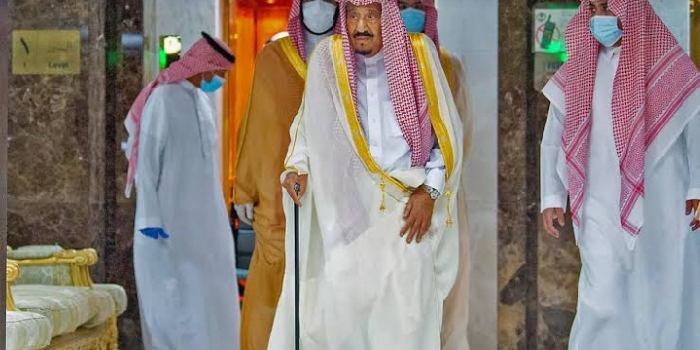
Makkah, Jul 31: Organising this year's scaled-down hajj required "double efforts" by Saudi authorities amid the coronavirus pandemic, King Salman said Friday after being discharged from hospital following gall bladder surgery.

Only up to 10,000 people already residing in the kingdom are participating in this year's pilgrimage, compared with 2019's gathering of some 2.5 million from around the world.

"Holding the ritual in the shadow of this pandemic... required reducing the numbers of pilgrims, but it obliged various official agencies to put in double efforts," 84-year-old King Salman said in a speech read out on state television by acting media minister Majid Al-Qasabi.

"The hajj this year was restricted to a very limited number of people from multiple nationalities, ensuring the ritual was completed despite the difficult circumstances," he said.

The speech came on the occasion of Eid al-Adha, the Muslim festival of sacrifice, a day after the king left hospital following a 10-day stay for surgery to remove his gall bladder.

The hajj, which began on Wednesday, is one of the five pillars of Islam and a must for able-bodied Muslims at least once in their lifetime.

Authorities implemented the "highest health precautions" during the rituals, the king said.

Pilgrims, who were all tested for the virus, are required to wear masks and observe social distancing.

For Friday's "stoning of the devil", the last major ritual of the hajj, Saudi authorities offered the pilgrims pebbles that were sanitised to protect against the pandemic.

In a sign that its strict measures were working, the health ministry reported no coronavirus cases in the holy sites on Wednesday or Thursday.

Comments

Add new comment

  • Coastaldigest.com reserves the right to delete or block any comments.
  • Coastaldigset.com is not responsible for its readers’ comments.
  • Comments that are abusive, incendiary or irrelevant are strictly prohibited.
  • Please use a genuine email ID and provide your name to avoid reject.