


Amid Recount Effort, Donald Trump Eyes Foreign Policy, Defense Jobs

November 27, 2016

West Palm Beach, Nov 27: His inauguration less than eight weeks away, President-elect Donald Trump was confronted by new developments Saturday in recount efforts in three states pivotal to his Nov. 8 victory, even as he worked to fill foreign policy and national defense jobs in his incoming administration.
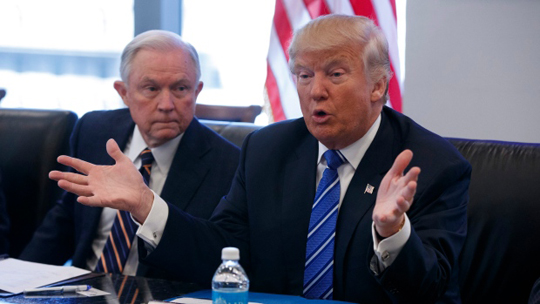
Donald

The New York billionaire, whose defeat of Democrat Hillary Clinton surprised even some loyalists, has scrambled to fill his Cabinet as the Jan. 20 inauguration approaches. Still, in many ways, he has barely scratched the surface of creating the massive team needed to run the government.

Experts say presidential transitions are periods of great vulnerability for the nation, and among the vacancies on the Trump team are leaders of the departments of State, Defense and Homeland Security.

Trump, who has virtually no experience in foreign affairs, offered a one-line tweet Saturday morning in reaction to the death of Cuban leader Fidel Castro - "Fidel Castro is dead!" - before issuing a more detailed statement.

"While Cuba remains a totalitarian island, it is my hope that today marks a move away from the horrors endured for too long, and toward a future in which the wonderful Cuban people finally live in the freedom they so richly deserve," Trump said.

His transition team did not immediately respond to requests to clarify his Cuba policy, which was inconsistent during the campaign.

Also Saturday, Clinton's camp said it was supporting Green Party candidate Jill Stein's push to force recounts in Wisconsin, Pennsylvania in Michigan. Trump narrowly carried those Democratic strongholds.

Clinton leads the national popular vote by close to 2 million votes, but Trump won 290 electoral votes to Clinton's 232, with Michigan still too close to call. It takes 270 to win the presidency.

Wisconsin officials are moving forward with the first presidential recount in state history following Stein's formal request. Stein, who drew 1 percent of the vote nationally, is raising millions of dollars to pay for the effort.

"Because we had not uncovered any actionable evidence of hacking or outside attempts to alter the voting technology, we had not planned to exercise this option ourselves," Clinton campaign attorney Marc Elias wrote Saturday in blog post. "But now that a recount has been initiated in Wisconsin, we intend to participate in order to ensure the process proceeds in a manner that is fair to all sides."

Elias said Clinton would take the same approach in Pennsylvania and Michigan if Stein were to follow through with recount requests those states, even though that was highly unlikely to change the election outcome.

"Regardless of the potential to change the outcome in any of the states, we feel it is important, on principle, to ensure our campaign is legally represented in any court proceedings and represented on the ground in order to monitor the recount process itself," Elias wrote.

Trump was spending the Thanksgiving holiday weekend with family at his Palm Beach estate, Mar-a-Lago. On Friday, he named Fox News analyst Kathleen Troia "KT" McFarland as deputy national security adviser and appointed campaign attorney Donald McGahn as White House counsel.

McFarland has worked for three presidents, although none since Ronald Reagan. Fox News said Saturday that her contract has been terminated in light of the appointment.

Trump planned to return to his New York home on Sunday ahead of a series of Monday meetings with prospective administration hires, including Sheriff David Clarke of Milwaukee County, Wisconsin. He's seen as a possible Homeland Security pick. Clarke's vocal opposition to the "Black Lives Matter" movement has made him popular with many conservatives.

Trump and Vice President-elect Mike Pence also have Monday meetings scheduled with Oklahoma Attorney General Scott Pruitt, Rep. Lou Barletta, R-Pa., former Security and Exchange Commission commissioner Paul Atkins, World Wide Technology chairman David Steward and General Growth Properties CEO Sandeep Mathrani.

Internal divisions over his choice for secretary of state have delayed that critical decision. The options include former New York City Mayor Rudy Giuliani, who lacks foreign policy experience, but was intensely loyal to Trump, and 2012 Republican presidential nominee Mitt Romney, who aggressively opposed Trump's candidacy but is largely regarded as more qualified. Tennessee Sen. Bob Corker is also a possibility.

With the world's attention on Cuba on Saturday, Trump indicated his administration would do "all it can to ensure the Cuban people can finally begin their journey toward prosperity and liberty."

During the campaign, Trump initially suggested he supported President Barack Obama's moves to loosen the US trade embargo.

Trump reversed himself less than a month before the election, and said he would reverse Obama unless Cuba met demands including "religious and political freedom for the Cuban people and the freeing of political prisoners."

His Saturday statement offered no more clarity.

Comments

Add new comment

  • Coastaldigest.com reserves the right to delete or block any comments.
  • Coastaldigset.com is not responsible for its readers’ comments.
  • Comments that are abusive, incendiary or irrelevant are strictly prohibited.
  • Please use a genuine email ID and provide your name to avoid reject.
News Network
May 30,2020

May 30: Warning of the tightrope walk ahead as governments battle the coronavirus crisis, Nobel laureate Peter Charles Doherty has expressed concern about densely populated countries such as India relaxing lockdown norms while also describing a complete shutdown as “an economic and social impossibility”.

The Australian immunologist, who cautioned that the number of COVID-19 cases will rise in the coming days, said the earliest time frame for an effective vaccine “going into large numbers of people” is nine to 12 months.

"If all goes well with testing, we could know if some of the candidate vaccines are both safe and effective as early as September/October. Then, rolling a vaccine out will depend on the type of product and how quickly it can be made, put in vials and so forth," Doherty told PTI in an email interview from Melbourne.

The novel coronavirus, he added, does not change fast like influenza and, from what is known so far, “the same vaccine should work everywhere”.

Doherty, who is with the Department of Microbiology and Immunology at the Doherty Institute, University of Melbourne, won the Nobel Prize for Medicine in 1996 for his discovery of how the body’s immune system distinguishes virus-infected cells from normal ones.

Discussing the lockdown, he said, "If it was purely a matter of hard science, everywhere should stay locked down. But that’s pretty much an economic and social impossibility.”

The expectation, he said, is the numbers will rise and limiting spread will depend on people acting responsibly and the capacity for rapid response and extensive contact testing.

“And in a densely populated country like India I think that it will be very difficult," the scientist said.

Several countries, including India, began relaxing lockdown norms in mid-May despite the WHO’s warning about a second wave. India’s lockdown began on March 25 and has since been extended. The fourth phase ends on Sunday.

Asked whether there are any alternatives to a lockdown, the 79-year-old said, "There is no other option other than closing borders. South Korea, for example, conducted massive, intensive testing and contact tracing in a wealthy country with a very disciplined population. Otherwise, not till we have effective vaccines."

He added that he personally doesn’t see the point of closing borders for people coming in if there’s already a high incidence of disease in the community, “unless it’s to avoid the need to care for them and use scarce hospital beds".

According to Doherty, the coronavirus "is a new virus which has come straight out of nature".

“It (the virus) has moved so rapidly across the world because of people travelling on international planes as well as tourist ships," he added.

The immunologist also warned against the use of hydroxychloroquine to treat COVID-19, and said current and planned trials of the anti-malaria drug should be stopped.

“My understanding is that the use of the drug in severe disease is definitely contra-indicated, but it’s not yet clear whether, if taken under medical supervision, it could have some useful effect if taken early on, or as a preventive. Those trials just haven’t been done properly," Doherty noted.

The Indian Council of Medical Research (ICMR) has backed the use of hydroxychloroquine as a preventive against COVID-19 even after the WHO suspended clinical trials of the drug citing safety concerns.

Asked whether plasma therapy can be an effective treatment for COVID-19, Doherty said, "We lack good properly controlled trials but, especially if the plasma has been tested for antibody levels and there’s evidence of good activity, it could be helpful. If I had the disease and was offered plasma therapy I would certainly accept, but I would not take hydroxychloroquine."

Doherty is also very optimistic about herd immunity developing against the SARS-CoV-2 infection.

"We think that (herd immunity) will cut in and have an obvious effect when, say, 60 per cent of people have been infected. Best hope is to boost herd immunity with a vaccine," he stated.

Herd immunity is a form of indirect protection from infectious disease that occurs when a large percentage of a population has become immune to an infection, whether through vaccination or previous infections.

The number of COVID-19 cases have crossed 5.9 million and the fatalities 3,65,000, according to the Johns Hopkins University on Saturday. 

In India, the death toll has risen to 4,971 and the number of cases to 1,73,763, according to the Union Health Ministry on Saturday.

Several states, including Bihar, Uttar Pradesh, Madhya Pradesh, Jharkhand and Chhattisgarh, have reported a rise in number since lockdown norms were relaxed in early May and migrant workers reached home.

In Uttar Pradesh, for instance, the number of infections rose from around 3,000 on May 4 to 6,532 on May 26. Similarly, Bihar’s numbers increased from around 500 to over 2,700 in the period.

Comments

Add new comment

  • Coastaldigest.com reserves the right to delete or block any comments.
  • Coastaldigset.com is not responsible for its readers’ comments.
  • Comments that are abusive, incendiary or irrelevant are strictly prohibited.
  • Please use a genuine email ID and provide your name to avoid reject.
Agencies
February 29,2020

Doha, Feb 29: The United States signed a landmark deal with the Taliban on Saturday, laying out a timetable for a full troop withdrawal from Afghanistan within 14 months as it seeks an exit from its longest-ever war.

President Donald Trump urged the Afghan people to embrace the chance for a new future, saying the deal held out the possibility of ending the 18-year conflict.

"If the Taliban and the government of Afghanistan live up to these commitments, we will have a powerful path forward to end the war in Afghanistan and bring our troops home," he said on the eve of the event in Doha.

Secretary of State Mike Pompeo arrived in the Qatari capital to witness the signing of the accord, while Defence Secretary Mark Esper was in Kabul for a separate joint declaration with the Afghan government.

The agreement is expected to lead to a dialogue between the Kabul government and the Taliban that, if successful, could ultimately see the Afghan war wind down.

But the position of the Afghan government, which has been excluded from direct US-Taliban talks, remains unclear and the country is gripped by a fresh political crisis amid contested election results.

The United States and its allies will withdraw all their forces from Afghanistan within 14 months if the Taliban abide by the Doha agreement, Washington and Kabul said in a joint statement.

After an initial reduction of troops to 8,600 within 135 days of Saturday's signing, the US and its partners "will complete the withdrawal of their remaining forces from Afghanistan within 14 months... and will withdraw all their forces from remaining bases", the declaration stated.

The Doha accord was drafted over a tempestuous year of dialogue marked by the abrupt cancellation of the effort by Trump in September.

The signing comes after a week-long, partial truce that has mostly held across Afghanistan, aimed at building confidence between the warring parties and showing the Taliban can control their forces.

NATO Secretary General Jens Stoltenberg heralded the agreement as a "first step to lasting peace".

"The way to peace is long and hard. We have to be prepared for setbacks, spoilers, there is no easy way to peace but this is an important first step," the Norwegian former prime minister told reporters in Kabul.

Since the US-led invasion that ousted the Taliban after the September 11, 2001 attacks, America has spent more than $1 trillion in fighting and rebuilding in Afghanistan.

About 2,400 US soldiers have been killed, along with unknown tens of thousands of Afghan troops, Taliban fighters and Afghan civilians.

The insurgents said they had halted all hostilities Saturday in honour of the agreement.

"Since the deal is being signed today, and our people are happy and celebrating it, we have halted all our military operations across the country," Taliban spokesman Zabihullah Mujahid told AFP.

Close to 30 nations were represented at Saturday's signing in the Qatari capital.

While Kabul will not be represented at the Doha ceremony, set for 1245 GMT, it will send a six-person taskforce to the Qatari capital to make initial contact with the Taliban political office, established in 2013.

Any insurgent pledge to guarantee Afghanistan is never again used by jihadist movements such as Al-Qaeda and the Islamic State group to plot attacks abroad will be key to the deal's viability.

The Taliban's sheltering of Al-Qaeda was the main reason for the US invasion following the 9/11 attacks.

The group, which had risen to power in the 1990s in the chaos of civil war, suffered a swift defeat at the hands of the US and its allies. They retreated before re-emerging to lead a deadly insurgency against the new government in Kabul.

After the NATO combat mission ended in December 2014, the bulk of Western forces withdrew from the country, leaving it in an increasingly precarious position.

While Afghans are eager to see an end to the violence, experts say any prospective peace will depend on the outcome of talks between the Taliban and the Kabul government.

But with President Ashraf Ghani and rival Abdullah Abdullah at loggerheads over contested election results, few expect the pair to present a united front, unlike the Taliban, who would then be in a position to take the upper hand in negotiations.

Comments

Add new comment

  • Coastaldigest.com reserves the right to delete or block any comments.
  • Coastaldigset.com is not responsible for its readers’ comments.
  • Comments that are abusive, incendiary or irrelevant are strictly prohibited.
  • Please use a genuine email ID and provide your name to avoid reject.
News Network
May 8,2020

May 8: Thousands of migrants have been stranded “all over the world” where they face a heightened risk of COVID-19 infection, the head of the UN migration agency International Organization for Migration (IOM) has said.

IOM Director-General António Vitorino said that more onerous health-related travel restrictions might discriminate disproportionately against migrant workers in future.

“Health is the new wealth,” Vitorino said, citing proposals by some countries to introduce the so-called immunity passports and use mobile phone apps designed to prevent the spread of the new coronavirus.

“In lots of countries in the world, we already have a system of screening checks to identify the health of migrants, above all malaria, tuberculosis… HIV-AIDS, and now I believe that there will be increased demands in health controls for regular migrants,” he said on Thursday.

Travel restrictions to try to limit the spread of the pandemic has left people on the move more vulnerable than ever and unable to work to support themselves, Vitorino told journalists via videoconference.

“There are thousands of stranded migrants all over the world.

 “In South-East Asia, in East Africa, in Latin America, because of the closing of the borders and with the travel restrictions, lots of migrants who were on the move; some of them wanted to return precisely because of the pandemic,” he said.

They are blocked, some in large groups, some in small, in the border areas, in very difficult conditions without access to minimal care, especially health screening, Vitorino said.

“We have been asking the governments to allow the humanitarian workers and the health workers to have access to (them),” he said.

Turning to Venezuelan migrants, who are believed to number around five million amidst a worsening economic crisis in the country, the IOM chief said “thousands… have lost their jobs in countries like Ecuador and Colombia and are returning back to Venezuela in large crowds without any health screening and being quarantined when they go back”.

In a statement, the IOM highlighted the plight of migrants left stranded in the desert in west, central and eastern Africa, either after having been deported without the due process, or abandoned by the smugglers.

The IOM’s immediate priorities for migrants include ensuring that they have access to healthcare and other basic social welfare assistance in their host country.

Among the UN agency’s other immediate concerns is preventing the spread of new coronavirus infection in more than 1,100 camps that it manages across the world.

They include the Cox’s Bazar complex in Bangladesh, home to around one million mainly ethnic Rohingya from Myanmar, the majority having fled persecution.

So far, no cases of infection have been reported there, the IOM chief said, adding that preventative measures have been communicated to the hundreds of thousands of camp residents, while medical capacity has been boosted.

Beyond the immediate health threat of COVID-19 infection, migrants also face growing stigmatization from which they need protection, Vitorino said.

Allowing hate speech and xenophobic narratives to thrive unchallenged also threatens to undermine the public health response to COVID-19, he said, before noting that migrant workers make up a significant percentage of the health sector in many developed countries including the UK, the US and Switzerland.

Populist narratives targeting migrants as carriers of disease could also destabilise national security through social upheaval and countries’ post-COVID economic recovery by removing critical workers in agriculture and service industries, he said.

Remittances have already seen a 30 per cent drop during the pandemic, Vitorino said, citing the World Bank data, meaning that some USD 20 billion has not been sent home to families in countries where up to 15 per cent of their gross domestic product comes from pay packets earned abroad.

Vitorino, in a plea, urged to give the health of migrants as much attention as that of the host populations in all countries.

“It is quite clear that health is the new wealth and that health concerns will be introduced in the mobility systems - not just for migration - but as a whole; where travelling for business or professional reasons, health will be the new gamechanger in town.

“If the current pandemic leads to a two or even three-tier mobility system, then we will have to try to solve the problem – the problem of the pandemic - but at the same time we have created a new problem of deepening the inequalities,” he said.

Comments

Add new comment

  • Coastaldigest.com reserves the right to delete or block any comments.
  • Coastaldigset.com is not responsible for its readers’ comments.
  • Comments that are abusive, incendiary or irrelevant are strictly prohibited.
  • Please use a genuine email ID and provide your name to avoid reject.