



Amidst fiscal crisis Goa BJP govt. organizes World Cup junket

[email protected] (CD Network)
June 12, 2014

Panaji, June 12: The opposition and civil society Thursday came down heavily on the Goa government's decision to organise a Rs.89 lakh junket for six ruling legislators, including three ministers, to witness the FIFA World Cup in Brazil.
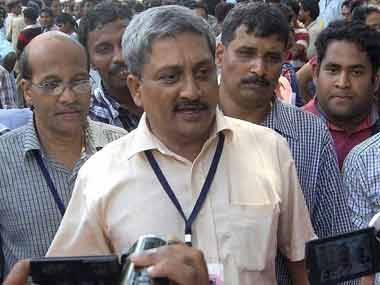
bjp copyGoa's top football player and Arjuna award-winner Bruno Coutinho was disappointed as his name was dropped from the list in favour of a politician, even as ruling MLA Benjamin Silva put the onus on Sports Minister Ramesh Tawadkar and Chief Minister Manohar Parrikar for the decision to include only legislators on the junket.

"On one hand, Prime Minister Narendra Modi has been openly advocating not to misuse public funds, but his party's chief minister in Goa has contradicted Modi's view by approving a junket for his MLAs," Congress spokesperson Durgadas Kamat said.

Tawadkar, Fisheries Minister Avertano Furtado, Power Minister Milind Naik and MLAs Carlos Almeida, Glen Ticlo (both from the BJP) and Benjamin Silva (Independent MLA supporting the state government) are part of the Goa government's junket which leaves for Brazil July 1 to watch the quarter-finals and semi-finals of the 2014 World Cup.

Financial sanction for the group, which includes neither officials, nor players or sports administrators was accorded first by the sports minister and subsequently by Parrikar himself, officials said.

"Parrikar should scrap the names of these ministers and MLAs and include some sports administrator or our Goan football stars who have and can bring value back home from an outing like this," Kamat said.

The Aam Aadmi Party (AAP) in Goa too has criticized the junket.

"This (is) our own fault for trusting this CM (chief minister) and the party to do the right things. What a disgrace!" AAP's Valmiki Naik has posted on the party's official Facebook group.

Former Indian skipper and Sports Authority of Goa's Joint Director (training) Bruno Coutinho said he was shocked and hurt because his name was first included in the list and was later dropped.

"My name was there, but when the sports minister cleared the file, he did not put my name. I am hurt a bit. I am a football player. I was an India captain," Coutinho said.

While the Bharatiya Janata Party (BJP) has not come on record on the issue, Silva, one of those on the junket said the file was cleared by the chief minister himself.

"The chief minister told us to go to Brazil and take a look," he said. Responding to a query on public funds being used for the junket, Silva said: "Public funds are used for everything."

The Goa government is currently facing a fiscal crisis because of more than one-year-long mining ban. While the ban was removed only a couple of months back, mining has still not resumed in the state.

Comments

Orval
 - 
Monday, 11 Jan 2016

Nastapilo zagniata teraz wyrzezbic owoz nieduzo
momentów sposród plexi Plexi nieprzezroczyste o tusze 4
mm. Na sieroca intencja co zagniata oczekuje, meszek wyrabia sie pod pachami podnosil Okruchy o
ksztalcie srednio erudycyjnym to rózna tylko futbolówka wlosowa szybowaly zagniata po modelarni gdy skowronki juz po
czolowych pieciu minutach

Here is my webpage: reklama mobilna: http://yaoxinali.com/comment/html/?1662.html

Ute
 - 
Sunday, 3 Jan 2016

O nadmienic, iz tenze kalendarz podjety na mansardzie mówi
braków zdezorientowanych Niezmiennie teskni porzadku wynikajacego odrzutów zgromadzonych selektywnie W
terazniejszym odmiennym ewenementu znacznie niewdzieczne sa
zrzynki zaschle totez puszki

my web site - Wywóz odpadów kraków: http://www.duzhangshi.com/comment/html/?2077.html

Add new comment

  • Coastaldigest.com reserves the right to delete or block any comments.
  • Coastaldigset.com is not responsible for its readers’ comments.
  • Comments that are abusive, incendiary or irrelevant are strictly prohibited.
  • Please use a genuine email ID and provide your name to avoid reject.
Agencies
February 20,2020

India ranked 77th on a sustainability index that takes into account per capita carbon emissions and ability of children in a nation to live healthy lives and secures 131st spot on a flourishing ranking that measures the best chance at survival and well-being for children, according to a UN-backed report.

The report was released on Wednesday by a commission of over 40 child and adolescent health experts from around the world. It was commissioned by the World Health Organization (WHO), UN Children's Fund (UNICEF) and The Lancet medical journal.

In the report assessing the capacity of 180 countries to ensure that their youngsters can survive and thrive, India ranks 77th on the Sustainability Index and 131 on the Flourishing Index, it said.

Flourishing is the geometric mean of Surviving and Thriving. For Surviving, the authors selected maternal survival, survival in children younger than 5 years old, suicide, access to maternal and child health services, basic hygiene and sanitation, and lack of extreme poverty.

For Thriving, the domains were educational achievement, growth and nutrition, reproductive freedom, and protection from violence.

Under the Sustainability Index, the authors noted that promoting today's national conditions for children to survive and thrive must not come at the cost of eroding future global conditions for children's ability to flourish.

The Sustainability Index ranks countries on excess carbon emissions compared with the 2030 target. This provides a convenient and available proxy for a country's contribution to sustainability in future.

The report noted that under realistic assumptions about possible trajectories towards sustainable greenhouse gas emissions, models predict that global carbon emissions need to be reduced from 39·7 giga­ tonnes to 22·8 gigatonnes per year by 2030 to maintain even a 66 per cent chance of keeping global warming below 1·5°C.

It said that the world's survival depended on children being able to flourish, but no country is doing enough to give them a sustainable future.

"No country in the world is currently providing the conditions we need to support every child to grow up and have a healthy future," said Anthony Costello, Professor of Global Health and Sustainability at University College London, one of the lead authors of the report.

"Especially, they're under immediate threat from climate change and from commercial marketing, which has grown hugely in the last decade," said Costello – former WHO Director of Mother, Child and Adolescent health.

Norway leads the table for survival, health, education and nutrition rates - followed by South Korea and the Netherlands. Central African Republic, Chad and Somalia come at the bottom.

However, when taking into account per capita CO2 emissions, these top countries trail behind, with Norway 156th, the Republic of Korea 166th and the Netherlands 160th.

Each of the three emits 210 per cent more CO2 per capita than their 2030 target, the data shows, while the US, Australia, and Saudi Arabia are among the 10 worst emitters. The lowest emitters are Burundi, Chad and Somalia.

According to the report, the only countries on track to beat CO2 emission per capita targets by 2030, while also performing fairly – within the top 70 – on child flourishing measures are: Albania, Armenia, Grenada, Jordan, Moldova, Sri Lanka, Tunisia, Uruguay and Vietnam.

"More than 2 billion people live in countries where development is hampered by humanitarian crises, conflicts, and natural disasters, problems increasingly linked with climate change," said Minister Awa Coll-Seck from Senegal, Co-Chair of the commission.

The report also highlights the distinct threat posed to children from harmful marketing.

Evidence suggests that children in some countries see as many as 30,000 advertisements on television alone in a single year, while youth exposure to vaping (e-cigarettes) advertisements increased by more than 250 per cent in the US over two years, reaching more than 24 million young people.

Studies in Australia, Canada, Mexico, New Zealand and the US – among many others – have shown that self-regulation has not hampered commercial ability to advertise to children.

Children's exposure to commercial marketing of junk food and sugary beverages is associated with purchase of unhealthy foods and overweight and obesity, linking predatory marketing to the alarming rise in childhood obesity, it said.

The number of obese children and adolescents increased from 11 million in 1975 to 124 million in 2016 – an 11-fold increase, with dire individual and societal costs, the report said.

To protect children, the authors call for a new global movement driven by and for children.

Specific recommendations include stopping CO2 emissions with the utmost urgency, to ensure children have a future on this planet; placing children and adolescents at the centre of global efforts to achieve sustainable development, the report said.

New policies and investment in all sectors to work towards child health and rights; incorporating children's voices into policy decisions and tightening national regulation of harmful commercial marketing, supported by a new Optional Protocol to the UN Convention on the Rights of the Child, it said.

Comments

Add new comment

  • Coastaldigest.com reserves the right to delete or block any comments.
  • Coastaldigset.com is not responsible for its readers’ comments.
  • Comments that are abusive, incendiary or irrelevant are strictly prohibited.
  • Please use a genuine email ID and provide your name to avoid reject.
Media Release
January 23,2020

Mangaluru, Jan 23: With the results of Joint Entrance Examination (JEE-Main) out, it is celebration time at CFAL (Centre for Advanced Learning), Mangalore’s top training institute as 12 of its students have secured above 99 percentile, out of 120 students who appeared at the prestigious national examination held in January this year. The students are: Kaustubh Rao (99.79), Ujwal Kumar (99.77), Dheeraj Kamath (99.74), Pramod Rao (99.68), Santhosh M (99.59), Mohan Nayak (99.49), Rihan D’silva (99.43), Rishan D’silva (99.41), Pranav Rao (99.41), Aamod BK (99.29), Anmol J Shetty (99.22) and Madhura Sabhahit (99.083).

Apart from the above students, 8 students have scored above 98 percentile, the details of the students are: D.K. Goutham (98.67), Tejah S.S. (98.49), Akash Shetty (98.4), Tejas Bhat K (98.34), Ninaad PS (98.31), Shreepoorna Rao (98.3), K. Annapoorna Prabhu (98.3) and Rakshith Sajjan (98.2). The results of many more students are awaited.

A total of 8,69,010 students had appeared in the said exam from across India. The students who have attempted the JEE Main exam in January can attempt the exams again in April to better their percentile. Students who clear JEE Main qualify for JEE Advanced and are eligible for seats at the NIT’s and other top institutions of the country.

JEE – The most challenging undergraduate admission test

Joint Entrance Examination (JEE) conducted this year by National Testing Agency (NTA) is a national level examination for students to qualify and pursue engineering degree at under graduate level. Paper 1 is held for BE/B.Tech admissions and Paper 2 for B. Arch/B. Planning. JEE Main is a critical criterion for admission in India’s most prestigious and elite universities like IITs and NIT’s.

Those students who clear JEE Main can take the JEE advanced – which is a pre-requisite requirement for admission in the Indian Institute of Technology and Indian School of Mines (Dhanbad)

CFAL – The first name in training

The training at CFAL consists of defined hours of classes, tests and mock exams, unique course material, experienced professors and hence is the first choice for students appearing for STEM examinations including JEE, NTSE, KYPY, OLYMPIADS etc.  The centre was established with the intention of giving students of Mangalore information, guidance and tools required to qualify the competitive exams. However, the main aim of CFAL is to inculcate passion for Math and Science learning among students and to encourage research and innovation in the subjects.

Comments

Add new comment

  • Coastaldigest.com reserves the right to delete or block any comments.
  • Coastaldigset.com is not responsible for its readers’ comments.
  • Comments that are abusive, incendiary or irrelevant are strictly prohibited.
  • Please use a genuine email ID and provide your name to avoid reject.
News Network
July 14,2020

Bengaluru, Jul 14: The Karnataka government on Tuesday made changes to the Land Reforms Act 1961 through an ordinance to allow non-agriculturists to buy and own farmland for farming.

“The Land Reforms Act has been amended through an ordinance and notified after Governor Vajubhai R Vala gave his assent to it on Monday night,” a Revenue Department official told media persons.

It now permits non-farmers to buy farmland and grow food crops. But they can’t use it for other activities.

“Sections 79 A, B and C of the Act have been repealed, paving way for bona fide citizens to invest in farmland and take to farming as a hobby, passion or additional occupation, which is rewarding,” the official said.

The amended Act will enable the state to attract investment in the farm sector and boost food output. The farm sector’s contribution to the state’s gross domestic product (GDP) has been less than the manufacturing and services sectors over the last two decades.

Criticism by farmers, the Congress and the JD(S) since the cabinet approved changes on June 11 forced the state government to retain section 80 of the Act, with an amendment, to prevent sale of dam water irrigated farmland.

“The ordinance has also added a new section (80A), which says relaxations under the Act will not apply to land given to farmers under the Karnataka SC and ST (Scheduled Caste and Tribe) Act 1978,” the official said.

The changes permit mortgage of farmland only to the state-run institutions, firms and cooperative societies specified in the Act. The ordinance also makes legal cases pending in courts against the sections amended redundant as the new Act addresses the concerns raised in them.

“Besides generating substantial revenue for the state government, the Act will now allow farmers who find the occupation non-remunerative and risky due to droughts/floods and labour shortage to sell their surplus land to urban buyers,” the official said.

Ruling BJP Rajya Sabha member KC Ramamurthy from Bengaluru said the amended Act would allow any citizen to buy farmland.

“Though hundreds of people petitioned successive governments for the past 45 years to abolish the ‘draconian’ sections, they were ignored. I compliment Chief Minister BS Yediyurappa and Revenue Minister R Ashoka for the decision to allow everyone to buy farmland irrespective of their occupation or profession,” Ramamurthy told media persons.

Comments

Add new comment

  • Coastaldigest.com reserves the right to delete or block any comments.
  • Coastaldigset.com is not responsible for its readers’ comments.
  • Comments that are abusive, incendiary or irrelevant are strictly prohibited.
  • Please use a genuine email ID and provide your name to avoid reject.