


Another 13 new smart cities announced; Mangaluru continues to wait its turn

[email protected] (News Network)
May 25, 2016

New Delhi, May 25: The Union government on Tuesday announced the names of 13 more cities that will be developed under the Centre's “Smart City Mission.” Lucknow in poll-bound Uttar Pradesh tops the list, followed by Warangal in Telangana and Dharamshala in Himachal Pradesh.

smartcity3

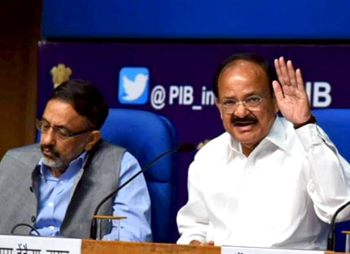
These cities were chosen from the 23 that failed to get representation in the first round of a competition held in January, and participated in the “fast-track competition.” The results were announced by Urban Development Minister M. Venkaiah Naidu on Tuesday.

Other cities on the list are Chandigarh, Raipur (Chhattisgarh), New Town Kolkata, Bhagalpur (Bihar), Panaji (Goa), Port Blair (Andaman and Nicobar Islands), Imphal (Manipur), Ranchi (Jharkhand), Agartala (Tripura) and Faridabad (Haryana). “The 13 cities selected in the competition have proposed a total investment of Rs. 30,229 crore. With this, the investment proposed by 33 cities [20 cities made the cut in January] under the smart city plans is now Rs. 80,789 crore,” Mr. Naidu told the media.
smartcity2

Karnataka's coastal city of Mangaluru does not figure in the list of 13 smart cities. In fact the local elected representatives in Mangaluru had made all possible efforts to make it in the first list of 20 smart cities announced in January this year. The wait continued.

Next round

Seven cities — Patna (Bihar), Shimla (Himachal Pradesh), Naya Raipur (Chhattisgarh), Itanagar (Arunachal Pradesh), Amaravati (Andhra Pradesh), Bengaluru (Karnataka) and Thiruvananthapuram (Kerala) — that were not among the 100 shortlisted for the competition will be able to participate in the next round, the Minister added.

Of the 13 cities that qualified for the project, four are from BJP-ruled States (Chhattisgarh, Goa, Jharkhand and Haryana) while two are from Congress-governed States (Himachal Pradesh and Manipur). Lucknow is in Samajwadi Party-ruled Uttar Pradesh, while Bhagalpur is in Bihar, where the JD(U), the RJD and the Congress are ruling coalition partners. Warangal is in Telangana, which is ruled by the Telangana Rashtra Samithi.Apart from these, The Union Territories of Chandigarh and Port Blair in Andaman and Nicobar Islands were also among the winners of this round.

Ten cities that failed to make the cut are: Pasighat (Arunachal Pradesh), Shillong (Meghalaya), Namchi (Sikkim), Diu (Daman & Diu), Oulgaret (Puducherry), Silvassa (Dadra and Nagar Haveli), Kohima (Nagaland), Aizawl (Mizoram), Kavaratti (Lakshadweep) and Dehradun (Uttarakhand). They will be able to participate in the next round with other cities.

Highlights of project

Assured water and power supply, sanitation and solid waste management systems, efficient urban mobility and public transportation, IT connectivity, e-governance and citizen participation are some of the highlights of the smart city project.

It aims to transform 100 cities by 2019-20, with the Union government providing financial support of Rs. 48,000 crore over five years.

Central assistance

Each city will receive Central assistance of Rs. 200 crore in the first year and Rs. 100. crore over the three subsequent financial years. State governments and respective urban local bodies will also match the Centre's contribution. While 20 cities were selected in 2015-16 as per the Mission's guidelines, another 40 (including the 13)will be selected this year. The remaining will be chosen in the next financial year.

What are smart cities?

A 'smart city' is an urban region that is highly advanced in terms of overall infrastructure, sustainable real estate, communications and market viability. It is a city where information technology is the principal infrastructure and the basis for providing essential services to residents. There are many technological platforms involved, including but not limited to automated sensor networks and data centres.

According to the documents released on the Smart Cities website, the core infrastructure in a smart city would include:

— Adequate water supply

— Assured electricity supply

— Sanitation, including solid waste management

— Efficient urban mobility and public transport

— Affordable housing, especially for the poor

— Robust IT connectivity and digitalisation

— Good governance, especially e-Governance and citizen participation

— Sustainable environment

— Safety and security of citizens, particularly women, children and the elderly

— Health and education

Also Read : Bengaluru, six other state capitals to compete for Smart Cities Mission

Comments

satyameva jayate
 - 
Wednesday, 25 May 2016

Mangalore....wow...and smart city... Political Drama only..
No communal harmony..
No Water ...
No proper roads..Still incomplete, pentagonal and hexagonal shaped flyovers..
Sewage flowing all over also connected to the rain water canals through middle of the city...
No parking in the city.
Whole city looks like a bus stand .....
Trees moved without any plan....
I dont see any hope for the coming 10 years also, may be to go worst whoever rules....God save our DK...

Zahoor Ahmed
 - 
Wednesday, 25 May 2016

Ram Bhat ask Modi and sankayya to add Mangalore in smart city list. Thanks to Nalin for doing nothing for Mangalore city. Mr. Moily bring money from ONGC to build new building for Lady Goshen but Smart Mangalorean reject him and now Lady Goshen building waiting for Nalin action but Nalin is busy making money instead of developments in the city.

Add new comment

  • Coastaldigest.com reserves the right to delete or block any comments.
  • Coastaldigset.com is not responsible for its readers’ comments.
  • Comments that are abusive, incendiary or irrelevant are strictly prohibited.
  • Please use a genuine email ID and provide your name to avoid reject.
Agencies
May 8,2020

Washington D.C., May 8: The prime time for brain development in a child's life is the first year, where the infant spends most of the time asleep. It is the time when neural connections form and sensory memories are encoded.

However, when sleep is disrupted, as occurs more often among children with autism, brain development may be affected, too.

New research led by the University of Washington finds that sleep problems in a baby's first 12 months may not only precede an autism diagnosis but also may be associated with altered growth trajectory in a key part of the brain, the hippocampus.

The study, which was published in the American Journal of Psychiatry, researchers report that in a sample of more than 400 taken of 6- to 12-month-old infants, those who were later diagnosed with autism were more likely to have had difficulty falling asleep.

It also states that this sleep difficulty was associated with altered growth trajectories in the hippocampus.

"The hippocampus is critical for learning and memory, and changes in the size of the hippocampus have been associated with poor sleep in adults and older children.

As many as 80 per cent of the children with autism spectrum disorder have sleep problems," said Annette Estes, director of the UW Autism Center and senior author of the study.

"In our clinical experience, parents have a lot of concerns about their children's sleep, and in our work on early autism intervention, we observed that sleep problems were holding children and families back," added Estes, who is also a UW professor of speech and hearing sciences.

"It could be that altered sleep is part-and-parcel of autism for some children. One clue is that behavioural interventions to improve sleep don't work for all children with autism, even when their parents are doing everything just right. This suggests that there may be a biological component to sleep problems for some children with autism," said Estes.

To consider links among sleep, brain development, and autism, researchers at the IBIS Network looked at MRI scans of 432 infants, surveyed parents about sleep patterns, and measured cognitive functioning using a standardized assessment.

At the outset of the study, infants were classified according to their risk for developing autism: Those who were at higher risk of developing autism -- about two-thirds of the study sample -- had an older sibling who had already been diagnosed.

Infant siblings of children with autism have a 20 per cent chance of developing autism spectrum disorder -- a much higher risk than children in the general population.

In the current study, 127 of the 432 infants were identified as "low risk" at the time the MRI scans were taken because they had no family history of autism.

They later evaluated all the participants at 24 months of age to determine whether they had developed autism. Of the roughly 300 children originally considered "high familial risk," 71 were diagnosed with autism spectrum disorder at that age.

Problems with sleep were more common among the infants later diagnosed with an autism spectrum disorder, as were larger hippocampi. No other subcortical brain structures were affected, including the amygdala, which is responsible for certain emotions and aspects of memory, or the thalamus, a signal transmitter from the spinal cord to the cerebral cortex.

The authors note that while parents reported more sleep difficulties among infants who developed autism compared to those who did not, the differences were very subtle and only observed when looking at group averages across hundreds of infants.

Sleep patterns in the first years of life change rapidly as infants transition from sleeping around the clock to a more adult-like sleep/wake cycle. Until further research is completed, Estes said, it is not possible to interpret challenges with sleep as an early sign of increased risk for autism.

Comments

Add new comment

  • Coastaldigest.com reserves the right to delete or block any comments.
  • Coastaldigset.com is not responsible for its readers’ comments.
  • Comments that are abusive, incendiary or irrelevant are strictly prohibited.
  • Please use a genuine email ID and provide your name to avoid reject.
News Network
March 27,2020

Bengaluru, Mar 27: A 65-year-old coronavirus patient who died in Karnataka this morning after apparently contracting the infection on a train ride has raised concern about community transmission of the highly contagious disease.
The man, the 60th coronavirus patient in Karnataka, died in Tumakuru. It is not known for certain how he caught the virus. The Karnataka Health Department has posted a notice on Twitter asking whoever travelled with him on train to come forward.

He had no history of recent foreign travel but had apparently traveled to Delhi on March 5 by Sampark Kranti Express and returned on March 11.

On March 7, he arrived at Delhi's Nizamuddin station and participated in an event at Jamia Masjid.

The man took a train back on March 11 and arrived at Yeshwantpur in Bengaluru. From there, he took a bus on March 14 to his hometown Sira.

He first showed symptoms of COVID-19 on March 18 and was taken to a private hospital. He was sent home with medicines but his condition worsened.

On March 23, he was admitted to a district hospital, but checked himself out against all advice and went to a private hospital. When his health showed signs of deterioration, he was again sent to the district hospital, where he tested positive for coronavirus yesterday. He died around 10.30 am today.

The health department has since traced 24 people who came in direct contact with him and are so, in the high-risk category. Thirteen are in hospital and eight have tested negative.

"All passengers who had travelled with him on the train are being traced," K Rakesh Kumar, Deputy Commissioner, Tumakuru, was quoted as telling news agency ANI.

A 70-year old woman and a 76-year old man had died of coronavirus or COVID-19 earlier in Karnataka.

India has over 700 coronavirus cases, including 17 deaths.

Comments

Add new comment

  • Coastaldigest.com reserves the right to delete or block any comments.
  • Coastaldigset.com is not responsible for its readers’ comments.
  • Comments that are abusive, incendiary or irrelevant are strictly prohibited.
  • Please use a genuine email ID and provide your name to avoid reject.
News Network
July 17,2020

Mangaluru, Jul 17: Dakshina Kannada district Youth Congress president Mithun Rai has tested positive for the covid-19. 

Mr Rai took to social media to announce it: “I have been tested COVID19 positive & I am under Quarantine at Bangalore. With all your love and blessings, I will recover and be back soon at your service.

“My request to all those who were in close proximity with me in the last few days, kindly get yourselves checked for COVID,” he stated in a social media post on Friday.

Comments

Add new comment

  • Coastaldigest.com reserves the right to delete or block any comments.
  • Coastaldigset.com is not responsible for its readers’ comments.
  • Comments that are abusive, incendiary or irrelevant are strictly prohibited.
  • Please use a genuine email ID and provide your name to avoid reject.