



Anyone can become an Internet troll: study

February 7, 2017

Washington, Feb 7: Anyone can become an Internet troll under the right circumstances, suggests a new study which discards the common assumption that people who troll are different from the rest of us. Internet trolls, by definition, are disruptive, combative and often unpleasant with their offensive or provocative online posts designed to disturb and upset. Researchers from Stanford University and Cornell University in the US, using social psychology research methods, investigated whether trolling behaviour is an innate characteristic or if situational factors can influence people to act like trolls.
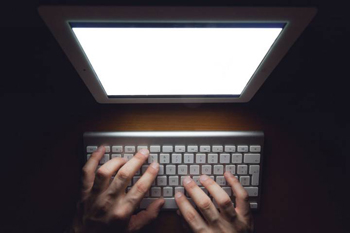
InternettrollThrough a combination of experimentation, data analysis and machine learning, they honed in on simple factors that make the average person more likely to troll. "We wanted to understand why trolling is so prevalent today," said Justin Cheng from Stanford University. "While the common knowledge is that trolls are particularly sociopathic individuals that occasionally appear in conversations, is it really just these people who are trolling others?," said Cheng.

Following previous research on antisocial behaviour, the researchers decided to focus on how mood and context affect what people write on a discussion forum. They set up a two-part experiment with 667 subjects recruited through a crowd-sourcing platform. In the first part of the experiment, the participants were given a test, which was either very easy or very difficult.

After taking the tests, all subjects filled out a questionnaire that evaluated various facets of their mood, including anger, fatigue, depression and tension. As expected, the people who completed the difficult test were in a worse mood than those who had the easy test. All participants were then instructed to read an article and engage in its comment section. They had to leave at least one comment, but could leave multiple comments and up-votes and down-votes and could reply to other comments.

The participants saw the same article on the same platform, created solely for the experiment, but some participants were given a forum with three troll posts at the top of the comment section. Others saw three neutral posts. Two independent experts evaluated whether the posts left by subjects qualified as trolling, defined generally in this research by a combination of posting guidelines taken from several discussion forums. For example, personal attacks and cursing were indicative of troll posts.

About 35 per cent of people who completed the easy test and saw neutral posts then posted troll comments of their own. That percentage jumped to 50 per cent if the subject either took the hard test or saw trolling comments. People exposed to both the difficult test and the troll posts trolled approximately 68 per cent of the time.

The researchers suggest that conversation context and mood can lead to trolling. They believe this could inform the creation of better online discussion spaces. "Understanding what actually determines somebody to behave antisocially is essential if we want to improve the quality of online discussions," said Cristian Danescu-Niculescu-Mizil, from Cornell University.

Comments

Add new comment

  • Coastaldigest.com reserves the right to delete or block any comments.
  • Coastaldigset.com is not responsible for its readers’ comments.
  • Comments that are abusive, incendiary or irrelevant are strictly prohibited.
  • Please use a genuine email ID and provide your name to avoid reject.
Agencies
March 15,2020

Cybercriminals continue to exploit public fear of rising coronavirus cases through malware and phishing emails in the guise of content coming from the Centers for Disease Control and Prevention (CDC) in the US and World Health Organisation (WHO), says cybersecurity firm Kaspersky.

In the APAC region, Kaspersky has detected 93 coronavirus-related malware in Bangladesh, 53 in the Philippines, 40 in China, 23 in Vietnam, 22 in India and 20 in Malaysia. 

Single-digit detections were monitored in Singapore, Japan, Indonesia, Hong Kong, Myanmar, and Thailand. 

Along with the consistent increase of 2019 coronavirus cases comes the incessant techniques cybercriminals are using to prey on public panic amidst the global epidemic, the company said in a statement. 

Kaspersky also detected emails offering products such as masks, and then the topic became more commonly used in Nigerian spam emails. Researchers also found scam emails with phishing links and malicious attachments.

One of the latest spam campaigns mimics the World Health Organisation (WHO), showing how cybercriminals recognise and are capitalising on the important role WHO has in providing trustworthy information about the coronavirus.

"We would encourage companies to be particularly vigilant at this time, and ensure employees who are working at home exercise caution. 

"Businesses should communicate clearly with workers to ensure they are aware of the risks, and do everything they can to secure remote access for those self-isolating or working from home," commented David Emm, principal security researcher.

Some malicious files are spread via email. 

For example, an Excel file distributed via email under the guise of a list of coronavirus victims allegedly sent from the World Health Organisation (WHO) was, in fact, a Trojan-Downloader, which secretly downloads and installs another malicious file. 

This second file was a Trojan-Spy designed to gather various data, including passwords, from the infected device and send it to the attacker.

Comments

Add new comment

  • Coastaldigest.com reserves the right to delete or block any comments.
  • Coastaldigset.com is not responsible for its readers’ comments.
  • Comments that are abusive, incendiary or irrelevant are strictly prohibited.
  • Please use a genuine email ID and provide your name to avoid reject.
Agencies
July 6,2020

The Covid-19 pandemic has made an unprecedented impact on the Indian businesses, particularly small and medium enterprises (SMEs) and startups. According to a joint survey by FICCI and Indian Angel Network (IAN), the pandemic has hit the businesses of around 70% startups.

With uncertainty in the business environment and an unexpected shift in priorities of the government as well as corporates, many startups are struggling to survive, it says.

In a nationwide survey on the 'Impact of Covid-19 on Indian Startups' involving 250 startups, 70% participants said their businesses had been impacted by Covid-19 and around 12% had shut operations.

The survey shows only 22% startups have cash reserves to meet the fixed cost expenses over the next 3-6 months, and 68% are reducing operational and administrative expenses.

Around 30% of the companies said they would retrench employees if the lockdown was extended too long. The 43% startups have already started 20-40% salary cuts over April-June.

Over 33% startups said investors had put the investment decision on hold and 10% said the deals had been scrapped. Only 8% startups had received funds as per the deals signed before Covid-19 outbreak, the survey revealed.

The reduced funding has forced startups to put a hold on business development and manufacturing activities, which has resulted in loss of projected orders.

The survey highlights the need of an urgent relief package for startups, including possible purchase orders from the government, tax relief and swifter tax refunds, and immediate fiscal support measures, including grants, soft loans and payroll grants.

Besides 250 startups, 61 incubators and investors also participated in the survey.

While 96% of investors accepted that their investments in startups had been impacted by Covid-19, 92% said their investments in startups would continue to be low over the next six months.

Around 59% investors said they would prefer to work with the existing portfolio firms in the coming months. Only 41% said they would consider new deals.

"A comparison of priority investment sectors before and during Covid-19 shows 35% investors are now looking at investments in healthcare startups, followed by EdTech, AI/Deep Tech, FinTech and Agri," said the survey.

Around 44% incubators surveyed said their day-to-day operations had been considerably hit by Covid-19. Most incubators are now supporting their portfolio firms by providing them virtual platforms to interact with mentors, investors and industries.

Dilip Chenoy, FICCI Secretary General, said, "The startup sector is stressed for survival at the moment. The investment sentiment is also subdued and is expected to remain so in the coming months. Lack of working capital and cash flows may lead to major layoffs over the next 3-6 months."

Indian startups needed an enabling ecosystem and flow of funds to continue operations, the survey said.

Padmaja Ruparel, President, Indian Angel Network & Co-Chair of FICCI Startup Committee, said, "In these uncertain times, as investors, we must play an important role to provide the Indian startups funding, mentoring and hand-holding support to stay afloat and come out at the other end of this crisis."

To that end, IAN recently announced a debt fund to help IAN portfolio companies raise working capital and ensure business continuity by partnering with debt providers.

This must be replicated on a wider scale, so a larger number of startups are provided the capital support to make it during these tough times, Ruparel said.

Comments

Add new comment

  • Coastaldigest.com reserves the right to delete or block any comments.
  • Coastaldigset.com is not responsible for its readers’ comments.
  • Comments that are abusive, incendiary or irrelevant are strictly prohibited.
  • Please use a genuine email ID and provide your name to avoid reject.
Agencies
July 4,2020

The Mars Colour Camera (MCC) onboard ISRO's Mars Orbiter Mission has captured the image of Phobos, the closest and biggest moon of Mars.

The image was taken on July 1 when MOM was about 7,200 km from Mars and 4,200 km from Phobos.

"Spatial resolution of the image is 210 m.

This is a composite image generated from 6 MCC frames and has been color corrected," ISRO said in an update along with the image.

Phobos is largely believed to be made up of carbonaceous chondrites.

According to ISRO, "the violent phase that Phobos has encountered is seen in the large section gouged out from a past collision (Stickney crater) and bouncing ejecta."

"Stickney, the largest crater on Phobos along with the other craters (Shklovsky, Roche & Grildrig) are also seen in this image," it said.

The mission also known as Mangalyaan was initially meant to last six months, but subsequently ISRO had said it had enough fuel for it to last "many years."

The country had on September 24, 2014 successfully placed the Mars Orbiter Mission spacecraft in orbit around the red planet, in its very first attempt, thus breaking into an elite club.

ISRO had launched the spacecraft on its nine-month- long odyssey on a homegrown PSLV rocket from Sriharikota in Andhra Pradesh on November 5, 2013.

It had escaped the earth's gravitational field on December 1, 2013.

The Rs 450-crore MOM mission aims at studying the Martian surface and mineral composition as well as scan its atmosphere for methane (an indicator of life on Mars).

The Mars Orbiter has five scientific instruments - Lyman Alpha Photometer (LAP), Methane Sensor for Mars (MSM), Mars Exospheric Neutral Composition Analyser (MENCA), Mars Colour Camera (MCC) and Thermal Infrared Imaging Spectrometer

Comments

Add new comment

  • Coastaldigest.com reserves the right to delete or block any comments.
  • Coastaldigset.com is not responsible for its readers’ comments.
  • Comments that are abusive, incendiary or irrelevant are strictly prohibited.
  • Please use a genuine email ID and provide your name to avoid reject.