



Anyone can become an Internet troll: study

February 7, 2017

Washington, Feb 7: Anyone can become an Internet troll under the right circumstances, suggests a new study which discards the common assumption that people who troll are different from the rest of us. Internet trolls, by definition, are disruptive, combative and often unpleasant with their offensive or provocative online posts designed to disturb and upset. Researchers from Stanford University and Cornell University in the US, using social psychology research methods, investigated whether trolling behaviour is an innate characteristic or if situational factors can influence people to act like trolls.
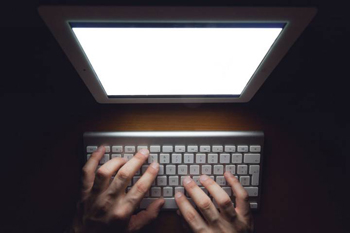
InternettrollThrough a combination of experimentation, data analysis and machine learning, they honed in on simple factors that make the average person more likely to troll. "We wanted to understand why trolling is so prevalent today," said Justin Cheng from Stanford University. "While the common knowledge is that trolls are particularly sociopathic individuals that occasionally appear in conversations, is it really just these people who are trolling others?," said Cheng.

Following previous research on antisocial behaviour, the researchers decided to focus on how mood and context affect what people write on a discussion forum. They set up a two-part experiment with 667 subjects recruited through a crowd-sourcing platform. In the first part of the experiment, the participants were given a test, which was either very easy or very difficult.

After taking the tests, all subjects filled out a questionnaire that evaluated various facets of their mood, including anger, fatigue, depression and tension. As expected, the people who completed the difficult test were in a worse mood than those who had the easy test. All participants were then instructed to read an article and engage in its comment section. They had to leave at least one comment, but could leave multiple comments and up-votes and down-votes and could reply to other comments.

The participants saw the same article on the same platform, created solely for the experiment, but some participants were given a forum with three troll posts at the top of the comment section. Others saw three neutral posts. Two independent experts evaluated whether the posts left by subjects qualified as trolling, defined generally in this research by a combination of posting guidelines taken from several discussion forums. For example, personal attacks and cursing were indicative of troll posts.

About 35 per cent of people who completed the easy test and saw neutral posts then posted troll comments of their own. That percentage jumped to 50 per cent if the subject either took the hard test or saw trolling comments. People exposed to both the difficult test and the troll posts trolled approximately 68 per cent of the time.

The researchers suggest that conversation context and mood can lead to trolling. They believe this could inform the creation of better online discussion spaces. "Understanding what actually determines somebody to behave antisocially is essential if we want to improve the quality of online discussions," said Cristian Danescu-Niculescu-Mizil, from Cornell University.

Comments

Add new comment

  • Coastaldigest.com reserves the right to delete or block any comments.
  • Coastaldigset.com is not responsible for its readers’ comments.
  • Comments that are abusive, incendiary or irrelevant are strictly prohibited.
  • Please use a genuine email ID and provide your name to avoid reject.
Agencies
May 22,2020

Kochi, May 22: During the nationwide COVID-19 lockdown, Kerala recorded the highest number of cyber attacks followed by Punjab and Tamil Nadu, a study by anti-virus software firm K7 Computing said on Thursday.

In a statement issued in Chennai, the company said its K7 Computing's Cyber Threat Report, a comprehensive analysis of cyber attacks during the lockdown has found that Kerala recorded the highest number of cyber attacks during this period. The report analyses various cyber attacks within India during the pandemic and reveals that threat actors targeted the state with COVID-themed attacks aimed at exploiting user trust.

In Kerala, regions like Kottayam, Kannur, Kollam, and Kochi saw the highest hits with 462, 374, 236, and 147 attacks respectively, while the state as a whole saw around 2,000 attacks during the period - the highest thus far in the country.

This was followed by Punjab with 207 attacks and Tamil Nadu with 184 attacks, the company said.

The sudden surge in the frequency of attacks witnessed from February 2020 to mid-April 2020 indicates that scamsters across the world were exploiting the widespread panic around coronavirus at both the individual and corporate level.

These attacks aimed to compromise computers and mobile devices to gain access to users' confidential data, banking details, and cryptocurrency accounts.

The key threats seen during this period ranged from phishing attacks to rogue apps disguised as COVID-19 information apps that targeted users' sensitive data. Phishing attacks were noticed more in Tier-II and Tier-III cities while the metros fared better. Smaller cities saw over 250 attacks being blocked per 10,000 users.

Users from Ghaziabad and Lucknow seem to have faced almost 6 and 4 times the number of attacks as Bengaluru users.

According to the statement, a majority of the recorded attacks were phishing attacks with sophisticated campaigns that could easily snare even the most educated users. These attacks were aimed at heightening users' fears and creating a sense of urgency to take action.

K7 Labs noticed phishing attacks where scamsters posed as representatives of the United States Department of Treasury, the World Health Organization (WHO), and the Centres for Disease Control and Prevention (CDC), the company said.

Users were encouraged to visit links that would automatically download malware on the host computer such as the Agent Tesla keylogger or Lokibot information-stealing malware, infamous banking Trojans such as Trickbot or Zeus Sphinx, and even disastrous ransomware.

Other attacks included infected COVID-19 Android apps like CoronaSafetyMask that scam users with promises of masks for an upfront payment; the spyware app Project Spy; and seemingly genuine apps that are infected with dangerous malware like banking Trojans such as Ginp, Anubis and Cerberus.

"Covid-19 has created an ideal situation for various threat actors to target individuals and enterprises alike. The panic caused by the stringent lockdown measures and rapid spread of this virus has left many people looking for more information on the situation," J. Kesavardhanan, Founder and CEO of K7 Computing was quoted as saying in the statement.

"Threat actors exploit this fear to their advantage and scam users into downloading malicious software and divulging sensitive information like banking codes. The need to be cyber cautious has never been greater. This is more so in the case of corporates who have adopted a work from home policy hurriedly without adequate cyber hygiene. We have seen an increase in attacks on enterprises and SME employees as well," he added.

Such attacks are expected to continue till normalcy returns. Social engineering attacks targeted at winning users' trust will gain momentum.

Healthcare institutions, well-known government offices, and international organisations will continue to be a prime target throughout the pandemic, the statement said.

Comments

Add new comment

  • Coastaldigest.com reserves the right to delete or block any comments.
  • Coastaldigset.com is not responsible for its readers’ comments.
  • Comments that are abusive, incendiary or irrelevant are strictly prohibited.
  • Please use a genuine email ID and provide your name to avoid reject.
Agencies
January 12,2020

Washington D.C., Jan 12: A recent study has claimed that people end up wasting almost an entire day when they take a vacation.

This can happen while standing in a queue or searching for places to visit, people do not keep a count of the time they have actually utilised during the trip. As a result, they end up doing much lesser activities than they originally had planned.

According to a recent report in Fox News, the study has also shared the fact that people try to justify time waste with planning and scheduling activities whereas the truth is that these things can be done well ahead to save time during the trip.

The average time waste according to the study commissioned by Sykes Holiday Cottages also said the people taking a seven days' trip waste a minimum of 17-and-a-half hours to figure out various factors.

But there are other causes involved as well. When one visits any crowded location, the real-time spent to enjoy the location is lesser than the time spent on reaching and trying to get involved. For instance, if one visits an amusement park, the activities take lesser time than the preparatory and other phases.

Comments

Add new comment

  • Coastaldigest.com reserves the right to delete or block any comments.
  • Coastaldigset.com is not responsible for its readers’ comments.
  • Comments that are abusive, incendiary or irrelevant are strictly prohibited.
  • Please use a genuine email ID and provide your name to avoid reject.
Agencies
March 15,2020

Cybercriminals continue to exploit public fear of rising coronavirus cases through malware and phishing emails in the guise of content coming from the Centers for Disease Control and Prevention (CDC) in the US and World Health Organisation (WHO), says cybersecurity firm Kaspersky.

In the APAC region, Kaspersky has detected 93 coronavirus-related malware in Bangladesh, 53 in the Philippines, 40 in China, 23 in Vietnam, 22 in India and 20 in Malaysia. 

Single-digit detections were monitored in Singapore, Japan, Indonesia, Hong Kong, Myanmar, and Thailand. 

Along with the consistent increase of 2019 coronavirus cases comes the incessant techniques cybercriminals are using to prey on public panic amidst the global epidemic, the company said in a statement. 

Kaspersky also detected emails offering products such as masks, and then the topic became more commonly used in Nigerian spam emails. Researchers also found scam emails with phishing links and malicious attachments.

One of the latest spam campaigns mimics the World Health Organisation (WHO), showing how cybercriminals recognise and are capitalising on the important role WHO has in providing trustworthy information about the coronavirus.

"We would encourage companies to be particularly vigilant at this time, and ensure employees who are working at home exercise caution. 

"Businesses should communicate clearly with workers to ensure they are aware of the risks, and do everything they can to secure remote access for those self-isolating or working from home," commented David Emm, principal security researcher.

Some malicious files are spread via email. 

For example, an Excel file distributed via email under the guise of a list of coronavirus victims allegedly sent from the World Health Organisation (WHO) was, in fact, a Trojan-Downloader, which secretly downloads and installs another malicious file. 

This second file was a Trojan-Spy designed to gather various data, including passwords, from the infected device and send it to the attacker.

Comments

Add new comment

  • Coastaldigest.com reserves the right to delete or block any comments.
  • Coastaldigset.com is not responsible for its readers’ comments.
  • Comments that are abusive, incendiary or irrelevant are strictly prohibited.
  • Please use a genuine email ID and provide your name to avoid reject.