Around 18 Per Cent Of Indian Women Suffer From PCOS, Finds Study

September 1, 2015

Mumbai, Sep 1: A recent study revealed that about 18 per cent of women in India, mostly from the East, suffer from Polycystic Ovarian Syndrome (PCOS), a disorder which causes infertility among women.
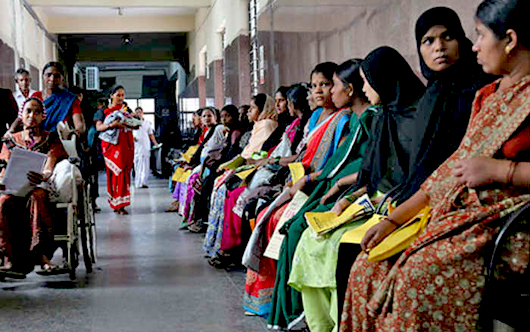
PCOS

Metropolis Healthcare, a multinational chain of pathology laboratories, conducted an inclusive study to observe the trends in the PCOS cases in young women in India.

Polycystic Ovarian Syndrome is a prevalent endocrine disorder in women and the leading cause of infertility nowadays.

Metropolis conducted a pan India study on 27,411 samples of testosterone, over a period of 18 months, out of which 4824 (17.60 per cent) women face hormonal associated risk with polycystic ovarian syndrome.

The increasing trend of PCOS is predominantly seen in the child bearing age group of 15 to 30 years.

Among the samples tested east India shows alarming levels of 25.88 per cent women affected by PCOS, followed by 18.62 per cent in north India, which can be largely attributed to lack of awareness among young women and ignorance.

“Undiagnosed PCOS can lead to infertility and in long term can cause several health complications which can be attributed to other factors as well,” Dr. Sonali Kolte, General Manager Medico Marketing, Metropolis Healthcare said.

“Early diagnosis and treatment can help control the symptoms and prevent health-related problems. Today a lot of young women are aware of the condition and seek medical help,” she said.

Ms. Kolte said PCOS is a characteristic amalgamation of cosmetic, gynecological and metabolic symptoms.

“Cosmetic symptoms include facial hair, thinning of the scalp and acne. Gynecological symptoms include irregular or scanty periods which are usually the first red flag in adolescents,” she said.

She added that infertility and recurrent pregnancy loss affect the women in the reproductive age and PCOS in older women can even lead to cancer of the uterus, cardiac disease and type 2 diabetes.

Ms. Kolte said diagnosis of the disease can be done by a testosterone test, along with a host of other tests like blood sugar, insulin, FSH, LH, 17OHP and DHEAS.

Comments

Add new comment

  • Coastaldigest.com reserves the right to delete or block any comments.
  • Coastaldigset.com is not responsible for its readers’ comments.
  • Comments that are abusive, incendiary or irrelevant are strictly prohibited.
  • Please use a genuine email ID and provide your name to avoid reject.
News Network
March 6,2020

Mar 6: The spread of the new coronavirus is shining the spotlight on a little-discussed gender split: men wash their hands after using the bathroom less than women, years of research and on-the-ground observations show.

Health officials around the world advise that deliberate, regular handwashing is one of the best weapons against the virus which causes a flu-like respiratory illness that can kill and has spread to around 80 countries.

The Centers for Disease Control and Prevention's online fact sheet "Handwashing: A corporate activity," cites a 2009 study that finds "only 31% of men and 65% of women washed their hands" after using a public restroom.

Social media comments about men's handwashing lapses forced an august British institution to caution visitors about bathroom behaviour this week.

After author Sathnam Sanghera complained on Twitter about "grown," "educated" men in the British Library toilets not washing their hands, the library responded, putting up additional signs reminding patrons to wash their hands in men's and women's bathrooms.

Thanks to "visitor feedback," a spokesman told Reuters, "we have increased further the number of posters in public toilets so that visitors are reminded of the importance of good hygiene at exactly the point where they can wash their hands."

Men and women approach handwashing after using the restroom differently, according to multiple surveys and field studies.

"Women wash their hands significantly more often, use soap more often, and wash their hands somewhat longer than men," according to a 2013 Michigan State University field study conducted by research assistants who observed nearly 4,000 people in restrooms around East Lansing, Michigan.

The study found 14.6% of men did not wash their hands at all after using the bathroom and 35.1% wet their hands but did not use soap, compared to 7.1% and 15.1% of women, respectively.

"If you stand in the men's bathroom at work, and watch men leave, they mostly don't wash their hands if they used the urinal," said one New York City public relations executive, who did not want to be identified for fear of alienating his colleagues.

Since the virus's spread, he's seen an uptick in men's handwashing at work, he noted. "I, for the record, do wash my hands all the time," he added.

Female medical staff in critical care units "washed their hands significantly more often than did their male counterparts after patient contact," a 2001 study published in the American Journal of Infection Control found.

Middle-aged women with some college education had the highest level of knowledge about hand hygiene, a survey published in 2019 by BMC Public Health, an open access public health journal, found.

Early information about coronavirus infection in China shows that men may be more susceptible to the disease. Just over 58% of the more than 1,000 COVID-19 patients reported in China through Jan. 29, 2020, were male, research published in the New England Journal of Medicine shows.

Researchers have not linked the difference to hand hygiene.

Comments

Add new comment

  • Coastaldigest.com reserves the right to delete or block any comments.
  • Coastaldigset.com is not responsible for its readers’ comments.
  • Comments that are abusive, incendiary or irrelevant are strictly prohibited.
  • Please use a genuine email ID and provide your name to avoid reject.
Agencies
August 2,2020

Washington, Aug 2: Children under the age of five have between 10 to 100 times greater levels of genetic material of the coronavirus in their noses compared to older children and adults, a study in JAMA Pediatrics said Thursday.

Its authors wrote this meant that young children might be important drivers of Covid-19 transmission within communities -- a suggestion at odds with the current prevailing narrative.

The paper comes as the administration of US President Donald Trump is pushing hard for schools and daycare to reopen in order to kickstart the economy.

Between March 23 and April 27, researchers carried out nasal swab tests on 145 Chicago patients with mild to moderate illness within one week of symptom onset.

The patients were divided into three groups: 46 children younger than five-years-old, 51 children aged five to 17 years, and 48 adults aged 18 to 65 years.

The team, led by Dr Taylor Heald-Sargent of the Ann & Robert H. Lurie Children's Hospital, observed, "a 10-fold to 100-fold greater amount of SARS-CoV-2 in the upper respiratory tract of young children."

15 countries with the highest number of cases, deaths due to the Covid-19 pandemic

The authors added that a recent lab study had demonstrated that the more viral genetic material was present, the more infectious virus could be grown.

It has also previously been shown that children with high viral loads of the respiratory syncytial virus (RSV) are more likely to spread the disease.

"Thus, young children can potentially be important drivers of SARS-CoV-2 spread in the general population," the authors wrote.

"Behavioral habits of young children and close quarters in school and daycare settings raise concern for SARS-CoV-2 amplification in this population as public health restrictions are eased," they concluded.

The new findings are at odds with the current view among health authorities that young children -- who, it has been well established, are far less likely to fall seriously ill from the virus -- don't spread it much to others either.

However, there has been fairly little research on the topic so far.

One recent study in South Korea found children aged 10 to 19 transmitted Covid-19 within households as much as adults, but children under nine transmitted the virus at lower rates.

Comments

Add new comment

  • Coastaldigest.com reserves the right to delete or block any comments.
  • Coastaldigset.com is not responsible for its readers’ comments.
  • Comments that are abusive, incendiary or irrelevant are strictly prohibited.
  • Please use a genuine email ID and provide your name to avoid reject.
Agencies
June 23,2020

The record levels of new daily COVID-19 cases are due to the fact that the pandemic is peaking in a number of big countries at the same time and reflect a change in the virus' global activity, the World Health Organisation said.

At a media briefing on Monday, WHO's emergencies chief Dr Michael Ryan said that the numbers are increasing because the epidemic is developing in a number of populous countries at the same time.

Some countries have attributed their increased caseload to more testing, including India and the US But Ryan dismissed that explanation.

We do not believe this is a testing phenomenon, he said, noting that numerous countries have also noted marked increases in hospital admissions and deaths neither of which cannot be explained by increased testing.

There definitely is a shift in that the virus is now very well established, Ryan said. The epidemic is now peaking or moving towards a peak in a number of large countries.

He added the situation was definitely accelerating in a number of countries, including the US and others in South Asia, the Middle East and Africa.

Comments

Add new comment

  • Coastaldigest.com reserves the right to delete or block any comments.
  • Coastaldigset.com is not responsible for its readers’ comments.
  • Comments that are abusive, incendiary or irrelevant are strictly prohibited.
  • Please use a genuine email ID and provide your name to avoid reject.