


Athletics: Leaked blood test results claim one in three medallists have doped

August 2, 2015

Paris/France, Aug 2: Athletics faced a fresh doping scandal Saturday when leaked results from 12,000 blood tests taken from 5,000 competitors allegedly demonstrated instances of cheating and "a shameful betrayal" of clean athletes.
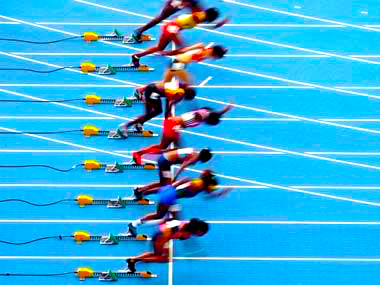
raceGerman broadcaster ARD as well as Britain's Sunday Times say they passed on their information to leading blood doping experts who concluded that track and field is in "the same diabolical position today that professional cycling was in 20 years ago".

The database, reportedly created by the International Association of Athletics Federations (IAAF), covers the period from 2001 to 2012, a statement from ARD said.

The findings were broadcast in a documentary screened in Germany on Saturday -- “Doping – Top Secret: The Shadowy World of Athletics.”

Australian doping experts Michael Ashenden and Robin Parisotto came to a series of conclusions:

- A total of 800 athletes in disciplines from 800m to the marathon registered values which, according to the definition of the biological passport of the World Anti-Doping Agency (WADA) are regarded as suspicious or even highly suspicious.

- In the analysis of the blood levels of the medal-winners at world championships and Olympics between 2001 and 2012, every third medal was won by athletes, for whom one or even both experts had identified suspicious blood values in the database.

- For every sixth medal winner at least one, they claimed, had doped in the course of his/her career.

“Often two out of the three medallists had probably engaged in blood doping during their career," Ashenden told the programme.

"In one event the entire podium was comprised of athletes, who in my opinion had most probably doped at some point in their career.”

Ashenden lashed out at the IAAF and their anti-doping policy.

“For the IAAF to have harvested millions of dollars from the broadcasting of athletics competitions...yet only devote a relative pittance of those funds towards anti-doping.

"...in my opinion (it's) a shameful betrayal of their primary duty to police their sport and to protect the clean athletes,” he said.

The values in the tests are not proof of cheating and the IAAF rejected criticism of its management.

"The IAAF has always been at the forefront in combating anti-doping, searching and implementing new analytical techniques and methodologies," said a statement released to the Sunday Times and carried by the BBC.

Since the introduction of the biological passport, the IAAF says it has "pursued more cases than all other anti-doping organisations together".

It added that it spent $2million a year on fighting doping.

The IAAF added in defence of its biological passport: "Any other approach, in particular, the use of data collected over a longer period for different purposes, with different objectives and with different methods of analysis, is nothing more than speculation."

Meanwhile, Russia and Kenya were subjected to new doping allegations in the documentary.

ARD, who last December aired similar accusations of doping and corruption in Russia, returned to the controversy just three weeks out from the world championships in Beijing.

"Despite assurances from the Russian authorities (in favour of a clean sport) doped competitors and their suppliers are always protected," the public broadcaster said in a statement.

The makers of the film claim to have evidence of human growth hormone being used to boost Russian runners.

They also say that a hidden camera recorded 800m athlete Anastasia Bazdireva as praising the benefits of drugs.

"With anabolics, I have stiff muscles. But I can run. It's hard but it's OK. You feel different with anabolics," she is recorded as claiming.

Journalists also returned to Kenya where they claim another hidden camera showed injections of "dangerous" doping products being administered.

The programme claimed that there is "massive corruption" within the Kenyan set-up and "a desire to cover-up doping...to the summit of the Kenyan athletics federation".

Kenya was rocked this year when marathon star Rita Jeptoo was banned for two years after being caught doping with the banned blood-boosting hormone EPO.

"Since 2006, I have not been forced to do a single blood test in Kenya," the 34-year-old is quoted as saying by ARD, adding that only urine tests were carried out.

Comments

Add new comment

  • Coastaldigest.com reserves the right to delete or block any comments.
  • Coastaldigset.com is not responsible for its readers’ comments.
  • Comments that are abusive, incendiary or irrelevant are strictly prohibited.
  • Please use a genuine email ID and provide your name to avoid reject.
News Network
January 24,2020

Auckland, Jan 24: K L Rahul and Shreyas Iyer smashed quick-fire half-centuries, while skipper Virat Kohli made 45 as India defeated New Zealand by six wickets in the first T20 International to take a 1-0 lead in the five-match series here on Friday.

Chasing a challenging 204-run target, Rahul smashed 56 off 27 balls and together with Kohli shared 99 runs for the second wicket to lay the foundation for the chase.

Later, Iyer (58 not out off 29 balls) and Manish Pandey (14 not out) remained unbeaten as India chased down the target with an over to spare.

Earlier, Colin Munro, Kane Williamson and Ross Taylor smashed scintillating half-centuries to power New Zealand to a challenging 203 for five.

Opener Munro blasted six fours and two sixes in his 42-ball 59, while skipper Williamson treated the Indian bowlers with equal disdain, hitting them out of the park four times in his 26-ball 51.

Taylor then clobbered an unbeaten 54 off 27 balls. His innings was laced with three sixes and as many fours.

Opener Martin Guptill also chipped in with a 19-ball 30.

Earlier, India skipper Virat Kohli won the toss and decided to field.

For India, Jasprit Bumrah (1/), Shardul Thakur (1/44), Yuzvendra Chahal (1/32), Shivam Dube (1/24) and Ravindra Jadeja (1/18) snapped one wicket each.

Brief Score:

New Zealand: 203 for 5 in 20 overs (Colin Munro 59, Kane Williamson 51, Ross Taylor 54; Jasprit Bumrah 1/31).

India: 204 for 4 in 19 overs (Shreyas Iyer 58 not out, K L Rahul 56, Virat Kohli 45; Ish Sodhi 2/36).

Comments

Add new comment

  • Coastaldigest.com reserves the right to delete or block any comments.
  • Coastaldigset.com is not responsible for its readers’ comments.
  • Comments that are abusive, incendiary or irrelevant are strictly prohibited.
  • Please use a genuine email ID and provide your name to avoid reject.
News Network
February 18,2020

Berlin, Feb 18: Sachin Tendulkar being lifted on the shoulders of his teammates after their World Cup triumph at home in 2011 has been voted the Laureus best sporting moment in the last 20 years.

With the backing of Indian cricket fans, Tendulkar got the maximum number of votes to emerge winner on Monday.

Tendulkar, competing in his sixth and last World Cup, finally realised his long-term dream when skipper Mahendra Singh Dhoni smacked Sri Lankan pacer Nuwan Kulasekara out of the park for a winning six.

The charged-up Indian cricketers rushed to the ground and soon they lifted Tendulkar on their shoulders and made a lap of honour, a moment etched in the minds of the fans.

Former Australian skipper Steve Waugh handed the trophy to Tendulkar after tennis legend Boris Becker announced the winner at a glittering ceremony.

“It's incredible. The feeling of winning the world cup was beyond what words can express. How many times you get an event happening where there are no mixed opinions. Very rarely the entire country celebrates,” Tendulkar said after receiving the trophy.

“And this is a reminder of how powerful a sport is and what magic it does to our lives. Even now when I watch that it has stayed with me.”

Becker then asked Tendulkar to share the emotions he felt at that time and the Indian legend put in perspective how important it was for him to hold that trophy.

“My journey started in 1983 when I was 10 years old. India had won the World Cup. I did not understand the significance and just because everybody was celebrating, I also joined the party.

“But somewhere I knew something special has happened to the country and I wanted to experience it one day and that's how my journey began.”

“It was the proudest moment of my life, holding that trophy which I chased for 22 years but I never lost hope. I was merely lifting that trophy on behalf of my countrymen.”

The 46-year-old Tendulkar, the highest run-getter in the cricket world, said holding the Laureus trophy has also given him great honour.

He also shared the impact the revolutionary South African leader Nelson Mandela had on him. He met him when he was just 19 years old.

“His hardship did not affect his leadership. Out of many messages he left, the most important I felt was that sport has got the power to unite everyone.

"Today, sitting in this room with so many athletes, some of them did not have everything but they made the best of everything they had. I thank them for inspiring youngsters to pick a sport of their choice and chase their dreams. This trophy belongs to all of us, it's not just about me.”

In a tweet on Tuesday, Tendulkar dedicated the award to his country, teammates and fans.

"Thank you all for the overwhelming love and support! I dedicate this @LaureusSport award to India, all my teammates, fans and well wishers in India and across the world who have always supported Indian cricket," he tweeted.

Comments

Add new comment

  • Coastaldigest.com reserves the right to delete or block any comments.
  • Coastaldigset.com is not responsible for its readers’ comments.
  • Comments that are abusive, incendiary or irrelevant are strictly prohibited.
  • Please use a genuine email ID and provide your name to avoid reject.
News Network
April 21,2020

New Delhi, Apr 21: India skipper Virat Kohli on Tuesday said people seem to have become more compassionate while coping with the COVID-19 pandemic and hoped the sense of gratitude towards frontline workers like doctors and police personnel remains even after the crisis is over.

Speaking in an online class organised by "Unacademy", Kohli and his actor wife Anushka Sharma spoke at length about the challenges they faced before tasting success.

"The one positive out of this crisis that we as a society have become more compassionate. We are showing more gratitude to the frontline workers in this war, be it police personnel, doctors or nurses.

"I hope it stays this way even after we overcome this crisis," said Kohli with Sharma seated next to her.

Kohli said the pandemic has taught the world a very important lesson.

"Life is unpredictable. So, do what makes you happy and not get into comparisons all the time. People have a choice now how to come out of this phase. Life is going to be different after this," said the skipper.

For Sharma, the pandemic has forced people to care about the basics in life.

"There is a learning in all of this. Nothing happens without a reason. If the frontline workers were not there, we would not have access to basics," she said..

"This has taught us that no one is special than the other. Health is everything. We are more connected as a society now," she added.

During the session, Kohli was asked about the moment when he felt most helpless.

"I felt nothing was working for me when I was not picked for the state team initially. I cried the whole night and asked my coach 'why did I not get selected'?" he responded.

Comments

Add new comment

  • Coastaldigest.com reserves the right to delete or block any comments.
  • Coastaldigset.com is not responsible for its readers’ comments.
  • Comments that are abusive, incendiary or irrelevant are strictly prohibited.
  • Please use a genuine email ID and provide your name to avoid reject.