


Athletics: Leaked blood test results claim one in three medallists have doped

August 2, 2015

Paris/France, Aug 2: Athletics faced a fresh doping scandal Saturday when leaked results from 12,000 blood tests taken from 5,000 competitors allegedly demonstrated instances of cheating and "a shameful betrayal" of clean athletes.
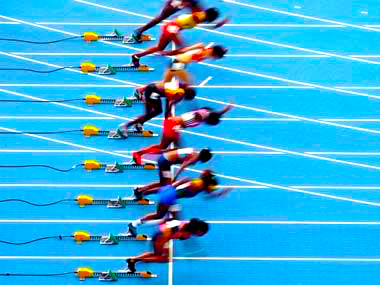
raceGerman broadcaster ARD as well as Britain's Sunday Times say they passed on their information to leading blood doping experts who concluded that track and field is in "the same diabolical position today that professional cycling was in 20 years ago".

The database, reportedly created by the International Association of Athletics Federations (IAAF), covers the period from 2001 to 2012, a statement from ARD said.

The findings were broadcast in a documentary screened in Germany on Saturday -- “Doping – Top Secret: The Shadowy World of Athletics.”

Australian doping experts Michael Ashenden and Robin Parisotto came to a series of conclusions:

- A total of 800 athletes in disciplines from 800m to the marathon registered values which, according to the definition of the biological passport of the World Anti-Doping Agency (WADA) are regarded as suspicious or even highly suspicious.

- In the analysis of the blood levels of the medal-winners at world championships and Olympics between 2001 and 2012, every third medal was won by athletes, for whom one or even both experts had identified suspicious blood values in the database.

- For every sixth medal winner at least one, they claimed, had doped in the course of his/her career.

“Often two out of the three medallists had probably engaged in blood doping during their career," Ashenden told the programme.

"In one event the entire podium was comprised of athletes, who in my opinion had most probably doped at some point in their career.”

Ashenden lashed out at the IAAF and their anti-doping policy.

“For the IAAF to have harvested millions of dollars from the broadcasting of athletics competitions...yet only devote a relative pittance of those funds towards anti-doping.

"...in my opinion (it's) a shameful betrayal of their primary duty to police their sport and to protect the clean athletes,” he said.

The values in the tests are not proof of cheating and the IAAF rejected criticism of its management.

"The IAAF has always been at the forefront in combating anti-doping, searching and implementing new analytical techniques and methodologies," said a statement released to the Sunday Times and carried by the BBC.

Since the introduction of the biological passport, the IAAF says it has "pursued more cases than all other anti-doping organisations together".

It added that it spent $2million a year on fighting doping.

The IAAF added in defence of its biological passport: "Any other approach, in particular, the use of data collected over a longer period for different purposes, with different objectives and with different methods of analysis, is nothing more than speculation."

Meanwhile, Russia and Kenya were subjected to new doping allegations in the documentary.

ARD, who last December aired similar accusations of doping and corruption in Russia, returned to the controversy just three weeks out from the world championships in Beijing.

"Despite assurances from the Russian authorities (in favour of a clean sport) doped competitors and their suppliers are always protected," the public broadcaster said in a statement.

The makers of the film claim to have evidence of human growth hormone being used to boost Russian runners.

They also say that a hidden camera recorded 800m athlete Anastasia Bazdireva as praising the benefits of drugs.

"With anabolics, I have stiff muscles. But I can run. It's hard but it's OK. You feel different with anabolics," she is recorded as claiming.

Journalists also returned to Kenya where they claim another hidden camera showed injections of "dangerous" doping products being administered.

The programme claimed that there is "massive corruption" within the Kenyan set-up and "a desire to cover-up doping...to the summit of the Kenyan athletics federation".

Kenya was rocked this year when marathon star Rita Jeptoo was banned for two years after being caught doping with the banned blood-boosting hormone EPO.

"Since 2006, I have not been forced to do a single blood test in Kenya," the 34-year-old is quoted as saying by ARD, adding that only urine tests were carried out.

Comments

Add new comment

  • Coastaldigest.com reserves the right to delete or block any comments.
  • Coastaldigset.com is not responsible for its readers’ comments.
  • Comments that are abusive, incendiary or irrelevant are strictly prohibited.
  • Please use a genuine email ID and provide your name to avoid reject.
News Network
January 15,2020

Jan 15: Australia openers David Warner and Aaron Finch both struck superb centuries to complement their bowlers’ inspired display as the touring side handed out a 10-wicket thrashing to India in the opening one-day international in Mumbai.

India, world-ranked No 2 in ODIs, suffered a middle-order collapse on their way to being bundled out for 255 in the final over of their innings after Australia captain Finch won the toss and opted to field in the first of the three-match series.

Warner and Finch then smashed the Indian bowlers to all corners of the ground, picking up boundaries seemingly at will to chase down the target with 74 balls to spare at the Wankhede Stadium.

Left-handed Warner successfully used the decision review system twice to overturn the umpire’s decision on his way to his 18th ODI century, hitting three sixes and 17 fours in his unbeaten knock of 128, from 112 balls. Finch completed his 16th century in the format, his unbeaten innings 110 from 114 features two sixes and 13 fours.

Earlier, Australia’s left-arm fast bowler Mitchell Starc, who made his ODI debut in India 10 years ago, picked up three wickets to set up Australia’s victory. He struck the first blow with the new ball when he sent back Rohit Sharma for 10.

India managed to recover from that early loss through a second-wicket stand of 121 between opener Shikhar Dhawan, who top-scored for the hosts with 74, and KL Rahul. However left-arm spinner Ashton Agar broke the stand by dismissing Rahul for 47 before Agar caught Dhawan off Pat Cummins in the next over.

The hosts were hoping for a solid innings from captain Virat Kohli, who batted a position lower than his usual No 3 spot to accommodate Rahul, to get them out of trouble. However, he lasted only 14 balls, hitting leg-spinner Adam Zampa for a six before offering a return catch to the bowler on the very next delivery to be out for 16.

Starc then returned to the attack, removing Shreyas Iyer cheaply as India lost four wickets for 30 runs to be reduced to 164 for five. Rishabh Pant and Ravindra Jadeja then fell just short of a half-century partnership, before the remaining four wickets falling for 42 runs, with Cummins and fast bowler Kane Richardson picking up two wickets apiece for Australia.

To compound India’s woes, wicketkeeper Pant suffered a concussion after being hit on his helmet by a short-pitched delivery from Cummins. The Indian cricket board said Pant, who did not come out to keep wicket and was replaced behind the stumps by Rahul, was under observation. The two sides will meet in Rajkot for the second ODI on Friday.

Comments

Add new comment

  • Coastaldigest.com reserves the right to delete or block any comments.
  • Coastaldigset.com is not responsible for its readers’ comments.
  • Comments that are abusive, incendiary or irrelevant are strictly prohibited.
  • Please use a genuine email ID and provide your name to avoid reject.
News Network
June 13,2020

New Delhi, Jun 13: West Indies all-rounder Dwayne Bravo has said that wicket-keeper batsman MS Dhoni is the biggest superstar in cricket and is one of the easiest guys to interact with.

Bravo was doing an Instagram live chat with former Zimbabwe pacer Pommie Mbangwa and it was then that the all-rounder was asked to talk about his stint with Chennai Super Kings (CSK).

"I think a lot of credit for CSK's success has to be given to Dhoni and Fleming, obviously the owners, they trust both Fleming and Dhoni, so there is no outside interference when it comes to decision making, both are very big students of the game, players love MS and it's an environment and franchise that allows you to be you," Bravo told Mbangwa during the chat.

"MS Dhoni is the biggest superstar in cricket and in our team. He was one of the easiest people to interact with, outside of the cricket field, he is like playing video games, his door is open at all times, whenever you talk about the biggest superstar and then you think a person like Dhoni is the most humble of them all. CSK is a special team and we have the most loyal fans," he added.

Bravo has been with the CSK since 2011. He has played a total of 104 matches for the franchise, picking up 121 wickets.

The all-rounder has also managed to win the Purple Cap (most wickets in IPL) two times (2013 and 2015).

CSK has won the IPL thrice (2010, 2011 and 2018) and all the titles have come under the leadership of MS Dhoni.

Thirty-eight-year-old Dhoni has been currently enjoying some time away from the game. He last played competitive cricket during the 2019 World Cup.

Dhoni had to face criticism for his slow batting approach during India's matches in the high-profile game.

This year, Dhoni did not find a place for himself in the BCCI's centrally contracted players list.

The board had released the list of central contract list of players for the period from October 2019 to September 2020.

Dhoni is the only captain to win all major ICC trophies (50-over World Cup, T20 World Cup, and Champions Trophy).

Under his leadership, India also managed to attain the number one ranking in Test cricket.

He would have been leading the Chennai Super Kings (CSK) if the Indian Premier League (IPL) had commenced from March 29.

However, the tournament has been postponed indefinitely due to the coronavirus pandemic.

Comments

Add new comment

  • Coastaldigest.com reserves the right to delete or block any comments.
  • Coastaldigset.com is not responsible for its readers’ comments.
  • Comments that are abusive, incendiary or irrelevant are strictly prohibited.
  • Please use a genuine email ID and provide your name to avoid reject.
Agencies
July 7,2020

Mumbai, Jul 7: Australias second largest city Melbourne is set to go for another round of lockdown — for six weeks — from midnight Wednesday as the coronavirus has reared its ugly head in Victoria. And this has further confirmed that this years T20 World Cup in Australia is practically not possible. Even as the ICC keeps delaying the announcement, BCCI hopes that the official call will now be taken with this latest development.

Despite ICC's Financial and Commercial Affairs Committee (F&CA) chief Ehsan Mani as well as Cricket Australia making it clear time and again that hosting a T20 World Cup in the October-November window is practically impossible, the ICC hasn't made an official announcement and that hasn't impressed the Board of Control for Cricket in India (BCCI).

Speaking to media persons, a BCCI official said that it is only the ICC which has kept speaking about delaying the inevitable — announcing a postponement — even as Cricket Australia chairman Earl Eddings wrote to the international body that it looks highly unlikely that a T20 World Cup can be hosted in these trying times.

"As it is there were so many logistical difficulties and that is perfectly understandable. The Australian government has been addressing the public health issue efficiently and there are regulations in place which are crucial to address the challenges. In that background even Cricket Australia has been practical in their assessment of the situation.

"With this present situation where Melbourne is in lockdown, the ICC really must take the final call of closure on the issue if they have any concept of responsible decision making," the official said.

Not just CA chairman Eddings, but also Mani — who is also the PCB chief — recently told the media that the T20 World Cup cannot be held in a bio-secure environment.

"We have had a lot of discussions and the feeling is it (T20 World Cup) would not be possible this year. ICC has World Cups lined up in 2021 and 2023, so we have a gap year where we can adjust this event. God forbid if some player(s) falls ill or mishap occurs during the tournament, it will have a big impact and create panic in the cricket world and we can't take that risk. Having a bio-bubble environment is feasible for say a bilateral series like Pakistan in England, but it is very difficult when 16 teams are involved," he had said.

Cricket Australia's interim CEO Nick Hockley echoed the sentiments when he said the biggest challenge was to get the players from so many teams into the country.

"Our biggest challenge is getting 15 teams into the country. If I compare it with the prospect of a bilateral tour, you're talking about bringing one team in and then playing individual matches. But the prospect of bringing 15 teams in and having six or seven teams in one city at the same time, it's a much more complex exercise," he had said.

Comments

Add new comment

  • Coastaldigest.com reserves the right to delete or block any comments.
  • Coastaldigset.com is not responsible for its readers’ comments.
  • Comments that are abusive, incendiary or irrelevant are strictly prohibited.
  • Please use a genuine email ID and provide your name to avoid reject.